

Did you know that tractor tires can influence fuel efficiency by as much as 20 percent? The right tire choice goes far beyond appearance and can decide how well your machinery performs across fields and seasons. Every crop, soil condition, and application depends on matching tire features to specific farm needs. Discover how understanding tread types, tire construction, and selection pitfalls can make a real difference for your productivity and equipment longevity.
Table of Contents
- Defining Tractor Tire Selection And Purpose
- Main Types Of Tractor Tires Explained
- Key Features Impacting Tire Performance
- Choosing Tread Patterns For Applications
- Common Mistakes In Tire Selection Process
Key Takeaways
| Point | Details |
|---|---|
| Tire Selection Criteria | Factors such as diameter, width, load capacity, and speed rating must align with your specific agricultural needs for optimal performance. |
| Tread Pattern Types | Different tread patterns including R1, R1W, R2, R3, and R4 are designed for specific applications, impacting traction and efficiency. |
| Common Selection Mistakes | Avoid errors like ignoring manufacturer specifications and neglecting soil conditions to enhance tire performance and longevity. |
| Importance of Tire Pressure | Consistent monitoring and adjustment of tire pressure is crucial to prevent performance issues and extend tire life. |
Defining Tractor Tire Selection and Purpose
Choosing the right tractor tire is far more nuanced than simply picking something round and black. According to research from Michelin Agricultural Business, tire selection involves carefully matching multiple technical specifications to your specific agricultural needs.
Tractor tire selection critically depends on several key factors that directly impact machinery performance and field efficiency. These include:
- Tire Diameter: Must match your specific tractor’s maximum allowable dimensions
- Tire Width: Should align with specific agricultural applications like crop spraying or navigating narrow row spaces
- Load Capacity: Ensures the tire can handle your equipment’s weight and operational requirements
- Speed Rating: Determines the tire’s safe operational speed range
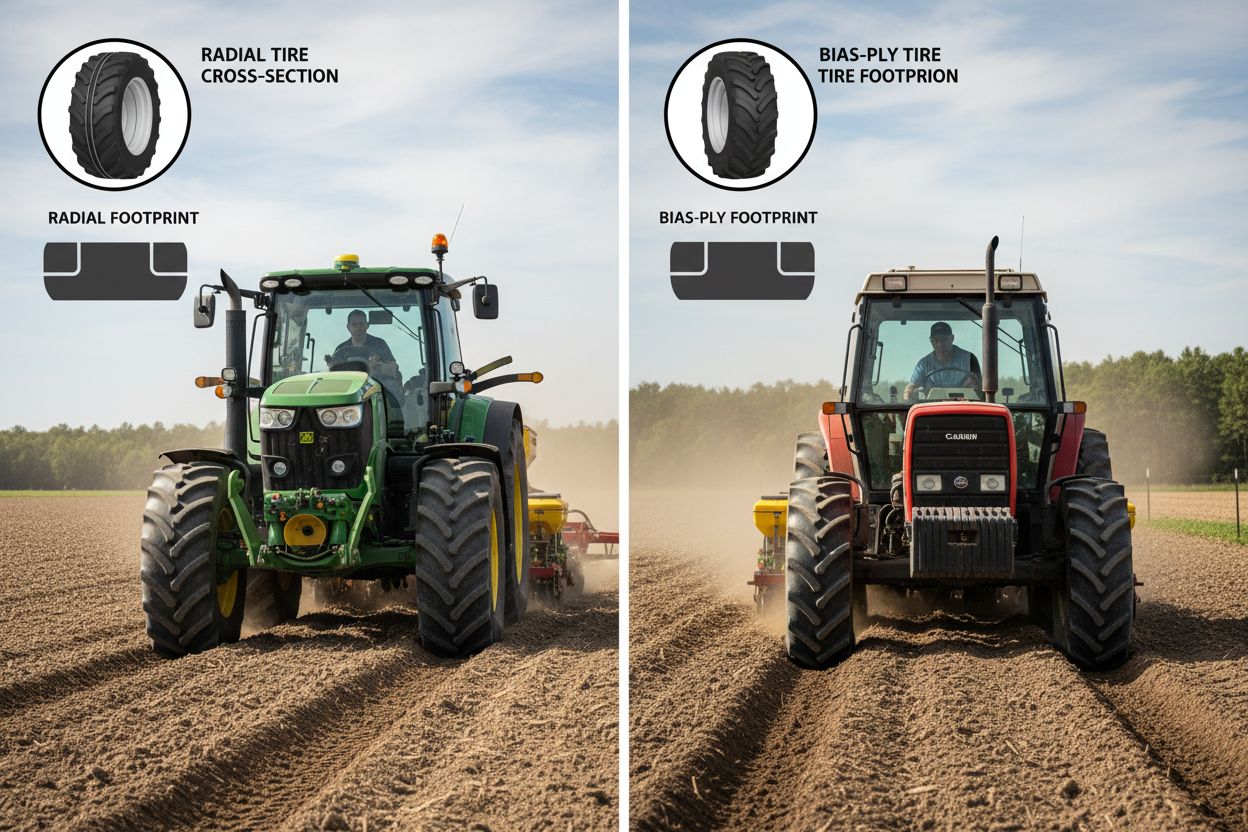
As research from Tractor.com indicates, tire construction plays a pivotal role in performance. Farmers must consider two primary tire types: radial and bias construction. Radial tires typically offer better ground contact, improved fuel efficiency, and longer wear life compared to traditional bias designs. Your specific soil conditions, primary agricultural tasks, and terrain will ultimately guide your most appropriate tire selection strategy.
Ultimately, selecting the right tractor tire isn’t just about purchasing rubber – it’s about investing in your agricultural operation’s overall productivity and efficiency. By understanding these critical selection parameters, you can make an informed decision that enhances your machinery’s performance and minimizes potential operational interruptions.
Main Types of Tractor Tires Explained
Tractor tires are not a one-size-fits-all solution. According to research from CEAT Specialty Tires, there are several distinct tire types designed for specific agricultural and operational needs.
The primary tread pattern categories include:
Here’s a comparison of major tractor tread pattern types and their typical applications:
| Tread Pattern | Primary Use Environment | Key Benefits |
|---|---|---|
| R1 (Agricultural) | Standard farming fields | Deep traction Versatile use |
| R1W (Winter) | Wet/cold field conditions | Enhanced grip Better mud performance |
| R2 (Rice/Swamp) | Waterlogged/muddy terrain | Extra-deep tread Superior wet traction |
| R3 (Turf) | Landscaping/lawns | Minimal ground impact Protects delicate surfaces |
| R4 (Industrial) | Construction/mixed surfaces | Heavy-duty Handles hard terrain |
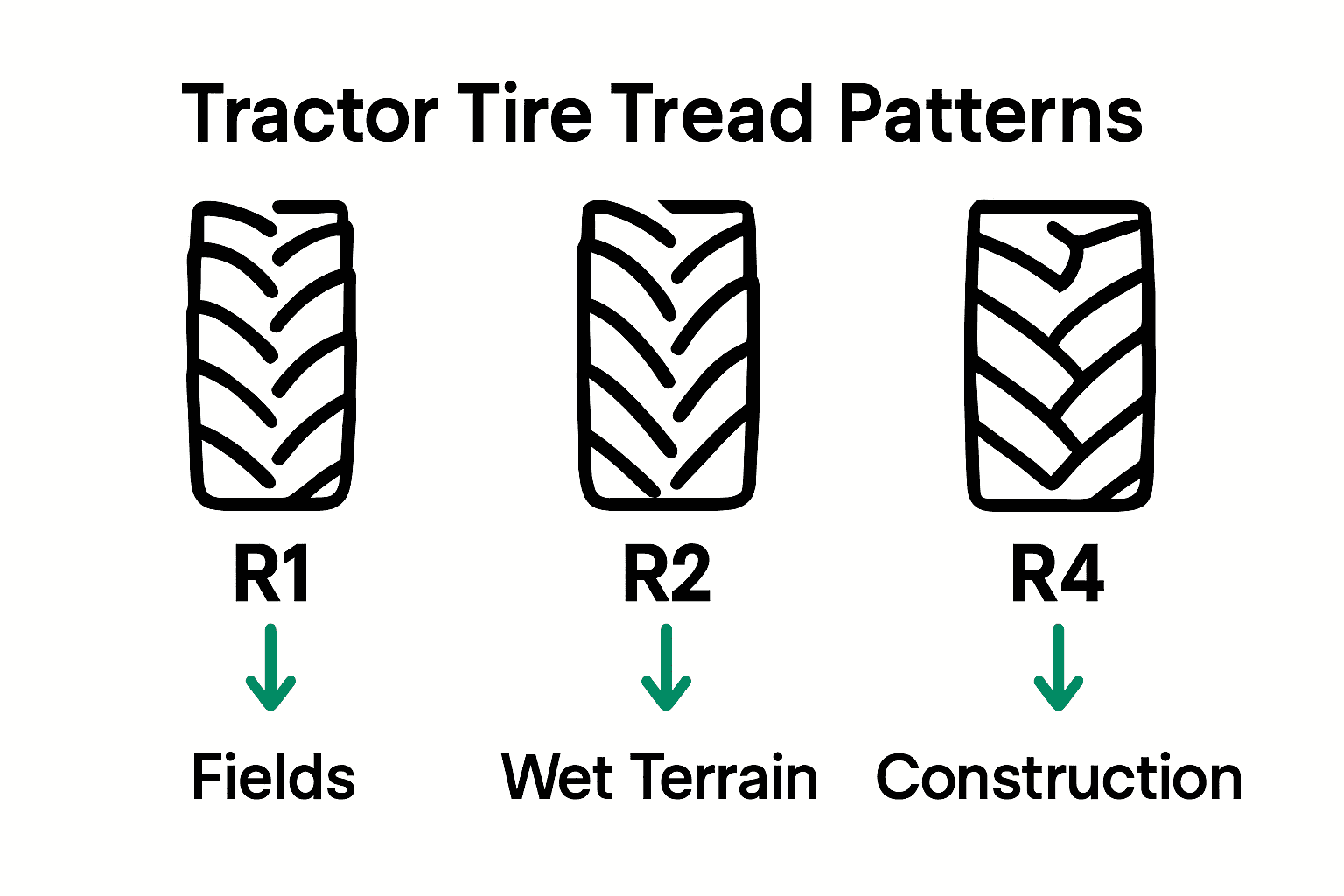
- R1 (Agricultural Tires): Standard deep-tread tires for traditional farming conditions
- R1W (Winter Tires): Enhanced traction design for cold and wet agricultural environments
- R2 (Rice/Swamp Tires): Specialized treads for wet, muddy terrain like rice paddies
- R3 (Turf Tires): Designed with minimal ground impact for landscaping and sensitive surfaces
- R4 (Industrial Tires): Robust construction for heavy-duty, mixed-terrain applications
Construction types also play a critical role in tire performance. According to Michelin Agricultural Business, farmers can choose between traditional designs and advanced technologies like Ultraflex (IF/VF) tires. These innovative designs offer improved load-bearing capacities, reduced soil compaction, and enhanced operational flexibility across different field conditions.
Beyond tread patterns, modern tractor tires are categorized by their intended use environments. Specialized options like the ROADBIB for pure road use and EVOBIB for mixed field-road applications demonstrate how tire technology continues to evolve, providing farmers with increasingly precise solutions tailored to specific operational requirements.
Key Features Impacting Tire Performance
Tractor tire performance is determined by multiple sophisticated engineering factors that go far beyond simple rubber composition. According to research from CEAT Specialty Tires, several critical features directly influence a tire’s overall effectiveness and longevity.
The most significant performance-impacting features include:
- Load Carrying Capacity: Determines the maximum weight the tire can support safely
- Construction Type: Radial vs. bias design affects traction, footprint, and ride comfort
- Tread Depth and Pattern: Influences ground grip, soil compaction, and operational efficiency
- Tire Pressure: Critical for maintaining optimal performance across different terrains
Advanced tire technologies have revolutionized agricultural performance. As highlighted by Farming Weekly, Increased Flexion (IF) technology represents a significant breakthrough. These innovative tires can carry higher loads at lower pressures, dramatically reducing soil compaction and improving overall operational efficiency.
Ultimately, tire performance is a complex interplay of engineering precision. Farmers must consider not just individual features, but how these characteristics work together to support their specific agricultural needs. The right tire isn’t just about durability—it’s about creating a harmonious interface between machinery, terrain, and agricultural productivity.
Choosing Tread Patterns for Applications
Selecting the right tread pattern isn’t just about looks—it’s about matching your tire’s design to specific agricultural and operational demands. According to research from CEAT Specialty Tires, tread patterns are engineered to address unique environmental and task-specific challenges.
The standard tread pattern classifications include:
- R1 (Agricultural): Deep, aggressive treads for standard farming terrain
- R1W (Winter): Enhanced grip for cold, wet, and muddy conditions
- R2 (Rice/Swamp): Extra-deep treads for extremely soft, waterlogged environments
- R3 (Turf): Minimal impact treads for landscaping and sensitive ground surfaces
- R4 (Industrial): Robust treads for hard surfaces and mixed-terrain applications
As highlighted by Michelin Agricultural Business, modern tire technology offers specialized solutions for mixed-use scenarios. Technologies like ROADBIB for road-focused travel, CROSSGRIP for road-dominant tasks, and EVOBIB for hybrid field-road applications demonstrate how precise tread engineering can optimize performance. When paired with central tire inflation systems, these advanced tread designs allow farmers to dynamically adjust their tire’s performance across different working conditions.
Ultimately, your tread pattern selection should reflect a holistic understanding of your specific agricultural environment. Consider not just the primary terrain, but also seasonal variations, crop types, and the diverse tasks your tractor will perform. The right tread pattern can significantly enhance traction, reduce soil compaction, and improve overall operational efficiency.
Common Mistakes in Tire Selection Process
Choosing the right tractor tire is more complex than most farmers realize. According to research from Harvest Harmonies, many costly mistakes stem from overlooking critical selection criteria that directly impact machinery performance and longevity.
The most prevalent tire selection errors include:
- Ignoring Manufacturer Specifications: Failing to match tire dimensions and load ratings precisely
- Neglecting Soil Condition Impact: Selecting uniform tires without considering terrain variability
- Mismatching Tire to Equipment Use: Choosing generic tires instead of application-specific designs
- Inconsistent Tire Pressure Management: Not adjusting pressure between field and road conditions
Research from Farming Weekly emphasizes the critical nature of tire pressure. Running tires at incorrect pressures can lead to significant problems: too high creates reduced grip and accelerated wear, while too low causes heat buildup, potential structural damage, and compromised handling. Professional farmers understand that tire pressure isn’t a set-it-and-forget-it parameter—it requires continuous monitoring and dynamic adjustment.
Ultimately, avoiding these common mistakes requires a holistic approach to tire selection. Invest time in understanding your specific agricultural needs, consult manufacturer guidelines, and regularly inspect your tires. Remember: the right tire is an investment in your farm’s productivity, not just an expense to be minimized.
Find the Perfect Tractor Tires to Boost Your Farm’s Efficiency
Selecting the right tractor tire is a critical challenge for every farmer who wants to maximize equipment performance while protecting soil health. From matching tire diameter and tread patterns like R1, R2, or R3 to understanding load capacity and the benefits of advanced radial or Ultraflex technologies, every detail counts. Ignoring these specifics can lead to costly downtime, excessive soil compaction, or uneven wear.
At pexlivanidis.com, we understand these pain points and offer a vast inventory of high-quality tractor tires and accessories tailored to your exact agricultural needs. Whether you need tires designed for wet conditions, industrial durability, or turf preservation, our selection supports the full range of specialized treads and constructions. Start by exploring our wide range of tractor accessories and spare parts and benefit from expert product advice, free shipping on orders over 100€, and options for bulk purchasing.
Don’t wait until your tractor tires cause delays or costly repairs. Take control of your machinery’s performance today by visiting pexlivanidis.com and discover the right tires that match your farm’s unique requirements. Your next step toward improved efficiency and productivity is just a click away.
Frequently Asked Questions
What key factors should I consider when selecting tractor tires?
Choosing the right tractor tires involves considering tire diameter, width, load capacity, speed rating, and construction type (radial vs. bias). Each of these factors impacts your tractor’s performance and efficiency in various agricultural tasks.
How does tire construction affect tractor performance?
Tire construction, whether radial or bias, plays a critical role in traction, fuel efficiency, and longevity. Radial tires often provide better ground contact and comfort, making them suitable for a wide range of farming applications compared to traditional bias tires.
What are the different tread patterns, and what are they used for?
Tractor tires come in various tread patterns designed for specific uses: R1 (Agricultural) for standard farming, R1W (Winter) for wet conditions, R2 (Rice/Swamp) for muddy terrain, R3 (Turf) for landscaping, and R4 (Industrial) for mixed surfaces. Each pattern optimizes performance according to the working environment.
What common mistakes should I avoid when selecting tractor tires?
Avoid mistakes like ignoring manufacturer specifications, neglecting to consider soil conditions, mismatching tire types for specific equipment uses, and inconsistent tire pressure management. Each of these errors can significantly impact tractor performance and longevity.