

Every tractor faces harsh punishment from dust, dirt, and even microscopic metal fragments that threaten to ruin expensive equipment. You might think a thick engine block or reinforced parts would handle the job just fine. But the real defense comes from a system most people overlook. A well maintained tractor filter system can cut machinery downtime by up to 40 percent and add years to a tractor’s life. That little detail changes everything about how you keep your machinery running.
Table of Contents
- Defining A Tractor Filter: Basic Concepts Explained
- The Importance Of Tractor Filters In Agriculture
- How Tractor Filters Function And Their Role In Machinery
- Types Of Tractor Filters And Their Specific Functions
- Maintaining Tractor Filters For Optimal Performance
Quick Summary
| Takeaway | Explanation |
|---|---|
| Tractor filters protect machinery durability. | They act as barriers to harmful particles, ensuring engine and hydraulic systems function optimally. |
| Regular filter maintenance is essential. | Scheduled inspections and timely replacements prevent early equipment wear and system failures. |
| Different filter types serve specific purposes. | From oil to air filters, each type targets unique contaminant risks to protect various mechanical systems. |
| Effective filtration can save agricultural costs. | Quality filters reduce downtime and extend machinery life, ultimately leading to significant financial benefits for farmers. |
| Advanced diagnostics improve filter performance. | Techniques like fluid analysis and pressure testing help monitor filter health and preempt potential issues. |
Defining a Tractor Filter: Basic Concepts Explained
A tractor filter is a critical mechanical component designed to prevent contaminants from damaging essential engine and hydraulic systems. These specialized filtration devices work as protective barriers, trapping harmful particles like dust, dirt, metal fragments, and other microscopic debris that could compromise machinery performance.
Understanding Filter Core Functions
At its fundamental level, a tractor filter operates through a complex screening mechanism that separates unwanted materials from critical fluids and air systems. Filters are engineered with precision materials like paper, synthetic fibers, or metal mesh that capture particles while allowing clean substances to pass through. Research from the Directory of Open Access Journals demonstrates how effective filtration directly correlates with reduced mechanical wear and extended equipment lifespan.
Key functions of tractor filters include:
- Protecting engine components from abrasive particles
- Maintaining fluid purity in hydraulic and lubrication systems
- Preventing contaminant buildup that could cause mechanical failures
Types of Filtration in Agricultural Machinery
Tractors typically utilize multiple filter types across different mechanical systems. Each filter serves a specialized purpose, targeting specific contaminant risks. Oil filters safeguard engine lubrication systems, air filters prevent dust and debris from entering combustion chambers, and fuel filters ensure clean energy delivery to the engine.
The complexity of these filtration systems highlights their role as guardians of agricultural machinery. Without robust filtering mechanisms, tractors would quickly deteriorate, experiencing accelerated component wear, reduced efficiency, and potentially catastrophic mechanical breakdowns. Proper filter selection, maintenance, and timely replacement are not merely recommended practices but essential strategies for preserving equipment functionality and operational reliability.
The following table summarizes the main types of tractor filters and the specific contaminants they target, helping clarify each filter’s protective role in agricultural machinery.
| Filter Type | Targeted Contaminants | Primary Function |
|---|---|---|
| Engine Oil Filter | Metal particles, combustion residues | Protects engine by removing abrasive debris from oil |
| Fuel Filter | Water, dust, particulate matter | Ensures clean fuel delivery and protects injection systems |
| Air Intake Filter | Dust, debris, airborne particles | Prevents contaminants from entering the engine combustion |
| Hydraulic System Filter | Metal fragments, fluid impurities | Maintains hydraulic fluid purity for system reliability |
| Transmission Filter | Metal shavings, dirt | Protects transmission by filtering lubrication fluids |
The Importance of Tractor Filters in Agriculture
Tractor filters play a pivotal role in agricultural productivity, serving as critical protective mechanisms that ensure machinery longevity, operational efficiency, and economic sustainability. These precision engineered components act as the first line of defense against environmental contaminants that could potentially compromise expensive agricultural equipment.
Economic Impact of Filtration Systems
The financial implications of proper filtration extend far beyond simple equipment maintenance. According to research published in agricultural engineering journals, effective filtration can reduce machinery downtime by up to 40% and extend equipment lifespan by several years. This translates into substantial cost savings for farmers who depend on reliable machinery for seasonal agricultural operations.
Key economic benefits of robust tractor filtration include:
- Reduced maintenance and repair expenses
- Extended equipment operational life
- Minimized unexpected machinery breakdowns
- Improved overall agricultural productivity
To help you see the economic and operational benefits of effective tractor filtration, here is a table outlining the key impacts and advantages discussed in the article.
| Benefit | Explanation |
|---|---|
| Reduced Maintenance and Repair Costs | Fewer breakdowns and repairs lower total ownership expenses |
| Extended Equipment Lifespan | Filters prevent wear, adding years to machinery service life |
| Lower Downtime | Fewer filter-related failures mean more productive working hours |
| Increased Agricultural Productivity | Reliable equipment improves performance in crucial farming periods |
| Minimized Environmental Impact | Prevents emissions and fluid leaks caused by contamination |
Performance and Environmental Protection
Filters are not merely mechanical components but sophisticated systems that protect both machinery and the broader agricultural ecosystem. By preventing contaminants from entering critical engine and hydraulic systems, filters ensure optimal machine performance while simultaneously reducing environmental pollution.
Advanced filtration technologies trap microscopic particles that could potentially release harmful emissions or cause inefficient fuel combustion.
Agricultural machinery operates in challenging environments characterized by dust, debris, and extreme conditions. Tractor filters must withstand these harsh scenarios while maintaining consistent performance. This requires specialized design that balances filtration efficiency with minimal resistance to airflow and fluid movement. Farmers investing in high quality filtration systems are essentially investing in their machinery’s long term reliability and their agricultural operation’s overall economic sustainability.
How Tractor Filters Function and Their Role in Machinery
Tractor filters represent sophisticated engineering solutions designed to protect complex mechanical systems from potentially destructive contaminants. These precision instruments operate through intricate filtration mechanisms that systematically separate harmful particles from critical fluids and air streams, ensuring optimal machinery performance and longevity.
Mechanical Filtration Principles
According to Purdue University agricultural engineering research, filter functionality relies on strategic material selection and advanced screening techniques. The core objective is creating a barrier that allows essential fluids and air to pass through while capturing microscopic contaminants that could potentially damage internal machinery components.
Key filtration mechanisms include:
- Mechanical screening using specialized mesh materials
- Surface filtration blocking larger particulate matter
- Depth filtration capturing progressively smaller particles
- Absorption techniques trapping molecular level contaminants
Filter Performance and System Integration
Filters are strategically integrated into multiple tractor systems, each serving a distinct protective function. Oil filters safeguard lubrication systems by removing metal fragments and combustion residues, while air filters prevent dust and debris from entering engine combustion chambers. Fuel filters ensure clean energy delivery by eliminating water and particulate contamination that could compromise engine performance.
The sophisticated design of modern tractor filters demonstrates remarkable engineering precision. These components must balance multiple performance criteria: maintaining high filtration efficiency, minimizing airflow resistance, and supporting consistent fluid movement. Agricultural machinery operates in extremely challenging environments with constant exposure to dust, debris, and temperature variations, requiring filtration systems capable of withstanding substantial mechanical stress while maintaining exceptional performance standards.
Types of Tractor Filters and Their Specific Functions
Tractor filters are specialized components engineered to protect different mechanical systems, each designed with unique characteristics to address specific contamination risks. Understanding these diverse filter types is crucial for maintaining optimal machinery performance and preventing potential mechanical failures.
Primary Filtration Categories
Agricultural machinery engineering research highlights the critical role of specialized filtration systems in preserving equipment functionality. Tractor filters are strategically developed to target distinct mechanical vulnerabilities across multiple operational systems.
The primary filter categories include:
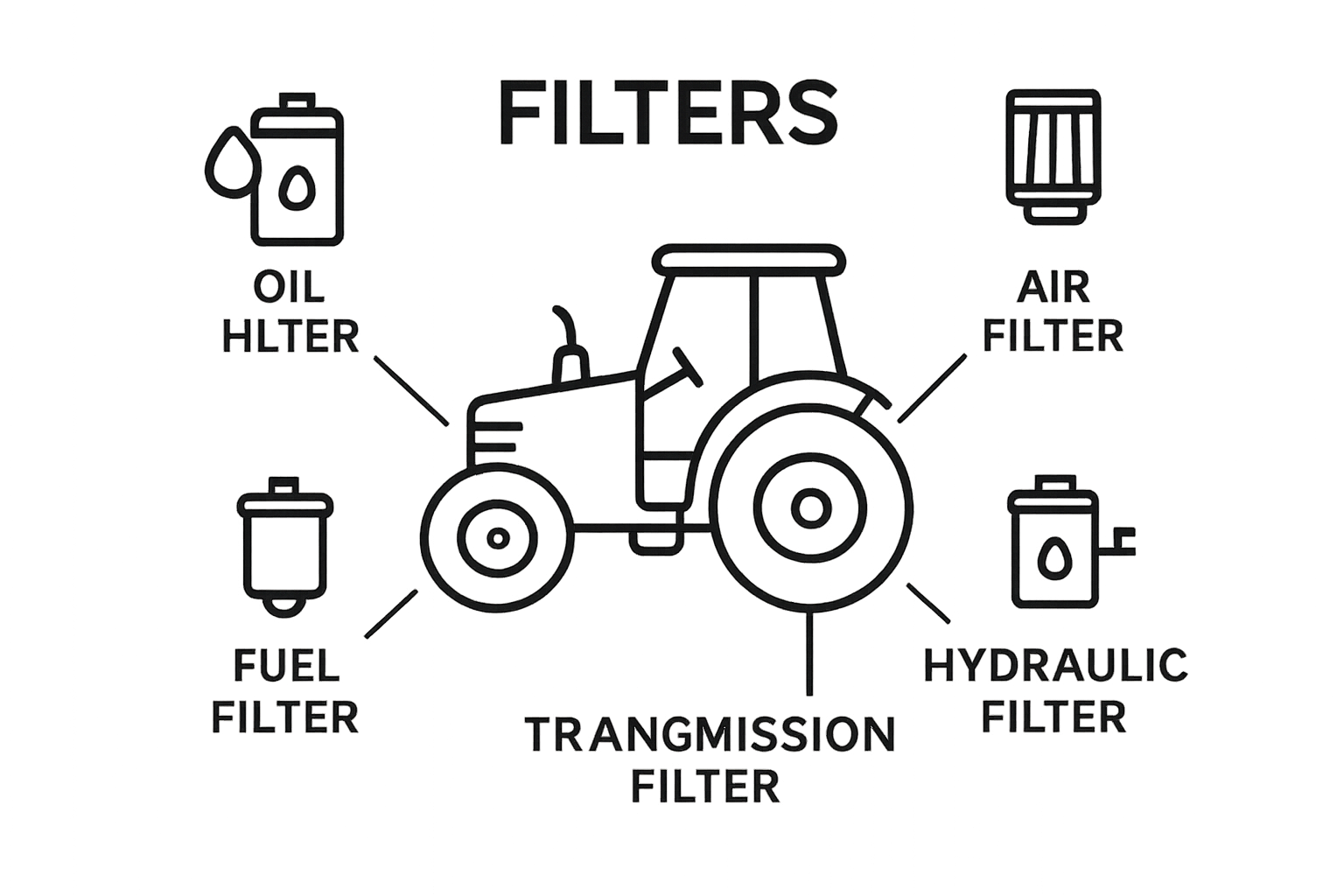
- Engine oil filters
- Fuel filters
- Air intake filters
- Hydraulic system filters
- Transmission filters
Specialized Filter Functionality
Each filter type operates with precision engineering tailored to its specific environmental challenges. Engine oil filters capture microscopic metal particles and combustion residues, preventing internal component wear. Fuel filters remove water and particulate contamination that could disrupt fuel injection systems. Air intake filters create a robust barrier against dust, preventing abrasive particles from entering combustion chambers and causing potential engine damage.
Hydraulic and transmission filters perform equally critical functions by maintaining fluid purity. These specialized filters trap contamination that could potentially compromise complex mechanical systems, ensuring smooth power transmission and preventing premature component deterioration. The intricate design of these filters demonstrates the sophisticated engineering required to maintain agricultural machinery performance under challenging operational conditions.
Maintaining Tractor Filters for Optimal Performance
Proper filter maintenance represents a critical aspect of agricultural machinery management, directly impacting equipment longevity, operational efficiency, and overall economic performance. Systematic filter care goes beyond simple replacement, encompassing comprehensive strategies that protect complex mechanical systems from potential contamination and premature wear.
Maintenance Strategies and Best Practices
According to North Dakota State University Extension, scheduled filter maintenance is fundamental to preserving tractor functionality. Regular inspection, cleaning, and timely replacement prevent dust, debris, and microscopic contaminants from compromising sensitive mechanical components.
Key maintenance considerations include:
- Adhering to manufacturer recommended replacement intervals
- Conducting visual inspections for signs of wear or damage
- Understanding specific environmental operating conditions
- Tracking filter performance and replacement history
- Using manufacturer approved replacement components
Performance Monitoring and Diagnostic Techniques
Advanced maintenance approaches involve proactive performance monitoring that extends beyond traditional maintenance schedules. Modern agricultural professionals utilize diagnostic techniques such as fluid analysis, pressure testing, and digital monitoring systems to assess filter condition and predict potential mechanical issues before they escalate.
Tractor filters operate under extreme conditions, experiencing constant exposure to dust, temperature variations, and mechanical stress. This demanding environment requires a sophisticated approach to maintenance that balances preventative care with precise diagnostic intervention. By implementing comprehensive filter management strategies, farmers and agricultural operators can significantly extend equipment life, reduce unexpected downtime, and optimize overall machinery performance.
Protect Your Tractor with the Right Filter—Get Trusted Parts Today
Farmers and agricultural professionals count on their machinery every day, and as the article explains, neglecting tractor filters can put productivity and investment at serious risk. Contaminants like dust, metal fragments, and debris threaten your equipment’s lifespan and performance. Without reliable filters, you face not only expensive repairs and sudden breakdowns, but also loss of precious working hours that can never be recovered. When every season and every field depends on your tractor running smoothly, quality filtration is not optional—it is essential.
Why wait and risk unnecessary costs or downtime? Explore our wide selection of reliable tractor filters and more at pexlivanidis.com, where over 20000 quality parts are in stock and ready to ship. Take action now to keep your machinery running at peak condition. Sign up for our newsletter to receive updates and exclusive offers or contact us directly using our contact form for fast assistance. Protect your investment and secure uninterrupted productivity today.
Frequently Asked Questions
What is the main function of a tractor filter?
A tractor filter serves as a protective barrier that prevents harmful contaminants from damaging critical engine and hydraulic systems, ensuring optimal performance and longevity of the machinery.
What are the different types of tractor filters?
Tractor filters include engine oil filters, fuel filters, air intake filters, hydraulic system filters, and transmission filters, each designed to target specific contamination risks within their respective systems.
How can I maintain tractor filters for optimal performance?
Proper maintenance involves adhering to manufacturer-recommended replacement intervals, conducting regular inspections for wear or damage, and utilizing manufacturer-approved replacement components to ensure efficient operation.
Why is effective filtration important for agricultural machinery?
Effective filtration reduces machinery downtime, extends equipment lifespan, and minimizes maintenance costs, translating into significant economic benefits for farmers during their agricultural operations.