

Did you know that farms using the right machinery can increase productivity by up to 30 percent? Choosing agricultural equipment is one of the biggest investments for any farm, and a single mistake can impact operations for years. Every purchase shapes your farm’s efficiency, costs, and ability to adapt as needs change. Understanding key buying steps helps you make confident choices that drive growth and avoid costly setbacks.
Quick Summary
| Key Point | Explanation |
|---|---|
| 1. Assess needs and budget first | Understand your farm’s specific requirements and financial constraints before buying machinery to make informed decisions. |
| 2. Research reliable suppliers thoroughly | Look for suppliers with strong reputations, support services, and parts availability to ensure long-term operational efficiency. |
| 3. Compare technical specifications carefully | Evaluate machinery features based on how they enhance productivity and suit your farm’s terrain and operational needs. |
| 4. Verify equipment condition and documentation | Conduct a thorough inspection and check maintenance records to protect your investment and ensure equipment reliability. |
| 5. Finalize purchase and logistics clearly | Create a detailed agreement, negotiate terms, and arrange safe delivery and setup for seamless integration of new equipment. |
Table of Contents
- Step 1: Assess Your Farming Needs And Budget
- Step 2: Research Trusted Suppliers And Parts Availability
- Step 3: Compare Specifications And Performance Features
- Step 4: Verify Machinery Condition And Documentation
- Step 5: Finalize Your Purchase And Arrange Delivery
Step 1: Assess Your Farming Needs and Budget
Before you dive into purchasing agricultural machinery, you need a clear game plan that matches your unique farm requirements and financial reality. This step helps you identify exactly what equipment will transform your agricultural operations without breaking the bank.
Start by taking a comprehensive look at your farm’s specific operational profile. Are you running a small vegetable operation or managing hundreds of acres of grain? According to research from agricultural experts, your machinery selection depends critically on understanding your crop type, farm scale, terrain complexity, and versatility needs.
Make a detailed inventory of your current farming activities. This means mapping out everything from crop cultivation methods to livestock management approaches. Pay special attention to the terrain you work with rough ground requires different machinery compared to flat plains. Assess how many acres you actively cultivate and what types of tasks you regularly perform plowing, harvesting, seeding, or transportation.
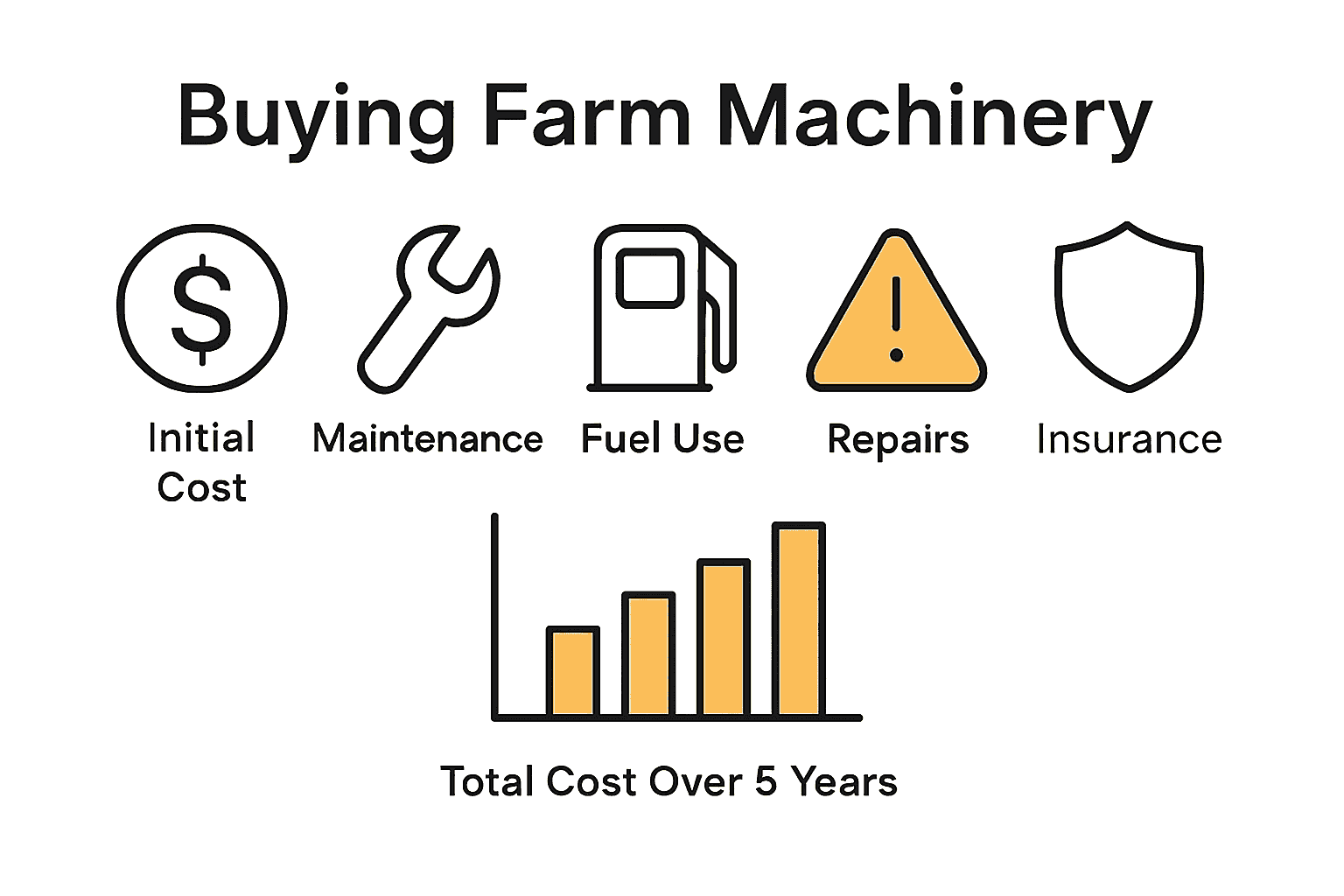
Budget considerations go far beyond the initial purchase price. As research from grspetro.com highlights, you must factor in long term costs like maintenance expenses, fuel efficiency, and potential resale value. Create a comprehensive financial worksheet that includes:
Here’s a summary of key budget considerations for agricultural machinery purchases:
| Cost Factor | What to Include | Why It Matters |
|---|---|---|
| Initial Purchase Price | Equipment base cost | Core investment amount |
| Annual Maintenance Costs | Routine service Parts |
Ongoing upkeep expenses |
| Fuel Consumption Estimates | Average fuel use per season | Impacts long-term costs |
| Repair Expenses | Unexpected breakdowns | Plan for contingencies |
| Insurance Requirements | Liability Equipment cover |
Financial protection |
| Projected Operational Cost | Labor Storage Upkeep |
Total financial picture |
- Initial purchase price
- Annual maintenance costs
- Fuel consumption estimates
- Potential repair expenses
- Insurance requirements
- Projected operational costs
Pro Tip: Always budget 15% more than your initial estimate to cover unexpected expenses.
Consider financing alternatives that can help manage upfront costs. Many agricultural equipment dealers offer leasing options or installment plans that can make sophisticated machinery more accessible. Compare prices across different brands and models to ensure you are getting the best possible value for your investment.
By thoroughly understanding your farming needs and creating a realistic budget, you are setting the foundation for smart machinery investment. Your next step will be researching specific equipment models that align with your comprehensive assessment.
Step 2: Research Trusted Suppliers and Parts Availability
Now that you have a clear understanding of your farm’s specific needs and budget, it is time to find reliable suppliers who can support your agricultural machinery investment. This step will help you identify vendors that offer not just quality equipment, but comprehensive support that keeps your farm running smoothly.
Starting your research means looking beyond just the price tag. According to insights from grspetro.com, brand reputation and after-sales support are critical factors that can significantly impact your long-term operational efficiency. A supplier with a strong support network can mean the difference between quick problem resolution and extended machinery downtime.
Begin by creating a list of potential suppliers in your region. Look for businesses with established track records in agricultural equipment sales. Check their online presence, read customer reviews, and ask fellow farmers about their experiences. Pay special attention to suppliers who offer comprehensive services like technical support, maintenance programs, and readily available spare parts.
Your research should focus on several key aspects of supplier quality:
- Years of industry experience
- Range of brands and models available
- Technical support capabilities
- Parts inventory and replacement timelines
- Warranty and service agreements
- Local presence and accessibility
Pro Tip: Always request detailed documentation about parts availability and typical replacement times before making a purchase.
Dig deeper by scheduling in-person consultations with potential suppliers. These meetings allow you to assess their expertise, ask specific questions about machinery performance, and understand their commitment to customer support. Ask about their inventory management strategies and how quickly they can source replacement parts for different equipment models.
For local agricultural equipment needs in regions like Thessaloniki or Kavala, consider suppliers with strong regional connections. Local providers often understand specific terrain challenges and can offer more personalized support compared to national or international vendors.
By thoroughly researching suppliers and their parts availability, you are building a foundation for reliable agricultural machinery ownership. Your next step will involve comparing specific equipment models and getting detailed quotes from your selected suppliers.
Step 3: Compare Specifications and Performance Features
With your trusted suppliers identified, it is time to dive deep into the technical details that will determine your agricultural machinery’s real-world performance. This step transforms your research into precise comparisons that ensure you select equipment perfectly matched to your farm’s unique operational demands.
According to research from grspetro.com, comparing technical specifications goes far beyond simple numbers. You need to understand how each feature translates into practical farm performance. Start by creating a detailed comparison matrix that covers critical aspects like horsepower, fuel efficiency, and terrain capability.
Your comparison should focus on how specific technological features can enhance your farm’s productivity. As insights from Jensen Tractor Ranch suggest, advanced technologies like GPS guidance systems and automated steering can dramatically improve operational efficiency. Look for equipment that offers:
- Precise GPS tracking
- Automated steering capabilities
- Real-time performance monitoring
- Fuel consumption analytics
- Data recording and reporting features
Evaluate each machine’s performance across different operational scenarios. Consider how the equipment handles various terrain types specific to your farm. Will you be working on flat plains or challenging uneven ground? Each machine has unique strengths that might make it more or less suitable for your specific environment.
Pro Tip: Request detailed performance demonstrations from suppliers to see equipment capabilities in action before making a final decision.
Safety features are another crucial aspect of your comparison. Look for critical safety elements like rollover protective structures (ROPS), emergency shut-off mechanisms, and comprehensive operator protection systems. These features are not just regulatory requirements but essential protections for you and your farm workers.
Beyond immediate specifications, consider long-term maintenance requirements. Machines with simpler maintenance protocols and readily available replacement parts will save you significant time and money over the equipment’s operational lifecycle.
By meticulously comparing specifications and performance features, you are positioning yourself to make an informed agricultural machinery investment. Your next step involves scheduling hands-on equipment evaluations and test runs to validate your research.
Step 4: Verify Machinery Condition and Documentation
With promising agricultural machinery options identified, your next critical step is a thorough verification process that protects your investment and ensures equipment reliability. This stage requires meticulous inspection and documentation review to prevent potential future operational challenges.
Start by scheduling a comprehensive physical inspection of the machinery. Whether you are considering new or used equipment, a detailed examination can reveal critical insights about the machine’s true condition. Walk around the entire piece of equipment, checking for visible signs of wear, rust, structural damage, or previous repairs that might compromise performance.
Pay special attention to key mechanical components. Examine hydraulic systems, engine compartments, transmission units, and electrical systems. Look for signs of improper maintenance or potential hidden damage. Request comprehensive maintenance records that document the equipment’s service history, previous ownership, and any significant repairs or modifications.
Your documentation verification should include:
- Original purchase documentation
- Maintenance service logs
- Repair history records
- Manufacturer warranties
- Original equipment specifications
- Transfer of ownership certificates
Pro Tip: Always request an independent mechanical assessment from a certified agricultural equipment technician before finalizing your purchase.
For used machinery, ask for detailed operational hours and usage history. Understanding how and where the equipment was previously used can provide crucial insights into its potential remaining operational lifespan. Equipment used in similar terrain and farming conditions to your own will likely perform more predictably.
Verify all serial numbers and cross reference them with manufacturer records. This step helps confirm the equipment’s authenticity and checks for any potential outstanding recalls or service bulletins that might affect its performance or safety.
During your inspection, test all critical operational functions. Start the engine, engage different systems, and observe how smoothly each mechanism performs. Listen for unusual sounds, check for smooth gear transitions, and ensure all technological features function as expected.
By meticulously verifying machinery condition and documentation, you are protecting yourself from potential future complications. Your next step involves negotiating final purchase terms and preparing for equipment integration into your farming operations.
Step 5: Finalize Your Purchase and Arrange Delivery
With careful research and thorough inspections complete, you are now ready to transform your agricultural machinery investment from possibility to reality. This final step involves navigating the purchasing process with strategic negotiation and clear logistical planning to ensure a smooth transaction and equipment integration.
Begin by consolidating all your research and inspection findings into a comprehensive negotiation strategy. Review your budget constraints, market comparisons, and the specific machinery’s condition to establish a fair and competitive purchase price. Do not hesitate to negotiate terms that provide additional value such as extended warranties, included maintenance packages, or delivery support.
Prepare a detailed purchasing agreement that clearly outlines all transaction specifics. This document should comprehensively cover:
- Exact equipment specifications
- Agreed purchase price
- Payment terms and schedule
- Warranty coverage
- Delivery expectations
- Any included maintenance services
- Return or exchange conditions
Pro Tip: Always request a written copy of all agreements and carefully review every clause before signing.
Coordinate delivery logistics well in advance of the payment completion. Discuss transportation methods that ensure your new machinery arrives safely at your farm. For larger equipment, this might involve specialized transport services with experience moving agricultural machinery. Confirm exact delivery dates, confirm the delivery location, and ensure you have appropriate equipment unloading capabilities at your farm.
Arrange for immediate post-delivery setup and initial operational training. Many suppliers offer comprehensive onboarding services that include equipment calibration, operational guidance, and initial maintenance instructions. Take full advantage of these services to maximize your new machinery’s performance and longevity.
Ensure you have all necessary documentation organized and securely stored. This includes purchase receipts, warranty information, maintenance records, and manufacturer contact details. Proper documentation protects your investment and simplifies future service or potential warranty claims.
By methodically finalizing your purchase and arranging precise delivery logistics, you are completing your agricultural machinery acquisition journey. Your new equipment stands ready to enhance your farm’s operational capabilities and productivity.
Upgrade Your Farm’s Reliability With the Right Spare Parts
You have just read how thorough planning, diligent research, and hands-on inspections are essential steps in making smart agricultural machinery investments. But even the most well-chosen equipment can quickly lose its advantage if you face downtime while searching for reliable spare parts. Missing or worn-out tractor accessories not only disrupt your workflow but also put your entire harvest season at risk. That is where many farming operations falter, often regretting overlooked support after the purchase.
Secure uninterrupted performance by partnering with a trusted supplier that anticipates every need long before issues slow you down. At pexlivanidis.com, discover a catalog of over 20000 agricultural machinery parts and tractor accessories ready for immediate shipment. Enjoy fast delivery throughout Greece and exclusive wholesale options tailored for serious growers and B2B clients. Do not let a missing part derail your progress after following the top buying advice. Act now and browse our complete range of products or contact us for expert support and availability. Your next harvest depends on every detail working in sync — ensure your investment pays off by keeping the right parts on hand today.
Frequently Asked Questions
How do I assess my farming needs for purchasing agricultural machinery?
Start by evaluating the size and type of your farm operations, including crop types, terrain complexity, and specific tasks performed. Create a comprehensive inventory of your current activities to clarify what machinery will enhance productivity.
What budget factors should I consider when buying agricultural machinery?
Beyond the initial purchase price, include annual maintenance costs, fuel efficiency, repair expenses, and insurance requirements in your budget. Build a financial worksheet covering these aspects to get a complete picture of your expected investment.
What are the key features I should compare when evaluating different machinery models?
Focus on specifications such as horsepower, fuel efficiency, and terrain capability. Consider technological features like GPS guidance and automated systems that can significantly enhance performance on your farm.
How can I ensure the condition of used agricultural machinery before purchasing?
Conduct a thorough physical inspection, checking for wear, maintenance history, and operational capabilities. Always request documentation like maintenance records and warranties to confirm the machinery’s reliability.
What should I include in the purchase agreement for agricultural machinery?
Ensure the purchase agreement includes exact specifications, agreed price, payment terms, warranty coverage, and delivery expectations. Carefully review each clause to avoid misunderstandings and protect your investment.
How can I coordinate the delivery of my new agricultural machinery effectively?
Plan early and discuss transportation methods with your supplier to ensure safe delivery of your machinery. Confirm logistics like delivery dates and your unloading capabilities to prevent delays in equipment setup.