

Over 85 percent of american farmers say that sourcing reliable agricultural parts is one of their top challenges each year. This process holds real consequences for both small family farms and large-scale operators who depend on efficient machinery to keep their work running smoothly. Understanding the essentials of agricultural parts sourcing gives you the knowledge to make smarter choices, improve equipment performance, and avoid costly breakdowns.
Table of Contents
- Defining Agricultural Parts Sourcing Essentials
- Types Of Agricultural Parts And Accessories
- Evaluating Reliable Suppliers And Platforms
- Sourcing Strategies For Cost And Availability
- Avoiding Common Sourcing Mistakes
Key Takeaways
| Point | Details |
|---|---|
| Effective Sourcing is Strategic | Understand the critical components and requirements of machinery for high-quality parts selection, impacting equipment longevity and performance. |
| Supplier Evaluation is Crucial | Look beyond price; assess technical expertise, product quality, and supply chain reliability when selecting suppliers. |
| Avoid Common Sourcing Mistakes | Pay attention to model compatibility and total lifecycle costs to minimize operational disruptions and equipment downtime. |
| Adopt Comprehensive Strategies | Develop nuanced approaches that integrate cost-effectiveness, supplier diversification, and long-term planning for optimal performance. |
Defining Agricultural Parts Sourcing Essentials
Sourcing agricultural parts requires strategic knowledge and precision. Whether you’re maintaining a small farm tractor or managing large-scale agricultural equipment, understanding the fundamentals of part selection can significantly impact operational efficiency and equipment longevity.
The core of effective agricultural parts sourcing involves recognizing critical machinery components and their specific requirements. Agricultural technician training programs emphasize the importance of identifying high-quality replacement parts that match exact machinery specifications. This process goes beyond simple replacement parts purchasing and demands a comprehensive understanding of equipment mechanics.
Key considerations in agricultural parts sourcing include:
- Compatibility: Ensuring precise matching with existing machinery models
- Quality Standards: Selecting parts that meet manufacturer specifications
- Performance Durability: Choosing components designed for agricultural working conditions
- Cost Effectiveness: Balancing upfront expenses with long-term equipment reliability
Professional agricultural operators recognize that strategic parts sourcing is not just about finding replacements but maintaining overall machinery performance. Successful sourcing requires deep technical knowledge, understanding equipment systems, and developing relationships with reputable parts suppliers who comprehend the nuanced needs of agricultural machinery.
Types of Agricultural Parts and Accessories
Agricultural parts and accessories represent a complex ecosystem of specialized components designed to enhance farming efficiency and productivity. From soil preparation tools to precision mechanical systems, these parts play a critical role in modern agricultural operations across diverse farming environments.
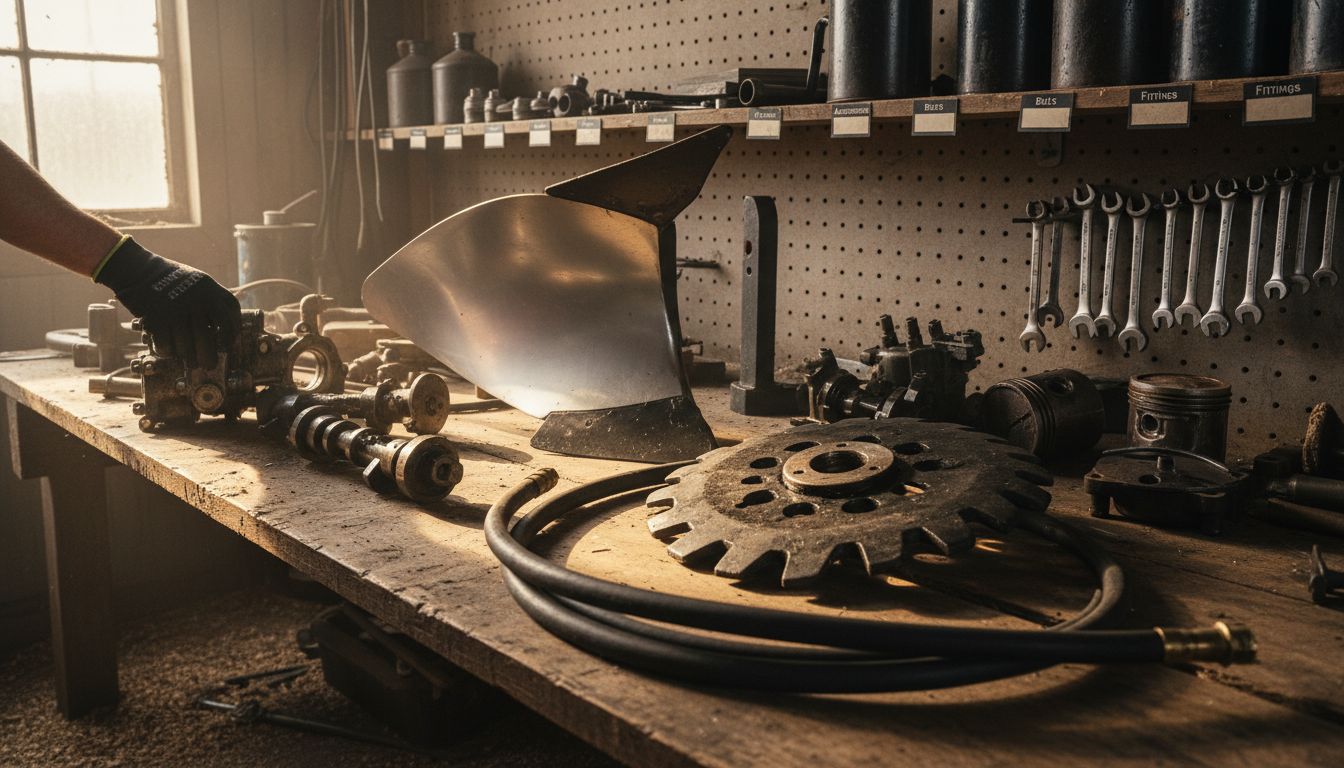
Soil Preparation Equipment forms a fundamental category of agricultural parts. Ploughs, for instance, come in multiple designs with specific purposes ranging from breaking initial ground to creating precise furrows for planting. These tools are engineered to handle different soil types, terrain configurations, and agricultural practices, making their selection a strategic decision for farmers.
Key agricultural parts and accessories include:
- Tillage Tools:
- Ploughs
- Harrows
- Cultivators
- Mechanical Components:
- Transmission systems
- Hydraulic attachments
- Bearing and shaft assemblies
- Precision Implements:
- Seeding mechanisms
- Irrigation connectors
- Fertilizer distribution systems
Harrow tools represent another critical category of agricultural accessories, designed to break and smooth soil surfaces after initial ploughing. These implements come in various configurations like disk harrows, spike harrows, and chain harrows, each serving unique soil preparation and crop management objectives. Understanding the specific characteristics and applications of these parts enables farmers to optimize their equipment selection and agricultural productivity.
Evaluating Reliable Suppliers and Platforms
Selecting the right agricultural parts supplier is a critical decision that directly impacts equipment performance, maintenance costs, and overall farm productivity. The marketplace for agricultural parts is complex, with numerous platforms and suppliers offering varying levels of quality, expertise, and support.
Effective supplier evaluation requires a comprehensive approach to assessing quality and reliability. Farmers and agricultural operators must look beyond simple price comparisons and examine multiple critical factors that determine a supplier’s true value. These considerations extend far beyond transactional interactions and represent strategic partnerships that can significantly influence operational efficiency.
Key criteria for evaluating agricultural parts suppliers include:
- Technical Expertise:
- Depth of product knowledge
- Understanding of specific machinery requirements
- Technical support capabilities
- Product Quality:
- Manufacturer certifications
- Compliance with industry standards
- Quality control processes
- Supply Chain Reliability:
- Inventory management
- Shipping and delivery performance
- Replacement and warranty policies
Successful sourcing demands a holistic approach that balances multiple factors. Beyond technical specifications, operators should consider supplier reputation, customer service responsiveness, and the ability to provide specialized parts for unique agricultural equipment configurations. Building long-term relationships with suppliers who demonstrate consistent reliability and technical understanding can prove far more valuable than seeking the lowest immediate price point.
Sourcing Strategies for Cost and Availability
Navigating agricultural parts procurement demands sophisticated strategies that balance cost-effectiveness with reliable equipment performance. Farmers and agricultural operators must develop nuanced approaches to sourcing that go beyond simple price comparisons, considering long-term equipment reliability and operational efficiency.
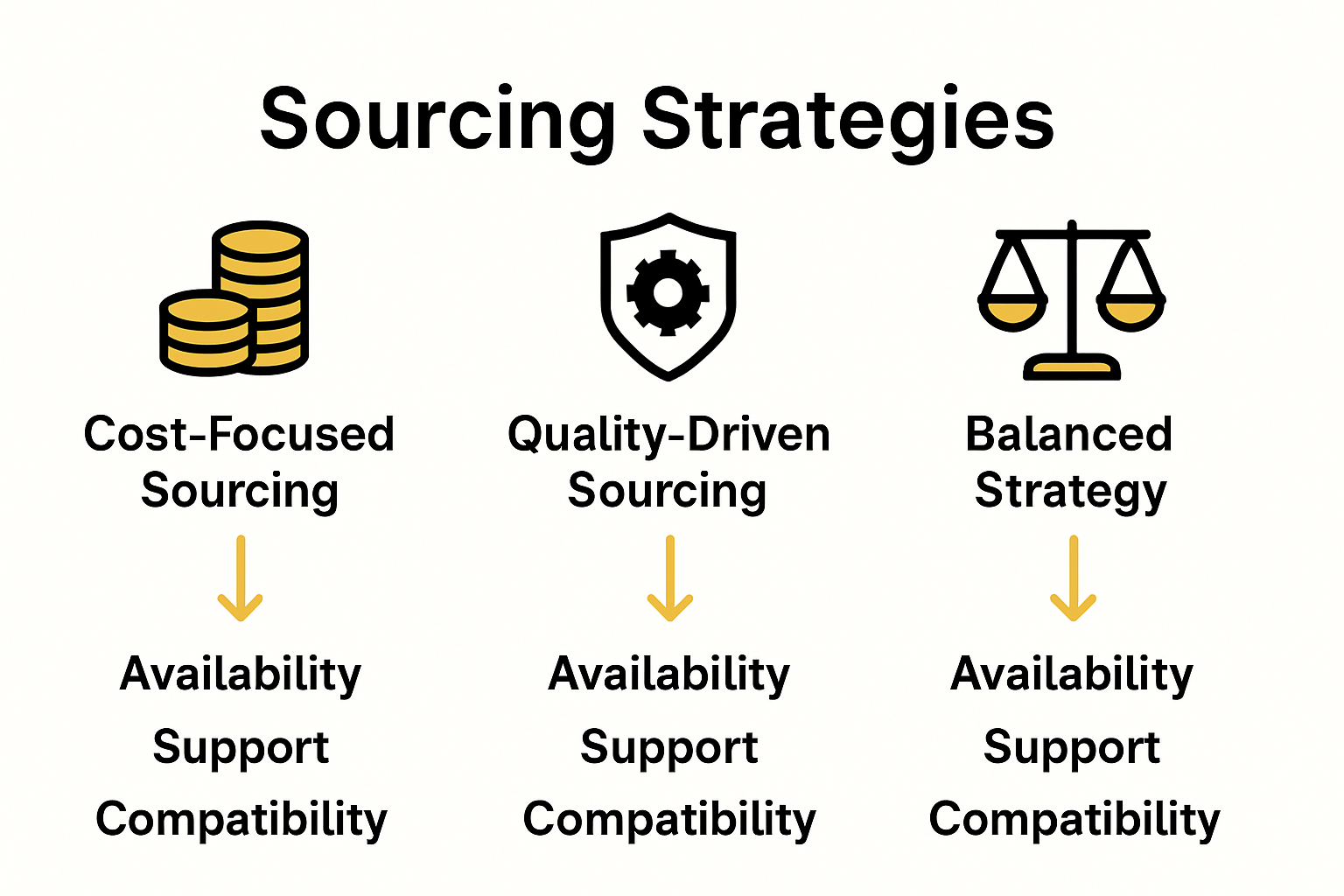
The complexity of agricultural equipment sourcing requires a multifaceted approach. Understanding the intricate ecosystem of parts availability involves analyzing market dynamics, regional supply chains, and technological advancements. Agricultural sprayer components, for instance, demonstrate the intricate nature of parts sourcing, with specialized equipment demanding precise procurement strategies that balance technical specifications and economic considerations.
Key sourcing strategies include:
- Bulk Purchasing:
- Negotiating volume discounts
- Coordinating group purchases
- Establishing long-term supplier relationships
- Diversified Sourcing:
- Multiple supplier networks
- Regional and online procurement channels
- Backup inventory management
- Cost Optimization Techniques:
- Predictive maintenance planning
- Strategic inventory management
- Lifecycle cost analysis
Successful agricultural parts sourcing transcends simple transactional interactions. Smart operators develop comprehensive procurement strategies that integrate technological insights, market intelligence, and strategic financial planning. By understanding the nuanced relationship between cost, availability, and equipment performance, farmers can create robust sourcing frameworks that minimize operational disruptions and maximize long-term economic efficiency.
Avoiding Common Sourcing Mistakes
Navigating agricultural parts procurement is a complex process fraught with potential pitfalls that can significantly impact operational efficiency and equipment performance. Farmers and agricultural operators must develop a keen understanding of sourcing strategies to minimize costly errors and ensure optimal machinery functionality.
Specialized equipment like milking machines exemplify the intricate nature of parts sourcing, where precision and compatibility are paramount. One minor miscalculation in parts selection can lead to substantial operational disruptions, financial losses, and extended equipment downtime. Understanding the nuanced requirements of specific agricultural machinery becomes crucial in preventing common sourcing mistakes.
Key mistakes to avoid include:
- Specification Errors:
- Ignoring exact model compatibility
- Overlooking precise measurement requirements
- Misunderstanding equipment technical specifications
- Financial Misjudgments:
- Prioritizing lowest price over quality
- Neglecting long-term maintenance costs
- Failing to consider total lifecycle expenses
- Supplier Selection Mistakes:
- Relying on single-source procurement
- Inadequate supplier background verification
- Overlooking technical support capabilities
Equipment-specific knowledge, such as understanding complex accessory systems, is fundamental to avoiding sourcing mistakes. Successful agricultural operators develop comprehensive procurement strategies that integrate detailed technical understanding, market intelligence, and strategic financial planning. By maintaining a holistic approach to parts sourcing, farmers can minimize operational risks and create robust, reliable equipment management frameworks that sustain long-term agricultural productivity.
Streamline Your Agricultural Parts Sourcing Today
Sourcing the right agricultural parts is a critical challenge that can affect your equipment’s performance and your farm’s productivity. This article highlights key hurdles like ensuring exact compatibility, avoiding costly specification errors, and balancing quality with cost. If you have experienced frustration with inconsistent suppliers or struggled to find durable tractor accessories and specialized components for your machinery, you are not alone. Precision, reliability, and strategic procurement are essential to avoid costly downtime and maintain peak operational efficiency.
Take control of your agricultural machinery maintenance with Pexlivanidis, a trusted platform offering over 20,000 high-quality parts designed to meet your precise needs. Benefit from free shipping in Greece for orders over 100€, quick product inquiries, and expert support for both retail and wholesale customers. Don’t let sourcing mistakes disrupt your farming business. Visit Pexlivanidis now and explore our extensive inventory of tractor spare parts and agricultural accessories that align perfectly with the sourcing strategies highlighted in the guide. Secure your equipment’s future by acting now and simplifying your parts procurement with expert solutions at your fingertips.
Frequently Asked Questions
What are the key factors to consider when sourcing agricultural parts?
When sourcing agricultural parts, consider compatibility with existing machinery, quality standards that meet manufacturer specifications, performance durability for agricultural conditions, and cost-effectiveness balancing initial expenses with long-term reliability.
How can I evaluate the reliability of an agricultural parts supplier?
To evaluate a supplier’s reliability, assess their technical expertise, product quality, supply chain reliability, and ability to provide technical support. Look for manufacturer certifications and their history of customer service.
What are common mistakes to avoid when sourcing agricultural parts?
Common mistakes include specification errors (ignoring model compatibility), financial misjudgments (prioritizing lowest price over quality), and supplier selection mistakes (relying on single-source procurement or inadequate supplier verification).
What sourcing strategies can enhance cost-effectiveness in agricultural parts procurement?
Effective sourcing strategies include bulk purchasing for discounts, diversified sourcing from multiple suppliers, and employing cost optimization techniques like predictive maintenance planning and lifecycle cost analysis.