

Unexpected breakdowns during harvest season can bring operations to a sudden halt in Northern Greece. Machinery reliability depends on more than routine care—it hinges on the spare parts farmers choose. Investing in quality spare parts brings measurable long-term value, slashing repair costs and supporting continuous work near Thessaloniki and Kavala. This guide explains what truly sets dependable components apart, highlighting how smart choices protect both equipment and income.
Table of Contents
- What Makes A Spare Part ‘Quality’
- Types Of Spare Parts And Key Differences
- Impact On Machinery Lifespan And Reliability
- Cost Savings Compared To Low-Quality Parts
- How Quality Parts Enhance Safety And Compliance
Key Takeaways
| Point | Details |
|---|---|
| Quality Assurance | Reliable spare parts must meet high manufacturing standards, ensuring compatibility, durability, and precise specifications. |
| Types of Spare Parts | Understanding spare parts categories helps in effective inventory management and maintenance strategies. |
| Cost Efficiency | Investing in quality spare parts leads to reduced replacement frequency, downtime, and overall maintenance costs in the long term. |
| Safety Compliance | Quality parts enhance safety and regulatory compliance, minimizing risks associated with equipment failure in agricultural operations. |
What Makes a Spare Part ‘Quality’
Quality spare parts are not just replacements; they are critical components that ensure the reliability and performance of farm machinery. Quality assurance standards play a fundamental role in defining what makes a spare part truly dependable for agricultural operations.
Defining a quality spare part involves several critical characteristics:
- Precise Manufacturing: Parts must be manufactured to exact specifications with minimal tolerances
- Material Integrity: High-grade materials that resist wear, corrosion, and mechanical stress
- Compatibility: Perfect fit and function with original equipment specifications
- Durability: Ability to withstand challenging agricultural working conditions
The foundation of quality spare parts lies in rigorous testing and adherence to strict manufacturing standards. Spare parts management involves maintaining inventory policies and real-time monitoring to support consistent operational reliability.
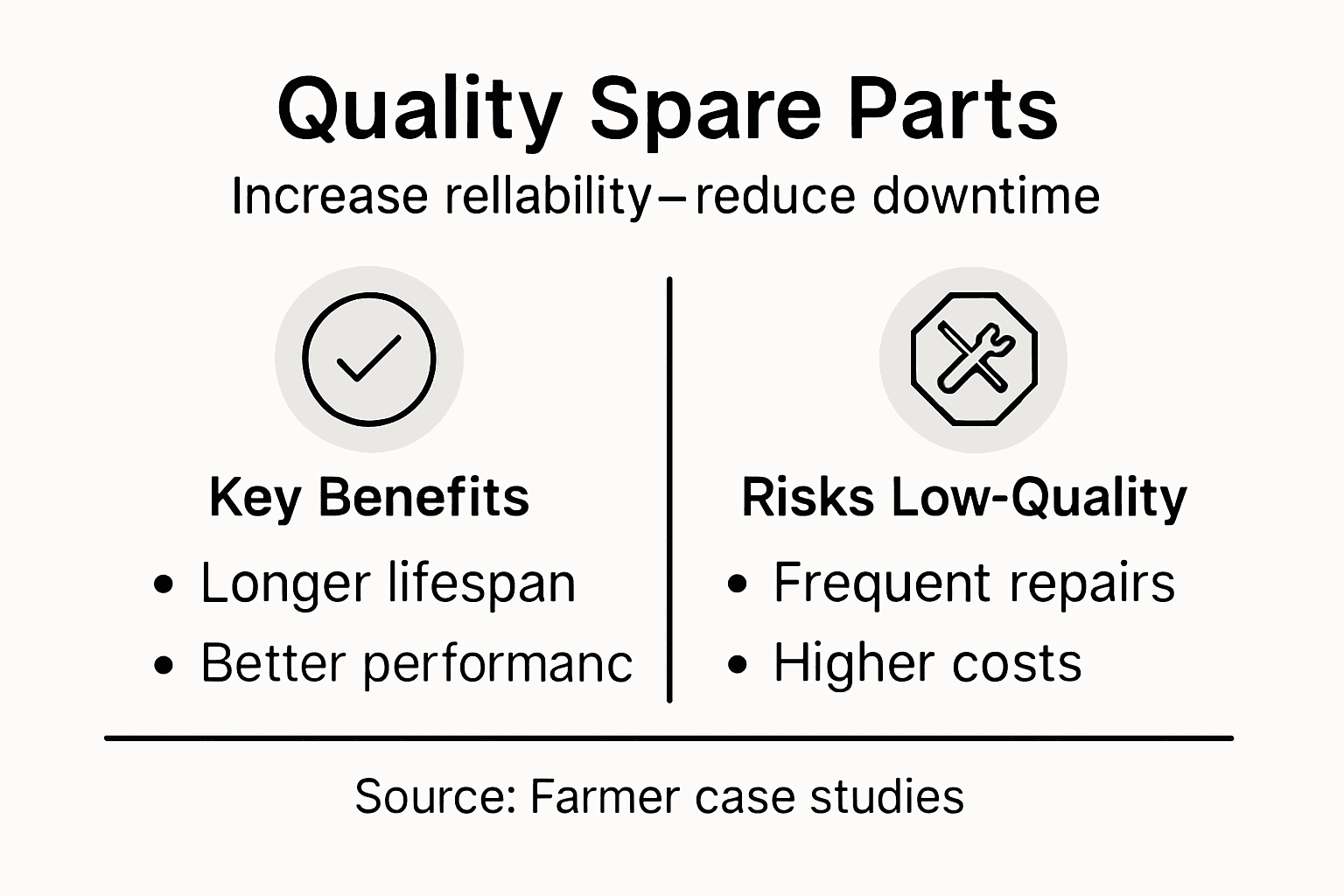
Farmers investing in high-quality spare parts can expect significant long-term benefits. These components reduce unexpected breakdowns, minimize maintenance costs, and extend the overall lifespan of expensive agricultural machinery. By selecting parts that meet precise engineering requirements, operators protect their equipment investments and ensure continuous, efficient farming operations.
Pro tip: Always verify a spare part’s certification, manufacturing origin, and compatibility before purchasing to guarantee optimal machinery performance.
Types of Spare Parts and Key Differences
Farm machinery spare parts represent a complex ecosystem with multiple classifications that directly impact equipment maintenance and operational efficiency. Spare parts classification methodology provides critical insights into understanding these diverse components and their strategic importance for agricultural operations.
Basically, spare parts can be categorized into several key types:
- Critical Parts: Essential components that prevent complete machinery failure
- Operational Parts: Regularly replaced items supporting continuous equipment performance
- Consumable Parts: Components with predictable wear and standard replacement cycles
- Optional/Supplementary Parts: Accessories that enhance but do not fundamentally determine machine functionality
The strategic management of these different part types requires nuanced inventory approaches. Inventory control strategies recognize that each category demands unique tracking, replacement, and stocking protocols to minimize downtime and optimize machinery reliability.
Understanding these distinctions allows farmers and agricultural managers to develop more sophisticated maintenance plans. By differentiating between part types, operators can anticipate replacement needs, budget more accurately for equipment upkeep, and ensure continuous farm productivity through intelligent spare parts management.
Here’s a summary of spare part types and their maintenance strategies:
| Spare Part Type | Maintenance Approach | Inventory Priority |
|---|---|---|
| Critical Parts | Scheduled inspections | High, always in stock |
| Operational Parts | Usage-based replacement | Moderate, track cycle |
| Consumable Parts | Regular monitoring | Routine, predict demand |
| Optional/Supplementary | As-needed evaluation | Low, on-demand stocking |
Pro tip: Develop a comprehensive spare parts inventory system that categorizes components by criticality, expected lifespan, and replacement frequency to streamline maintenance operations.
Impact on Machinery Lifespan and Reliability
Quality spare parts are the unsung heroes of agricultural machinery performance, directly influencing equipment longevity and operational reliability. Quality assurance in spare parts plays a critical role in preventing unexpected breakdowns and extending machine lifespans.
The impact of high-quality spare parts on machinery reliability can be observed through several key dimensions:
- Reduced Mechanical Wear: Premium parts minimize friction and material degradation
- Precision Engineering: Exact manufacturing tolerances ensure optimal component fit
- Corrosion Resistance: Superior materials prevent premature equipment failure
- Performance Consistency: Reliable parts maintain machinery efficiency over time
Systematic maintenance strategies demonstrate that investing in quality components significantly reduces long-term operational costs. By selecting parts that meet or exceed original equipment specifications, farmers can dramatically extend machinery lifespan and minimize unexpected downtime.
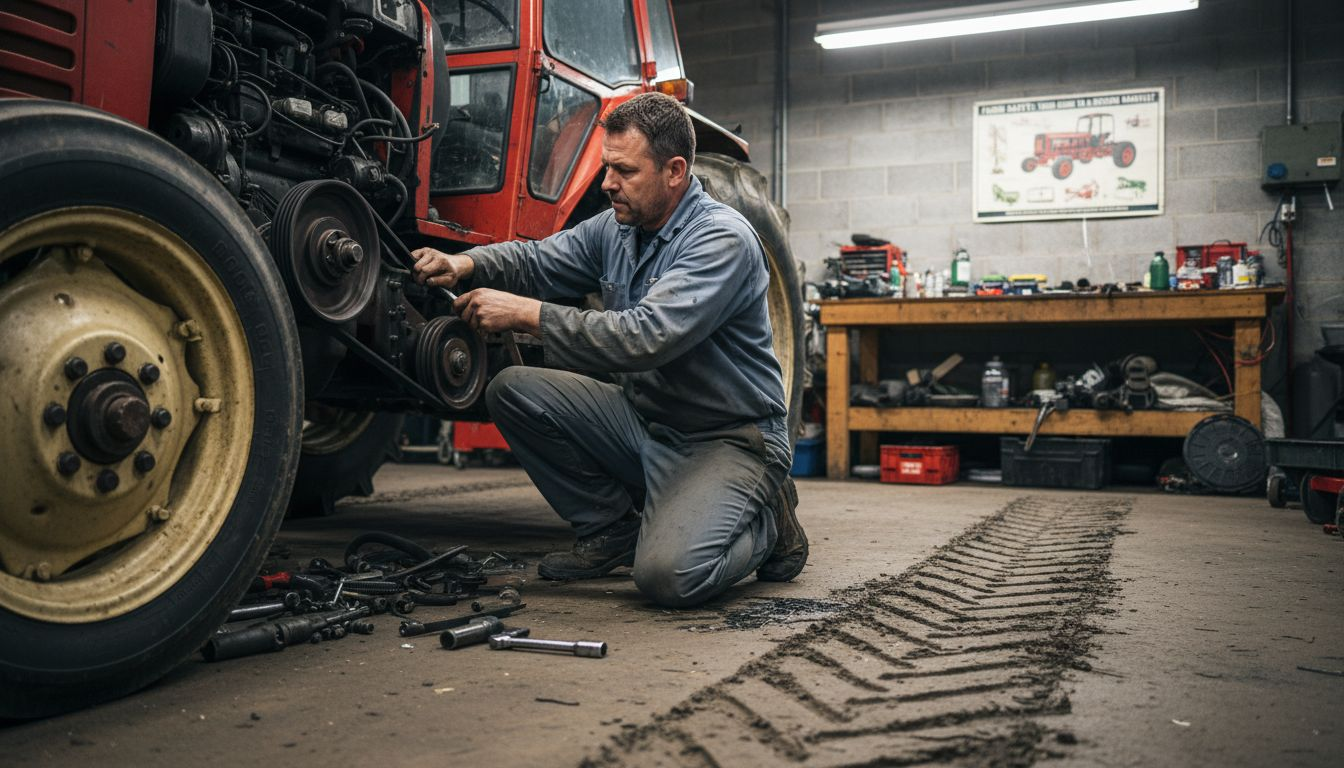
Ultimately, the relationship between spare part quality and machinery reliability is direct and measurable. Consistent use of high-grade components ensures that agricultural equipment performs at peak efficiency, reduces repair frequencies, and provides a more predictable return on expensive machinery investments.
Pro tip: Implement a rigorous spare parts tracking system that monitors component performance, replacement cycles, and maintenance history to optimize machinery reliability.
Cost Savings Compared to Low-Quality Parts
Contrary to popular belief, investing in high-quality spare parts represents a strategic financial decision for agricultural machinery owners. Spare part management strategies reveal that upfront investments in premium components generate substantial long-term economic benefits.
The cost comparison between quality and low-quality parts becomes evident through several critical metrics:
- Replacement Frequency: Quality parts require less frequent replacement
- Downtime Reduction: Fewer mechanical failures mean continuous operational capacity
- Collateral Damage Prevention: Superior parts minimize risks of cascading equipment failures
- Maintenance Expense Minimization: Lower repair and intervention costs over time
The true economic impact extends beyond immediate purchase price. Low-quality parts might seem financially attractive initially, but they often lead to exponential costs through increased maintenance, unexpected breakdowns, and potential complete equipment failure.
Farmers who prioritize quality spare parts effectively convert short-term expenses into long-term savings. By selecting components that meet or exceed original manufacturing specifications, agricultural professionals can protect their significant machinery investments and maintain consistent operational efficiency.
Compare the financial impact of quality versus low-quality spare parts:
| Factor | Quality Spare Parts | Low-Quality Spare Parts |
|---|---|---|
| Replacement Interval | Longer, less frequent | Shorter, more frequent |
| Downtime Risk | Minimal, rare | High, frequent |
| Maintenance Cost | Lower over time | Higher cumulative expense |
| Total Cost of Ownership | Lower in the long term | Higher due to failures |
Pro tip: Calculate your total cost of ownership by tracking replacement frequencies, repair expenses, and downtime costs when comparing quality versus low-quality spare parts.
How Quality Parts Enhance Safety and Compliance
Safety in agricultural machinery is not a luxury but a critical necessity, and quality parts certification serves as the primary defense against potential workplace hazards. High-quality spare parts are fundamental to maintaining equipment integrity and protecting operational personnel.
Key safety and compliance benefits of quality parts include:
- Standardized Performance: Meets rigorous industry safety specifications
- Risk Mitigation: Reduces potential equipment failure scenarios
- Regulatory Alignment: Ensures compliance with governmental safety standards
- Workplace Protection: Minimizes potential operational risks
Safety standards implementation goes beyond simple replacement. These components are engineered to operate within precise design parameters, effectively preventing catastrophic mechanical failures that could endanger farm workers and compromise equipment functionality.
Companies investing in certified, high-quality spare parts demonstrate a profound commitment to worker safety. By selecting components that adhere to recognized certifications like ISO 9001 and industry-specific standards, agricultural businesses create a protective ecosystem that safeguards both human resources and expensive machinery investments.
Pro tip: Develop a comprehensive parts verification protocol that cross-references manufacturer specifications, safety certifications, and compliance documentation before installation.
Maximize Your Farm Machinery Efficiency with Quality Spare Parts
Maintaining your agricultural equipment with the right quality spare parts is essential to avoid unexpected breakdowns and protect your valuable investments. This article highlights the critical pain points farmers face such as frequent replacements, costly downtime, and safety risks caused by low-quality parts. By focusing on quality assurance standards, precise manufacturing, and durability you can ensure your machinery runs smoothly and lasts longer with fewer interruptions.
At Pexlivanidis, we understand these challenges and offer a vast inventory of over 20,000 tractor accessories and spare parts designed to meet or exceed original equipment specifications. Whether you need critical, operational, or consumable parts, our reliable selection comes with options for free shipping within Greece on orders above 100€ and wholesale memberships for agricultural businesses. Explore our offerings to benefit from reduced maintenance costs, enhanced safety compliance, and improved machinery reliability today.
Take control of your equipment’s performance now. Visit our online platform and discover how investing in quality parts can save you money and avoid costly downtime. For tailored support and product inquiries, connect with us and secure your farm’s productivity with confidence.
Frequently Asked Questions
What are the key characteristics of quality spare parts for farm machinery?
Quality spare parts are defined by precise manufacturing, material integrity, compatibility with original equipment, and durability to withstand harsh working conditions.
How do quality spare parts impact the lifespan of farm machinery?
High-quality spare parts reduce mechanical wear, provide precise engineering fits, and improve performance consistency, all of which significantly extend the lifespan of agricultural equipment.
Why is it more cost-effective to invest in quality spare parts?
Investing in quality spare parts leads to longer replacement intervals, reduces downtime, prevents collateral damage, and minimizes overall maintenance costs, ultimately creating long-term savings despite higher initial costs.
What safety benefits are associated with using quality spare parts?
Quality spare parts comply with industry safety standards, reduce the risk of equipment failure, and help ensure regulatory alignment, thus protecting both machinery and personnel from potential hazards.