

Nearly seventy percent of farmers say reliable customer support shapes their loyalty to machinery brands. That level of trust matters when every hour of downtime costs yield and peace of mind. As tractors and harvesters become more complex, support teams need more than technical know-how. Effective farm machinery support now depends on transparent communication, speedy response, and a genuine commitment to helping farmers keep operations running strong.
Table of Contents
- Defining Customer Support In Farm Machinery
- Types Of Customer Support Services Offered
- How Support Processes Work For Farmers
- Operator Responsibilities And Legal Obligations
- Common Issues And Best Practice Solutions
Key Takeaways
| Point | Details |
|---|---|
| Customer Support Focus | Effective customer support in farm machinery prioritizes relationship management and proactive communication to build long-term connections with farmers. |
| Comprehensive Service Offerings | Diverse customer support services, including technical diagnostics and training, ensure maximum equipment efficiency and minimize downtime. |
| Structured Support Processes | A well-defined support process enhances problem resolution, from initial contact to follow-up, fostering trust and collaboration with customers. |
| Operator Responsibilities | Operators must actively manage equipment safety and maintenance while adhering to legal obligations to ensure optimal performance and reduce liability risks. |
Defining Customer Support in Farm Machinery
Customer support in the agricultural machinery sector is far more than answering phone calls or responding to emails. Relationship management stands at the core of effective customer interactions, where businesses strive to build lasting connections that extend well beyond a single transaction. According to research from Farm Equipment Magazine, providing exceptional support involves breaking language barriers and staying meticulously organized with parts ordering.
The landscape of agricultural machinery support encompasses several critical elements that distinguish outstanding service. These include:
- Proactive communication strategies
- Comprehensive technical knowledge
- Swift problem resolution
- Reliable parts availability
- Transparent vendor relationships
As research from SciELO indicates, effective customer support isn’t just about solving immediate issues – it’s a strategic approach to enhancing market share and building long-term customer loyalty. Successful agricultural machinery businesses understand that every interaction is an opportunity to demonstrate expertise, reliability, and commitment.
Ultimately, customer support in farm machinery is about creating a seamless, responsive experience that gives farmers confidence in their equipment and support network. By prioritizing clear communication, technical proficiency, and genuine care, businesses can transform standard service interactions into powerful relationship-building moments.
Types of Customer Support Services Offered
Farm machinery customer support encompasses a comprehensive range of services designed to ensure farmers receive maximum value and operational efficiency from their equipment. Technical support represents the cornerstone of these services, providing expert guidance and problem-solving capabilities that extend far beyond traditional repair interventions. According to research from OSUM Blog, manufacturers are increasingly offering sophisticated support solutions that include training programs and specialized workshops.
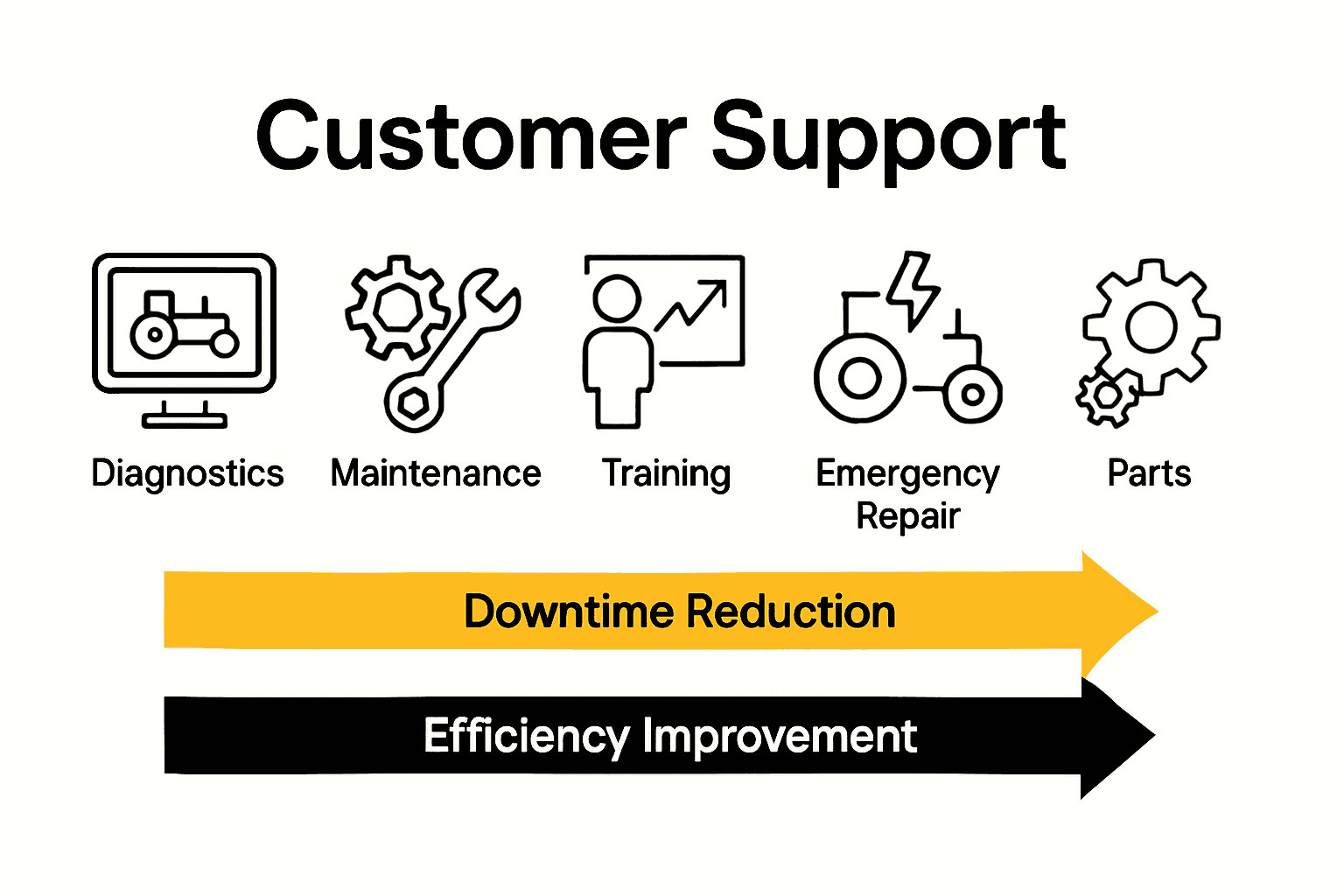
The primary types of customer support services in agricultural machinery typically include:
Here’s a summary of the primary customer support services in agricultural machinery:
| Service Type | Main Purpose | Key Benefit |
|---|---|---|
| Technical Diagnostics | Equipment assessment | Rapid troubleshooting |
| Maintenance Programs | Scheduled & preventative service | Reduced downtime |
| Training Workshops | Operator education | Improved equipment efficiency |
| Emergency Repair Services | Quick technical response | Minimized operational disruption |
| Parts Replacement | Fast component sourcing | Enhanced equipment reliability |
 |
|
- Technical Diagnostics: Remote and on-site equipment assessment
- Maintenance Programs: Scheduled and preventative service plans
- Training Workshops: Equipment operation and optimization sessions
- Emergency Repair Services: Rapid response technical interventions
- Parts Replacement: Streamlined inventory and quick component sourcing
Research from Farmonaut highlights that reliable agricultural equipment suppliers are now implementing proactive support strategies. These include generating maintenance notifications, conducting remote diagnostics, establishing localized repair networks, and maintaining transparent warranty policies that provide farmers with comprehensive protection and peace of mind.
Modern customer support in farm machinery is fundamentally about creating an ecosystem of continuous assistance. By offering integrated services that combine technological expertise, responsive communication, and genuine commitment to customer success, agricultural machinery providers transform traditional support models into collaborative partnerships that drive agricultural productivity and innovation.
How Support Processes Work for Farmers
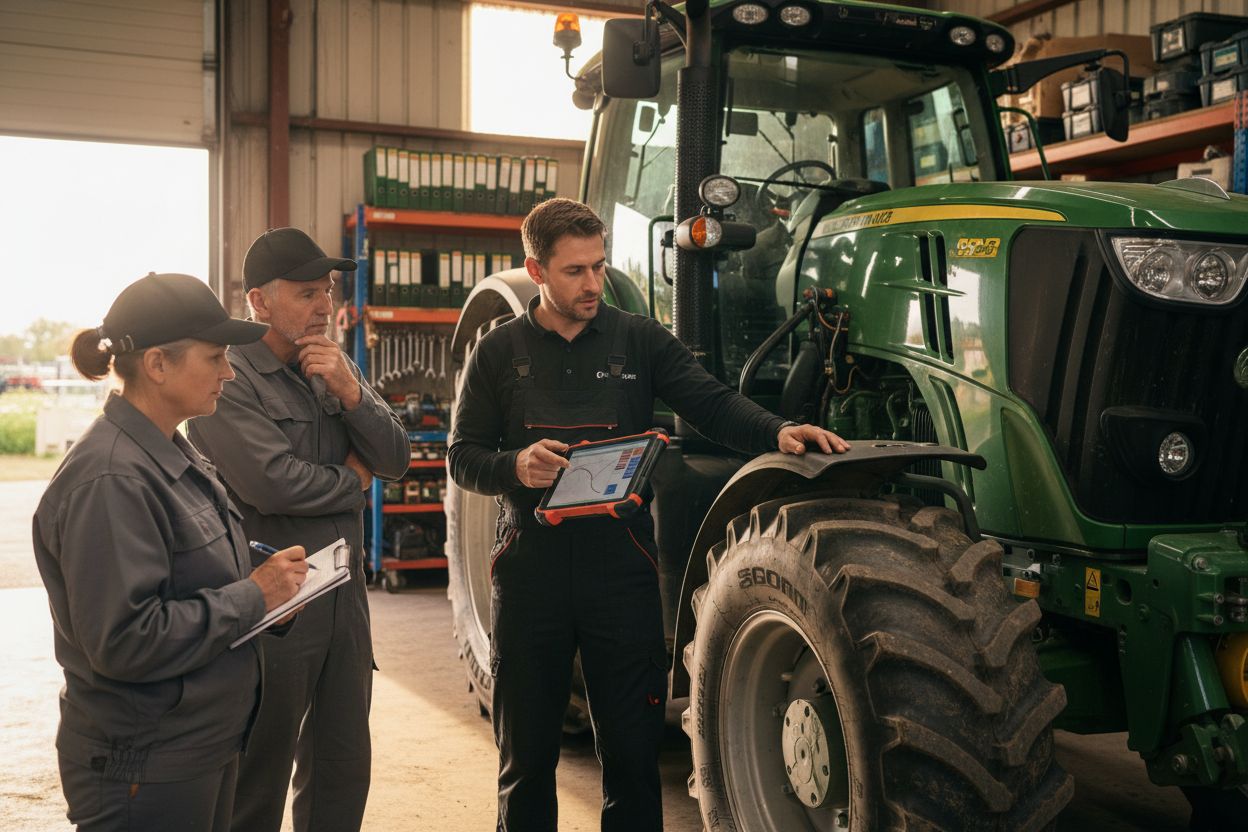
Support processes for agricultural machinery represent a carefully orchestrated system designed to provide farmers with seamless, responsive assistance throughout their equipment lifecycle. Customer interaction begins the moment a farmer first connects with a support team, setting the foundation for a potentially long-term collaborative relationship. According to research from Farm Equipment Magazine, building trust starts with understanding each farmer’s unique operational needs and providing personalized service.
The typical support process follows a structured approach that ensures comprehensive and efficient problem resolution:
- Initial Contact and Needs Assessment
- Technical Diagnostic Evaluation
- Customized Solution Recommendation
- Implementation and Follow-up Support
- Continuous Performance Monitoring
Research from Farm Equipment Magazine highlights the importance of strategic facility design in optimizing customer experience. By implementing continuous improvement methodologies like Kaizen, support teams can create more responsive and adaptable service frameworks that anticipate and address farmers’ evolving equipment challenges.
Ultimately, effective support processes transform traditional transactional interactions into strategic partnerships. By combining technical expertise, proactive communication, and a deep understanding of agricultural operational demands, support teams can help farmers maximize equipment performance, minimize downtime, and ultimately enhance overall agricultural productivity.
Operator Responsibilities and Legal Obligations
Operator responsibilities in farm machinery management extend far beyond simple equipment operation, encompassing critical legal and technical obligations that directly impact safety, performance, and liability. Machinery maintenance represents a fundamental responsibility where operators must demonstrate comprehensive understanding and proactive management of their agricultural equipment. According to research from EBSCO Research, farm equipment mechanics require strong mechanical knowledge, advanced problem-solving abilities, and significant physical stamina to meet these demanding requirements.
Key operator responsibilities typically include:
- Regular equipment inspection and maintenance
- Comprehensive operational safety protocols
- Accurate documentation of machinery usage
- Compliance with manufacturer maintenance guidelines
- Prompt reporting of mechanical issues or potential failures
Interestingly, recent technological advancements are transforming traditional monitoring approaches. Research from MDPI highlights how machine learning and Internet of Things (IoT) technologies are now being utilized to authenticate field activities and prevent potential fraudulent machinery usage, adding another layer of accountability to operator responsibilities.
Ultimately, operator responsibilities represent a critical intersection of technical competence, legal compliance, and professional integrity. By understanding and meticulously executing their obligations, farm machinery operators not only protect their equipment and ensure optimal performance but also safeguard themselves against potential legal and financial risks associated with improper machinery management.
Common Issues and Best Practice Solutions
Farm machinery customer support encounters a diverse range of challenges that require strategic, proactive approaches to resolution. Equipment reliability sits at the heart of these challenges, with farmers depending on rapid, effective interventions to minimize operational disruptions. According to research from Cademix, evaluating equipment vendors involves carefully considering their reputation, reliability, and comprehensive support infrastructure.
The most frequent issues typically encountered in farm machinery support include:
- Unexpected mechanical breakdowns
- Complex diagnostic challenges
- Supply chain parts availability limitations
- Technical compatibility problems
- Communication gaps between operators and support teams
Best practice solutions for addressing these challenges require a multifaceted approach. Successful support strategies involve developing robust diagnostic protocols, maintaining extensive parts inventories, providing continuous technician training, and implementing advanced communication technologies that enable faster, more accurate problem resolution. Proactive maintenance scheduling and predictive diagnostic tools can significantly reduce unexpected equipment failures and minimize operational downtime.
Ultimately, effective issue resolution in farm machinery support transcends technical problem-solving. By combining technical expertise, responsive communication, and a deep understanding of agricultural operational dynamics, support teams can transform potential challenges into opportunities for building stronger, more trusting customer relationships that drive long-term satisfaction and operational success.
Elevate Your Farm Machinery Support with Trusted Spare Parts
Managing farm machinery requires rapid solutions to technical problems and reliable parts availability. The challenges farmers face such as unexpected breakdowns, complex diagnostics, and maintaining equipment performance demand a customer support system backed by extensive inventory and quick access to components. At pexlivanidis.com, we understand these pain points and goals from the article’s insights about building seamless support experiences and proactive maintenance.
With over 20,000 agricultural machinery parts in stock, including essential tractor accessories and spare parts, you can eliminate downtime and ensure your equipment stays reliable. Whether you are seeking replacement components or expert guidance on part selection, our platform offers a streamlined experience with free shipping in Greece on orders over 100€. Explore our large inventory now at Pexlivanidis Online Store and see how our dedication to availability and service turns challenges into operational confidence.
Ready to reduce disruptions and maximize your equipment’s efficiency? Visit pexlivanidis.com today, register for wholesale benefits, and experience customer support that goes beyond simple transactions. Act now to secure the spare parts you need and partner with a supplier committed to supporting your farm machinery’s long-term success.
Frequently Asked Questions
What is the primary focus of customer support in farm machinery?
Customer support in farm machinery primarily focuses on relationship management, enhancing customer interactions beyond simple transactions, and building long-lasting connections with farmers.
What types of customer support services are commonly offered for agricultural machinery?
Common customer support services include technical diagnostics, maintenance programs, training workshops, emergency repair services, and parts replacement, all aimed at optimizing equipment performance and reliability.
How do farm machinery support processes enhance customer experience?
Support processes enhance customer experience by providing structured interactions, including initial contact, technical diagnostics, solution recommendations, implementation, and follow-up support, which foster trust and long-term relationships.
What are the key responsibilities of operators in managing farm machinery?
Operators are responsible for regular equipment inspection, safety protocols, accurate documentation of usage, compliance with maintenance guidelines, and prompt reporting of mechanical issues to ensure optimal performance and legal compliance.