

Choosing the right tractor accessories can make a huge difference for every american farmer. Nearly 60 percent of equipment failures are caused by using mismatched or incompatible add ons. The process of selecting perfect accessories involves more than just checking a sales catalog. Understanding your tractor’s exact needs and checking reliability at each step ensures you get real value and performance on your land.
Table of Contents
- Step 1: Assess Your Tractor’s Needs and Specifications
- Step 2: Review Compatible Accessories and Options
- Step 3: Compare Product Features and Quality
- Step 4: Verify Supplier Reliability and Warranty
- Step 5: Complete Your Purchase and Inspect Accessories
Quick Summary
| Key Point | Explanation |
|---|---|
| 1. Assess Your Needs Thoroughly | Evaluate operational requirements, including horsepower and implement demands, to ensure appropriate accessory selection. |
| 2. Check Accessory Compatibility | Examine physical connection points and power requirements to ensure new accessories integrate with your tractor without modifications. |
| 3. Compare Features and Quality | Use a detailed matrix to compare product specifications, including material durability and performance ratings, before making a decision. |
| 4. Verify Supplier Reliability | Investigate dealership reputation and warranty terms to ensure dependable support and service for your tractor accessories. |
| 5. Conduct a Thorough Inspection | Inspect newly purchased accessories for damage and compatibility before installation to avoid costly mistakes. |
Step 1: Assess Your Tractor’s Needs and Specifications
Before investing in tractor accessories, you need to thoroughly understand your specific operational requirements. According to Virginia Tech Extension, evaluating your tractor’s performance criteria is crucial for selecting the right equipment that matches your agricultural tasks.
Starting the assessment means closely examining your current tractor’s power requirements, transmission type, and intended usage. University of Vermont’s agricultural resource recommends conducting a comprehensive review of your operational needs. This involves calculating the horsepower necessary for your specific jobs like tilling, plowing, or hauling, and understanding the terrain and conditions where you’ll be working.
A pro tip: Create a detailed inventory of your planned tasks and their specific machinery demands. This means measuring exact field dimensions, calculating anticipated load weights, and identifying the precise implement attachments you’ll require. By mapping out these specifics, you’ll prevent potential mismatches between your tractor’s capabilities and your agricultural workload.
With your tractor’s specifications clearly understood, you’re now ready to explore which accessories will enhance its performance and efficiency.
Step 2: Review Compatible Accessories and Options
After understanding your tractor’s specifications, the next critical step is identifying accessories that will seamlessly integrate with your machinery. Manchester Motors emphasizes the importance of carefully evaluating implement compatibility, focusing on factors like versatility, durability, and overall performance potential.
Starting your review means systematically checking three key compatibility dimensions. First, examine the physical connection points on your tractor like the three point hitch, power takeoff shaft, and hydraulic coupling systems. You want accessories that connect smoothly without requiring extensive modifications. Next, verify the power requirements and weight specifications to ensure the new accessory matches your tractor’s capabilities. This means checking horsepower ratings, weight distribution limits, and hydraulic pressure tolerances.
A pro tip: Create a comprehensive compatibility checklist before making any purchases. Document your tractor’s exact make, model, year, and specific technical specifications. Take measurements of connection points, record hydraulic system details, and note maximum weight capacities. This preparation prevents costly mistakes and ensures you select accessories that integrate perfectly with your agricultural equipment.
With your compatibility review complete, you’re now ready to explore specific accessory options that can enhance your tractor’s operational efficiency.
Step 3: Compare Product Features and Quality
With your compatibility research complete, it’s time to dive deep into comparing specific product features and quality across potential tractor accessories. Virginia Tech Extension recommends creating a systematic approach to comparing performance data, helping you make an informed decision based on objective measurements and specifications.
Your comparison process should involve a comprehensive evaluation across multiple dimensions. University of Vermont’s agricultural resource suggests examining key specifications like transmission types, engine performance, material durability, and overall construction quality. Start by creating a detailed comparison matrix that lists each potential accessory side by side. Include critical factors such as weight capacity, material strength, precision of engineering, compatibility ratings, manufacturer warranties, and expected performance under different agricultural conditions.
A pro tip: Request technical specification sheets from manufacturers and perform side by side comparisons. Pay special attention to stress testing data, performance ratings under extreme conditions, and user feedback from agricultural professionals who have real world experience with these accessories. By gathering comprehensive information, you’ll be able to select accessories that offer the best combination of quality, performance, and long term value for your specific agricultural needs.
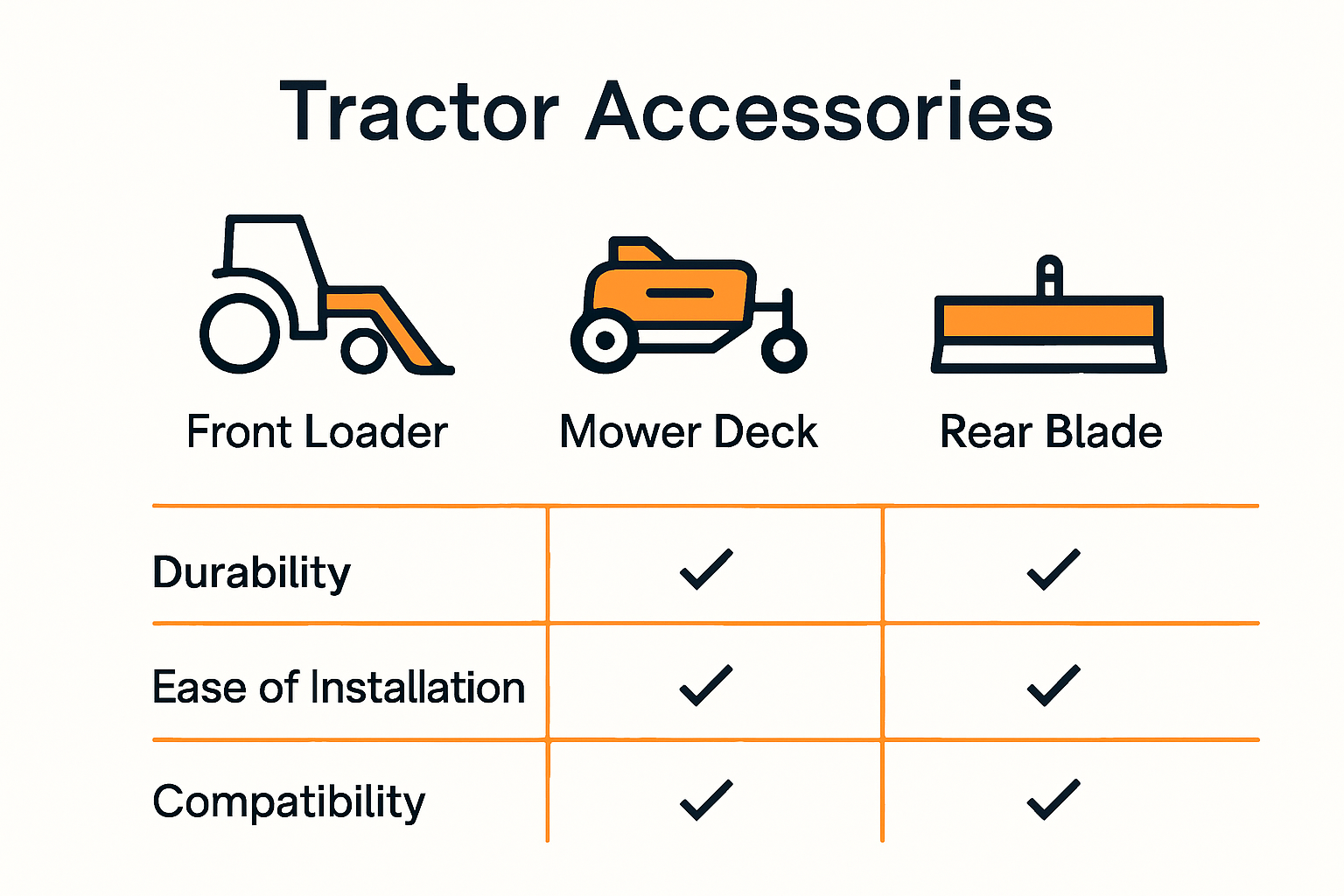
With your detailed product comparison complete, you’re now prepared to make an informed selection of tractor accessories that will maximize your equipment’s capabilities.
Step 4: Verify Supplier Reliability and Warranty
Now that you have researched product features and compatibility, it is crucial to carefully evaluate the supplier’s reliability and warranty terms. Virginia Tech Extension emphasizes the significance of considering dealership proximity, reputation, and warranty offerings to ensure dependable support and service for your tractor accessories.
Verifying supplier reliability involves a comprehensive assessment of several key factors. University of Vermont’s agricultural resource recommends examining dealer support, service availability, and warranty coverage in depth. Start by requesting detailed warranty documentation from each potential supplier. Carefully review the terms, including coverage duration, what specific components are protected, repair or replacement conditions, and any potential limitations or exclusions that might impact your long term equipment performance.
A pro tip: Do not rely solely on written warranty information. Reach out directly to the supplier and ask specific questions about their support process. Inquire about response times for service requests, availability of replacement parts, and whether they offer onsite repairs or require you to transport the equipment. Additionally, seek out customer testimonials and references from other agricultural professionals who have worked with the same supplier to gain insights into their real world reliability and customer service quality.
With a thorough understanding of supplier reliability and warranty terms, you are now prepared to make a confident and informed decision about your tractor accessory purchase.
Step 5: Complete Your Purchase and Inspect Accessories
Virginia Tech Extension recommends a systematic approach to finalizing your tractor accessory purchase that goes beyond simply making a transaction. This final step involves not just buying your selected accessories, but ensuring they meet your precise agricultural equipment requirements through a comprehensive inspection and verification process.
University of Vermont’s agricultural resource suggests conducting a thorough physical and functional inspection immediately upon receiving your accessories. Begin by carefully examining each item for any shipping damage, verifying that all components match your original order specifications. Check for proper packaging, completeness of included hardware, and examine the overall condition of each accessory. Confirm that mounting points, connection interfaces, and structural integrity align perfectly with the technical specifications you previously reviewed.
A pro tip: Document everything during your inspection. Take clear photographs of each accessory from multiple angles, noting any potential issues before installation. Keep all packaging, shipping documents, and manufacturer specifications. This documentation can be crucial if you need to file a warranty claim or return an item that does not meet your exact requirements. Additionally, test fit each accessory against your tractor to ensure absolute compatibility before making any permanent modifications.
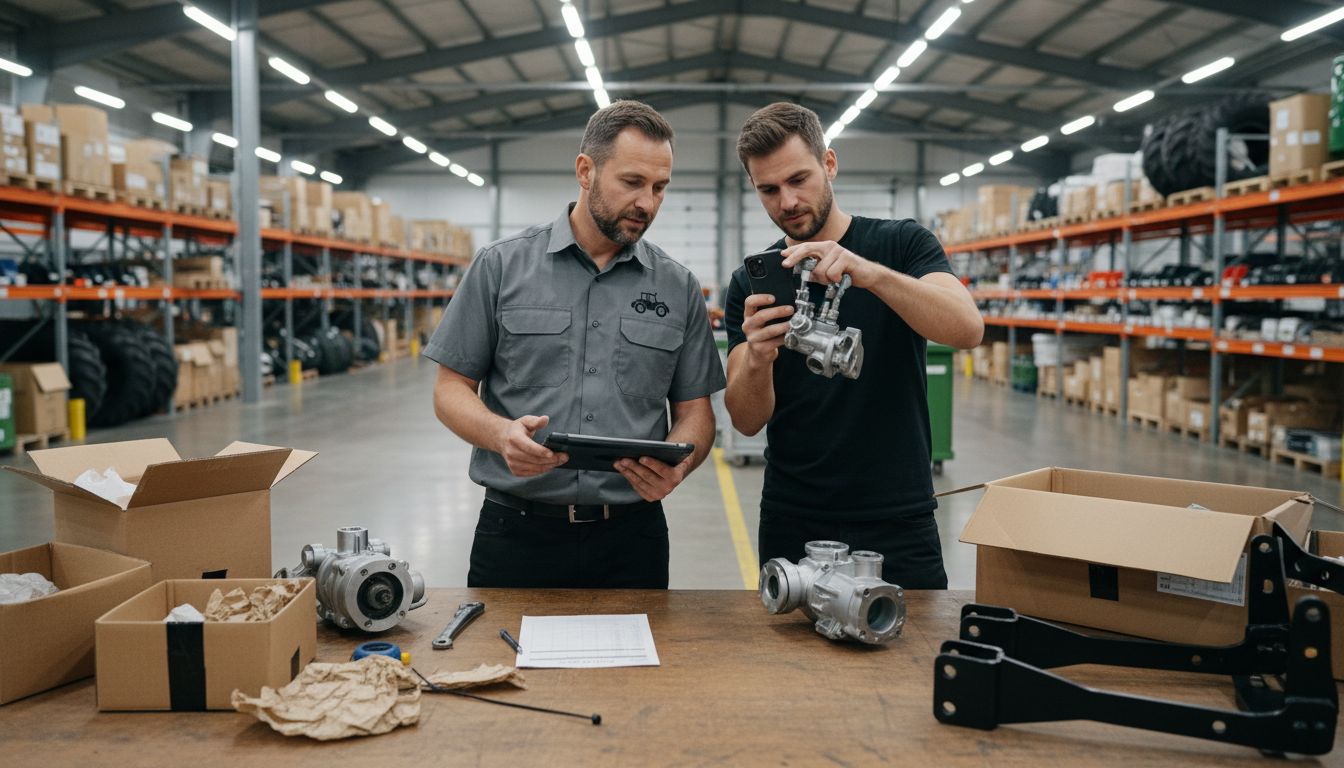
With your accessories carefully inspected and verified, you are now prepared to integrate these new components into your agricultural equipment setup.
Find the Perfect Tractor Accessories with Confidence
Choosing the right tractor accessories can feel overwhelming. You need equipment that fits your tractor’s exact specifications while offering quality and durability for demanding agricultural tasks. This guide helps you avoid mismatches and costly errors by carefully assessing your tractor, reviewing compatibility, and verifying supplier reliability. At the heart of your search should be a trusted source with a vast inventory and reliable support.
Take the guesswork out of your next purchase by exploring our extensive selection of tractor accessories offered at Pexlivanidis.com. With over 20,000 parts available and free shipping on orders over 100€ within Greece, we provide both retail and wholesale customers with quick access to high-quality products. Our dedicated team is ready to help you find accessories that fit perfectly and perform reliably. Don’t wait until the fieldwork is delayed. Visit Pexlivanidis today, review product availability, and experience seamless shopping designed to keep your equipment running at its best.
Frequently Asked Questions
How do I assess my tractor’s specific needs for accessories?
To assess your tractor’s specific needs, start by evaluating its power requirements, transmission type, and intended usage. Create a detailed inventory of tasks, including field dimensions and load weights, to ensure you choose accessories that align with your agricultural operations.
What should I check for compatibility when choosing tractor accessories?
When reviewing tractor accessories, examine connection points like the three-point hitch and power takeoff shaft. Ensure the accessories match your tractor’s horsepower and weight specifications, and create a compatibility checklist to document relevant technical details.
What features should I compare between different tractor accessories?
Compare product features such as material durability, weight capacity, and engineering precision. Develop a matrix to evaluate each accessory side by side, including warranties and performance ratings to determine which provides the best value for your needs.
How do I verify the reliability of a supplier for tractor accessories?
To verify supplier reliability, assess their reputation, warranty offerings, and service availability. Request warranty documents and directly inquire about their support processes to gain insights into their customer service quality.
What steps should I take after purchasing tractor accessories?
After purchasing accessories, conduct a thorough inspection upon receipt. Check for shipping damage, confirm all components are included, and document any issues with photographs before installation to ensure compatibility with your tractor.