

Choosing the wrong tractor accessory can lead to expensive mistakes and wasted time. With over 60 percent of farmers reporting compatibility issues when adding new attachments, the stakes are high for anyone looking to upgrade agricultural equipment. Careful planning and step-by-step evaluation ensure you get the right fit for your specific tractor setup, maintain performance, and avoid frustrating setbacks that can slow down your work.
Table of Contents
- Step 1: Assess Your Tractor’s Specifications and Needs
- Step 2: Research Compatible Accessory Types and Standards
- Step 3: Compare Material Quality and Manufacturer Reputation
- Step 4: Evaluate Vendor Support and Shipping Policies
- Step 5: Verify Accessory Fitment and Functionality at Delivery
Quick Summary
| Important Insight | Clear Explanation |
|---|---|
| 1. Assess Your Tractor’s Needs | Gather and understand all specifications to ensure compatibility with tractor accessories. Assess horsepower, hydraulic capacity, and operational purposes first. |
| 2. Research Accessory Compatibility | Identify accessories designed to integrate with your tractor’s model by checking standards for mounting and hydraulics to ensure optimal performance. |
| 3. Focus on Quality and Manufacturer | Evaluate the material quality and manufacturer reputation for durability. Look for certifications and customer reviews to ensure reliability. |
| 4. Evaluate Vendor Support | Choose suppliers who provide excellent technical support and clear shipping policies to enhance your purchasing experience and resolve issues efficiently. |
| 5. Inspect Delivered Accessories Thoroughly | Conduct a detailed check of all accessories upon delivery, ensuring they meet specifications and function correctly to avoid future problems. |
Step 1: Assess Your Tractor’s Specifications and Needs
Before investing in any tractor accessories, understanding your machine’s specific requirements is crucial for optimal performance and compatibility. You need a comprehensive assessment that goes beyond surface level observations and digs into the mechanical details that will guide your accessory selection process.
Start by gathering key technical specifications like your tractor’s horsepower, hydraulic system capacity, three point hitch category, and transmission type. Measure your tractor’s physical dimensions precisely including wheelbase, ground clearance, and attachment point locations. Review your operational needs carefully: Are you using the tractor for crop cultivation, livestock management, landscaping, or mixed agricultural tasks? Different applications demand different accessory configurations. Pay special attention to your tractor’s power take off (PTO) rating and hydraulic flow rates, as these factors directly impact which attachments will function effectively.
Pro tip: Create a dedicated equipment documentation folder where you store your tractor’s original manual, specification sheets, and a running inventory of current and potential accessories.
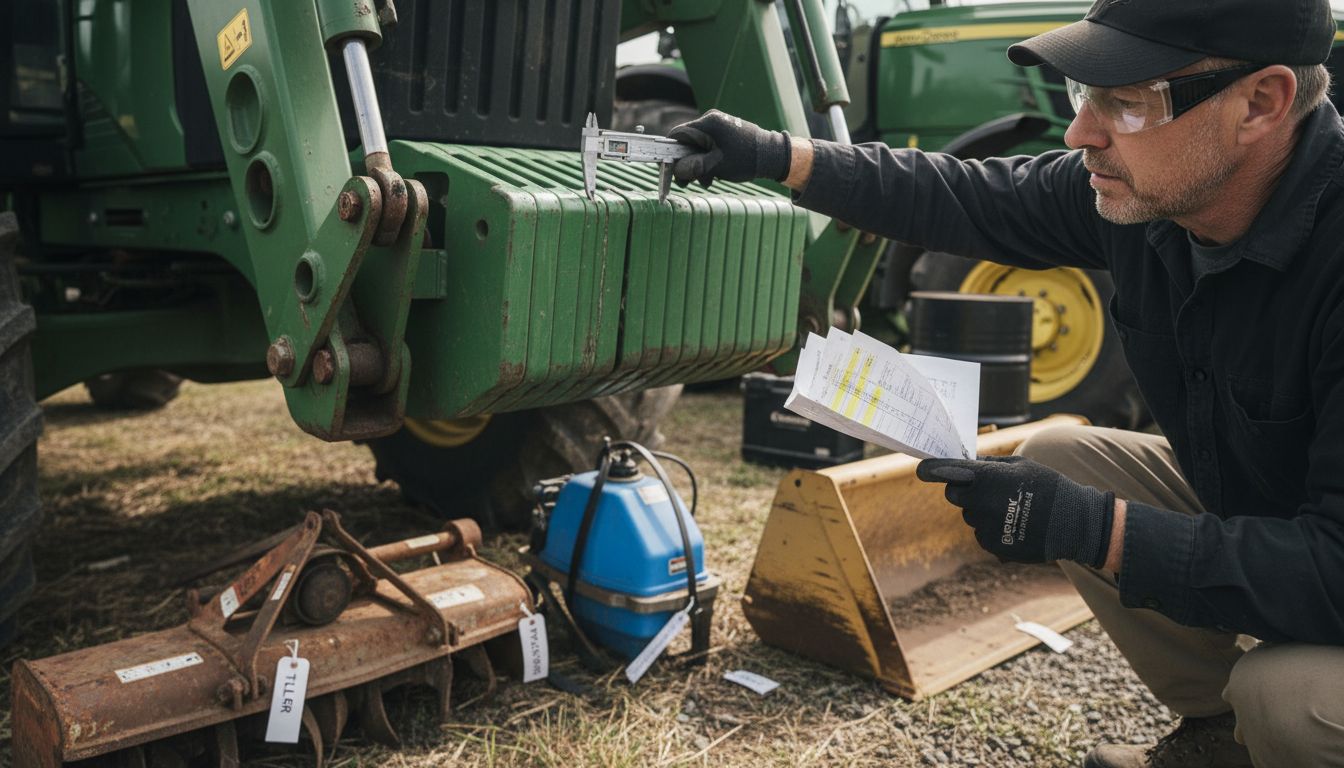 This proactive approach will save you time and prevent costly compatibility mistakes when upgrading or expanding your agricultural machinery toolkit.
Step 2: Research Compatible Accessory Types and Standards
Navigating the complex world of tractor accessories requires a strategic approach to understanding compatibility and industry standards. Your goal in this step is to identify the precise types of accessories that will integrate seamlessly with your specific tractor model and operational requirements.
ANSI highlights the importance of standardized communication protocols through ISO 11783, which enables plug and play integration between different manufacturers’ implements. This means you can confidently explore accessories from various brands knowing they are designed to communicate effectively with modern agricultural machinery. When researching compatibility, focus on critical parameters like mounting systems, power take off (PTO) specifications, hydraulic connection types, and electrical interface standards. Moreover, ISO provides safety standards like ISO 10975:2023 for auto guidance systems, ensuring that any technological accessories you consider meet rigorous operational safety requirements.
Pro tip: Create a compatibility checklist that includes your tractor’s specific model number, PTO horsepower, hydraulic flow rate, and electrical system voltage. This document will become your roadmap for identifying accessories that will integrate smoothly and safely into your existing agricultural equipment ecosystem.
Step 3: Compare Material Quality and Manufacturer Reputation
Selecting the right tractor accessories requires a deep dive into material quality and manufacturer credibility. Your goal is to identify accessories that not only meet technical specifications but also demonstrate exceptional durability and reliability.
International standards provide critical guidance for evaluating accessory quality. ISO establishes precise dimensions and requirements for components like three point hitch couplers, allowing you to objectively assess manufacturing precision. Similarly, ISO specifies interface standards for tractor mounted sensors, which helps you verify a manufacturer’s commitment to engineering excellence. When comparing manufacturers, look beyond marketing claims and investigate their track record of producing robust agricultural equipment. Examine factors like material composition, welding quality, corrosion resistance, and third party certifications. Research customer reviews professional agricultural equipment forums and industry publications to gain insights into real world performance and long term reliability.
Pro tip: Request material certifications and warranty documentation before making a purchase. A reputable manufacturer will transparently provide detailed specifications and stand behind their product with comprehensive support and replacement guarantees.
Step 4: Evaluate Vendor Support and Shipping Policies
Vendor support and shipping policies can make or break your tractor accessory purchasing experience. Your objective is to select a supplier that offers comprehensive technical assistance, reliable delivery, and transparent communication throughout the buying process.
ANSI highlights how standardized communication protocols like ISO 11783 help ensure vendors maintain high compatibility and support standards for agricultural equipment. When evaluating potential vendors, investigate their technical support infrastructure carefully. Look for suppliers who provide detailed product documentation, responsive customer service channels, and comprehensive technical guidance. Additionally, ISO safety standards like ISO 10975:2023 for auto guidance systems offer insights into a vendor’s commitment to quality and professional support. Examine their return policies, warranty terms, shipping timeframes, and availability of replacement parts. Check whether they offer specialized support for complex agricultural machinery accessories and if they can provide expert consultation specific to your tractor model and operational requirements.
Pro tip: Request a detailed support contract or service level agreement before finalizing your purchase. A reputable vendor will be transparent about their support capabilities and willing to provide clear documentation of their technical assistance commitments.
Step 5: Verify Accessory Fitment and Functionality at Delivery
The moment your tractor accessories arrive marks a critical checkpoint in your equipment upgrade process. Your primary goal is to conduct a thorough and systematic inspection to ensure every component meets your precise specifications and operational requirements.
ISO provides critical guidance through standards like ISO 11001-1:2016, which establishes precise dimensional specifications for components such as three-point hitch couplers. These standards offer a reliable benchmark for verifying mechanical compatibility during your initial inspection. Similarly, ISO specifies interface standards for tractor mounted sensors, helping you methodically assess electronic and mechanical integration. Begin by comparing the delivered accessories against your original specifications checklist. Examine mounting points, connection interfaces, material quality, and overall structural integrity. Test electrical connections, hydraulic fittings, and mechanical attachments systematically. Verify that mounting hardware fits correctly, moving parts operate smoothly, and all connection points align precisely with your tractor’s existing systems.
Pro tip: Document your inspection process with photographs and detailed notes. This creates a visual and written record that can be crucial if you need to file a warranty claim or return an incompatible accessory.
Find the Perfect Tractor Accessories for Your Needs Today
Selecting the right tractor accessories for optimal performance can be overwhelming with all the technical specifications like horsepower ratings PTO compatibility and hydraulic flow rates to consider. Many farmers and operators struggle with compatibility issues and concerns about material quality vendor support and fitment accuracy. You need a trustworthy source that understands these challenges and provides a wide selection of parts that meet strict quality standards and fit your tractor precisely.
At pexlivanidis.com you will find a vast inventory of over 20,000 tractor accessories and spare parts designed to match your machine’s specifications. Benefit from expert guidance on compatibility and reliable customer support that will help you avoid costly mistakes. Explore our offerings and take advantage of free shipping on orders over 100€ to Thessaloniki Kavala and surrounding areas. Do not wait until the wrong accessory arrives and delays your work. Visit pexlivanidis.com now and equip your tractor with the perfect parts that deliver durability safety and performance.
Frequently Asked Questions
How do I assess my tractor’s specifications before selecting accessories?
Start by gathering key technical specifications such as horsepower, hydraulic system capacity, and three-point hitch category. Measure your tractor’s physical dimensions and evaluate its intended use to guide your accessory choices effectively.
What should I include in my compatibility checklist for tractor accessories?
Include your tractor’s specific model number, PTO horsepower, hydraulic flow rate, and electrical system voltage in your compatibility checklist. This will help you identify accessories that will integrate smoothly with your existing equipment.
How can I evaluate the material quality of tractor accessories?
Look for manufacturers that provide material certifications, warranty documentation, and customer reviews. Comparing factors such as corrosion resistance and welding quality can help you choose durable and reliable accessories.
What factors should I consider regarding vendor support when buying tractor accessories?
Evaluate the vendor’s technical support infrastructure, including their product documentation and customer service responsiveness. Checking their return policies and warranty terms is essential to ensure you receive comprehensive support after your purchase.
How do I verify the fitment and functionality of tractor accessories upon delivery?
Conduct a thorough inspection of each accessory against your specifications checklist, examining mounting points and connection interfaces.
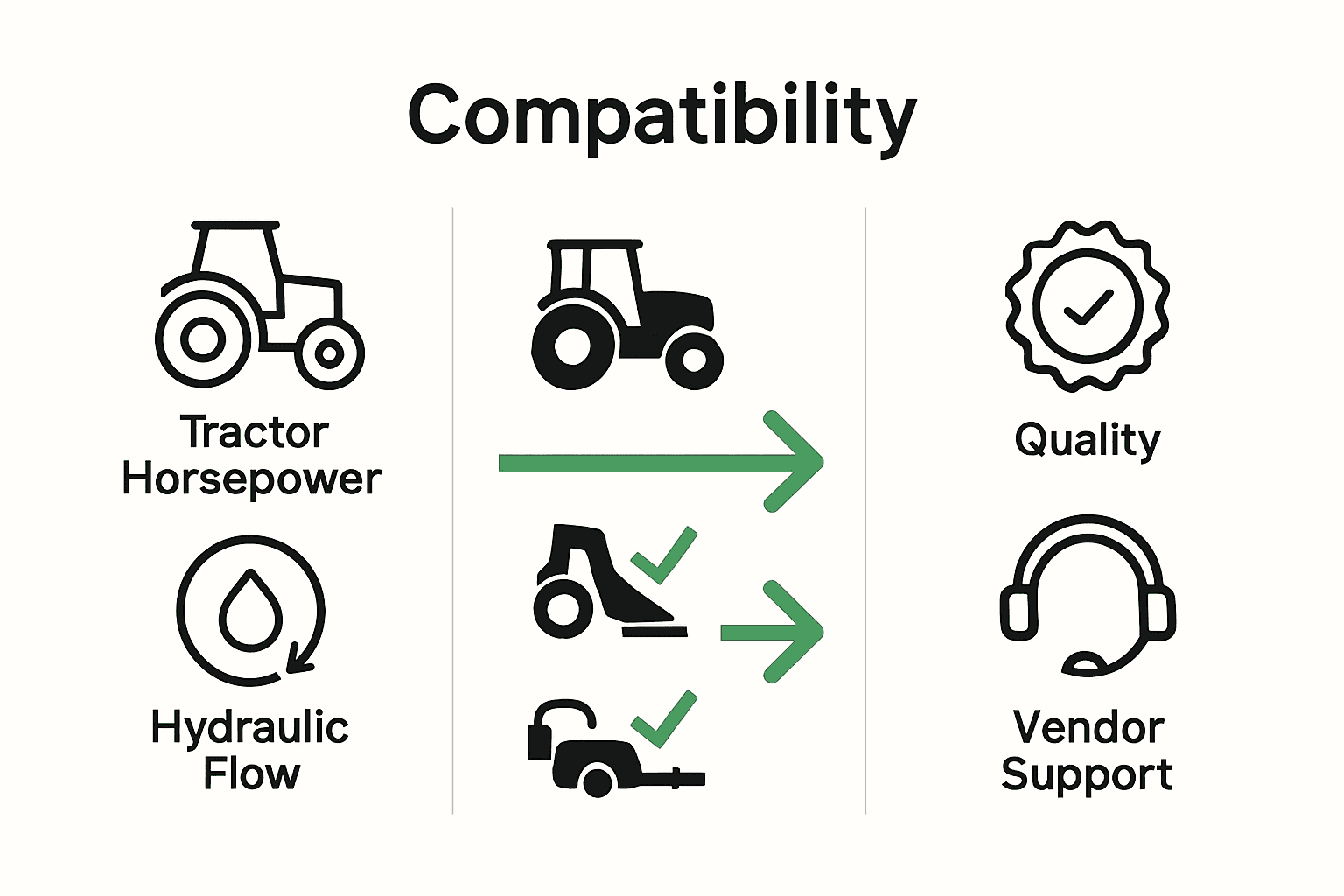 Testing all fittings and attachments will confirm that each component is compatible and operates smoothly.
What proactive steps can I take to avoid compatibility mistakes when selecting tractor accessories?
Create a dedicated folder for equipment documentation, storing your tractor’s manual and specification sheets. This organized approach will help you make informed decisions and reduce compatibility issues by keeping all relevant information readily accessible.