

Tractor documentation might sound like just piles of paperwork, but for farmers and equipment managers, it is the backbone of safe and efficient operations. Surprisingly, detailed documentation can actually increase a tractor’s resale value by up to 20 percent and help prevent equipment downtime. Most people focus on keeping their machines running in the field, but the real advantage often comes from what gets written down in the office.
Table of Contents
- What Is Tractor Documentation And Its Components?
- Why Tractor Documentation Is Crucial For Farmers
- How Proper Documentation Affects Tractor Maintenance
- The Role Of Documentation In Legal Compliance
- Key Concepts In Effective Tractor Documentation
Quick Summary
| Takeaway | Explanation |
|---|---|
| Maintain comprehensive documentation for tractors | Proper records enhance operational efficiency and safety management for agricultural machinery. |
| Use documentation for legal protection | Accurate records establish maintenance history and demonstrate compliance with regulations, protecting farmers from legal challenges. |
| Implement predictive maintenance strategies | Systematic documentation supports early identification of potential issues, reducing unexpected breakdowns and enhancing equipment lifespan. |
| Document equipment performance metrics | Keeping track of performance helps in making informed decisions about maintenance, repairs, and upgrades, optimizing farm productivity. |
What is Tractor Documentation and Its Components?
Tractor documentation represents a comprehensive collection of critical records and materials that detail the operational, maintenance, and safety aspects of agricultural machinery. At its core, this documentation serves as an essential communication tool between machinery manufacturers, operators, maintenance professionals, and regulatory bodies.
Understanding the Core Components
Tractor documentation encompasses several key elements that provide a holistic view of machinery management. Proper documentation includes:
- Detailed operator manuals specifying machine specifications and operational guidelines
- Maintenance logs tracking service history and repair records
- Safety instruction documents outlining potential hazards and recommended precautions
- Technical specification sheets describing mechanical and performance characteristics
According to Virginia Cooperative Extension, comprehensive tractor documentation plays a pivotal role in ensuring safe and efficient machinery operation. These documents provide critical information that helps prevent accidents, optimize performance, and maintain equipment longevity.
Significance in Agricultural Operations
Documentation serves multiple crucial functions beyond simple record keeping. It provides legal protection, facilitates equipment transfers, supports warranty claims, and helps maintain a systematic approach to machinery management. For farmers and agricultural professionals, well-maintained documentation can mean the difference between smooth operations and costly interruptions.
Tractor documentation transforms complex machinery information into accessible knowledge. By consolidating technical details, maintenance history, and operational guidelines into organized records, these documents empower operators to understand their equipment thoroughly, make informed decisions, and implement proactive maintenance strategies.
This table breaks down the main components of effective tractor documentation and explains their role in supporting safe and efficient machinery management.
| Component | Purpose |
|---|---|
| Operator Manual | Outlines specifications and operational procedures |
| Maintenance Log | Tracks service history and repairs |
| Safety Instruction Document | Details potential hazards and preventive measures |
| Technical Specification Sheet | Provides mechanical and performance characteristics |
| Usage Log | Records operational hours and usage patterns |
| Inspection and Compliance Record | Verifies adherence to safety, legal, and regulatory standards |
Whether you are a small-scale farmer or managing a large agricultural enterprise, robust tractor documentation represents an indispensable tool for effective machinery management and operational excellence.
Why Tractor Documentation is Crucial for Farmers
For farmers, tractor documentation represents far more than simple paperwork. It is a strategic tool that supports operational efficiency, legal compliance, financial management, and long-term equipment performance. Understanding the multifaceted importance of comprehensive documentation can transform how agricultural professionals approach machinery management.
Operational and Legal Protection
Documentation serves as a critical safeguard for farmers, providing multiple layers of protection and insight. Key protective functions include:
- Establishing clear maintenance and repair histories
- Supporting warranty claims and equipment valuations
- Demonstrating compliance with safety and operational regulations
- Creating transparent records for potential equipment resale
According to the Food and Agriculture Organization, accurate documentation is essential for effective fleet management and meeting regulatory requirements. These records help farmers track equipment performance, anticipate maintenance needs, and make informed strategic decisions about their agricultural machinery.
Financial and Performance Management
Comprehensive tractor documentation directly impacts a farm’s financial health and operational efficiency. By maintaining detailed records, farmers can track equipment depreciation, plan maintenance budgets, and optimize machinery utilization. Precise documentation allows for better predictive maintenance, reducing unexpected breakdowns and minimizing costly operational interruptions.
Moreover, well-maintained documentation provides tangible evidence of equipment care. When farmers decide to sell or upgrade their tractors, detailed service records can significantly enhance the machinery’s resale value. Potential buyers view comprehensive documentation as a sign of responsible ownership and meticulous maintenance.
Beyond financial considerations, documentation supports data-driven agricultural management. By tracking usage patterns, maintenance history, and performance metrics, farmers can make more strategic decisions about equipment deployment, replacement cycles, and operational improvements.
In an increasingly complex agricultural landscape, tractor documentation is not just a bureaucratic requirement but a powerful management tool that supports farmers’ operational excellence and long-term success.
How Proper Documentation Affects Tractor Maintenance
Tractor maintenance is a complex process that relies heavily on systematic documentation and record keeping.
Proper documentation transforms maintenance from a reactive approach to a proactive strategy, enabling farmers to anticipate potential issues and prevent costly equipment failures before they occur.
Predictive Maintenance Strategies
Documentation serves as the foundation for predictive maintenance, allowing farmers to develop comprehensive understanding of their equipment’s performance patterns. Critical predictive maintenance aspects include:
- Tracking recurring mechanical issues
- Monitoring component wear and replacement cycles
- Identifying potential performance degradation trends
- Establishing baseline performance metrics
According to Pennsylvania State University, conducting systematic pre-operational checks and maintaining detailed documentation can significantly reduce unexpected equipment breakdowns and extend machinery lifespan.
Performance Tracking and Optimization
Comprehensive maintenance documentation enables farmers to develop a holistic view of their tractor’s operational history. By recording every service intervention, repair, and performance metric, operators create a detailed equipment profile that supports informed decision making.
Detailed documentation allows farmers to understand specific maintenance requirements, predict potential mechanical issues, and develop targeted maintenance schedules. This approach transforms maintenance from a cost center into a strategic investment in equipment longevity and farm productivity.
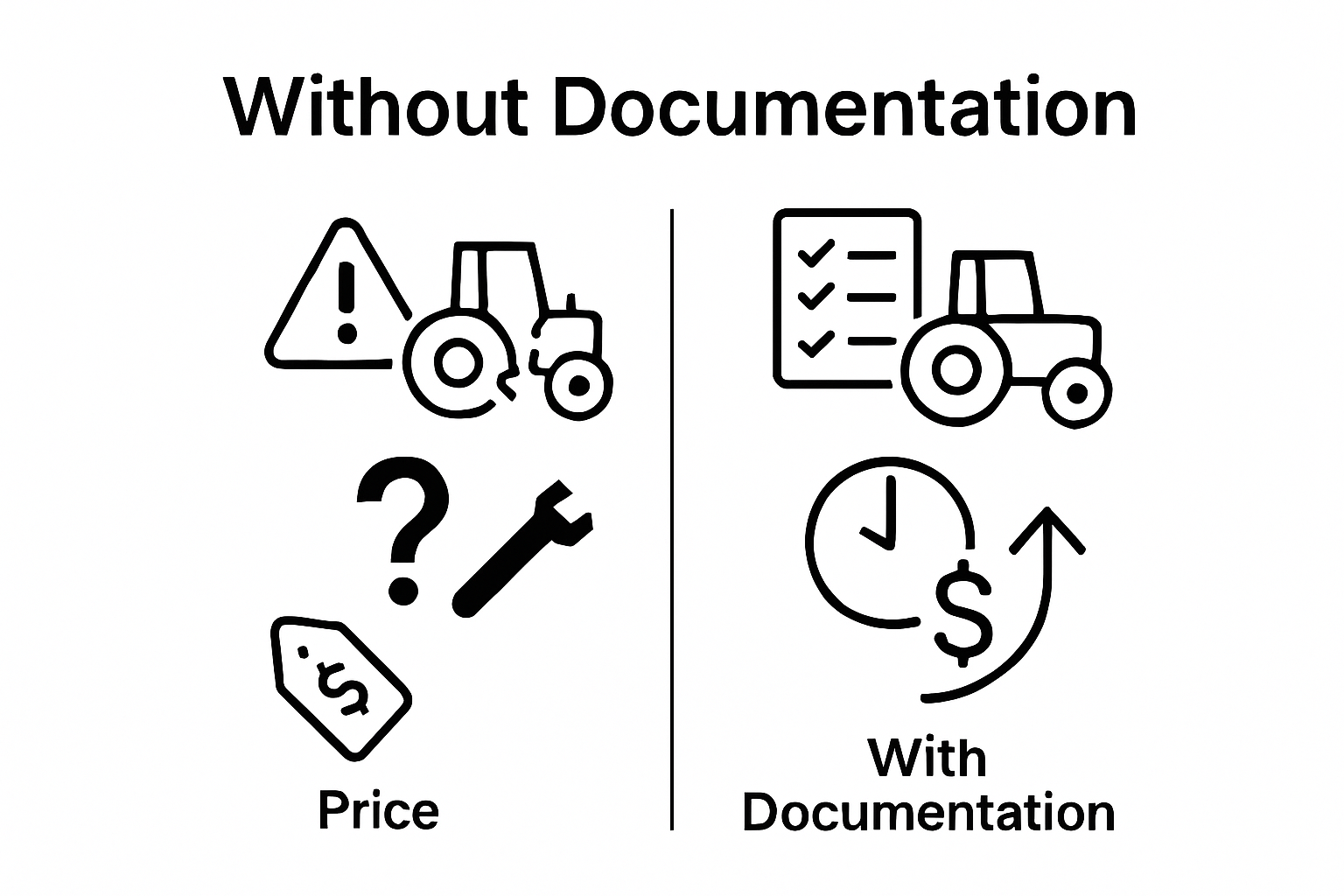
Moreover, precise documentation provides valuable insights into equipment performance, helping farmers make data-driven decisions about repair, replacement, or equipment upgrades. By maintaining meticulous records, farmers can optimize maintenance budgets, reduce unexpected downtime, and ensure consistent agricultural operations.
In the evolving landscape of modern agriculture, tractor maintenance documentation is not just a administrative task but a critical tool for sustainable and efficient farm management.
The Role of Documentation in Legal Compliance
Legal compliance represents a critical aspect of agricultural machinery management that extends far beyond simple record keeping. Tractor documentation serves as a fundamental mechanism for ensuring farmers meet regulatory requirements, maintain operational legitimacy, and protect themselves from potential legal complications.
Regulatory Documentation Requirements
Farmers must navigate a complex landscape of legal and regulatory standards that demand precise documentation. Key compliance documentation elements include:
- Vehicle registration and title verification
- Emissions and environmental standards certification
- Safety inspection records
- Proof of ownership and equipment provenance
According to the Office of Justice Programs, proper documentation helps authorities track equipment ownership, prevent theft, and ensure legal accountability for agricultural machinery.
Protecting Operational Legitimacy
Comprehensive documentation serves as a critical shield against potential legal challenges. By maintaining thorough records, farmers demonstrate their commitment to regulatory compliance, workplace safety, and responsible equipment management. These documents provide tangible evidence of adherence to local, state, and federal regulations governing agricultural machinery.
To help clarify the critical areas required for regulatory compliance, the following table summarizes key documentation types and their purposes in agricultural machinery management.
| Documentation Type | Description | Compliance Purpose |
|---|---|---|
| Vehicle Registration & Title | Legal proof of ownership and operation | Verifies legal operation and ownership |
| Emissions & Environmental Certification | Certification of meeting environmental and emissions standards | Ensures adherence to environmental laws |
| Safety Inspection Records | Documentation of periodic safety checks and inspections | Demonstrates commitment to workplace safety |
| Proof of Ownership/Equipment Provenance | Records tracing equipment history and previous ownership | Aids theft prevention and legal tracking |
| Insurance & Warranty Documents | Evidence of insurance coverage and active warranties | Supports claims and protection |
Documentation also plays a crucial role in insurance claims, warranty protection, and potential legal disputes. Detailed records can substantiate equipment condition, maintenance history, and operational practices, providing farmers with a robust defense against potential legal challenges.
Moreover, legal compliance documentation extends beyond mere paperwork. It represents a systematic approach to equipment management that prioritizes safety, environmental responsibility, and professional standards. Farmers who invest in comprehensive documentation protect not just their machinery, but their entire agricultural enterprise from potential legal and financial risks.
In an increasingly regulated agricultural landscape, documentation is no longer optional but an essential component of responsible and legal farm management.
Key Concepts in Effective Tractor Documentation
Effective tractor documentation transcends mere record keeping, representing a sophisticated system of information management that supports operational excellence, safety, and strategic decision making. Understanding the fundamental principles behind comprehensive documentation is crucial for agricultural professionals seeking to optimize their machinery management approach.
Comprehensive Information Capture
Documentation must capture a holistic view of tractor performance and history. Essential documentation elements include:
- Detailed maintenance and repair chronology
- Operational usage logs and performance metrics
- Technical specifications and manufacturer recommendations
- Safety inspection and compliance records
According to the National Safe Tractor and Machinery Operation Program, comprehensive documentation serves as a critical educational and operational tool that supports both equipment management and operator safety.
Strategic Documentation Principles
Effective documentation requires a systematic and disciplined approach. Farmers must develop a consistent method for recording and organizing information that allows for easy retrieval, analysis, and interpretation. This means creating standardized templates, establishing clear recording protocols, and ensuring digital or physical storage systems that preserve information integrity.
The documentation process should be viewed as a dynamic, ongoing practice rather than a static record. Each entry represents a snapshot of the tractor’s condition, performance, and potential future maintenance requirements. By treating documentation as a living, evolving resource, farmers can transform record keeping from a bureaucratic task into a strategic management tool.
Moreover, effective documentation demands regular review and update. Farmers should periodically assess their documentation practices, identify potential gaps in information capture, and refine their approach to ensure maximum utility and accuracy. This continuous improvement mindset ensures that documentation remains a valuable asset in machinery management.
In the complex world of agricultural machinery, documentation is not just about preserving information but about creating a comprehensive narrative of equipment performance, maintenance, and potential.
Take Control of Your Tractor’s Future with Trusted Parts Support
Managing accurate tractor documentation can feel overwhelming, especially when you are juggling safety protocols, legal requirements, and tight deadlines. As discussed in your recent reading, missing records or insufficient maintenance data often lead to unexpected breakdowns or lost resale value. You already know that having the right information is crucial. Equally important is ensuring your tractor is equipped with quality parts that match those records perfectly.
That is where pexlivanidis.com steps in. Our extensive inventory of over 20000 tractor accessories and spare parts aligns seamlessly with proper documentation practices, offering you reliable options that keep your maintenance logs accurate and your equipment running longer. Explore our product listings using the easy search feature or contact us for personalized support. Want even better deals with fast delivery in Thessaloniki, Kavala, or wider Greece? Register for a B2B membership or subscribe to our newsletter for exclusive promotions. Take the next step toward seamless documentation and dependable tractor performance. Visit pexlivanidis.com now and secure the trusted spare parts your operation deserves.
Frequently Asked Questions
What is tractor documentation?
Tractor documentation is a comprehensive collection of critical records and materials detailing the operational, maintenance, and safety aspects of agricultural machinery.
Why is tractor documentation important for farmers?
Tractor documentation is essential for operational efficiency, legal compliance, financial management, and long-term equipment performance, helping farmers ensure safe and effective machinery management.
How does proper documentation affect tractor maintenance?
Proper documentation facilitates predictive maintenance, allowing farmers to anticipate potential issues and develop targeted maintenance schedules, which ultimately enhances the longevity and performance of their tractors.
What key components should be included in tractor documentation?
Key components of tractor documentation include detailed operator manuals, maintenance logs, safety instruction documents, and technical specification sheets, which together provide a holistic view of machinery management.