

Tractor parts are the muscles and bones behind every modern farm machine, each with a specific job that keeps fields running smoothly. Most people picture horsepower or high-tech cabins, but the real story hides in the numbers. Proactive maintenance of tractor components can cut long-term operating costs by a significant amount and even help some farms save up to 10 percent on fuel over a tractor’s life. That means the biggest gains in farming often start with understanding what is happening under the hood—not just what you see on the surface.
Table of Contents
- What Are Tractor Parts And Their Functions?
- The Importance Of Understanding Tractor Parts’ Lifecycle
- The Phases Of A Tractor Part’s Lifecycle
- Factors Affecting The Longevity Of Tractor Parts
- Real-World Implications Of Tractor Parts Lifecycle
Quick Summary
| Takeaway | Explanation |
|---|---|
| Regular maintenance extends tractor part lifespan | Implementing consistent inspections and timely replacements can significantly enhance the durability of tractor components. |
| Understanding part lifecycle reduces operational costs | Proactive management of wear patterns and replacements can lead to substantial savings on repairs and downtime. |
| Environmental factors impact part longevity | Conditions like temperature, humidity, and terrain complexity can accelerate deterioration, affecting performance. |
| Three-point linkage enhances equipment adaptability | This system allows for quick attachment of implements, improving operational efficiency in diverse farming tasks. |
| Lifecycle management influences farm profitability | Efficient component management translates to improved performance, reduced costs, and increased agricultural output. |
What Are Tractor Parts and Their Functions?
Tractor parts represent the intricate mechanical components that collectively enable agricultural machinery to perform complex tasks efficiently. Understanding these parts provides insight into how modern agricultural equipment operates and maintains productivity across diverse farming environments.
Core Mechanical Components
Tractor parts can be categorized into several fundamental systems that work together to generate power, transfer motion, and support agricultural operations. At the heart of any tractor are components like the engine, transmission, hydraulic system, and drivetrain. These mechanical elements transform fuel energy into mechanical work, enabling farmers to cultivate, plow, plant, and harvest crops with remarkable precision.
The rollover protection structure (ROPS) represents a critical safety component designed to protect equipment operators during potential vehicle overturns. This structural framework creates a protective zone around the operator, dramatically reducing injury risks in challenging agricultural terrains.
Functional Classification of Parts
Tractor parts can be broadly classified into several functional categories:
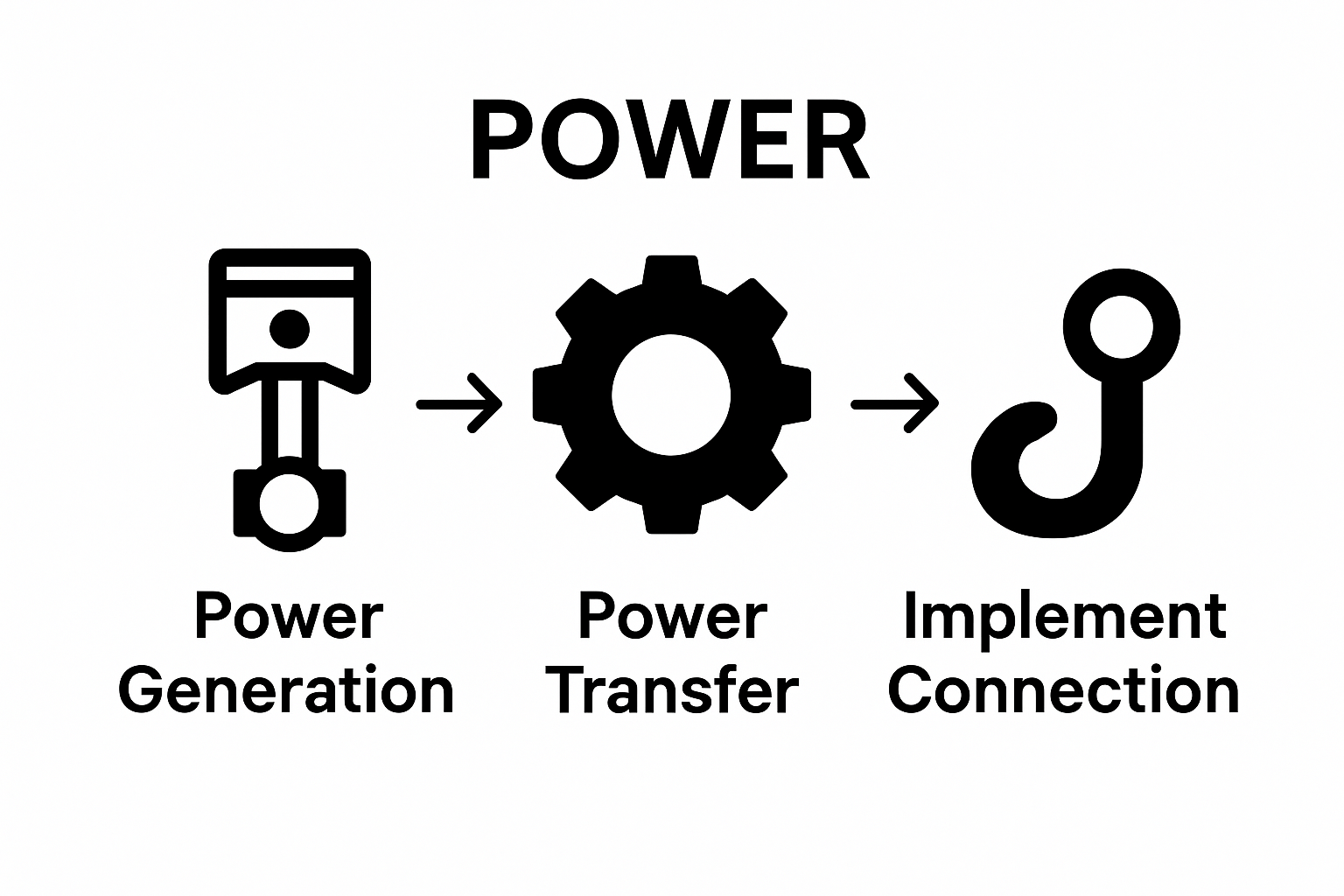
- Power Generation Components: Engine, fuel system, cooling system
- Power Transfer Systems: Transmission, differential, axles
- Implement Connection Parts: Three-point linkage, hitches, power takeoff (PTO)
- Control and Operation Elements: Steering mechanism, brake systems, operator controls
The three-point linkage system, for instance, serves multiple critical functions. It allows farmers to attach various implements, regulate implement depth, maintain consistent draught force, and transfer weight distribution across the tractor’s rear wheels. This versatile mechanism enables rapid tool changes and enhances overall agricultural equipment adaptability.
The table below summarizes the core functional categories of tractor parts along with key examples and their main contributions to machinery performance.
| Functional Category | Example Parts | Main Functionality |
|---|---|---|
| Power Generation Components | Engine, fuel system, cooling system | Generate mechanical power and regulate operating temps |
| Power Transfer Systems | Transmission, differential, axles | Transmit, modulate, and allocate power to tractor wheels |
| Implement Connection Parts | Three-point linkage, hitches, PTO | Attach, control, and power a variety of farm implements |
| Control and Operation Elements | Steering, brakes, operator controls | Enable safe operation, maneuverability, and precision |
| Safety Structure | Rollover protection structure (ROPS) | Protect operator during equipment overturns |
Comprehending the lifecycle of tractor parts involves recognizing how each component contributes to the machine’s overall performance, efficiency, and longevity.
This table outlines major phases in the lifecycle of a tractor part, giving a concise overview of each stage and its primary focus.
| Lifecycle Phase | Description | Primary Focus |
|---|---|---|
| Design and Manufacturing | Engineering, research, material selection, and part production | Durability, compatibility, efficiency |
| Operational | Part runs under varied conditions during regular tractor use | Performance, endurance, reliability |
| Maintenance | Inspection, lubrication, calibration, and monitoring | Extending lifespan, preventing failure |
| Replacement/End of Life | Assessment and substitution of worn or failed components | Minimizing downtime, cost-effectiveness |
The Importance of Understanding Tractor Parts’ Lifecycle
Understanding the lifecycle of tractor parts is crucial for agricultural professionals who rely on robust and efficient machinery to maintain productivity. This comprehensive approach goes beyond simple maintenance and encompasses strategic planning, cost management, and operational reliability.
Economic and Operational Implications
The economic impact of understanding tractor parts’ lifecycle cannot be overstated. Proactive management of component wear and replacement schedules can significantly reduce long-term operational costs. Farmers and agricultural businesses must recognize that each tractor part has a specific performance duration and predictable degradation pattern.
According to research from Virginia Tech, proper maintenance and understanding of tractor components are critical for preventing unexpected equipment failures and minimizing downtime. These practices directly influence the overall efficiency and profitability of agricultural operations.
Strategic Maintenance Approaches
Effective lifecycle management of tractor parts involves several strategic considerations:
- Predictive Maintenance: Regular inspection and monitoring of component conditions
- Performance Tracking: Documenting wear patterns and performance metrics
- Timely Replacement: Scheduling component replacements before critical failures occur
- Quality Assessment: Evaluating replacement parts for compatibility and durability
By adopting a holistic view of tractor parts’ lifecycle, agricultural professionals can transform equipment maintenance from a reactive process to a proactive strategy. This approach not only extends machinery lifespan but also optimizes operational efficiency and reduces unexpected repair costs.
The lifecycle of tractor parts represents a complex interplay between mechanical performance, environmental conditions, usage intensity, and maintenance practices. Understanding these intricate relationships empowers farmers to make informed decisions about equipment management, ultimately contributing to more sustainable and productive agricultural practices.
The Phases of a Tractor Part’s Lifecycle
The lifecycle of a tractor part represents a complex journey from initial design and manufacturing to eventual replacement, encompassing multiple critical stages that determine its overall performance and durability. Understanding these phases enables agricultural professionals to optimize equipment management and operational efficiency.
Design and Manufacturing Phase
Tractor parts begin their lifecycle during the intricate design and manufacturing process, where engineers carefully develop components that meet rigorous performance standards. This initial phase involves extensive research, computational modeling, material selection, and precision engineering to create parts capable of withstanding harsh agricultural environments.
According to research on farm tractor engineering, the design phase considers multiple critical factors including:
- Mechanical stress tolerance
- Environmental resistance
- Compatibility with existing machinery systems
- Material durability
- Manufacturing cost efficiency
Operational and Maintenance Stages
Once manufactured, tractor parts enter their operational lifecycle, which involves continuous performance evaluation and maintenance. This phase determines the actual longevity and reliability of the component. Factors such as usage intensity, environmental conditions, maintenance frequency, and operational demands significantly influence a part’s performance trajectory.
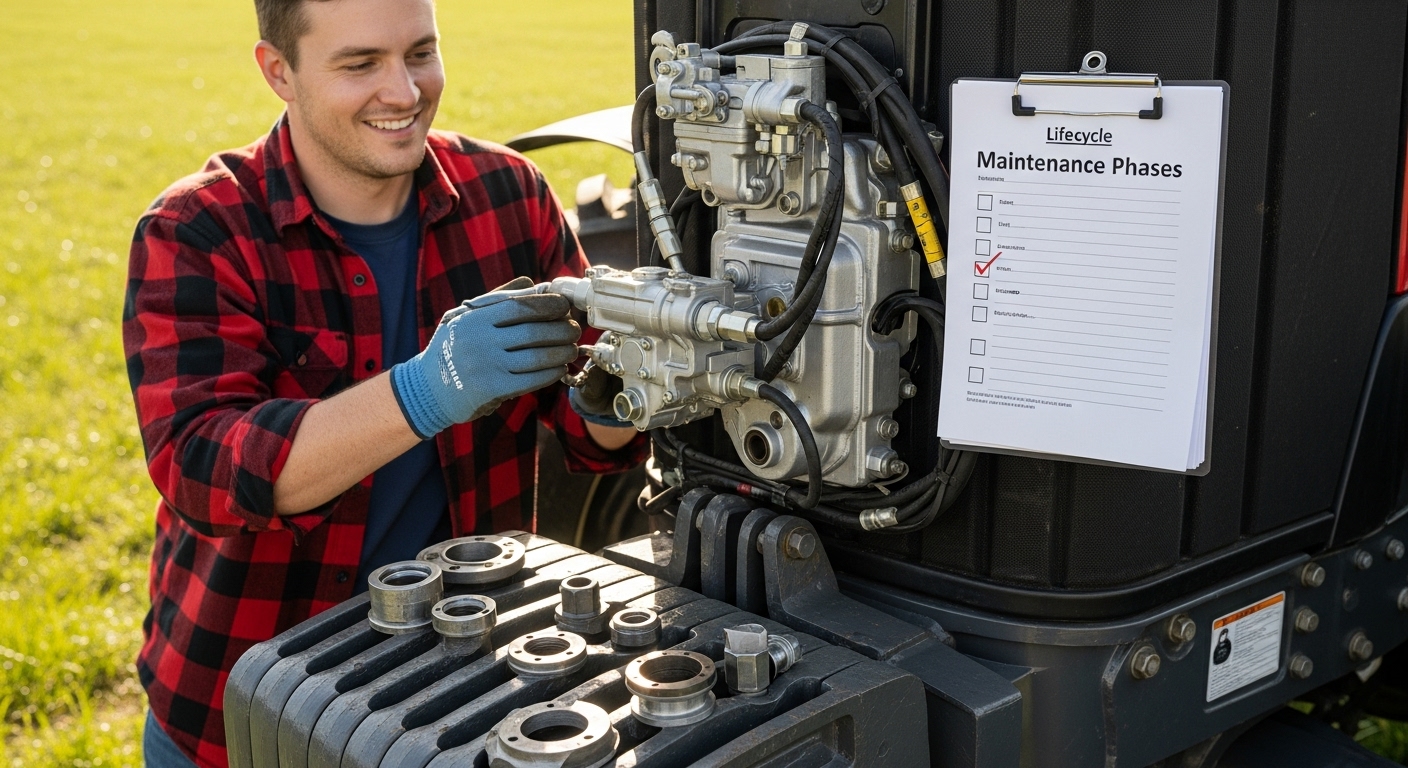
During the operational stage, agricultural professionals must monitor component performance, track wear patterns, and implement preventative maintenance strategies. Regular inspections, lubrication, calibration, and timely interventions can dramatically extend a part’s functional lifespan and prevent unexpected equipment failures.
The final phase of a tractor part’s lifecycle involves strategic replacement. Recognizing the precise moment when a component requires replacement is crucial for maintaining machinery efficiency. This decision involves careful assessment of performance metrics, potential failure risks, and overall cost-effectiveness of continued use versus replacement.
Factors Affecting the Longevity of Tractor Parts
The durability and performance of tractor parts depend on a complex interplay of environmental, operational, and maintenance factors. Understanding these variables helps agricultural professionals extend equipment lifespan and optimize machinery performance.
Environmental and Operational Stressors
Environmental conditions significantly impact the longevity of tractor components, with factors like temperature extremes, humidity, dust exposure, and terrain complexity directly influencing part deterioration. Agricultural machinery operates in challenging environments that continuously test mechanical resilience.
According to research from Virginia Tech, modifying tractor engines or increasing power can substantially reduce the service life of critical components. Specific environmental and operational stressors include:
- Extreme temperature variations
- Soil composition and abrasiveness
- Moisture and humidity levels
- Frequency and intensity of equipment usage
- Terrain complexity and surface conditions
Maintenance and Performance Optimization
Proactive maintenance emerges as the most critical factor in extending tractor part longevity. Regular inspections, precise lubrication, timely component replacements, and adherence to manufacturer-recommended maintenance schedules can dramatically enhance equipment performance and durability.
Critical maintenance practices that directly influence part longevity include:
- Consistent lubrication of moving parts
- Regular cleaning and debris removal
- Prompt replacement of worn components
- Calibration of mechanical systems
- Comprehensive performance monitoring
Ultimately, the lifecycle of tractor parts is not predetermined but can be significantly influenced by strategic management. Agricultural professionals who understand and mitigate environmental stressors, implement rigorous maintenance protocols, and invest in quality components can substantially extend the operational life of their machinery.
Real-World Implications of Tractor Parts Lifecycle
The lifecycle of tractor parts extends far beyond mechanical performance, encompassing broader economic, environmental, and operational considerations that significantly impact agricultural productivity and sustainability. Understanding these real-world implications provides crucial insights for farmers, equipment manufacturers, and agricultural professionals.
Economic Impact and Efficiency
The economic consequences of tractor parts lifecycle management are substantial, directly influencing operational costs, equipment reliability, and overall farm profitability. Inefficient component management can lead to significant financial losses through unexpected equipment downtime, costly emergency repairs, and reduced agricultural output.
According to research from the National Renewable Energy Laboratory, strategic improvements in hydraulic system design could potentially generate nearly 10% fuel savings over a tractor’s lifetime. These efficiency gains demonstrate how thoughtful component management translates into tangible economic benefits.
Key economic considerations include:
- Reduced maintenance expenditures
- Minimized equipment downtime
- Improved operational efficiency
- Extended machinery lifecycle
- Enhanced productivity per equipment investment
Environmental and Sustainability Dimensions
Tractor parts lifecycle management plays a critical role in agricultural sustainability efforts, influencing resource consumption, waste generation, and overall environmental impact. Modern agricultural professionals must consider the broader ecological consequences of their equipment maintenance and replacement strategies.
Environmental implications encompass multiple dimensions:
- Carbon emissions from manufacturing replacement parts
- Energy consumption during production and maintenance
- Waste generation from discarded components
- Resource utilization in component design and replacement
- Potential for recycling and component remanufacturing
Ultimately, the real-world implications of tractor parts lifecycle extend beyond immediate operational concerns. By adopting holistic approaches that balance economic efficiency, technological innovation, and environmental responsibility, agricultural professionals can transform equipment management from a routine maintenance task into a strategic advantage.
Keep Your Tractor in Top Shape with Reliable Parts
After learning how each tractor part’s lifecycle impacts performance, you might be worried about sudden downtime, expensive emergency repairs, or sourcing the right replacement at the right moment. Regular maintenance is crucial, but having access to trustworthy spare parts when component wear threatens your productivity is just as important. Without a reliable partner for replacement parts, you risk higher costs and lost time during critical farming periods.
Why wait for breakdowns to hurt your operation? Visit pexlivanidis.com today to browse over 20,000 agricultural machinery parts and tractor accessories—ready to ship across Greece, with free delivery on orders over 100€. Register for our B2B membership if you buy wholesale or subscribe to our newsletter for updates that help you stay ahead of repairs. Take the next step in protecting your tractor’s lifecycle by exploring our detailed product listings and reaching out with product inquiries anytime. Don’t let worn parts disrupt your harvest. Choose pexlivanidis.com as your trusted source for all your replacement part needs.
Frequently Asked Questions
What are the core components of a tractor?
The core components of a tractor include the engine, transmission, hydraulic system, drivetrain, and the rollover protection structure (ROPS), which collectively enable efficient agricultural operations.
How does the lifecycle of tractor parts impact agricultural efficiency?
Understanding the lifecycle of tractor parts helps farmers manage component wear and replacement effectively, reducing long-term operational costs and minimizing unexpected equipment failures, thus enhancing overall efficiency.
What factors influence the longevity of tractor parts?
Environmental conditions, operational stressors, and maintenance practices significantly affect the longevity of tractor parts. Regular inspections, lubrication, and timely replacements contribute to extended durability.
Why is proactive maintenance important for tractor parts?
Proactive maintenance ensures optimal performance by monitoring component conditions, addressing wear patterns, and scheduling replacements before critical failures, ultimately extending the machinery’s lifespan.