

Choosing between mechanical and hydraulic parts for tractor maintenance often feels like a balancing act for operators and technicians in Thessaloniki and Kavala. Agricultural work in Northern Greece demands durable equipment that can keep up with tight schedules and challenging weather. This guide breaks down the key differences between these systems, so you can prioritize reliability, cost, and ease of repair when updating or servicing your tractor.
Table of Contents
- Mechanical Parts Defined And How They Work
- Hydraulic Parts Explained With Key Functions
- Comparing Durability, Performance, And Maintenance
- Choosing Between Mechanical And Hydraulic Parts
Key Takeaways
| Point | Details |
|---|---|
| Mechanical Systems Offer Simplicity | Mechanical parts are durable and straightforward, relying on direct contact and requiring less maintenance than hydraulic systems. |
| Hydraulic Systems Provide Versatility | Hydraulics excel in tasks requiring precise control and adaptability, though they demand more rigorous maintenance. |
| Cost Considerations are Key | Mechanical systems have lower upfront and maintenance costs, making them ideal for small-scale operations, while hydraulics justify higher costs with increased productivity. |
| Maintenance Discipline is Critical | Regular maintenance is essential for hydraulic systems to prevent costly repairs, while mechanical systems are more forgiving of irregular maintenance practices. |
Mechanical Parts Defined and How They Work
Mechanical parts in your tractor are the straightforward, durable components that move and transfer power through physical contact. Unlike their hydraulic counterparts, they rely on solid materials touching each other—gears grinding together, shafts spinning, clutches engaging—to get the job done.
Think of mechanical parts like a bicycle chain and sprockets. Power flows directly from one piece to the next through real, tangible contact. No fluid pressure required. This simplicity has kept tractors running in Greek agriculture for decades.
Core Components You’ll Encounter
Mechanical systems in tractors center around a handful of essential parts:
- Engine: Generates raw power through combustion
- Clutch: Connects and disconnects engine power to the transmission
- Transmission gears: Control speed and torque distribution
- Differential: Splits power evenly to both drive wheels
- Final drive: Delivers power to the wheels
- Chassis and linkages: Support the structure and connect implements
Engine power transmission to wheels and implements operates through mechanical principles like levers and pulleys, creating movement and force.
How Power Actually Flows
Your tractor’s mechanical system works like a relay race. The engine spins the clutch, which engages the transmission, which routes power through gears of different sizes. Larger gears provide torque for pulling implements; smaller gears provide speed for road work.
The differential is brilliant engineering. It allows each wheel to spin at its own speed when turning corners, preventing tire scrub and mechanical stress.
Mechanical systems don’t require fluid to function—they rely on solid component contact, making repairs simpler and more affordable for operators in Thessaloniki and Kavala.
Why Mechanics Matter in Your Region
In northern Greece’s agricultural climate, mechanical parts offer reliable performance without the complexity of hydraulic systems. When something breaks, local technicians understand them intuitively. Parts are straightforward to diagnose and replace.
This matters when you’re managing harvest schedules during critical windows. Downtime costs money.
Maintenance Advantage
Mechanical components give clear warning signs before failure. A grinding clutch, noisy transmission, or stiff linkage tells you exactly what’s happening. You can often repair mechanical parts yourself with basic tools.
Hydraulic leaks? That’s messier. Mechanical wear? That’s predictable.
Real-World Durability
Gears engineered properly last years of continuous use. Shafts and clutches withstand seasonal demands. The straightforward design means fewer failure points and less unexpected breakdowns during critical planting or harvesting periods.
Pro tip: When inspecting mechanical components, listen for grinding noises and check for visible wear on gears and shafts—catching these early prevents catastrophic failures during peak work seasons.
Hydraulic Parts Explained With Key Functions
Hydraulic parts use pressurized fluid to create movement and control. Instead of gears grinding together, hydraulics push oil through tubes and cylinders to accomplish work. This approach gives your tractor incredible versatility for lifting, steering, and controlling implements.
Think of hydraulics as a remote control system. The pump sends pressurized oil wherever you direct it, and cylinders convert that pressure into powerful pushing and pulling action. Your tractor becomes responsive and adaptable to whatever task you’re facing.
The Essential Hydraulic Components
Hydraulic pump, reservoir, control valves, cylinders, hoses, and relief valves work together as an integrated system. Each component serves a specific purpose in moving fluid and converting pressure into useful work.
Here’s what each part does:
- Hydraulic pump: Draws oil from the reservoir and creates pressure to power the system
- Reservoir: Stores hydraulic fluid and allows air bubbles to escape
- Control valves: Direct fluid flow to specific cylinders based on operator input
- Hydraulic cylinders: Convert fluid pressure into linear pushing and pulling motion
- Hoses and fittings: Transport pressurized fluid safely between components
- Pressure relief valves: Protect the system from dangerous pressure spikes
How Hydraulic Power Works
When you pull a lever in the cab, you’re directing the pump to send pressurized oil to a specific cylinder. That cylinder fills with fluid, pushes a piston, and creates movement—lifting your implement three-point hitch or steering your front wheels.
The beauty is responsiveness. Hydraulics react instantly to your input, giving precise control over heavy loads.
Real-World Applications in Your Operations
Hydraulic systems handle the hardest jobs on your tractor:
- Implement lifting: Three-point hitch control for plows, cultivators, and balers
- Steering assistance: Power steering on larger machines reduces driver fatigue
- Braking systems: Hydraulic brakes provide consistent stopping power across all wheels
- Auxilliary functions: Winches, spreaders, and specialized attachments depend on hydraulic power
Hydraulic systems give tractors remarkable flexibility, enabling implement control and steering precision that mechanical systems alone cannot match.
The Complexity Trade-Off
Hydraulics demand more attention than mechanical systems. Fluid cleanliness matters. Seals wear out. Hose connections leak if not maintained properly. In Thessaloniki’s humid climate, corrosion can attack hydraulic fittings faster than you’d expect.
But that versatility and power make the investment worthwhile for serious farming operations.
Pro tip: Check hydraulic fluid color regularly—dark or milky fluid indicates contamination or water entry, which can damage pumps and cylinders; change fluid per manufacturer schedules to prevent costly repairs.
Comparing Durability, Performance, and Maintenance
Choosing between mechanical and hydraulic systems means understanding their strengths and weaknesses. Mechanical systems excel at durability and simplicity. Hydraulic systems deliver precision and versatility. The right choice depends on your operation’s specific demands.
Neither option is universally superior. Each serves different farming scenarios and budgets.
Here is a side-by-side comparison of mechanical and hydraulic systems for tractor operations:
| Aspect | Mechanical Systems | Hydraulic Systems |
|---|---|---|
| Power Transfer Method | Direct contact (gears, shafts) | Pressurized fluid (oil) |
| Maintenance Need | Low and predictable | High and preventive |
| Repair Complexity | Simple, local repairs | Specialized knowledge required |
| Upfront Cost | Lower investment | Higher investment |
| Precision & Control | Manual and basic | Responsive and highly adjustable |
| Typical Failures | Wear, obvious warning signs | Leaks, contamination, hidden issues |
| Best For | Basic, repetitive tasks | Lifting, steering, implement control |
Durability Head-to-Head
Mechanical systems use solid components like gears and shafts. These parts withstand years of abuse. Gears can last a decade or more with basic maintenance. They’re not prone to sudden catastrophic failure.
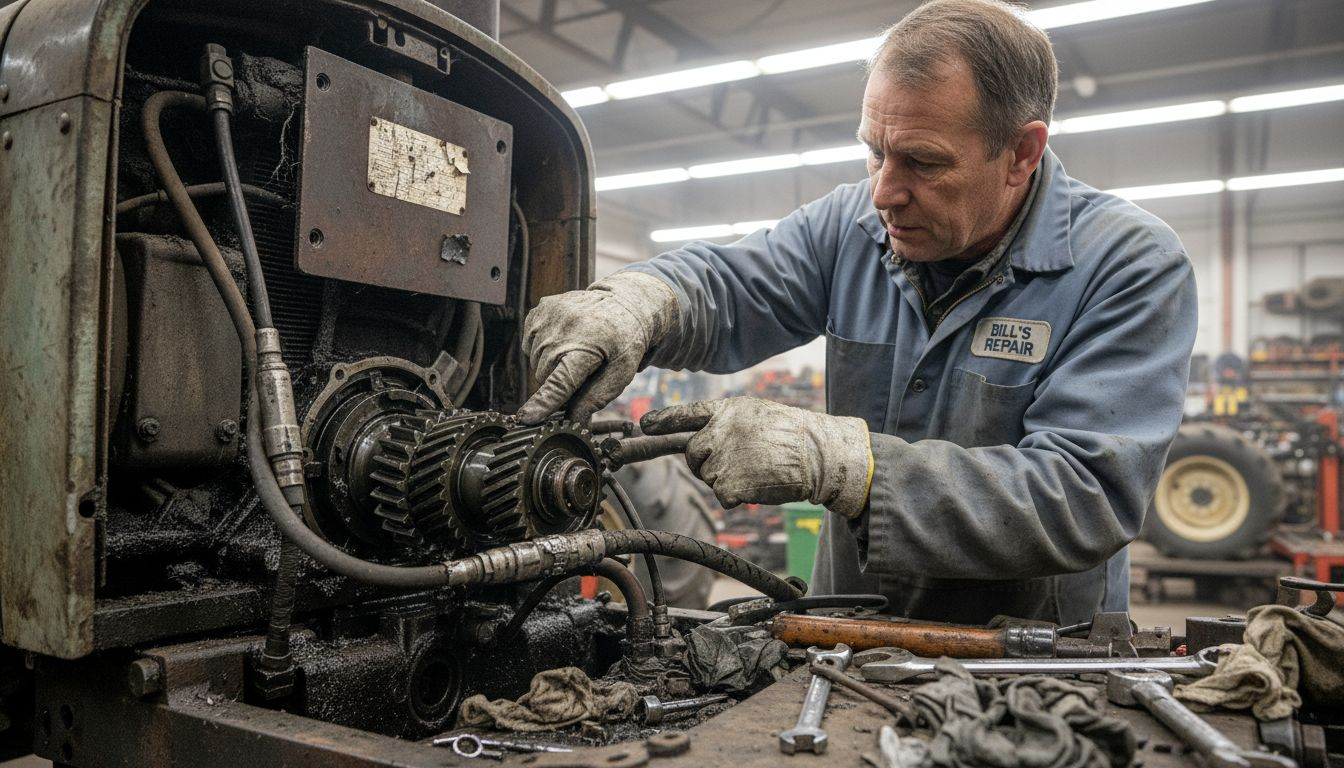
Hydraulic systems introduce complexity. Seals degrade. Hoses crack. Fluid degrades. A single failing component can compromise the entire system. That said, when properly maintained, hydraulic cylinders operate reliably for thousands of hours.
The durability advantage goes to mechanical systems for longevity under harsh conditions.
Performance: Precision vs. Power
Mechanical systems offer simplicity and lower maintenance costs, while hydraulic systems provide smoother control and handle variable loads more efficiently.
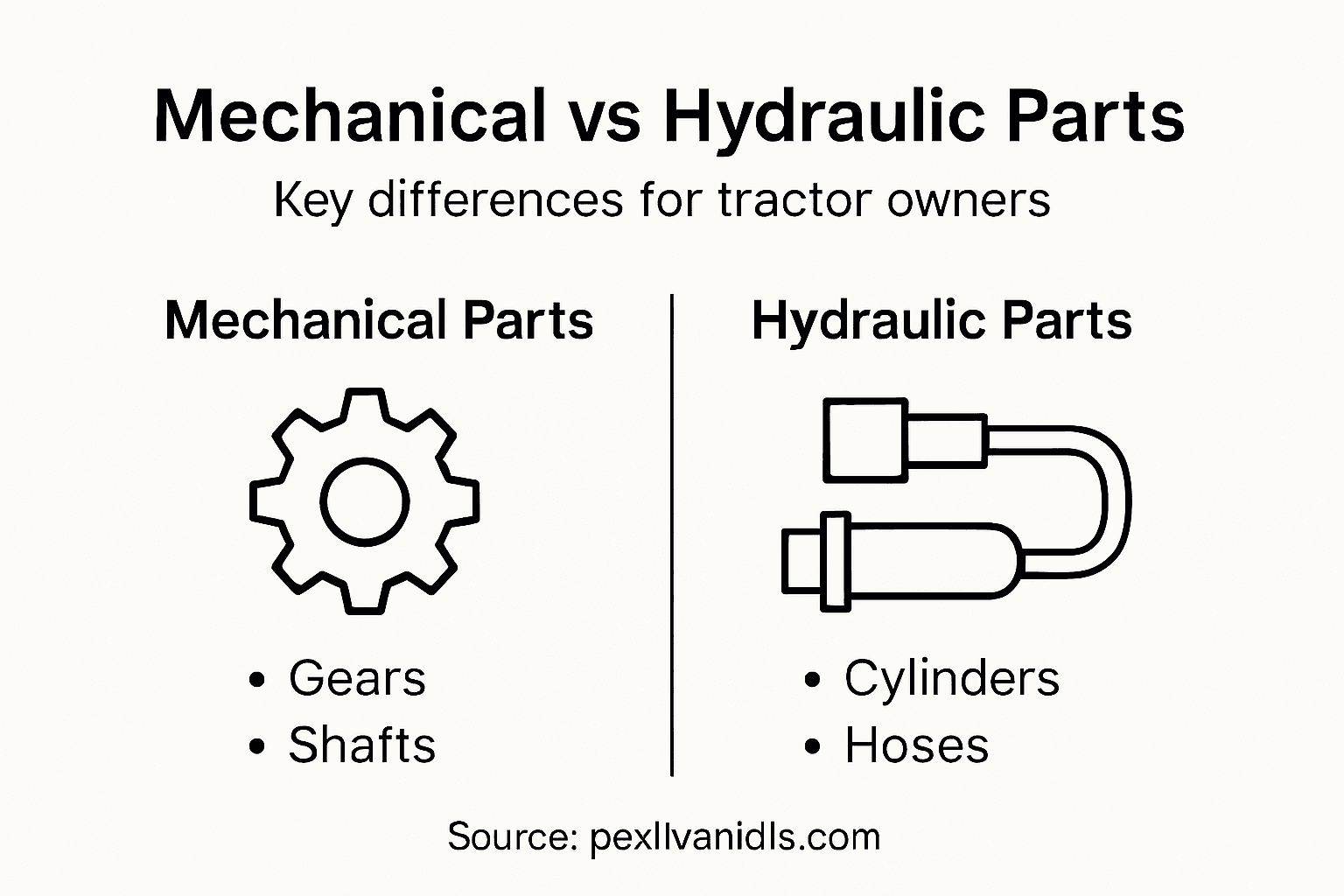
Mechanical systems provide consistent, straightforward operation. What you see is what you get. But they lack finesse. Steering feels heavier. Load control is more manual.
Hydraulic systems respond instantly and precisely. Your three-point hitch adjusts smoothly. Power steering feels natural. Braking is proportional and controlled. Performance clearly favors hydraulics.
Maintenance Requirements
Here’s where costs diverge significantly:
Mechanical maintenance:
- Oil and filter changes
- Gear inspections
- Linkage lubrication
- Annual fluid checks
Hydraulic maintenance:
- Fluid analysis and replacement
- Filter changes (more frequent)
- Hose inspections
- Seal replacements
- Pressure testing
- Contamination monitoring
Mechanical systems demand less attention. Hydraulic systems require vigilance. Missing scheduled maintenance on hydraulics leads to expensive repairs.
Mechanical systems cost less to maintain but deliver less precision, while hydraulic systems require disciplined maintenance schedules to prevent costly failures.
Real-World Cost Analysis
For small-scale operations in Kavala focusing on basic plowing and cultivation, mechanical systems offer lower total cost of ownership. Repairs are cheaper, parts are simpler, and downtime is predictable.
For larger operations requiring implement lifting, power steering, and specialized controls, hydraulics justify their higher maintenance costs through increased productivity and operator comfort.
Making Your Choice
Consider your operation’s complexity. Simple tasks? Mechanical serves you well. Demanding, varied operations? Hydraulics provide the control you need.
Your budget matters. Mechanical requires less upfront investment and lower maintenance spending.
Pro tip: Document all maintenance intervals for your system type and set phone reminders before each service is due—staying ahead of maintenance costs far less than emergency repairs during critical harvest periods.
Choosing Between Mechanical and Hydraulic Parts
This decision isn’t about which system is objectively better. It’s about matching the right system to your operation, budget, and maintenance capabilities. The wrong choice wastes money. The right choice keeps you productive.
Start by asking honest questions about your farming goals and resources.
Assess Your Operation’s Demands
What tasks consume most of your time? Simple, repetitive work like plowing and harrowing favors mechanical systems. Complex tasks requiring variable control—like precision implement lifting, power steering, and braking—demand hydraulics.
Choosing between mechanical and hydraulic parts depends on intended use, budget, and maintenance capability. Be realistic about what your farm actually requires.
Consider these factors:
- Task complexity: Simple or complex?
- Load variability: Do loads change during operation?
- Precision requirements: Is fine control essential?
- Seasonal intensity: How heavy are your peak periods?
- Available maintenance time: Can you commit to regular servicing?
Budget Matters More Than You Think
Mechanical systems cost less upfront and less to maintain. If your budget is tight, mechanical makes sense.
Hydraulic systems demand higher initial investment and ongoing maintenance expenses. Factor in fluid changes, filter replacements, seal service, and potential emergency repairs. These costs accumulate.
For small operations in Kavala running equipment for seasonal work, mechanical systems often provide better return on investment.
The following table summarizes factors to consider based on your farming operation’s needs:
| Farming Factor | Mechanical Advantage | Hydraulic Advantage |
|---|---|---|
| Task Complexity | Suits simple, repeatable tasks | Excels at varied and demanding tasks |
| Maintenance Discipline | Tolerates irregular schedules | Needs consistent, disciplined upkeep |
| Environmental Impact | Handles dust and humidity better | Vulnerable to fluid contamination |
| Operational Scale | Favored by small-scale, local farms | Necessary for large, diversified farms |
| Budget Sensitivity | Lower total cost of ownership | Higher, but offers extra functionality |
Maintenance Reality Check
Be honest about maintenance discipline. Hydraulic systems punish neglect. Missing a fluid change leads to contamination. Skipping inspections means missing early warning signs of hose wear. Ignoring pressure tests results in catastrophic failures.
Mechanical systems tolerate irregular maintenance better. They’re more forgiving of lazy maintenance routines.
If you can commit to disciplined maintenance schedules, hydraulics become manageable. If not, stick with mechanical.
The best system for your operation is the one you’ll actually maintain properly and afford to operate long-term.
Environmental Factors
Thessaloniki’s coastal humidity accelerates corrosion on hydraulic fittings. Dust in summer plowing season clogs hydraulic filters faster than in temperate climates.
These environmental challenges don’t rule out hydraulics, but they demand extra vigilance.
Making the Final Decision
Answer these questions in order:
- What are your most demanding tasks?
- How much can you spend initially?
- Can you afford annual maintenance?
- Do you have time for regular servicing?
- Is local technical support available?
Mechanical suits you if you answered “simple tasks,” “limited budget,” or “inconsistent maintenance.” Hydraulic suits you if you need precision, have budget flexibility, and commit to maintenance.
Pro tip: Talk with other farmers operating similar equipment in your region—they can share honest experiences about maintenance costs and reliability in Thessaloniki and Kavala’s specific conditions, guiding your decision.
Find the Right Tractor Parts for Your Mechanical and Hydraulic Needs
Understanding whether mechanical or hydraulic parts best suit your tractor is crucial for keeping your farming operations efficient and reliable. This article highlights the challenges many tractor owners face: balancing durability, maintenance demands, and the precision required to handle Thessaloniki and Kavala’s agricultural environment. Whether you need durable mechanical gears and shafts or responsive hydraulic cylinders and pumps, sourcing high-quality components is key to avoiding costly downtime and repairs.
At pexlivanidis.com we provide over 20,000 agricultural machinery parts designed to fit your exact needs. Explore our extensive inventory to find durable mechanical parts or advanced hydraulic components that match the performance your tractor demands. Every order over 100€ ships for free in Greece, enabling you to maintain your equipment without delay. Don’t let parts wearing out disrupt your work—visit our website now to secure your tractor’s reliability today and experience expert support ready to assist with your specific tractor part inquiries.
Frequently Asked Questions
What are the main differences between mechanical and hydraulic systems in tractors?
Mechanical systems rely on direct contact between solid components like gears and shafts, while hydraulic systems use pressurized fluid to create movement and control. This fundamental difference affects durability, maintenance, and how power is managed in a tractor.
Which type of system is easier to maintain, mechanical or hydraulic?
Mechanical systems typically require less maintenance and provide clear warning signs before failure. Hydraulic systems, on the other hand, demand more regular maintenance and monitoring to prevent leaks and contamination that can lead to costly repairs.
What types of tasks are better suited for hydraulic systems?
Hydraulic systems excel at tasks that require precision and control, such as lifting implements, steering assistance, and braking. They provide responsive handling of heavy loads, making them ideal for diverse farming operations and demanding jobs.
How do I decide which system is best for my tractor operations?
Consider the complexity of your tasks, your budget for initial investment and maintenance, and your ability to provide regular service. Simple tasks may favor mechanical systems, while more complex tasks requiring variable control may benefit from hydraulic systems.