

Supplying retailers and service centers across Thessaloniki and Kavala with tractor parts means relying on sources that offer more than just quick delivery. The right wholesaler acts as a critical link, connecting your business to established supply networks and providing both bulk purchasing advantages and smooth logistics. Understanding what sets parts wholesalers apart helps you choose partners that strengthen your inventory, improve order flexibility, and build trust with your customers.
Table of Contents
- Parts Wholesalers Defined And Basic Concepts
- Types Of Parts Wholesalers And Distinctions
- Inventory Strategies And Sourcing Methods
- Legal And Operational Requirements For B2B
- Risks, Costs, And Common Mistakes To Avoid
Key Takeaways
| Point | Details |
|---|---|
| Role of Parts Wholesalers | Parts wholesalers serve as critical intermediaries between manufacturers and businesses, helping to manage bulk purchasing, inventory, and logistics. |
| Types of Wholesalers | Understanding the distinct types of wholesalers—merchant wholesalers, agents, and manufacturers’ sales branches—can help you choose the best supplier for your needs. |
| Effective Inventory Management | Employ data analytics and demand forecasting to maintain appropriate inventory levels, minimizing holding costs and stockouts. |
| Risk Mitigation and Cost Awareness | Diversify supplier relationships and implement comprehensive insurance and security measures to address the various risks associated with wholesaling. |
Parts wholesalers defined and basic concepts
A parts wholesaler is a business that purchases agricultural machinery components in bulk directly from manufacturers and distributes them to retailers, service centers, and commercial operations like yours. They operate as critical intermediaries in the supply chain, sitting between manufacturers and the businesses that serve farmers and equipment owners.
Think of wholesalers as aggregators and distributors. They don’t sell to end consumers. Instead, they maintain large inventories and break bulk shipments into manageable quantities that your business actually needs. This is how operations like Pexlivanidis function—holding over 20,000 tractor parts in stock so you don’t have to.
What makes a wholesaler different from other suppliers
Wholesalers serve specific roles that retailers and direct manufacturers cannot. Wholesalers buy goods from manufacturers and resell them to retailers or other organizations, providing services beyond simple product delivery.
Key characteristics of parts wholesalers include:
- Bulk purchasing power: They buy in massive quantities, which lowers unit costs
- Inventory management: They maintain warehouses with diverse stock, eliminating long lead times
- Logistics coordination: They handle storage, packaging, and distribution to multiple locations
- Order flexibility: They process smaller orders tailored to your business needs
- Market knowledge: They understand regional demand patterns and seasonal fluctuations
Core functions wholesalers perform
In the agricultural parts sector, wholesalers handle essential operations that keep your inventory flowing smoothly:
- Order processing: Managing requests, tracking shipments, and coordinating delivery schedules
- Warehousing and storage: Maintaining climate-controlled facilities with thousands of SKUs organized for rapid fulfillment
- Inventory management: Using data systems to predict demand and maintain stock levels
- Transportation: Arranging efficient delivery routes across regions like Thessaloniki and Kavala
- Product information: Providing technical specifications, compatibility data, and cross-references
Quality wholesalers reduce your procurement burden while expanding the range of products you can confidently offer to your customers.
Why wholesalers matter for your business
You rely on wholesalers to fill gaps that manufacturers and retailers cannot. When you need 50 different tractor parts from multiple suppliers consolidated into one shipment with free delivery over 100€, that’s wholesale economics at work. You gain access to established supply networks that took years to build, saving you from managing dozens of manufacturer relationships.
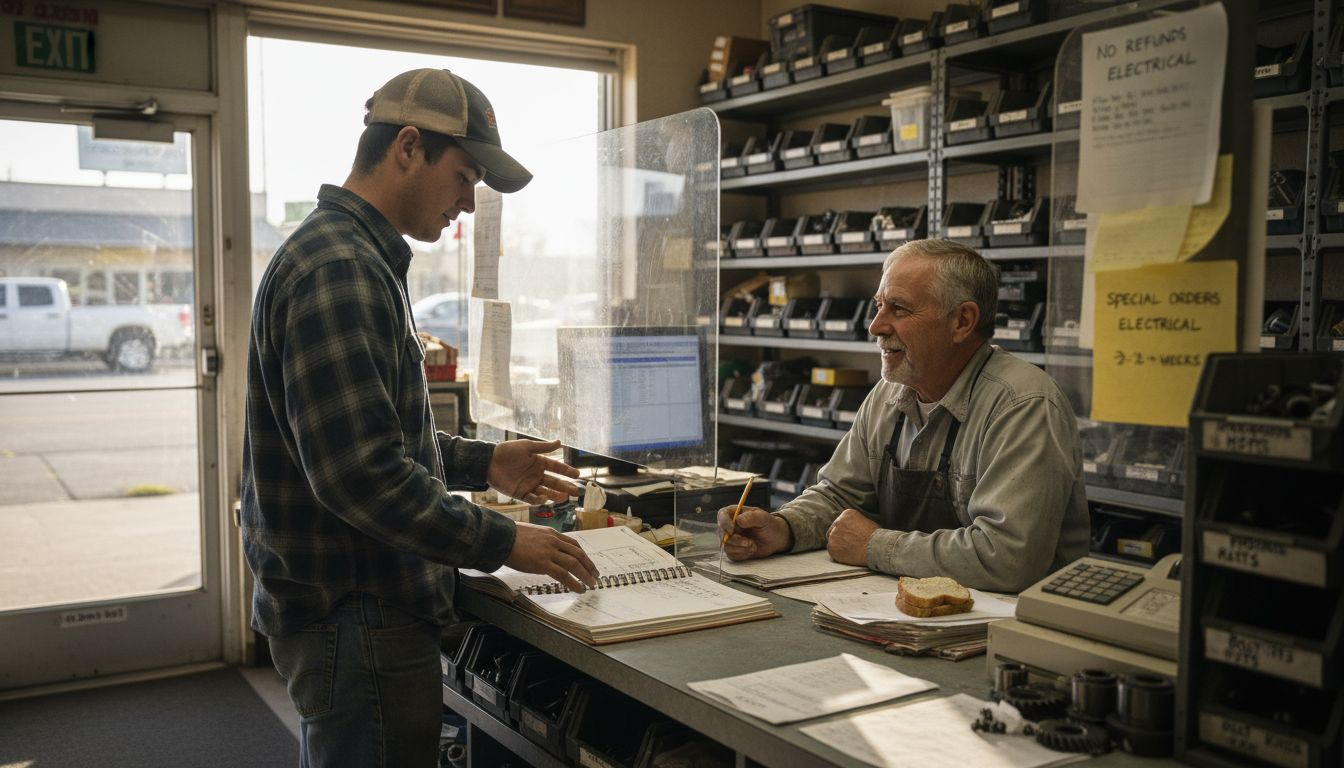
Wholesalers also absorb risk. They hold inventory based on market trends, so you’re not forced to guess which parts will sell next month. Their data-driven approach to stock management directly benefits your ordering accuracy and cash flow.
Pro tip: Build relationships with wholesalers who offer B2B membership programs and transparent pricing structures—these partnerships typically yield better margins and faster order processing times over the long term.
Types of parts wholesalers and distinctions
Not all wholesalers operate the same way. Understanding the different types helps you choose the right supplier for your specific needs in Thessaloniki, Kavala, and surrounding regions. Each type brings distinct advantages and limitations to your supply chain.
Merchant wholesalers: The traditional full-service model
Merchant wholesalers are the most common type you’ll encounter in agricultural parts distribution. They purchase inventory directly from manufacturers, take full ownership of the goods, and resell them to retailers and businesses like yours.
What sets them apart:
- Full ownership: They buy goods outright and assume all financial risk
- Comprehensive services: They provide storage, transportation, and marketing support
- Inventory investment: They maintain large warehouses with diverse product lines
- Extended credit: They often offer flexible payment terms to established customers
Operations like Pexlivanidis function as merchant wholesalers, holding over 20,000 items in stock and managing the entire logistics chain for you.
Agents and brokers: The facilitation model
Unlike merchant wholesalers, agents and brokers facilitate sales without taking ownership of the products. They match buyers with suppliers and earn commissions on completed transactions.
Key differences from merchants:
- No inventory risk: They don’t hold stock, reducing their overhead costs
- Commission-based income: They earn percentages on sales rather than markup margins
- Relationship focus: They specialize in connecting the right parties rather than logistics
- Lower involvement: They perform less extensive operational services
Agents and brokers work well for specialized or hard-to-find tractor parts where sourcing expertise matters more than immediate availability.
Manufacturers’ sales branches: Direct distribution
Some equipment manufacturers bypass traditional wholesalers entirely by operating their own sales branches. These divisions sell directly to retailers and distributors while maintaining manufacturer control over pricing and product information.
Specialized wholesaler categories
Within the agricultural parts sector, you’ll also encounter specialized operators:
Here’s how different types of agricultural parts wholesalers compare in terms of operation and benefits:
| Wholesaler Type | Inventory Control | Risk Exposure | Customer Advantages |
|---|---|---|---|
| Merchant Wholesalers | Full ownership, manage stock | High, financial and inventory | Immediate parts access, flexible payments |
| Agents/Brokers | No stock ownership | Low, only commissions | Access to rare parts, sourcing expertise |
| Manufacturers’ Branches | Controlled by manufacturer | Low, tied to production | Direct pricing, authentic products |
| Specialized Operators | Focused or cooperative stock | Varies, depends on model | Discounts, direct shipment, niche supply |
- Single-line wholesalers: Focus exclusively on specific product categories like engine parts or hydraulics
- Drop shippers: Process orders without physically handling inventory—manufacturers ship directly to you
- Wholesale cooperatives: Groups of smaller businesses pooling purchases for better volume discounts
- Commission agents: Sell products owned by manufacturers, earning fees rather than markups
The best wholesaler for your business depends on your ordering frequency, capital availability, and need for immediate stock access versus supplier relationships.
Making the right choice for your business
Merchant wholesalers offer immediate availability and comprehensive service—critical for time-sensitive repairs. Agents and brokers work better when you’re sourcing unusual parts or building long-term supplier relationships. Manufacturers’ branches provide direct access but often with less flexibility on terms.
Consider your cash flow situation, storage capacity, and how quickly you need parts delivered. These factors determine which wholesaler type aligns with your operation.
Pro tip: Request trial orders from potential wholesalers before committing to larger relationships—this reveals their actual service quality, shipping speed, and responsiveness to your specific regional needs.
Inventory strategies and sourcing methods
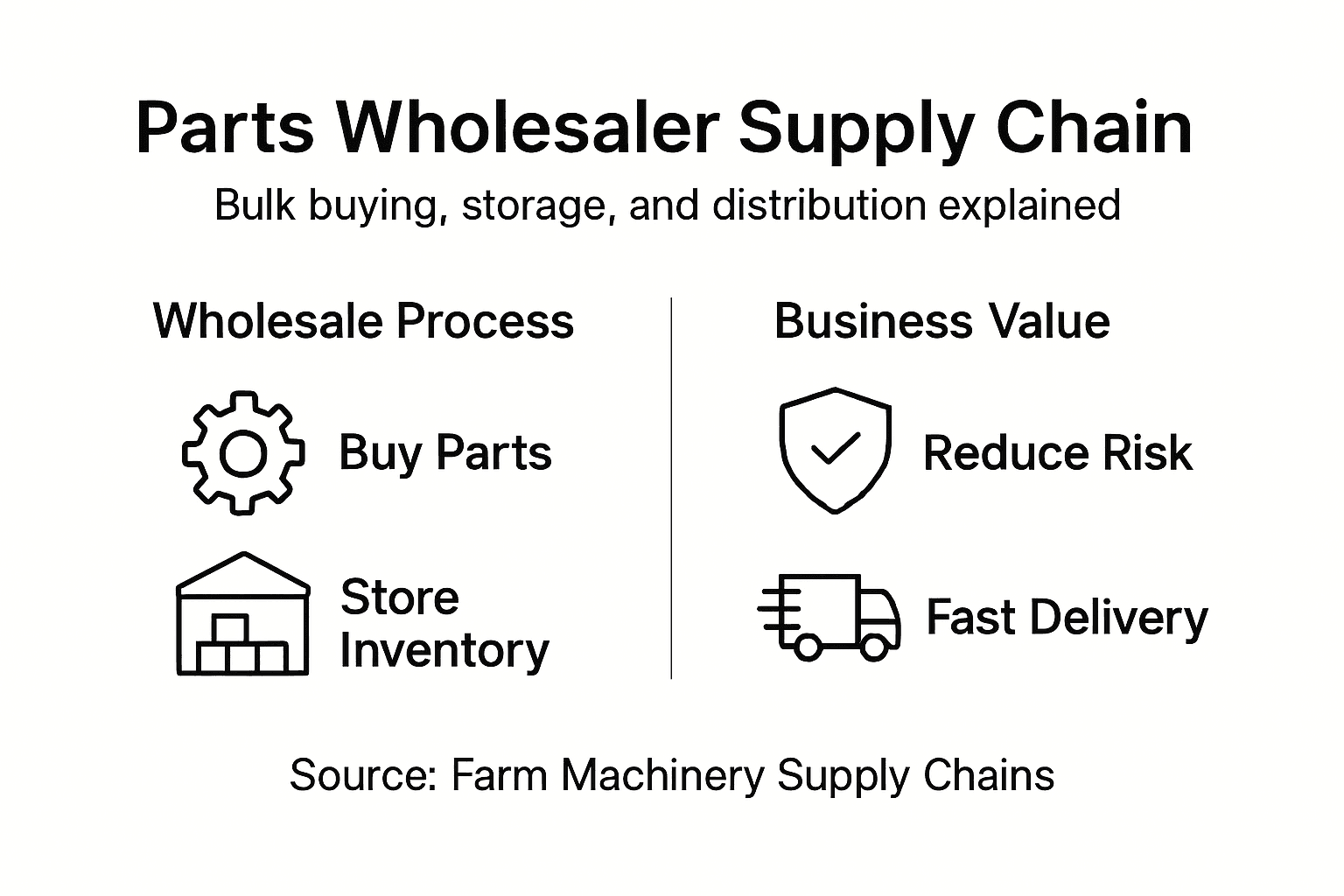
Successful parts wholesalers balance two competing pressures: keeping enough stock to meet demand without tying up excessive capital in slow-moving inventory. Your sourcing methods and inventory strategy directly impact your profit margins and customer satisfaction.
Understanding demand forecasting
You can’t stock what you don’t predict customers will need. Data analytics and demand forecasting help minimize holding costs and avoid stockouts by giving you visibility into seasonal patterns and regional preferences.
Tractor parts buying follows predictable rhythms. Farmers purchase heavily before spring planting and fall harvest. Hydraulic components and engine parts move year-round. By analyzing your sales history, you identify which items need higher stock levels during specific months.
Building smart inventory levels
The goal is right-sized inventory—enough to prevent customer disappointment but not so much that capital sits idle. Consider these factors:
- Lead times: How long does it take to restock from your suppliers?
- Turnover rates: Which items sell multiple times monthly versus annually?
- Storage costs: Climate-controlled warehouse space is expensive in Thessaloniki and Kavala regions
- Obsolescence risk: Technology changes might make certain parts less relevant
- Seasonal variation: Plan for peak and slow periods throughout the year
Sourcing relationship strategies
Your supplier relationships directly affect your inventory effectiveness. Strong partnerships with manufacturers and primary wholesalers enable faster restocking and better pricing.
Effective sourcing involves:
- Diversifying suppliers: Don’t rely on one source for critical parts
- Negotiating volume commitments: Larger orders typically yield better unit costs
- Establishing clear communication: Regular contact prevents misunderstandings about specifications and availability
- Monitoring performance: Track on-time delivery rates and product quality consistently
Wholesalers using automation and supplier integration systems reduce manual order processing by 40-60% while improving accuracy and speed.
Technology and automation
Modern inventory management systems track stock levels in real-time and trigger automatic reorders when items fall below set thresholds. This removes guesswork and prevents accidental stockouts.
Integration with supplier systems means orders can flow electronically, reducing processing time from days to hours. This speeds up your ability to respond to unexpected demand spikes or urgent customer requests.
Pro tip: Implement quarterly inventory audits comparing system records to physical counts—this catches data entry errors and shrinkage early, preventing cascade problems in your forecasting models.
Legal and operational requirements for B2B
Operating as a B2B parts wholesaler means navigating both legal obligations and operational standards. These requirements protect your business, your customers, and ensure smooth transactions across Thessaloniki, Kavala, and beyond.
Understanding B2B contracts and agreements
B2B contracts are legally binding agreements that define terms of cooperation between businesses including supply agreements, service contracts, and confidentiality arrangements. A clear contract prevents misunderstandings that can damage relationships and profitability.
Your contracts should specify:
- Product specifications: Exact descriptions, part numbers, and quality standards
- Delivery schedules: When products arrive and acceptable timeframes for fulfillment
- Payment terms: Invoice dates, payment methods, and credit periods
- Warranty coverage: What you guarantee and what liability you accept
- Dispute resolution: How you handle disagreements without litigation
Critical contract clauses for farm machinery parts
Farm equipment parts require specific contractual language. A hydraulic pump must match exact specifications—generic descriptions create liability exposure. Include clauses addressing seasonal demand fluctuations, emergency restocking requests, and return policies for defective items.
Liability clauses matter significantly. Define what happens if you ship incorrect parts or if parts fail prematurely. Some wholesalers limit liability to the purchase price; others negotiate higher caps for critical components.
Operational standards and procedures
Standard Operating Procedures (SOP) ensure operational consistency, regulatory compliance, safety, and efficiency in B2B transactions within farm machinery supply. Document everything from supplier selection through final delivery.
Your SOP manual should cover:
- Product selection: How you vet new suppliers and evaluate quality
- Inventory control: Receiving, storage, and tracking procedures
- Order processing: From customer inquiry through shipment confirmation
- Quality assurance: Testing and inspection checkpoints
- Packaging and logistics: Standards for protecting parts during transit
- Customer service: Response times and complaint handling
Well-documented procedures reduce disputes, improve efficiency, and demonstrate professionalism that builds customer trust.
Regulatory compliance considerations
You operate within Greek business law, which includes VAT reporting, employment regulations, and product safety requirements. Agricultural parts don’t face specialized certification like pharmaceuticals, but misleading specifications violate consumer protection laws.
If you handle cross-border transactions with European Union customers, familiarize yourself with relevant international sales conventions that govern contracts and liability.
Documentation practices
Keep detailed records of every transaction. Document product specifications, pricing, delivery dates, and any quality issues. This protects you if disputes arise and demonstrates good faith business practices.
Maintain supplier agreements showing what you ordered, what you received, and any problems. This creates an audit trail that protects you if customers claim defective parts.
Pro tip: Have a lawyer review your standard B2B contract templates before using them extensively—investing 200-300 euros upfront prevents costly disputes later and ensures compliance with Greek commercial law requirements.
Risks, costs, and common mistakes to avoid
Wholesaling farm machinery parts exposes your business to financial, operational, and legal risks. Understanding these dangers and how to mitigate them separates profitable operations from those that struggle.
Inventory management pitfalls
Poor inventory management, inadequate market research, and weak supplier relationships cause wholesale business failures. Overstocking ties up capital in slow-moving parts while understocking loses sales and frustrates customers.
Common inventory mistakes include:
- Ignoring demand trends: Stocking what sold last year, not what customers need now
- Excessive safety stock: Holding 6 months of supply for items that turn monthly
- Dead inventory: Parts for discontinued equipment that nobody buys anymore
- Seasonal blindness: Not adjusting stock levels for planting and harvest periods
These errors compound. Capital trapped in excess inventory can’t fund new product lines or pay suppliers on time, damaging your relationships.
Supplier and sourcing risks
Dependence on a single supplier creates vulnerability. If your primary tractor engine parts distributor faces disruptions—factory fires, shipping delays, bankruptcy—your entire operation stalls.
Vet suppliers thoroughly. Check their financial stability, delivery track records, and quality consistency. Negotiate backup arrangements with secondary suppliers for critical items. Document everything in writing.
Operational and property risks
Wholesalers must prepare for property damage from fire or flooding, supply shortages, legal penalties for contract non-compliance, and product liability for defective goods. Warehouse fires destroy inventory instantly. Flooding damages climate-sensitive components. Equipment breakdowns halt order processing.
Mitigate these through:
Use this reference to quickly assess common risks facing agricultural parts wholesalers:
| Risk Area | Example Issue | Impact on Business | Prevention Approach |
|---|---|---|---|
| Inventory | Overstocked obsolete items | Tied up capital, slow sales | Data-driven forecasting |
| Supplier | Single-source dependency | Supply disruptions | Diversify sourcing, vet partners |
| Property | Warehouse fire/flood | Lost stock, business halt | Insurance, secure facilities |
| Pricing | Static price structure | Margin erosion | Regular price reviews |
- Insurance coverage: Property, liability, and business interruption policies
- Diversified storage: Don’t keep all inventory in one location
- Security protocols: Theft prevention and access controls
- Maintenance schedules: Regular equipment inspections and repairs
- Incident tracking: Document all losses and near-misses
Hidden cost mistakes
Many wholesalers overlook expenses that erode margins. Warehouse rent, climate control, insurance, shipping damage, and obsolete stock write-offs add up quickly. Dynamic pricing that reflects these costs prevents losses.
Calculate your true cost of goods sold, including storage, handling, and shrinkage. Adjust pricing accordingly or your margins disappear.
The wholesalers who survive focus relentlessly on cash flow, maintain diversified supplier relationships, and invest in systems that prevent inventory mistakes.
Pricing strategy failures
Static pricing ignores market conditions and cost changes. When your suppliers raise prices 15% but you don’t adjust retail prices, your margins collapse. Review pricing quarterly and adjust for seasonal demand.
Pro tip: Implement a monthly reconciliation process comparing actual inventory counts to system records—catch shrinkage and errors early before they compound into significant financial losses.
Streamline Your Farm Machinery Supply Chain with Trusted Wholesale Solutions
Managing the complex demands of agricultural parts supply requires a partner who understands inventory challenges, seasonal fluctuations, and fast delivery. If your business struggles with stock shortages, managing multiple suppliers, or costly delivery delays, embracing the right wholesaler model is essential. As highlighted, merchant wholesalers like Pexlivanidis play a crucial role by offering bulk purchasing power, extensive inventories, and tailored logistics support designed specifically for farm machinery distributors in Thessaloniki, Kavala, and beyond.
Discover how you can benefit from a vast inventory of over 20,000 tractor parts, simplified order processing, and reliable shipping options with free delivery on orders above 100€. Explore our product listings and availability to experience seamless sourcing, or register for a wholesale B2B membership to unlock flexible payment terms and exclusive pricing. Do not wait for stockouts to impact your bottom line. Take control of your parts supply today by visiting Pexlivanidis and start building a smarter, more dependable supply chain.
Frequently Asked Questions
What is the role of a parts wholesaler in the agricultural supply chain?
Parts wholesalers act as intermediaries that purchase agricultural machinery components in bulk from manufacturers and distribute them to retailers and service centers, thereby facilitating efficient supply management.
How do parts wholesalers help reduce procurement costs for businesses?
Parts wholesalers buy components in massive quantities, allowing them to lower unit costs, manage extensive inventories, and offer flexible order sizes tailored to business needs, which ultimately reduces procurement costs.
What types of services do parts wholesalers provide?
Parts wholesalers provide services such as order processing, inventory management, warehousing, logistics coordination, and technical product information, ensuring businesses can maintain consistent supply with minimal effort.
How can a business choose the right type of wholesaler?
Choosing the right wholesaler involves assessing your specific needs, such as the frequency of orders, available capital, and whether you prioritize immediate stock access or long-term supplier relationships.