

Farm equipment has changed more in the last hundred years than in any other time in history. Machines with wooden plows and simple tools were once the standard, but now farms use tractors with GPS and robots powered by artificial intelligence. Some modern farming equipment can plant and fertilize crops with centimeter-level precision. Most people think technology just makes things faster. The real surprise is that these advances are turning farmers into data scientists who optimize every inch of their land.
Table of Contents
- The Evolution Of Machinery In Agriculture
- Key Types Of Machinery Used In Modern Farming
- Impact Of Machinery On Farming Efficiency
- The Importance Of Technology In Agricultural Machinery
- Sustainability And The Future Of Farming Machinery
Quick Summary
| Takeaway | Explanation |
|---|---|
| Machinery Revolutionizes Farming Efficiency | Advanced machinery has boosted agricultural productivity significantly, making farming more efficient than ever before. |
| Integration of Technology Enhances Precision | Modern farming employs GPS and data analytics, allowing precise resource management and optimized crop production. |
| Sustainability Is Key for Future Machinery | Future agricultural machines must prioritize environmental sustainability through innovative designs and energy sources. |
| Specialized Equipment Addresses Specific Needs | Specialized machines like harvesters and precision sprayers optimize different agricultural tasks, improving overall effectiveness. |
| Technological Innovations Improve Resource Management | Emerging technologies focus on reducing waste and enhancing input efficiency, helping to optimize agricultural practices. |
The Evolution of Machinery in Agriculture
The role of machinery in modern farming has transformed dramatically over centuries, representing a remarkable journey from basic manual tools to sophisticated technological systems. Agricultural machinery has fundamentally reshaped how humans produce food, dramatically increasing efficiency, productivity, and scale of agricultural operations.
From Manual Labor to Mechanical Innovation
Historically, farming relied exclusively on human and animal power. Farmers used hand tools like wooden plows, sickles, and manual threshing methods. The physical labor was intense, with productivity severely limited by human capacity. The Agricultural Revolution marked a pivotal transition, introducing mechanical innovations that would permanently alter farming practices.
Key technological milestones included:
- The steel plow, which replaced wooden designs and enabled deeper, more efficient soil cultivation
- Steam-powered tractors that eliminated dependence on animal labor
- Mechanical seed drills enabling more precise planting techniques
Precision Agriculture and Technological Integration
Modern agricultural machinery represents an extraordinary leap in technological capability. According to the Food and Agriculture Organization, contemporary farm equipment integrates advanced technologies like GPS guidance, automated steering, variable rate application systems, and real-time data monitoring.
These sophisticated machines can now:
- Analyze soil conditions with centimeter-level precision
- Automatically adjust planting and fertilization strategies
- Minimize resource waste through targeted interventions
Today’s agricultural machinery is not just about mechanical power but represents a complex intersection of engineering, data science, and environmental management. Farmers now operate highly intelligent systems that optimize every aspect of crop production, transforming agriculture from a labor-intensive activity to a technologically driven profession.
Key Types of Machinery Used in Modern Farming
Agriculture has transformed from manual labor to a sophisticated technological industry, with specialized machinery playing a critical role in enhancing productivity, efficiency, and precision in farming operations. Understanding the key types of machinery provides insight into how modern agriculture sustains global food production.
The following table summarizes the main types of modern agricultural machinery discussed in the article and their key features or roles in farming operations.
| Machinery Type | Primary Function | Key Features/Technologies |
|---|---|---|
| Tractors | Power and mobility for various tasks | High-horsepower engines, GPS, automated steering |
| Harvesters | Efficient crop collection | Automated harvest, reduces manual intervention |
| Planting/Seeding Equipment | Precise seed placement | Ensures uniform distribution, optimal conditions |
| Irrigation Systems | Automated water management | Targeted irrigation, resource efficiency |
| Precision Sprayers | Targeted pesticide/fertilizer application | Reduces waste, improves precision |
| Drones | Crop monitoring and data collection | Aerial imagery, remote sensing capabilities |
| Robotic Equipment | Automated specific tasks (e.g., weeding) | AI integration, selective operation |

Power and Mobility: Tractors and Heavy Equipment
Tractors form the fundamental backbone of agricultural machinery, serving as versatile platforms for numerous farm operations. These powerful machines provide the mechanical energy required for various tasks, from soil preparation to crop management. According to Cademix Institute of Technology, modern tractors feature advanced capabilities like high-horsepower engines, precision steering systems, and interchangeable attachments that enable farmers to perform multiple functions with a single piece of equipment.
Key characteristics of modern agricultural tractors include:
- Integrated GPS and navigation systems
- Automated steering mechanisms
- Compatibility with diverse farming implements
- Advanced hydraulic systems
Specialized Crop Management Machinery
Beyond tractors, specialized machinery addresses specific agricultural needs. Harvesters represent a critical category, designed to efficiently collect mature crops with minimal manual intervention. These machines range from combine harvesters for grains to specialized equipment for fruits, vegetables, and other crop types. Planting and seeding machinery ensures precise seed placement, uniform distribution, and optimal growing conditions.
Other specialized agricultural machines include:
- Irrigation systems with automated water management
- Precision sprayers for targeted fertilizer and pesticide application
- Drone technology for crop monitoring and data collection
- Robotic equipment for weeding and selective harvesting
The integration of advanced technologies like artificial intelligence and machine learning continues to push the boundaries of agricultural machinery, transforming farming from a traditional occupation to a high-tech, data-driven profession. Modern farmers now rely on intelligent systems that optimize every aspect of crop production, dramatically increasing efficiency and sustainability.
Impact of Machinery on Farming Efficiency
Machinery has fundamentally revolutionized agricultural productivity, transforming farming from a labor-intensive activity to a sophisticated, technology-driven profession. The introduction of advanced equipment has dramatically enhanced operational efficiency, resource management, and overall agricultural output.
Quantifiable Productivity Improvements
Modern agricultural machinery enables farmers to achieve unprecedented levels of productivity and precision. According to research from Frontiers in Environmental Science, mechanization significantly improves Total Factor Productivity (TFP), with the most substantial gains observed in larger farming operations.
Key productivity improvements include:
- Reduced manual labor requirements
- Faster operational speeds
- More consistent crop cultivation
- Minimized human error
- Enhanced crop yield and quality
Resource Optimization and Economic Benefits
Beyond increased productivity, agricultural machinery offers critical economic advantages. Mechanized farming techniques allow for more precise resource allocation, reducing waste and maximizing input efficiency. Advanced equipment enables targeted interventions in areas like irrigation, fertilization, and pest management, ensuring optimal use of water, nutrients, and agricultural inputs.
Economic benefits of machinery integration encompass:
- Lower long-term operational costs
- Increased farm income potential
- Reduced dependency on manual labor
- Enhanced scalability of farming operations
- More predictable agricultural outcomes
The transformative impact of machinery extends beyond immediate economic considerations. By enabling more sustainable and efficient farming practices, technological innovations are helping address global challenges like food security, environmental conservation, and agricultural resilience. Modern farmers are no longer just producers but technological managers, leveraging sophisticated equipment to optimize every aspect of crop production.
This table compares traditional and modern agricultural machinery, highlighting how advancements have impacted farming productivity and environmental sustainability.
| Aspect | Traditional Machinery | Modern Machinery |
|---|---|---|
| Power Source | Human/animal labor | Engines (diesel, electric, hydrogen), automation |
| Precision | Low | High (GPS, AI-guided, centimeter-accuracy) |
| Labor Requirements | High | Reduced via automation and robotics |
| Resource Management | General and imprecise | Targeted, data-driven, efficient |
| Environmental Impact | Higher emissions, soil compaction | Reduced emissions, lighter designs, sustainability |
| Role of Farmer | Manual operator | Data-driven manager, technology operator |
The Importance of Technology in Agricultural Machinery
Technology has become the cornerstone of modern agricultural machinery, transforming farming from a traditional practice to a sophisticated, data-driven industry. The integration of advanced technological solutions enables farmers to address complex challenges related to productivity, sustainability, and resource management.
Precision and Intelligent Systems
Advanced technologies are revolutionizing agricultural machinery by introducing unprecedented levels of precision and intelligent decision-making capabilities. According to research from MDPI’s Agronomy journal, modern agricultural technologies enable machinery to achieve remarkable navigation accuracy, with lateral precision below 6 cm and sophisticated data processing capabilities.
Key technological advancements include:
- Multi-source positioning systems
- Intelligent perception technologies
- Deep learning algorithms
- Adaptive robotic control mechanisms
- Real-time data analytics platforms
Sustainability and Resource Optimization
Technology in agricultural machinery plays a critical role in promoting sustainable farming practices. Intelligent systems now enable targeted interventions that significantly reduce resource waste. For instance, advanced UAVs can reduce pesticide usage by up to 40% through precise, location-specific application. Smart greenhouse technologies can regulate microclimate conditions with temperature precision within 0.1 degrees.
Environmental and efficiency benefits encompass:
- Reduced chemical and water consumption
- Minimized environmental impact
- Enhanced crop monitoring capabilities
- Predictive maintenance of agricultural equipment
- Improved crop yield and quality
The convergence of technology and agricultural machinery represents more than a technological upgrade.
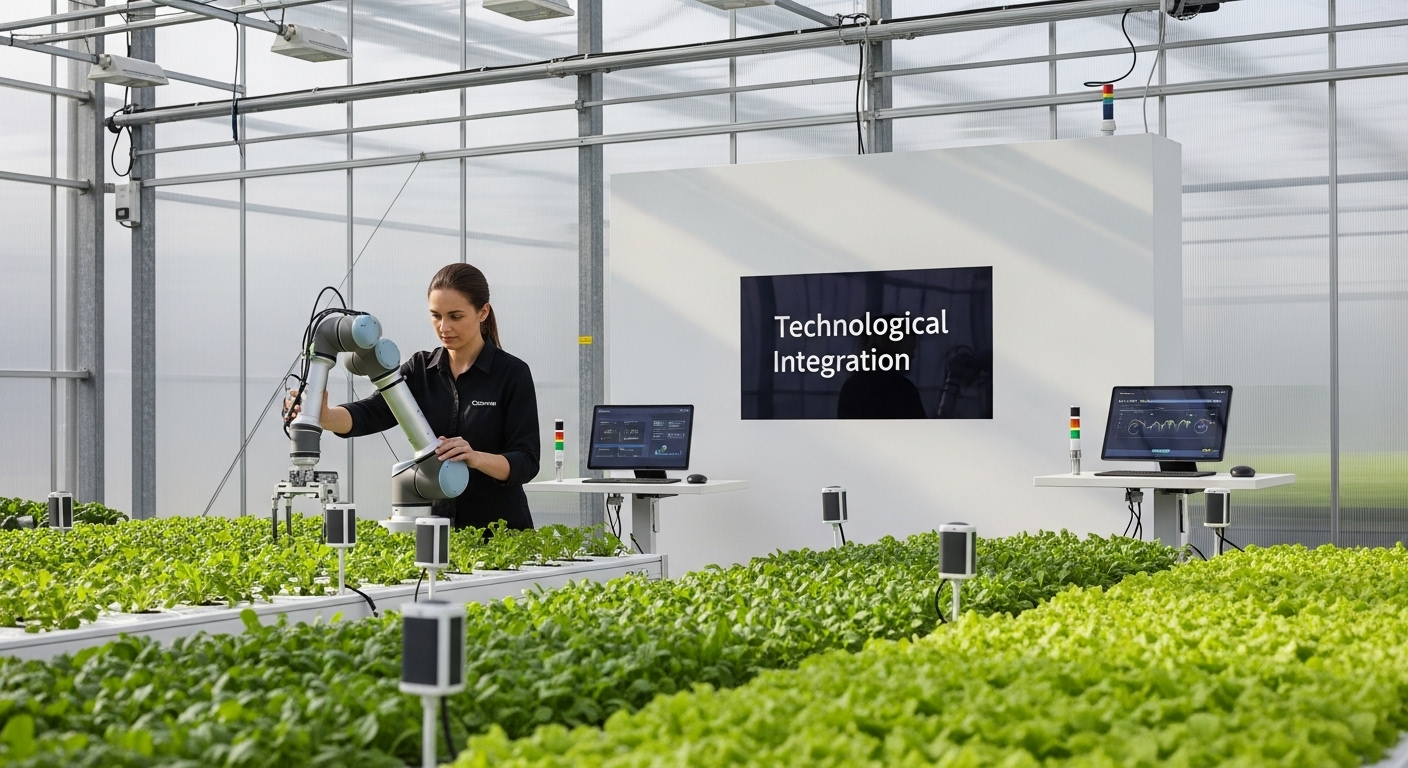 It signifies a fundamental reimagining of agricultural practices, where farmers become data-driven managers leveraging sophisticated technological tools to address global challenges like food security, climate adaptation, and sustainable resource management.
Sustainability and the Future of Farming Machinery
The agricultural machinery sector stands at a critical intersection of technological innovation and environmental responsibility. As global challenges like climate change, resource scarcity, and food security intensify, farming machinery must evolve to become more sustainable, efficient, and environmentally conscious.
Environmental Challenges and Technological Solutions
Traditional agricultural machinery has historically contributed to environmental degradation through high energy consumption, soil compaction, and significant carbon emissions. According to the Food and Agriculture Organization, the future of farming machinery requires a fundamental reimagining of design and operational principles to mitigate these environmental impacts.
Key sustainability strategies include:
- Developing lighter, smaller machinery designs
- Implementing renewable energy powered equipment
- Reducing soil compaction through advanced engineering
- Minimizing greenhouse gas emissions
- Creating autonomous robotic systems with lower environmental footprints
Technological Innovations Driving Sustainable Agriculture
Future farming machinery will increasingly integrate advanced technologies that prioritize environmental stewardship. Emerging innovations focus on precision agriculture, reduced resource consumption, and intelligent systems that optimize every aspect of farming operations. Electric and hydrogen-powered machinery, AI-driven autonomous equipment, and modular design principles will characterize the next generation of sustainable agricultural technologies.
Critical technological innovations encompass:
- Electric and hydrogen propulsion systems
- AI and machine learning for resource optimization
- Modular and adaptable machinery designs
- Advanced sensor technologies for precise interventions
- Biodegradable and recyclable machinery components
The transformation of farming machinery represents more than technological advancement. It signifies a comprehensive approach to agricultural sustainability, where innovation, environmental consciousness, and productive efficiency converge to address global challenges and create a more resilient food production ecosystem.
Power Your Fields with Advanced Agricultural Parts and Support
Are you facing rising costs or downtime as you strive to keep up with the demands of modern farming? The journey from traditional manual labor to today’s precision agriculture means that your machinery has never been more central to efficiency and crop yield. As described in the article, farmers rely on cutting-edge technology, robust tractor systems, and specialized equipment to maximize productivity and meet new sustainability targets. Yet, one broken part or outdated accessory can slow progress and put your harvest at risk.
Make sure your operation is equipped for tomorrow by exploring the huge selection at pexlivanidis.com. With over 20,000 agricultural machinery parts, including essential tractor accessories and spare parts, you will find reliable solutions for every challenge. Enjoy free shipping in Greece on orders over 100€, fast product searches, and wholesale B2B options designed to keep your business running smoothly. Do not let interruptions hold you back. Visit pexlivanidis.com now and secure the parts you need to keep your farm productive and future-ready.
Frequently Asked Questions
What impact has machinery had on farming efficiency?
Machinery has revolutionized farming by significantly increasing productivity and efficiency. It reduces manual labor, speeds up operations, and enhances consistency in crop cultivation, leading to higher crop yields and quality.
How do modern tractors enhance agricultural operations?
Modern tractors come equipped with advanced technology features like GPS, automated steering, and high-horsepower engines, making them versatile for various tasks such as soil preparation, planting, and crop management.
What are the key advantages of using specialized crop management machinery?
Specialized machinery, such as harvesters and precision sprayers, allows for efficient crop collection and precise application of water, fertilizers, and pesticides. This leads to better resource management and improved crop health and yield.
How does technology contribute to sustainable farming practices?
Technology in agricultural machinery enables precise resource allocation, reducing waste and environmental impact. Innovations like electric propulsion systems and AI-driven equipment help farmers practice sustainable agriculture while maintaining high productivity.