

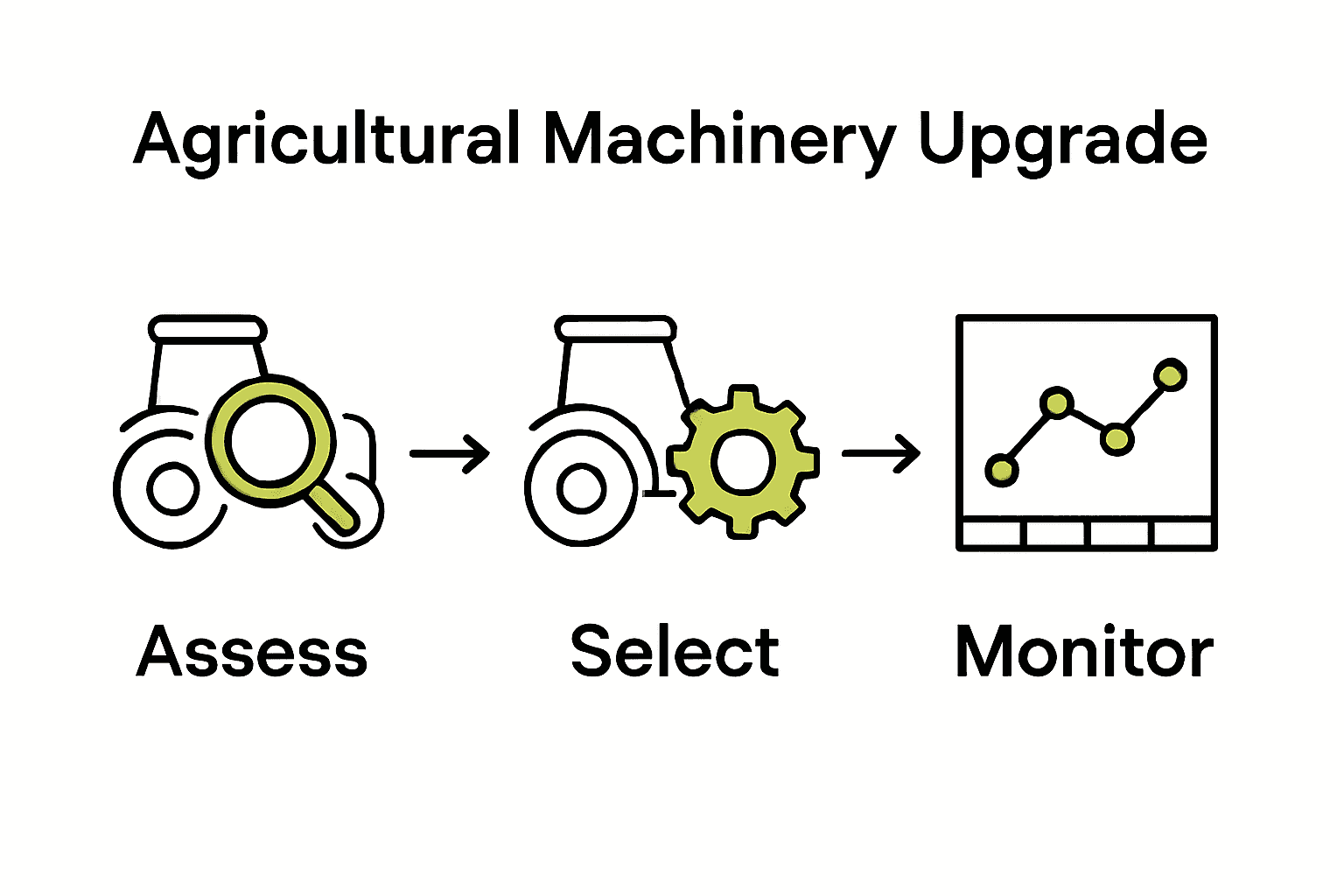
Unexpected breakdowns can grind a farm’s progress to a halt, yet fewer than half of agricultural operators use condition monitoring to spot early warning signs. When every harvest depends on reliable equipment, understanding your machinery’s weaknesses and strengths becomes more than a routine task. This guide brings clear steps for assessing current conditions, choosing the right upgrades, and keeping your investment running at its best, helping you avoid costly repairs and downtime.
Table of Contents
- Step 1: Assess Current Machinery Conditions
- Step 2: Research Suitable Upgrade Options
- Step 3: Select Compatible Replacement Parts
- Step 4: Install Upgrades And Accessories Carefully
- Step 5: Test Upgraded Machinery Performance
- Step 6: Monitor Long-Term Efficiency Improvements
Quick Summary
| Key Point | Explanation |
|---|---|
| 1. Conduct thorough machinery inspections | Regular visual and technical checks prevent costly breakdowns and ensure optimal performance. |
| 2. Research machinery upgrades meticulously | Compare equipment and calculate ROI to choose upgrades that provide long-term benefits. |
| 3. Select high-quality replacement parts | Verify compatibility and durability of parts to maintain machinery efficiency and performance. |
| 4. Follow precise installation procedures | Methodical installation minimizes errors and ensures proper machinery functionality. |
| 5. Monitor performance over time | Continuously tracking key metrics helps assess the impact of upgrades on efficiency and productivity. |
Step 1: Assess current machinery conditions
Knowing the exact condition of your agricultural machinery is the first critical step in preventing expensive breakdowns and maintaining peak performance. According to Wikipedia, condition monitoring helps track key machinery parameters like vibration and temperature to detect potential issues before they become major problems.
Start by conducting a comprehensive visual inspection of your equipment. Look for signs of wear, rust, unusual damage, or loose components. Check hydraulic lines for cracks, examine electrical connections for corrosion, and inspect moving parts for excessive play or unexpected resistance. Pay special attention to areas that experience frequent stress like joints, pivot points, and connection mechanisms.
Measure and record critical metrics during this assessment. Use diagnostic tools to check bearing temperatures, analyze vibration patterns, and evaluate fluid conditions. According to Teagasc, a systematic risk assessment helps identify potential safety issues and ensures your machinery meets operational standards. Document everything meticulously, creating a baseline record that will help you track future changes and predict potential maintenance needs.
Warning: Never skip a thorough inspection just because machinery seems to be running smoothly. Hidden wear can compromise performance and lead to unexpected failures.
Next, you will want to analyze these collected data points and determine your machinery’s precise maintenance requirements.
Step 2: Research suitable upgrade options
Identifying the right agricultural machinery upgrades requires strategic planning and a thoughtful approach to technology investments. Farmstand App recommends calculating precise return on investment (ROI) timeframes to ensure you select technologies delivering quantifiable benefits within 2 to 3 growing seasons.
Begin your research by creating a comprehensive spreadsheet comparing your current equipment with potential upgrades. Track key performance metrics including fuel efficiency, labor requirements, maintenance costs, and potential productivity improvements. Reach out to local agricultural equipment dealers, attend farm machinery exhibitions, and connect with other farmers in your network to gather real world insights about different technological options. Read professional agricultural journals, watch equipment demonstration videos, and consult manufacturer specifications to build a nuanced understanding of each potential upgrade.
Dig deeper than surface level specifications. Request detailed performance data from manufacturers, ask for demonstration opportunities, and seek testimonials from farmers who have already implemented similar upgrades. Calculate potential long term savings and productivity gains not just immediate costs. Consider factors like reduced fuel consumption, decreased labor hours, improved precision, and potential yield increases when evaluating your options.
Warning: Avoid making impulsive upgrade decisions based solely on marketing materials or initial sticker price. Comprehensive research and thorough cost benefit analysis are crucial for making smart investment choices.
Once you have gathered and analyzed all relevant information, you will be prepared to make an informed decision about which machinery upgrades make the most sense for your specific agricultural operation.
Step 3: Select compatible replacement parts
Choosing the right replacement parts is crucial for maintaining your agricultural machinery’s performance and longevity. According to Cqmcjx, selecting replacement parts requires careful consideration of multiple factors including cost-effectiveness, performance potential, installation complexity, warranty implications, and long term reliability.
Start by gathering precise specifications for your existing machinery. Locate the exact make, model, and serial number of the equipment needing replacement parts. Create a detailed inventory of the specific components you need to replace, noting their precise measurements, material specifications, and functional requirements. Contact the original equipment manufacturer directly or consult specialized agricultural equipment parts catalogs to ensure absolute compatibility. Cross reference your requirements with multiple sources to verify accuracy and reduce the risk of purchasing incorrect components.
Take a systematic approach to parts selection by evaluating multiple potential replacements. Compare technical specifications, material quality, manufacturing standards, and price points. Request technical documentation from suppliers, including performance certifications and compatibility guarantees. Consider factors beyond immediate cost such as potential durability, expected performance improvements, and potential impact on overall machinery efficiency.
Warning: Never compromise on part quality just to save money. Inferior replacement parts can cause significant damage and lead to more expensive repairs down the line.
Once you have thoroughly researched and selected the most appropriate replacement parts, you will be ready to move forward with the installation process.
Step 4: Install upgrades and accessories carefully
Installing new machinery upgrades and accessories requires precision and careful attention to technical details. According to Choong Ngai Engineering, proper installation involves comprehensive checks including radiator fluid levels, drive belt wear and tension, fuel quality, and oil levels to ensure optimal machinery performance.
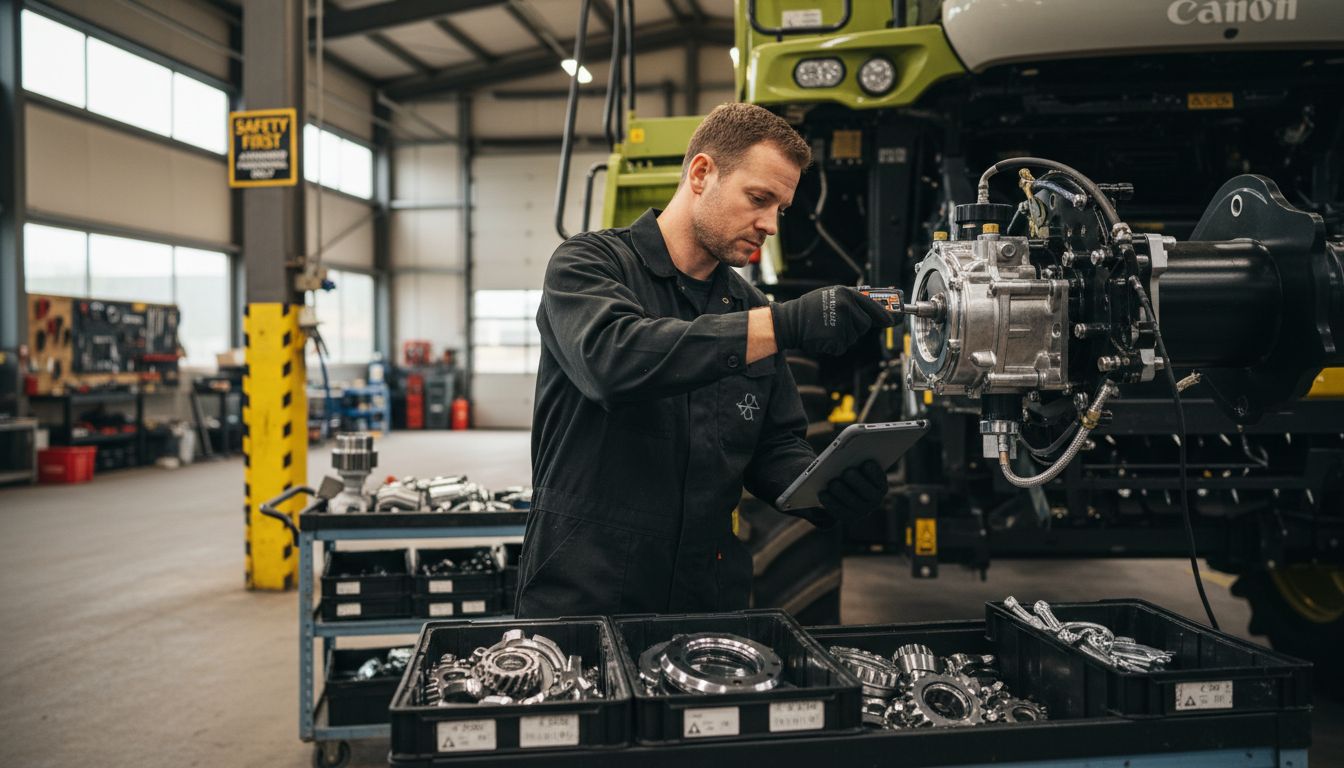
Begin by preparing a clean and well-organized workspace with all necessary tools and installation equipment readily available. Review the manufacturer installation instructions thoroughly before starting any work. Carefully unpack new components, inspecting them for potential shipping damage or manufacturing defects. Ensure you have all required mounting hardware, connectors, and specialized tools specific to the installation process. Take time to understand each component and how it interfaces with your existing machinery systems.
Proceed with installation methodically and systematically. Disconnect power sources before beginning work and wear appropriate personal protective equipment. Align components precisely according to manufacturer specifications, checking tolerances and connection points multiple times. Use torque specifications recommended by the manufacturer when tightening bolts and connectors to prevent over or under tightening. Clean all connection surfaces and apply appropriate lubrication or sealants as specified in the installation guidelines.
Warning: Rushing through an installation can lead to critical errors. Take your time and follow each step meticulously to prevent potential mechanical failures or safety risks.
After completing the installation, you will want to perform a comprehensive system check and initial test run to verify proper functionality.
Step 5: Test upgraded machinery performance
Validating the performance of your newly upgraded agricultural machinery requires a systematic and comprehensive approach. MDPI recommends selecting specific performance indicators such as daily working area, fuel consumption, and proportion of effective working time to accurately assess operational improvements.
Design a structured testing protocol that simulates real world agricultural working conditions. Start by creating a detailed baseline comparison document that tracks key performance metrics before and after the upgrade. Conduct multiple test runs under varying environmental conditions to ensure consistent performance. Measure precise data points including fuel efficiency, operational speed, material handling capacity, and overall productivity. Document every observation meticulously using digital logging tools or specialized agricultural performance tracking software.
According to research from MDPI, assessing machinery performance goes beyond technical metrics and can also impact farmer well being. Consider subjective factors like operator comfort, ease of use, and stress reduction alongside quantitative performance measurements. Calculate return on investment by comparing efficiency gains against initial upgrade costs.
Analyze long term potential benefits such as reduced maintenance requirements, improved crop yields, and potential labor savings.
Warning: Do not rely solely on manufacturer specifications or initial test results. Conduct thorough real world testing across multiple scenarios to truly understand your machinery upgrade’s capabilities.
After completing comprehensive performance testing, you will be prepared to make informed decisions about the long term value of your agricultural machinery upgrades.
Step 6: Monitor long-term efficiency improvements
Continuous performance tracking is essential for understanding the true value of your agricultural machinery upgrades. According to Wikipedia, precision agriculture involves gathering and analyzing data to support management decisions, ultimately improving resource use efficiency, productivity, and overall agricultural sustainability.
Establish a comprehensive monitoring system that tracks key performance indicators consistently over time. Create a detailed digital dashboard that captures critical metrics such as fuel consumption, daily working area, operational efficiency, and maintenance requirements. MDPI recommends focusing on indicators like daily working area, fuel consumption, and proportion of effective working time to accurately assess long-term performance improvements. Use specialized agricultural data management software to log and analyze these metrics, enabling you to identify trends, potential improvements, and areas requiring further optimization.
Develop a systematic approach to data collection and analysis. Schedule regular review periods quarterly or biannually to comprehensively evaluate machinery performance. Compare current operational metrics against your initial baseline measurements to quantify actual efficiency gains. Look beyond simple numerical data and consider qualitative factors such as operator feedback, maintenance frequency, and overall workflow improvements. Calculate precise return on investment by analyzing cost savings, productivity increases, and reduced downtime resulting from your machinery upgrades.
Warning: Inconsistent or incomplete data tracking can lead to missed optimization opportunities. Maintain rigorous and systematic documentation throughout the monitoring process.
By maintaining a disciplined approach to long-term performance monitoring, you will continuously refine and improve your agricultural machinery operations.
Enhance Your Agricultural Machinery Upgrades with Reliable Parts
Upgrading agricultural machinery can be challenging when you are unsure about finding the right replacement parts or worry about installation mistakes that could lead to costly breakdowns. This article highlights how essential it is to carefully assess machinery condition, select compatible parts, and test performance for long-term efficiency. You need parts that won’t compromise durability or performance and a trusted source to support your upgrade journey.
At pexlivanidis.com, we understand the pain points of farmers and machinery owners looking to boost productivity without risking costly downtime. With over 20,000 quality tractor accessories and spare parts, we offer exactly what you need to keep your equipment running smoothly. Take advantage of our free shipping on orders over 100€ within Greece and access exclusive wholesale offers tailored for your business. Don’t wait for a failure to happen—visit our site now, explore our extensive inventory, and prepare your machinery for success with parts you can trust.
Ready to take control of your agricultural equipment upgrades? Browse our full product listing for compatible parts designed to optimize your machinery’s performance today.
Frequently Asked Questions
How do I assess the current condition of my agricultural machinery?
Start by conducting a thorough visual inspection for signs of wear, rust, or loose components. Measure critical metrics like bearing temperatures and vibration patterns to establish a baseline for future comparisons.
What should I consider when researching suitable upgrade options for my machinery?
Focus on calculating the return on investment (ROI) and comparing key performance metrics such as fuel efficiency and maintenance costs. Create a spreadsheet to track and analyze these metrics against potential upgrades before making a decision.
How do I select compatible replacement parts for my agricultural machinery?
Gather detailed specifications of the existing machinery, including make, model, and measurements of parts needed for replacement. Cross-reference requirements with manufacturers or specialized parts catalogs to ensure compatibility.
What steps should I follow when installing machinery upgrades?
Prepare a clean workspace and follow manufacturer instructions carefully during installation. Remember to disconnect power sources and use specified torque settings for bolts to avoid issues during operation.
How can I test the performance of upgraded agricultural machinery?
Create a structured testing protocol that simulates real-world conditions to measure metrics like fuel consumption and productivity. Document all observations clearly and compare them to your established baseline for a comprehensive assessment.
What is the best way to monitor long-term efficiency improvements after upgrades?
Establish a routine system for tracking key performance indicators consistently over time. Regularly review metrics against your baseline to quantify gains and address any areas needing further optimization.