

Did you know that a single faulty starter can leave a tractor idle and disrupt an entire day’s work on the farm? In agriculture, where every minute of uptime matters, understanding how tractor starters function is crucial for keeping heavy machinery reliable. From the first turn of the key to powering through demanding conditions, learning about these essential components can help prevent unwanted delays and keep operations running efficiently.
Key Takeaways
| Point | Details |
|---|---|
| Crucial Functionality | Tractor starters transform electrical energy into mechanical motion, essential for starting diesel engines in agricultural machinery. |
| Variety of Types | Various starter types, including electric, pneumatic, and hydraulic, are designed for specific applications to meet operational demands. |
| Maintenance Importance | Regular maintenance, including inspecting electrical connections and battery health, is vital for ensuring starter reliability and longevity. |
| Troubleshooting Approach | Systematic troubleshooting techniques are necessary for diagnosing common starter issues, minimizing downtime during critical farming operations. |
Table of Contents
- What Tractor Starters Are And Their Role
- Types Of Tractor Starters And Key Differences
- How Tractor Starters Function Mechanically
- Common Issues And Troubleshooting Steps
- Essential Maintenance And Replacement Guidelines
What Tractor Starters Are and Their Role
A tractor starter is a critical mechanical component designed to transform electrical energy into mechanical motion, initiating an engine’s combustion cycle. According to technical research, this device essentially bridges the gap between a stationary engine and its operational state by providing the initial rotational force needed to start the crankshaft. Imagine it as the spark that awakens a massive agricultural machine from its dormant state.
In agricultural machinery, tractor starters are engineered with exceptional durability to handle challenging environments and high-compression diesel engines. As research from Nuojin Auto Parts indicates, these starters draw significant battery power to spin the flywheel, overcoming substantial mechanical resistance. Their robust design ensures reliable performance even under demanding farming conditions.
Tractor starters come in multiple configurations, including:
- Electric starters: Most common in modern tractors
- Pneumatic starters: Used in specific industrial applications
- Hydraulic starters: Employed in heavy-duty machinery
- Auxiliary engine starters: Utilized in large agricultural equipment
The fundamental role of a tractor starter remains consistent: transforming stored electrical energy into mechanical rotation, enabling the engine to begin its operational cycle efficiently and reliably.
Types of Tractor Starters and Key Differences
Tractor starters are not a one-size-fits-all solution. According to research from Wikipedia), these mechanical marvels come in several distinct configurations, each designed to meet specific agricultural and industrial machinery requirements. The primary types include electric, pneumatic, and hydraulic starters, each with unique operational characteristics and performance advantages.
Electric starters represent the most prevalent type in modern tractors. These systems leverage battery power to initiate engine rotation, with specialized variants like inertia starters offering enhanced efficiency. As technical research indicates, inertia starters spin a dedicated flywheel and transfer kinetic energy via a freewheel mechanism, which significantly reduces the power requirements compared to traditional direct-drive systems.
The alternative starter types each serve specific contexts:
- Pneumatic Starters: Utilize compressed air to spin a turbine and engage the flywheel
- Hydraulic Starters: Commonly employed in heavy-duty industrial and construction equipment
- Engine-Based Starters: Used in extremely large diesel engines where electrical systems might prove insufficient
Understanding these variations helps farmers and machinery operators select the most appropriate starter for their specific agricultural equipment, ensuring reliable and efficient engine initialization across diverse operational environments.
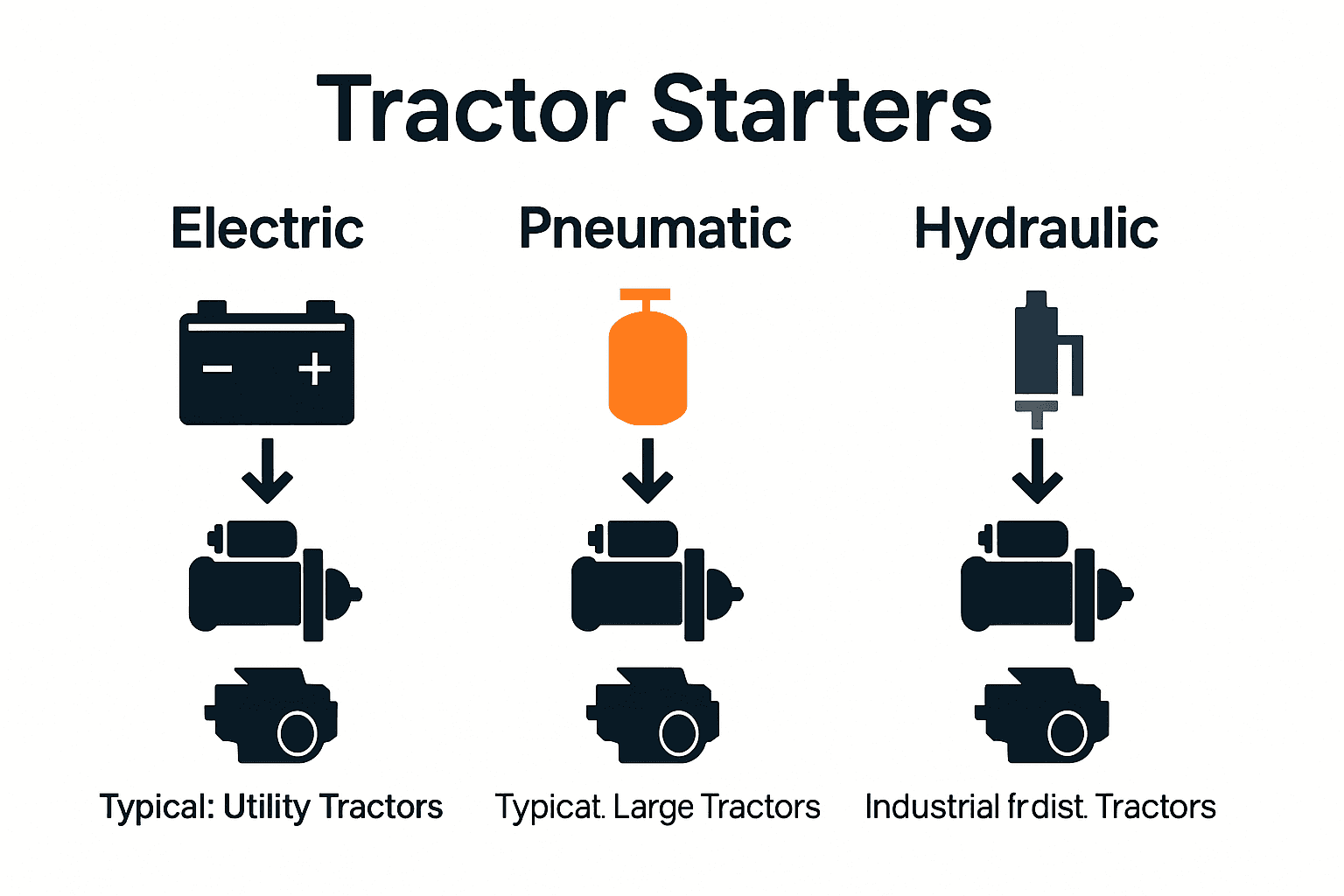
Here’s a comparison of key tractor starter types and their characteristics:
| Starter Type | Power Source | Typical Application |
|---|---|---|
| Electric | Battery | Modern tractors |
| Pneumatic | Compressed air | Industrial/agricultural |
| Hydraulic | Hydraulic fluid | Heavy-duty equipment |
| Engine-Based | Auxiliary engine | Large diesel power units |
How Tractor Starters Function Mechanically
At the heart of a tractor starter’s mechanical operation lies a sophisticated electrical and mechanical dance of precision components. According to research from Wikipedia), the electric starter motor fundamentally transforms electrical energy into rotational mechanical force through a carefully orchestrated sequence of interactions between electrical and mechanical systems.
The Bendix drive mechanism plays a crucial role in this process. As technical research explains, this ingenious system uses a pinion mounted on a helical splined shaft that moves into mesh with the engine’s flywheel ring gear through inertial motion. When the starter motor activates, the pinion automatically engages and then retracts once the engine begins running, ensuring smooth and efficient power transmission.
The starter’s operational sequence typically follows these key steps:
- DC power activates an electromagnetic solenoid
- The solenoid pushes the pinion gear to mesh with the flywheel
- High-current electrical contacts close to power the starter motor
- The motor spins, turning the engine’s crankshaft
- Once the engine starts, the pinion disengages via a return spring
This intricate mechanical ballet ensures that tractors can reliably start in various agricultural conditions, transforming electrical energy into the mechanical motion necessary to bring powerful diesel engines to life.
Common Issues and Troubleshooting Steps
Tractor starters can encounter various mechanical and electrical challenges that compromise their performance. According to research from Nuojin Auto Parts, farmers and equipment operators frequently face several diagnostic scenarios that require systematic troubleshooting to resolve starter-related problems effectively.
Diagnostic symptoms typically manifest in distinct patterns. These include slow cranking, complete failure to start, unusual grinding noises, or the starter remaining engaged after engine initiation. As technical research indicates, these symptoms often stem from specific underlying issues such as battery deterioration, electrical connection problems, or mechanical wear in the starter’s components.
Critical troubleshooting steps include:
- Battery Terminal Inspection: Clean and verify electrical connections
- Voltage Testing: Check battery voltage using a multimeter
- Solenoid Evaluation: Test for proper engagement and electrical continuity
- Glow Plug Verification: Especially crucial in diesel tractor engines
- Mechanical Alignment: Inspect starter and flywheel gear mesh
Professional mechanics recommend a methodical approach to diagnosing starter issues.
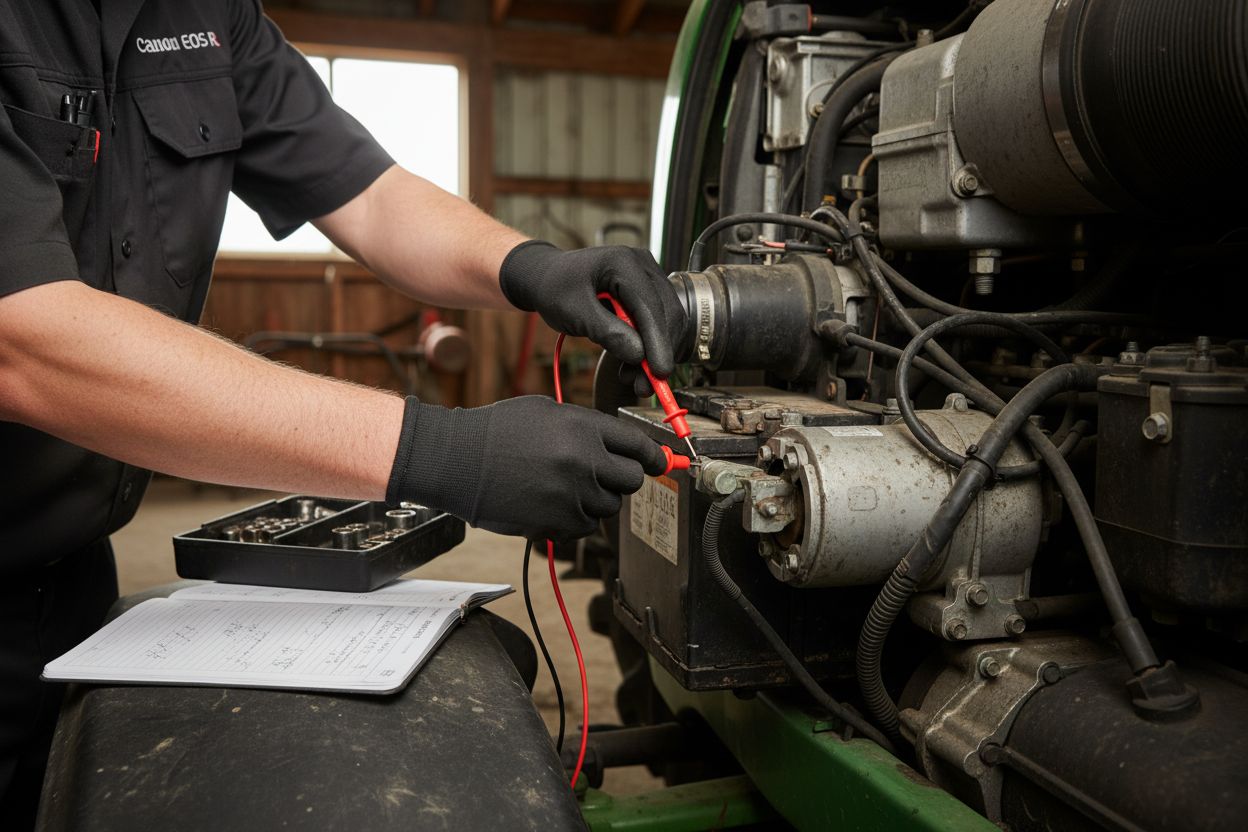 By systematically eliminating potential failure points and understanding the intricate interactions between electrical and mechanical systems, tractor owners can efficiently diagnose and resolve most starter-related challenges, minimizing downtime and preventing costly extensive repairs.
Essential Maintenance and Replacement Guidelines
Proper maintenance of tractor starters is crucial for ensuring reliable agricultural equipment performance. According to research from DB Electrical, systematic care can significantly extend the functional life of your starter motor and prevent unexpected breakdowns during critical farming operations.
Electrical system maintenance represents the cornerstone of starter preservation. As technical research indicates, this involves regular inspection of electrical connections, battery cable conditions, and comprehensive voltage testing. Farmers should aim to maintain battery voltage between 13.5-14.5 volts for 12V systems, ensuring optimal electrical system health and starter motor functionality.
Key maintenance recommendations include:
- Regular Connection Cleaning: Remove corrosion from battery terminals
- Voltage Monitoring: Use a multimeter to check battery output
- Starter Drive Lubrication: Periodically lubricate Bendix drive components
- Visual Inspection: Check mounting alignment and wiring integrity
- Seasonal Preparation: Disconnect batteries during extended storage
When replacement becomes necessary, select a starter that precisely matches your tractor’s specifications. Professional mechanics recommend proactive replacement when performance begins to degrade, typically indicated by slow cranking, unusual noises, or intermittent starting issues. By maintaining a preventative approach, farmers can minimize costly downtime and ensure their agricultural machinery remains operational during critical farming seasons.
Secure Reliable Tractor Starters and Parts for Uninterrupted Farm Operations
If you have ever experienced the frustration of a tractor that will not start or have lost valuable work hours due to worn or faulty starters, you know just how essential reliable components are to your machinery’s performance. The article highlights common pain points such as electrical failures, mechanical wear, and the critical impact that starter motor issues can have during peak farming seasons. Nothing should hold you back from getting your equipment up and running when your livelihood depends on it.
At pexlivanidis.com, we understand the urgency of finding dependable tractor accessories and spare parts. With a large inventory of over 20,000 items, including starter motors and related electrical components, you are sure to find exactly what your farm requires. Our platform is designed for both retail and wholesale customers, offering free shipping across Greece for orders over 100 euros, quick response product inquiries, and local delivery support. Do not let starter issues stop your productivity. Visit pexlivanidis.com now and experience our fast service and professional support so you can replace or upgrade your starter before the next big job.
Frequently Asked Questions
What is the primary function of a tractor starter?
A tractor starter is designed to convert electrical energy into mechanical motion, providing the initial rotational force necessary to start the engine’s combustion cycle.
What are the different types of tractor starters and their applications?
Tractor starters primarily include electric, pneumatic, hydraulic, and engine-based starters, each tailored for specific uses like modern tractors, industrial applications, heavy-duty machinery, and large diesel engines.
How do tractor starters mechanically function to start an engine?
Tractor starters use a combination of electrical energy and mechanical components, including a Bendix drive mechanism, which engages the engine’s flywheel when the starter motor is activated, allowing the engine to start efficiently.
What common issues may arise with tractor starters, and how can they be troubleshot?
Common issues include slow cranking, failure to start, and unusual noises. Troubleshooting involves inspecting battery terminals, checking voltage levels, evaluating the solenoid, and ensuring proper mechanical alignment.