

Farm machinery is the heartbeat of any productive farm and when breakdowns hit at the wrong moment the entire season can hang in the balance. Yet many don’t realize that proactive maintenance can reduce unexpected equipment downtime by up to 60 percent. Most would expect quick fixes to be the answer but it turns out that true longevity and efficiency come from a full overhaul—a process that breathes new life into even the oldest tractors and harvesters.
Table of Contents
- Defining Farm Machinery Overhaul And Its Importance
- The Role Of Regular Maintenance In Farm Machinery
- Understanding Key Concepts Of Machinery Overhaul
- How Farm Machinery Overhaul Impacts Efficiency And Longevity
- Real-World Applications And Case Studies In Farm Machinery Overhaul
Quick Summary
| Takeaway | Explanation |
|---|---|
| Invest in comprehensive machinery overhaul | Thorough overhauls extend equipment lifespan and improve performance significantly. |
| Implement regular preventative maintenance | Routine maintenance can prevent catastrophic failures and reduce downtime by up to 60 percent. |
| Conduct precision diagnostics | Accurate assessments help identify mechanical issues before they escalate, ensuring reliability. |
| Adopt innovative restoration strategies | Creative techniques can restore equipment beyond traditional repairs, yielding higher performance. |
| Treat maintenance as a strategic investment | Viewing maintenance as essential can optimize equipment functionality and reduce long-term costs. |
Defining Farm Machinery Overhaul and Its Importance
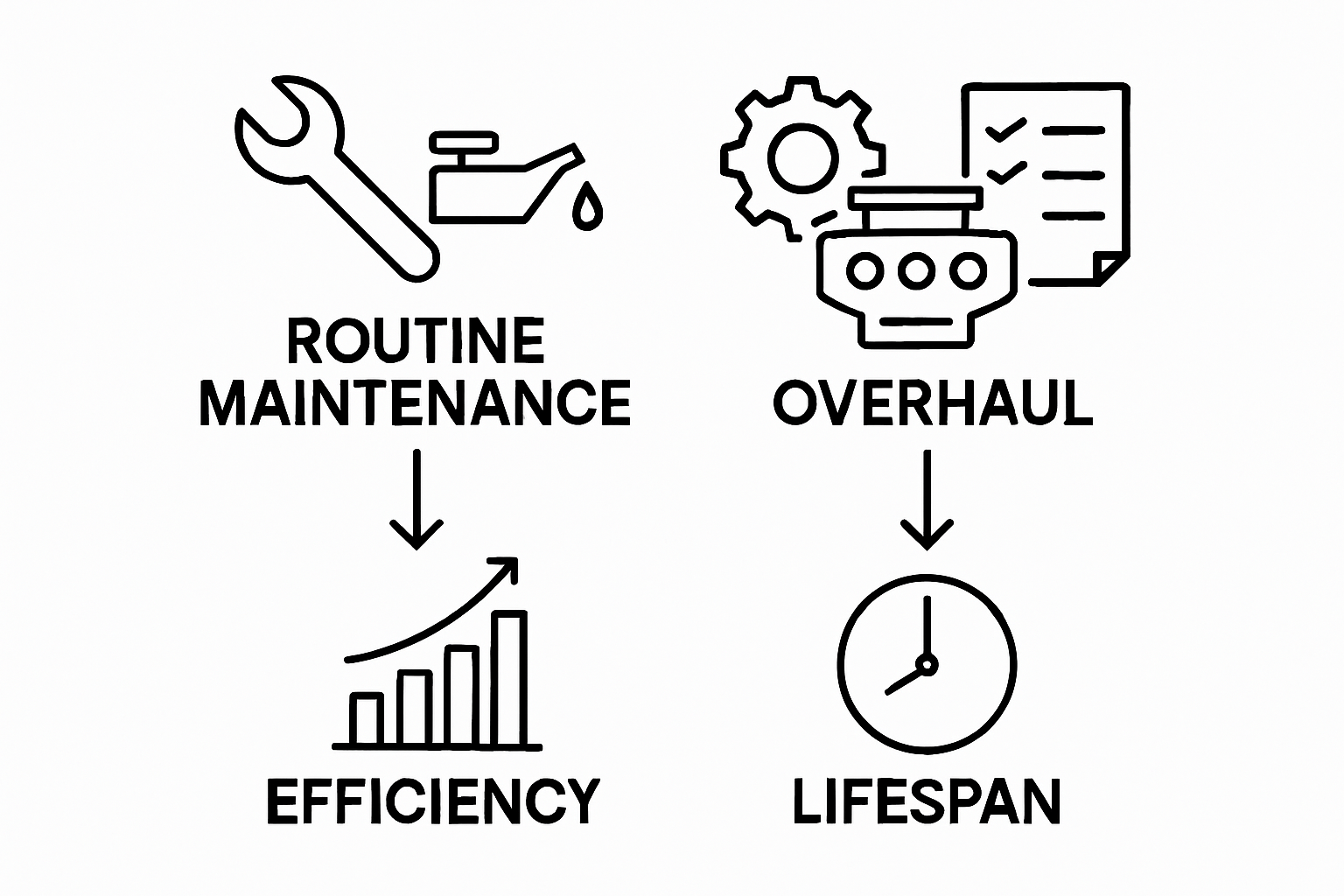
Farm machinery overhaul represents a comprehensive maintenance strategy designed to restore agricultural equipment to optimal operational conditions. Unlike routine maintenance, an overhaul involves a systematic and in-depth restoration process that addresses fundamental mechanical and functional challenges within complex farm machinery systems.
Understanding the Core Concept
At its essence, farm machinery overhaul is a strategic intervention that goes beyond standard repairs. This process involves completely dismantling equipment, thoroughly inspecting each component, replacing worn parts, reconditioning critical systems, and reassembling machinery to restore its original performance capabilities. According to the Food and Agriculture Organization, proper equipment maintenance is crucial for sustainable agricultural productivity.
Key aspects of a comprehensive farm machinery overhaul include:
- Complete equipment disassembly
- Detailed component inspection
- Replacement of deteriorated parts
- Precision recalibration of mechanical systems
- Restoration of original manufacturer specifications
Economic and Operational Significance
The economic rationale behind farm machinery overhaul is compelling. Investing in a thorough overhaul can significantly extend equipment lifecycle, prevent catastrophic failures, and reduce long-term operational costs. Well-maintained machinery ensures consistent performance, minimizes unexpected breakdowns, and maintains agricultural operational efficiency.
Farmers who prioritize comprehensive machinery overhaul gain multiple strategic advantages. Proactive maintenance reduces unexpected downtime, preserves equipment value, and ensures that critical agricultural machinery remains functional during crucial planting and harvesting periods. By systematically addressing mechanical wear and potential system degradation, farmers can optimize their equipment investments and maintain consistent agricultural productivity.
The Role of Regular Maintenance in Farm Machinery
Regular maintenance serves as the critical backbone of agricultural equipment performance, ensuring machinery operates at peak efficiency while preventing potential catastrophic failures. This systematic approach to equipment care transcends basic repair work, representing a strategic investment in long-term agricultural productivity and operational reliability.
Preventive Maintenance Framework
Preventive maintenance establishes a proactive approach to farm machinery management. By implementing regular inspection, cleaning, lubrication, and component replacement strategies, farmers can identify potential issues before they escalate into major mechanical problems. According to research from the University of Massachusetts Amherst, consistent equipment maintenance is fundamental to smooth farm operations.
Key elements of an effective preventive maintenance strategy include:
- Scheduled routine inspections
- Regular lubrication of moving parts
- Timely replacement of worn components
- Comprehensive cleaning and debris removal
- Systematic documentation of maintenance activities
Economic and Performance Implications
Beyond mechanical preservation, regular maintenance delivers substantial economic benefits. Well-maintained farm machinery demonstrates improved fuel efficiency, reduced repair costs, extended equipment lifespan, and minimized operational interruptions. Proactive maintenance can reduce unexpected equipment downtime by up to 60 percent, transforming machinery from a potential liability into a consistent, reliable asset.
Farmers who integrate systematic maintenance protocols create a robust operational environment.
To clarify how preventive maintenance is distinct from a full machinery overhaul and routine maintenance, the table below compares their key characteristics and impacts.
| Maintenance Type | Key Actions | Primary Purpose | Impact on Equipment |
|---|---|---|---|
| Preventive Maintenance | Routine inspection, lubrication, minor repairs | Prevent breakdowns, prolong usage | Reduces downtime by up to 60% |
| Routine Maintenance | Simple checks, cleaning, basic part replacement | Maintain day-to-day performance | Addresses minor issues; no deep restoration |
| Full Machinery Overhaul | Complete disassembly, component restoration, recalibration | Restore original performance, extend lifecycle | Extends lifespan by 40-60%; major performance boost |
Understanding Key Concepts of Machinery Overhaul
Machinery overhaul represents a sophisticated technical process that demands comprehensive understanding of mechanical systems, diagnostic techniques, and precision restoration strategies. This intricate procedure goes far beyond simple repairs, requiring specialized knowledge and methodical approach to equipment rehabilitation.
Core Technical Fundamentals
The technical foundation of machinery overhaul centers on comprehensive system analysis and strategic component restoration. Precision diagnostics form the critical initial phase, where skilled technicians conduct thorough assessments to identify mechanical wear, potential structural weaknesses, and system performance degradation. According to agricultural engineering research, effective overhaul processes require systematic evaluation of each mechanical component’s functional integrity.
Key technical considerations during machinery overhaul include:
- Comprehensive system diagnostic scanning
- Microscopic component wear analysis
- Precise measurement of mechanical tolerances
- Evaluation of structural and functional performance
- Assessment of potential failure points
Strategic Restoration Methodology
Successful machinery overhaul demands a structured restoration methodology that balances technical expertise with strategic planning. Technicians must develop a holistic approach that addresses not just immediate mechanical issues but potential future performance challenges. This process involves meticulous component reconstruction, utilizing advanced measurement techniques, precision engineering principles, and targeted replacement strategies.
The ultimate goal of machinery overhaul transcends simple repair work. By systematically addressing mechanical systems’ fundamental challenges, agricultural professionals can transform aging equipment into reliable, high-performance machinery capable of delivering consistent operational excellence across demanding agricultural environments.
How Farm Machinery Overhaul Impacts Efficiency and Longevity
Farm machinery overhaul serves as a transformative process that directly influences equipment performance, operational efficiency, and long-term agricultural productivity. By systematically addressing mechanical wear and potential system degradation, farmers can substantially extend the functional lifespan of their critical agricultural equipment.
Performance Enhancement Mechanisms
Performance optimization emerges as a primary outcome of comprehensive machinery overhaul. The process goes beyond simple repairs, creating a holistic restoration strategy that revitalizes equipment’s core mechanical systems. According to research from Virginia Cooperative Extension, strategic maintenance interventions can significantly improve machine reliability and operational efficiency.
Key performance enhancement aspects include:
- Restoration of original mechanical tolerances
- Elimination of cumulative mechanical wear
- Recalibration of critical system parameters
- Replacement of deteriorated components
- Optimization of mechanical energy transfer
Economic and Operational Implications
The economic benefits of machinery overhaul extend far beyond immediate repair considerations. By investing in comprehensive equipment restoration, agricultural professionals can achieve substantial long-term cost savings. Well-executed overhauls can potentially extend machinery lifecycle by 40 to 60 percent, transforming equipment from a potential operational liability into a reliable, high-performing asset.
Strategic machinery overhaul represents more than a maintenance procedure. It is a proactive approach to equipment management that balances technical precision with economic pragmatism, enabling farmers to maintain competitive operational capabilities while minimizing unexpected downtime and excessive replacement costs.
Real-World Applications and Case Studies in Farm Machinery Overhaul
Real-world farm machinery overhaul transcends theoretical concepts, representing practical solutions that address complex mechanical challenges across diverse agricultural environments. These case studies illuminate the transformative potential of strategic equipment restoration, demonstrating how targeted interventions can resurrect seemingly irreparable machinery.
Innovative Restoration Strategies
Innovative restoration techniques have emerged as game-changing approaches in agricultural equipment management. Complex mechanical rehabilitation often requires creative problem-solving and advanced technical expertise. According to research from Texas A&M University, unique repair methodologies can successfully restore equipment functionality beyond conventional repair expectations.
Significant restoration approaches include:
- Precision brush plating for component reconstruction
- Combining failed mechanical units into functional systems
- Advanced welding and metallurgical restoration techniques
- Comprehensive system recalibration
- Strategic component redesign and reinforcement
Performance Transformation Case Examples
Practical case studies reveal remarkable machinery transformation potential. Agricultural professionals have successfully extended equipment lifecycle through meticulous overhaul processes, converting potential equipment write-offs into high-performing operational assets. Targeted restoration interventions can reduce replacement costs by up to 70 percent, providing substantial economic advantages for farming operations.
These real-world applications demonstrate that machinery overhaul is not merely a technical procedure but a strategic approach to equipment management. By combining technical expertise, innovative restoration techniques, and systematic evaluation, farmers can optimize their machinery investments and maintain consistent agricultural productivity.
Restore Your Farm Machinery’s Power with the Right Parts
Has your equipment lost efficiency or started showing signs of wear as described in our overview of farm machinery overhaul? When downtime threatens your productivity and vital components are at risk, regular repairs may not solve deep problems. You need real solutions to keep your machines reliable through every critical season. Our large selection of spare parts and tractor accessories can address those core issues discussed—from replacing deteriorated components to restoring original performance.
Why wait until a minor issue becomes a costly failure? Visit pexlivanidis.com to browse over 20,000 parts tailored for both quick fixes and comprehensive overhauls. For immediate assistance or questions about product availability, use our product inquiry form or explore our detailed registration options for exclusive deals and B2B support. Take charge of your efficiency now and secure your machinery’s future—start with the right parts from a trusted partner.
Frequently Asked Questions
What is the purpose of a farm machinery overhaul?
A farm machinery overhaul is a comprehensive maintenance process aimed at restoring agricultural equipment to optimal operational conditions by addressing mechanical and functional challenges within complex systems.
How often should farm machinery undergo an overhaul?
The frequency of farm machinery overhauls depends on usage and wear but is generally recommended at the end of a significant farming season or when performance issues arise to ensure reliability and efficiency.
What are the benefits of performing a machinery overhaul instead of routine maintenance?
An overhaul extends the equipment’s lifecycle, prevents catastrophic failures, and reduces long-term operational costs, while routine maintenance focuses on preventive care and minor repairs.
What key steps are involved in a farm machinery overhaul?
Key steps in a farm machinery overhaul include complete equipment disassembly, detailed component inspection, replacement of worn parts, recalibration of systems, and reassembling machinery to restore original performance.
The following table summarizes important steps and objectives that define the comprehensive farm machinery overhaul process described in the article.
| Overhaul Step | Description | Outcome |
|---|---|---|
| Equipment Disassembly | Machinery is taken apart completely | Exposes all components for inspection |
| Component Inspection | Each part is thoroughly examined | Identifies wear, damage, or structural issues |
| Replacement of Worn Parts | Deteriorated components are replaced | Ensures integrity and reliability |
| Recalibration | Systems are reset to precise specifications | Restores efficiency and optimal operation |
| System Reassembly | Machinery is rebuilt following overhaul | Returns equipment to original or improved state |