

A tractor front loader can turn an ordinary tractor into a material handling powerhouse that tackles chores with surprising ease on farms and construction sites. Most people picture these attachments as just a simple scoop, but the reality goes far beyond lifting dirt. Modern loaders can swap out tools in minutes and use advanced hydraulics to move materials with precision. Some models can handle loads of over 3,000 pounds. What seems like basic farm equipment is actually a clever blend of engineering and tech that reshapes how work gets done everywhere from fields to building sites.
Table of Contents
- Defining The Tractor Front Loader And Its Components
- The Importance Of Front Loaders In Farming
- How Tractor Front Loaders Operate Mechanically
- Key Features And Options For Modern Front Loaders
- Real-World Applications And Benefits Of Tractor Front Loaders
Quick Summary
| Takeaway | Explanation |
|---|---|
| Tractor front loaders greatly enhance productivity. | They convert tractors into multifunctional machines, allowing for efficient material handling in various tasks. |
| Easy attachment swapping maximizes operational flexibility. | Operators can quickly change attachments to handle different tasks, reducing the need for multiple machines. |
| Hydraulic systems enable precise mechanical movements. | A complex hydraulic network allows for smooth lifting and positioning, increasing precision in material handling. |
| Front loaders reduce labor demand significantly. | By mechanizing tasks, farmers can focus on strategic management rather than manual labor, improving efficiency. |
| Significant economic benefits include lower costs. | They consolidate multiple machinery functions, resulting in reduced acquisition, maintenance costs, and improved productivity. |
Defining the Tractor Front Loader and Its Components
A tractor front loader represents a versatile attachment designed to transform agricultural machinery into a powerful material handling system. These robust mechanical extensions connect directly to the front of a tractor, enabling operators to lift, move, and manipulate substantial quantities of materials with precision and efficiency.
Core Mechanical Structure
The front loader fundamentally consists of several critical components that work in synchronized harmony. Agricultural engineering research highlights the primary elements as:
- Frame Assembly: The sturdy metal framework providing structural integrity and connection points
- Hydraulic System: Sophisticated network of cylinders and valves enabling smooth lifting and movement
- Mounting Brackets: Specialized connection points ensuring secure attachment to the tractor
These interconnected components transform an ordinary tractor into a multi functional machine capable of handling diverse agricultural and construction tasks. The hydraulic system serves as the loader’s neural network, translating operator commands into precise mechanical movements.
To help clarify the core components of a tractor front loader, the following table summarizes the main mechanical parts and their specific functions.
| Component | Function |
|---|---|
| Frame Assembly | Provides structural integrity and connects the loader to the tractor |
| Hydraulic System | Enables lifting and movement through fluid power |
| Mounting Brackets | Securely attach the loader to the tractor |
| Hydraulic Pump | Generates and supplies pressurized hydraulic fluid |
| Control Valves | Direct and regulate hydraulic fluid movement |
| Hydraulic Cylinders | Convert hydraulic pressure into lifting and movement actions |
| Fluid Reservoirs | Store hydraulic fluid for continuous system operation |
Functional Design and Versatility
Tractor front loaders are engineered with remarkable adaptability. Operators can quickly interchange attachments such as buckets, forks, grapples, and specialized tools, dramatically expanding the machine’s operational capabilities. This modular design allows farmers and construction workers to address multiple tasks without requiring separate equipment.
The loader’s design prioritizes both strength and flexibility. Typically constructed from high tensile steel or advanced alloys, these attachments can withstand significant weight and endure challenging environmental conditions. Hydraulic control mechanisms provide smooth, controlled movements, allowing operators to handle delicate materials or perform heavy lifting with equal proficiency.
Operational efficiency remains the primary goal of tractor front loader design. By integrating seamlessly with existing tractor systems, these attachments minimize equipment redundancy and maximize agricultural productivity. Whether moving soil, transporting hay bales, clearing debris, or managing landscaping projects, front loaders represent a versatile solution for material handling challenges.
The Importance of Front Loaders in Farming
Front loaders have revolutionized agricultural operations by providing farmers with a multipurpose tool that dramatically enhances productivity and operational efficiency. These powerful attachments transform standard tractors into dynamic machinery capable of addressing numerous complex agricultural challenges.
Labor Efficiency and Time Savings
Agricultural safety experts recognize front loaders as critical tools for reducing manual labor and accelerating farm workflows. The mechanical advantages of front loaders enable farmers to accomplish tasks that would traditionally require significant human effort and extended time periods.
Key labor efficiency benefits include:
- Rapid material transportation across farm landscapes
- Minimized physical strain on agricultural workers
- Consistent and precise material handling
- Reduced time spent on repetitive manual tasks
By mechanizing material movement, front loaders allow farmers to allocate human resources more strategically, focusing on complex decision making and specialized agricultural management.
Versatile Agricultural Applications
The adaptability of front loaders makes them indispensable across various farming scenarios. Farmers can quickly switch attachments to perform diverse tasks without investing in multiple specialized machines. From loading hay bales and transporting feed to clearing land and managing construction projects, front loaders provide unparalleled operational flexibility.
Typical agricultural applications encompass:
- Soil preparation and land leveling
- Manure and compost management
- Feed and fodder handling
- Construction and maintenance work
Economic and Operational Impact
Beyond immediate operational benefits, front loaders represent a significant economic investment for agricultural enterprises. By consolidating multiple machinery functions into a single attachment, farmers can reduce equipment acquisition costs, maintenance expenses, and storage requirements. The ability to rapidly complete tasks translates directly into improved farm productivity and potential increased revenue streams.
Front loaders exemplify technological innovation in modern agriculture, bridging traditional farming practices with advanced mechanical solutions. Their ability to enhance efficiency, reduce labor requirements, and provide flexible operational capabilities makes them an essential tool for contemporary agricultural management.
How Tractor Front Loaders Operate Mechanically
Tractor front loaders represent complex mechanical systems that seamlessly integrate hydraulic power, precision engineering, and robust structural design to enable sophisticated material handling capabilities. Understanding their operational mechanics reveals the intricate technology that transforms agricultural machinery into versatile working instruments.
Hydraulic Power Transmission
Agricultural machinery research demonstrates that front loaders fundamentally rely on hydraulic systems to translate operator inputs into precise mechanical movements. The hydraulic mechanism operates through a network of interconnected components that convert fluid pressure into controlled mechanical force.
Critical hydraulic system components include:
- Hydraulic Pump: Generates pressurized fluid flow
- Control Valves: Regulate fluid direction and pressure
- Hydraulic Cylinders: Convert fluid pressure into linear mechanical motion
- Fluid Reservoirs: Store and circulate hydraulic fluid
These components work in synchronized harmony, allowing operators to execute complex lifting, tilting, and positioning actions with remarkable precision and minimal physical effort.
Mechanical Linkage and Structural Design
The front loader’s mechanical structure consists of carefully engineered linkage systems that distribute mechanical stress and enable smooth, controlled movements. Robust steel frames and pivot points connect the loader to the tractor, creating a stable platform capable of handling substantial weight and resisting dynamic operational forces.
Key structural elements facilitate:
- Smooth articulation and movement
- Weight distribution across multiple connection points
- Stress absorption during heavy lifting tasks
- Precise angular adjustments
Operational Control Mechanisms
Modern front loaders incorporate sophisticated control systems that allow operators to manipulate attachments with exceptional accuracy. Integrated control levers within the tractor cab enable real time adjustments to lifting height, angle, and attachment positioning. Electronic sensors and feedback systems further enhance operational precision, providing operators with detailed performance information.
The mechanical complexity of tractor front loaders represents a remarkable fusion of engineering principles, transforming simple hydraulic principles into powerful, adaptable agricultural tools. By converting fluid dynamics into precise mechanical movements, these systems demonstrate the pinnacle of agricultural machinery design and functionality.
Key Features and Options for Modern Front Loaders
Modern front loaders represent sophisticated technological solutions that go far beyond basic material handling capabilities. Manufacturers have continuously evolved these attachments to meet increasingly complex agricultural and construction demands, integrating advanced features that enhance performance, efficiency, and user experience.
Advanced Attachment Compatibility
Agricultural engineering research highlights the critical importance of versatile attachment systems in modern front loader design. Contemporary models offer quick connect mechanisms that allow operators to seamlessly switch between different tools without requiring extensive technical expertise.
Key attachment options include:
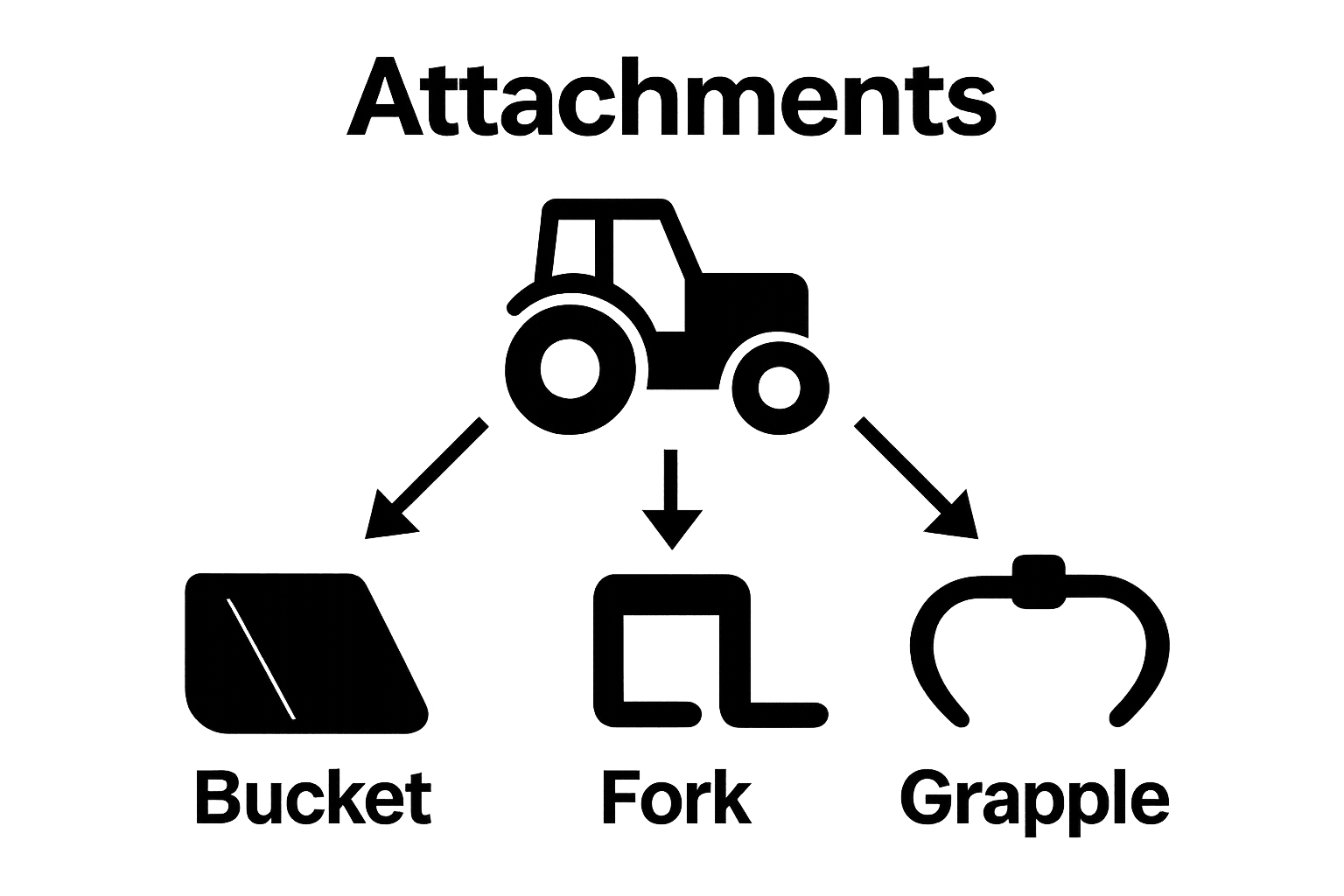
- Multipurpose buckets for general material handling
- Specialized forks for palletized goods
- Grapple attachments for managing bulky organic materials
- Snow removal blades for seasonal applications
- Specialized agricultural implements
The modular design enables farmers and contractors to maximize equipment utility by transforming a single machine into a multipurpose work platform.
Technological Integration and Control Systems
Cutting edge front loaders now incorporate sophisticated electronic control systems that dramatically improve operational precision and user comfort. Digital interfaces provide real time performance monitoring, allowing operators to track critical metrics such as load weight, hydraulic pressure, and operational efficiency.
Advanced technological features encompass:
- Integrated digital display panels
- Precision load sensing mechanisms
- Automatic leveling systems
- Electronic joystick control interfaces
- Performance diagnostic capabilities
Ergonomic and Safety Enhancements
Manufacturers have placed increasing emphasis on operator comfort and safety in modern front loader designs. Improved cab visibility, reduced vibration mechanisms, and ergonomically designed control systems minimize operator fatigue and enhance overall workplace safety.
Contemporary front loaders represent more than mere mechanical attachments they are sophisticated technological solutions that bridge human skill with advanced engineering principles. By continuously evolving design parameters, manufacturers have transformed these tools from simple material handling equipment into intelligent, adaptable agricultural and construction assets.
Real-World Applications and Benefits of Tractor Front Loaders
Tractor front loaders have emerged as transformative tools across multiple industries, offering unprecedented flexibility and efficiency in material handling and landscape management. Their remarkable versatility extends far beyond traditional agricultural applications, providing solutions for diverse operational challenges.
Agricultural Sector Applications
Agricultural research experts demonstrate that front loaders play a crucial role in modern farming operations. These attachments enable farmers to perform complex tasks with minimal human intervention, dramatically reducing labor costs and improving operational efficiency.
Typical agricultural applications include:
- Loading and transporting hay bales
- Managing animal feed and silage
- Clearing land and preparing fields
- Moving fertilizer and organic materials
- Handling grain and crop storage logistics
By consolidating multiple functions into a single attachment, farmers can streamline their workflows and optimize resource utilization.
Construction and Landscaping Utility
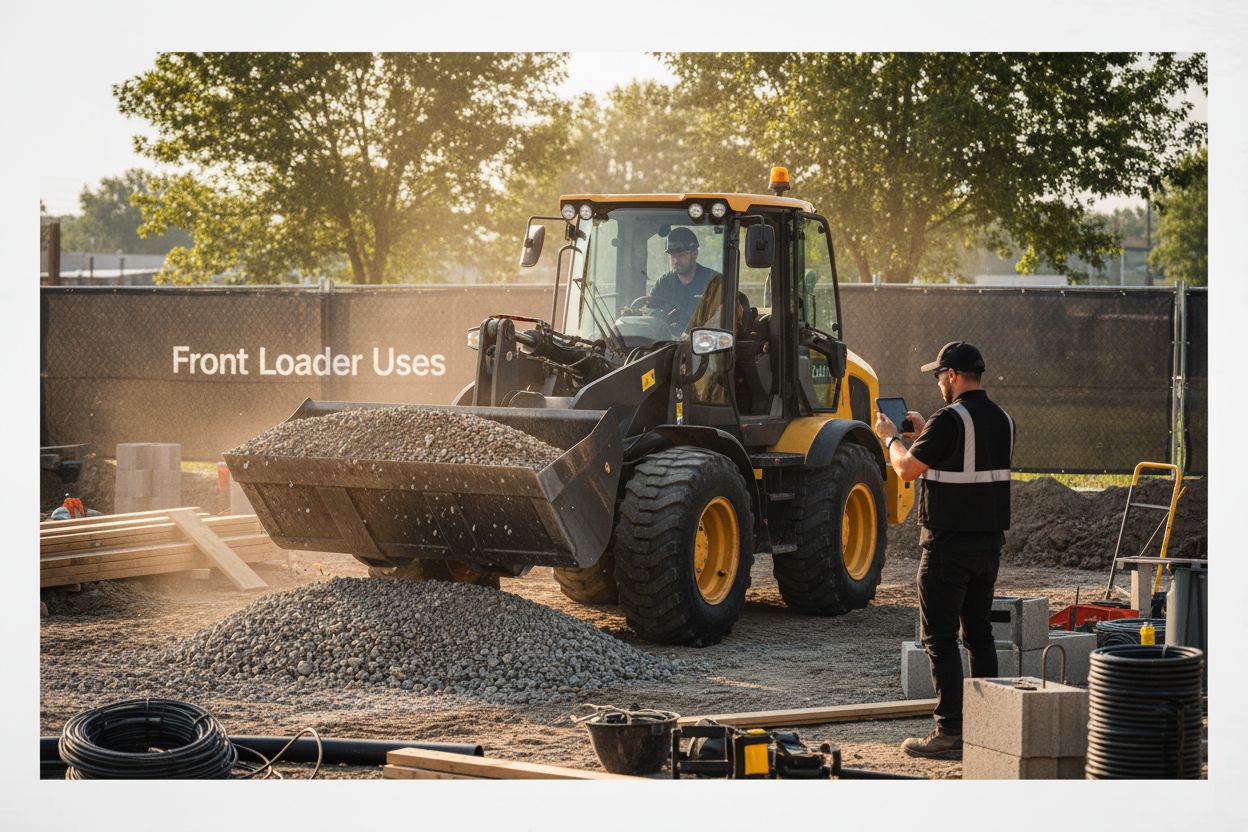
Beyond agriculture, front loaders have become indispensable in construction and landscaping industries. Their ability to quickly switch attachments makes them ideal for various tasks that traditionally required multiple specialized machines.
The following table organizes common applications of tractor front loaders, highlighting their roles in both agricultural and construction environments for quick reference.
| Application Area | Typical Uses |
|---|---|
| Agriculture | Loading hay, feed handling, manure management |
| Agriculture | Clearing land, moving fertilizer, soil preparation |
| Construction | Excavation, grading land, moving materials |
| Construction | Debris removal, snow removal, equipment loading |
| Landscaping | Terrain shaping, site cleanup |
Key construction and landscaping applications encompass:
- Excavation and land grading
- Moving construction materials
- Snow and debris removal
- Landscape shaping and terrain modification
- Loading and unloading heavy equipment
Economic and Operational Advantages
The economic benefits of front loaders extend well beyond immediate operational capabilities. By reducing the need for multiple specialized machines, businesses can significantly lower equipment acquisition and maintenance costs. The ability to rapidly complete tasks translates into increased productivity and potential revenue generation.
Front loaders represent a sophisticated intersection of engineering innovation and practical utility. Their capacity to adapt to changing operational requirements makes them essential tools across multiple industries, demonstrating how technological advancement can transform traditional work processes.
Take Your Tractor’s Front Loader Further With Pexlivanidis
Reading about the power and versatility of tractor front loaders, you understand how critical high-quality parts and reliable accessories are for maintaining maximum efficiency in your daily work. Wasting time searching for the right hydraulic components or facing downtime from worn attachments impacts both your productivity and your profit. The article highlights how crucial it is to have robust, adaptable, and precise loader systems, but even the best front loaders need trustworthy parts and ongoing support to deliver their full value on your farm or job site.
Why risk costly delays or limited equipment performance when access to over 20,000 tractor parts and accessories is just a click away? Visit pexlivanidis.com to search for genuine replacement parts, tough new attachments, and essential hydraulic components that keep your front loader working at its peak. Whether you are a busy farmer in Thessaloniki or support a large fleet across Greece, act now to benefit from free shipping offers and expert help every step of the way. Browse our inventory, contact our team for product inquiries, and secure the parts that drive your success today.
Frequently Asked Questions
What is a tractor front loader?
A tractor front loader is a versatile attachment for tractors that allows operators to lift, move, and manipulate various materials with precision. It consists of a frame assembly, hydraulic system, and mounting brackets that work together to enhance the functionality of agricultural machinery.
How do tractor front loaders operate?
Tractor front loaders operate using hydraulic power, which converts operator inputs into precise mechanical movements. The hydraulic system includes components such as a pump, control valves, and cylinders that enable smooth lifting and handling of materials.
What are the main applications of tractor front loaders in agriculture?
In agriculture, tractor front loaders are used for various applications, including loading and transporting hay bales, managing animal feed, clearing land, and handling grains. They enhance labor efficiency and streamline farm operations by consolidating multiple tasks into one machine.
What are the advantages of using a front loader compared to other attachments?
Front loaders offer significant advantages, including increased versatility, labor savings, and operational efficiency. Their ability to quickly switch attachments allows farmers to handle various tasks without needing multiple specialized machines, ultimately saving time and costs.