

Did you know that some modern tillage tools reach soil depths of up to 90 centimeters? Powerful tillage equipment shapes the very foundation of farming, helping transform untouched land into fields ready for high-yield crops. The right tools not only break, loosen, and aerate the ground but also support healthy plant growth and long-term productivity. Understanding these implements can help farmers create better growing conditions and make smarter decisions for every season.
Key Takeaways
| Point | Details |
|---|---|
| Role of Tillage Equipment | Tillage implements are essential for soil preparation, enabling optimal crop growth through soil manipulation. |
| Types of Tillage Equipment | Equipment is categorized into primary (e.g., moldboard plows) and secondary (e.g., disk harrows) types, each serving specific agricultural purposes. |
| Selection Considerations | Farmers must evaluate soil characteristics, crop needs, and operational factors to choose the most suitable tillage implements. |
| Impact on Agriculture | Proper tillage increases crop yield potential, enhances soil health, and assists in effective weed and moisture management. |
Table of Contents
- Defining Tillage Equipment And Its Functions
- Major Types Of Tillage Equipment Explained
- Key Features And How Tillage Tools Work
- Common Uses In Modern Agriculture
- Choosing The Right Tillage Equipment
Defining Tillage Equipment and Its Functions
Tillage equipment represents the backbone of modern agricultural soil preparation, encompassing a diverse array of specialized tools designed to transform raw land into productive farmland. Tillage implements are mechanical devices engineered to manipulate soil conditions, preparing ground for optimal crop growth through strategic physical interventions.
According to research from Encyclopedia Britannica, tillage equipment typically operates at depths ranging from 15 to 90 centimeters, serving multiple critical agricultural functions:
- Breaking compact soil structures
- Loosening ground for better root penetration
- Inverting soil layers to manage organic residues
- Aerating ground to improve oxygen circulation
- Preparing seedbeds for planting
As studies from the University of Minnesota Extension highlight, these implements are strategically categorized based on their depth and specific soil conditioning objectives. Farmers can choose from deep zone tools like subsoilers and rippers, medium-depth implements such as chisel plows, or shallow vertical tillage methods, each tailored to address unique agricultural landscape requirements.
The ultimate goal of tillage equipment transcends mere ground manipulation — it represents a sophisticated approach to creating optimal growing environments. By strategically disrupting soil composition, these powerful machines help farmers maximize crop potential, manage residual plant materials, and enhance overall agricultural productivity.
Major Types of Tillage Equipment Explained
Tillage equipment can be broadly classified into two primary categories: primary and secondary implements, each serving distinct roles in agricultural soil preparation. These mechanical tools are strategically designed to transform agricultural landscapes and create optimal growing conditions for crops.
According to research from Encyclopedia Britannica, primary tillage implements include several specialized tools:
- Moldboard Plows: Deep soil turning and complete inversion
- Disk Plows: Breaking and mixing soil layers
- Rotary Plows: Intensive soil pulverization
- Chisel Plows: Partial soil disruption and residue management
- Subsoil Plows: Addressing deep soil compaction
Companion research from the National Center for Appropriate Technology highlights secondary tillage equipment critical for refining soil conditions. These tools include disk harrows, spike-tooth harrows, spring-tooth harrows, rollers, cultivators, and rod weeders — each designed to further prepare seedbeds and manage crop residues.
Small-scale agricultural operations often utilize more compact versions of these implements. Rotary tillers, spading machines, and field cultivators with specialized sweeps or tines provide farmers flexibility in soil preparation, allowing precise ground conditioning tailored to specific crop requirements and landscape characteristics. The strategic selection of tillage equipment ultimately determines soil health, crop yield potential, and overall agricultural productivity.
Here’s a comparison of primary and secondary tillage equipment types and their main functions:
| Equipment Type | Common Implements | Typical Depth | Main Functions |
|---|---|---|---|
| Primary Tillage | Moldboard plow Disk plow Chisel plow Subsoiler Rotary plow |
15-90 cm (6-36 in) |
Breaking soil Inverting layers Managing compaction |
| Secondary Tillage | Disk harrow Spike-tooth harrow Spring-tooth harrow Roller Field cultivator |
5-15 cm (2-6 in) |
Seedbed prep Weed control Residue mixing |

Key Features and How Tillage Tools Work
Tillage implements are complex mechanical systems engineered with precision to interact strategically with different soil environments. Each tool features unique design elements that enable specific agricultural interventions, transforming raw ground into productive farming landscapes.
According to research from Encyclopedia Britannica, different tillage tools operate through specialized mechanical principles:
- Moldboard Plows: Comprised of critical components like shares, landsides, and moldboards
- Disk Plows: Use rotating concave disks to reduce ground friction
- Chisel Plows: Utilize vertical shanks to rip and stir soil without complete inversion
- Subsoilers: Designed to penetrate and break compacted soil layers
Research from Wikipedia reveals that subsoilers represent particularly sophisticated tillage technology. These heavy-duty implements feature vertical shanks mounted on robust frames, capable of engaging deeply compacted soil layers up to 45+ centimeters. They operate at slow speeds, requiring significant horsepower and utilizing adjustable features like angled legs and replaceable tips to maximize ground penetration and disruption.
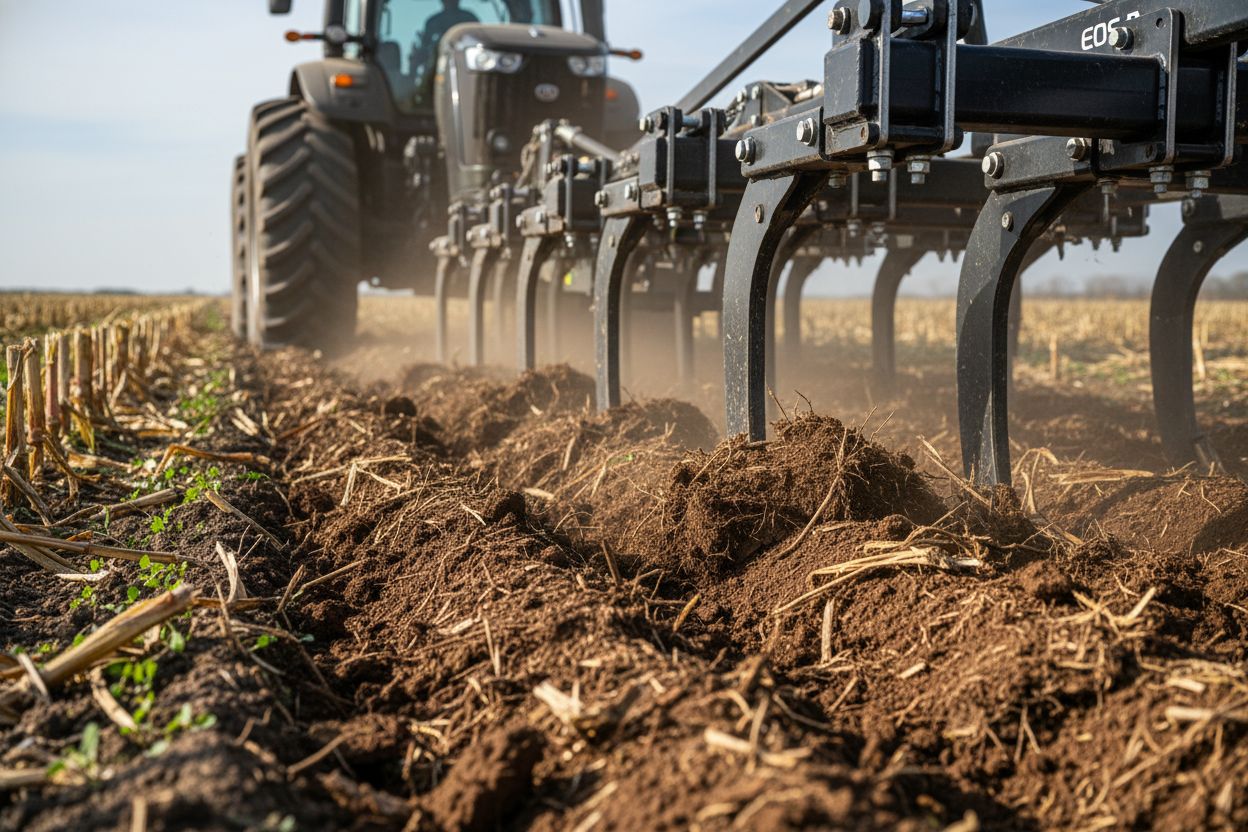
The engineering behind tillage equipment goes beyond simple ground manipulation. Each implement is meticulously designed to address specific soil conditions, crop requirements, and environmental challenges. From share angle and disk curvature to shank configuration, every mechanical detail influences soil interaction, ultimately determining the effectiveness of agricultural preparation and the potential for optimal crop growth.
Common Uses in Modern Agriculture
Tillage equipment plays a critical role in modern agricultural practices, serving far more than simple ground preparation. These sophisticated implements have become essential tools for farmers seeking to optimize crop production, manage soil health, and address complex agricultural challenges across diverse farming systems.
According to research from Encyclopedia Britannica, primary tillage tools are extensively used for multiple critical functions:
- Soil Pulverization: Breaking down complex soil structures
- Crop Residue Incorporation: Managing organic materials from previous harvests
- Seedbed Preparation: Creating optimal conditions for planting
- Moisture Conservation: Improving ground water retention
- Weed Management: Disrupting unwanted plant growth
Research from the National Center for Appropriate Technology highlights specialized uses in small-scale and market-garden systems. Rotary tillers and power harrows excel at creating fine seedbeds, while chisel plows effectively break hardpan layers without completely inverting soil structures. Field cultivators and harrows provide precise weed control and surface smoothing before planting.
The versatility of tillage equipment extends beyond mechanical soil manipulation. These tools represent a sophisticated approach to agricultural management, enabling farmers to address soil compaction, improve nutrient distribution, and create optimal growing environments tailored to specific crop requirements and local ecological conditions. By strategically selecting and deploying tillage implements, farmers can significantly enhance crop yield potential and long-term soil health.
Choosing the Right Tillage Equipment
Equipment selection in agriculture represents a nuanced decision requiring careful evaluation of multiple interconnected factors. Farmers must consider soil characteristics, crop requirements, operational constraints, and long-term environmental implications when selecting appropriate tillage implements.
According to research from the University of Minnesota Extension, critical selection criteria include:
- Soil Compaction Depth: Determining appropriate tool penetration
- Crop Residue Levels: Managing previous harvest materials
- Seedbed Requirements: Creating optimal planting conditions
- Available Horsepower: Matching equipment to tractor capabilities
- Soil Type and Moisture: Understanding ground interaction dynamics
Research from the University of Nebraska Extension recommends a structured decision-making approach. This involves systematically evaluating multiple factors such as erosion risk, irrigation needs, residue management strategies, and overall implementation costs. Producers can assign weighted scores to different tillage systems — including disk, chisel, ridge-till, and no-till methods — to scientifically determine the most suitable approach for their specific agricultural operation.
Ultimately, choosing tillage equipment transcends simple mechanical selection. It represents a strategic investment in agricultural productivity, requiring farmers to balance immediate operational needs with long-term soil health objectives. Successful implementation demands comprehensive understanding of local ecological conditions, crop rotation patterns, and sustainable farming principles.
Upgrade Your Tillage Operations With Reliable Parts
Are you struggling to keep your tillage equipment running smoothly or frustrated by unexpected downtime when you need your implements the most? As highlighted in our complete guide, having the right tillage equipment is essential for breaking tough soils, managing crop residue, and preparing perfect seedbeds. But without dependable tractor accessories and spare parts, even the best implements can fall short and put your harvest at risk.
Take control of your farming success by choosing from over 20,000 high-quality agricultural machinery parts at pexlivanidis.com. Whether you need replacement components or want to stock up to avoid delays, our product listings give you access to the parts that keep your primary and secondary tillage tools at peak performance. Enjoy peace of mind with free shipping in Greece for qualifying orders and the support of our experienced service team. Ready to boost productivity and protect your investment? Visit pexlivanidis.com today and secure the essential parts your tillage equipment depends on before the next busy season.
Frequently Asked Questions
What is tillage equipment used for?
Tillage equipment is used for preparing soil for crop growth by breaking compact soil structures, loosening the ground for better root penetration, inverting soil layers to manage organic residues, aerating the soil to improve oxygen circulation, and preparing seedbeds for planting.
What are the main types of tillage equipment?
Tillage equipment is categorized into two main types: primary tillage implements (such as moldboard plows, chisel plows, and subsoilers) that disrupt soil at greater depths, and secondary tillage implements (like disk harrows and cultivators) that fine-tune soil conditions closer to the surface.
How do different types of tillage equipment work?
Different tillage implements operate using specialized mechanical principles. For example, moldboard plows turn and invert soil, disk plows use rotating disks to break soil layers, and subsoilers penetrate deeply compacted soils using vertical shanks without complete inversion.
How do I choose the right tillage equipment for my farm?
Choosing the right tillage equipment involves evaluating soil characteristics, crop requirements, compaction depth, available horsepower, and long-term environmental implications. A structured decision-making approach helps in selecting the most suitable tillage system for specific agricultural needs.