

Over half of modern farms depend on tractor implements to handle everything from soil preparation to crop harvesting. Farmers face pressure to boost productivity and keep operations running smoothly, making efficient equipment choices more important than ever. Whether you want to maximize yields or simply get more done in less time, understanding the main types of tractor implements, how they attach, and the key functions they serve can help transform your entire approach to farming.
Table of Contents
- Tractor Implements Defined And Core Functions
- Main Types Of Tractor Implements Explained
- How Tractor Implements Attach And Operate
- Choosing Compatible Implements For Your Tractor
- Safety, Maintenance, And Common Mistakes
Key Takeaways
| Point | Details |
|---|---|
| Implement Versatility | Tractor implements enhance agricultural efficiency by enabling farmers to perform multiple tasks with a single machine through various attachments. |
| Compatibility Importance | Proper matching of tractor power, design, and hitch systems to implements is critical to avoid mechanical failures and ensure optimal performance. |
| Safety and Maintenance | Implement safety requires adherence to protocols, regular maintenance, and comprehensive operator training to prevent accidents and prolong equipment lifespan. |
| Technological Integration | Modern tractor implements increasingly incorporate advanced technologies, allowing for precision farming and improved operational efficiency. |
Tractor Implements Defined and Core Functions
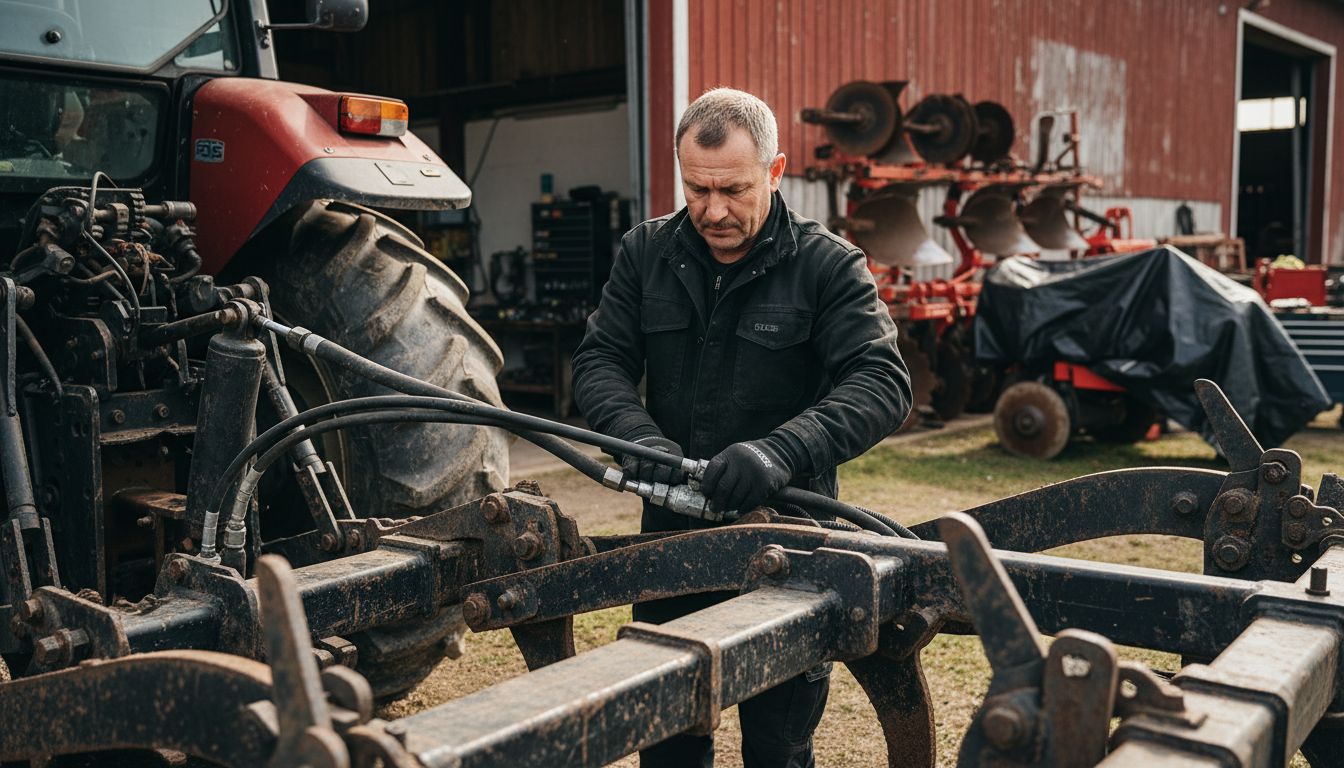
A tractor implement is a specialized tool or attachment designed to be mounted onto a tractor, enabling farmers to perform diverse agricultural tasks efficiently. According to Cademix, these implements enhance farm productivity by automating labor-intensive processes and improving overall agricultural operations.
Tractor implements serve multiple core functions across different stages of agricultural work. Their primary purposes include:
- Soil Preparation: Plowing, tilling, and cultivating land
- Planting: Precise seed drilling and spacing
- Crop Management: Fertilizing, weeding, and irrigation
- Harvesting: Collecting and processing crops
- Transportation: Moving materials and equipment across farmland
The versatility of tractor implements makes them indispensable in modern agriculture. Education IRRI highlights that these tools allow farmers to transform a standard tractor into a multifunctional machine capable of handling complex agricultural challenges. By attaching different implements, farmers can quickly adapt their equipment to specific tasks without purchasing multiple specialized machines.
Successful implementation of tractor implements requires understanding their compatibility, proper attachment techniques, and operational safety. Farmers must consider factors like implement weight, tractor horsepower, and specific field conditions to ensure optimal performance and prevent potential equipment damage. Regular maintenance and careful selection of implements based on crop type and terrain can significantly improve agricultural efficiency and productivity.
Main Types of Tractor Implements Explained
Tractor implements are categorized into several key types, each designed for specific agricultural tasks and operational requirements. According to Inspire Education, these implements range from soil preparation tools to sophisticated harvesting equipment, providing farmers with versatile solutions for different agricultural stages.
The primary categories of tractor implements include:
Here’s a summary of the main tractor implement categories and their typical uses:
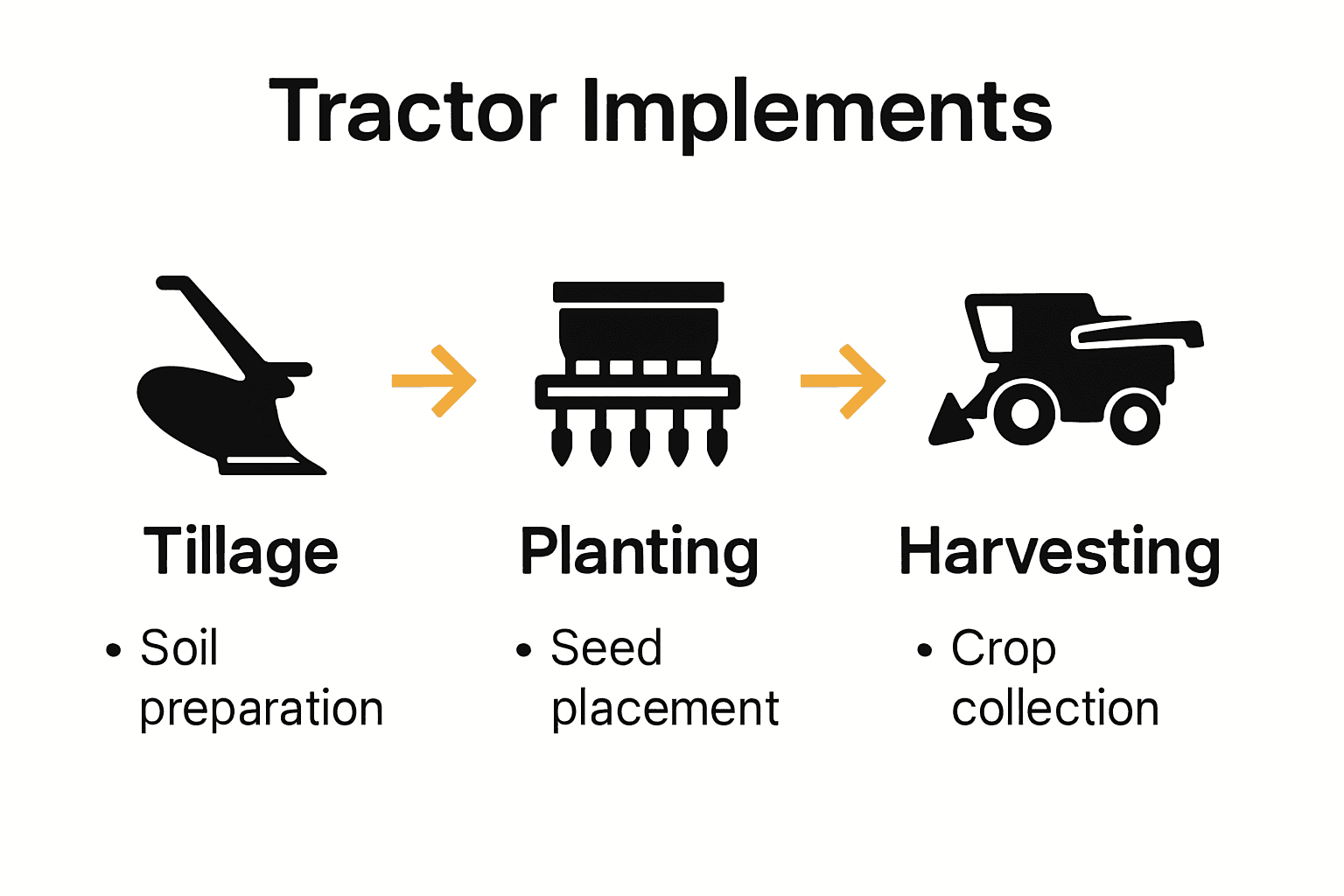
| Implement Category | Common Implements | Primary Functions |
|---|---|---|
| Tillage Implements | Ploughs Harrows Cultivators |
Breaks soil Smooths surface Controls weeds |
| Planting Implements | Seed drills Planters Row markers |
Precise seed placement Uniform crop spacing |
| Harvesting Implements | Combine harvesters Threshers Hay balers |
Crop collection Processing Packaging |
- Tillage Implements
- Ploughs: Breaking and turning soil
- Harrows: Breaking soil clumps and smoothing surfaces
- Cultivators: Weed control and soil aeration
- Planting Implements
- Seed drills: Precise seed placement
- Planters: Automated crop seeding
- Row markers: Ensuring uniform crop spacing
- Harvesting Implements
- Combine harvesters
- Threshers
- Hay balers
Teacher notes that tractor implements are typically classified into two primary mounting systems: one-point hitch and three-point hitch. The three-point hitch system, developed by Harry Ferguson, revolutionized implement attachment by providing more stability, better weight distribution, and easier connection to tractors.
Modern tractor implements are engineered with advanced technologies to enhance precision and efficiency. Farmers can now select implements that not only perform specific tasks but also integrate with GPS tracking, variable rate application systems, and other precision agriculture technologies. This evolution allows for more targeted farming practices, reducing resource waste and improving overall agricultural productivity.
How Tractor Implements Attach and Operate
Tractor implements connect to agricultural machinery through specialized attachment systems that ensure secure and efficient operation. Wikipedia explains that the three-point hitch is the most widely used connection method, providing a statically determinate and rigid link between the tractor and implement that allows for precise weight transfer and operational control.
The attachment process typically involves several critical components:
- Mounting Points
- Top link for angle adjustment
- Two lower links for lateral stability
- Hydraulic lift mechanisms
- Connection Types
- Drawbar connections
- Quick-attach systems
- Integrated mounting frames
- Alignment Requirements
- Precise tractor-implement matching
- Compatibility with horsepower ratings
- Proper weight distribution
Wikipedia notes that implements like ploughs are designed to integrate seamlessly with tractor systems, allowing farmers to turn soil layers while efficiently transferring mechanical power. The connection mechanism enables precise depth control, angle adjustment, and smooth operational dynamics.
Modern tractor implements incorporate advanced technologies to enhance attachment and operational efficiency. Farmers can now utilize computerized systems that automatically adjust implement settings, monitor performance metrics, and optimize farming processes.
 These innovations reduce manual intervention, minimize equipment stress, and provide real-time feedback on implement performance and soil interactions.
Choosing Compatible Implements for Your Tractor
Implement compatibility is crucial for efficient agricultural operations, requiring careful consideration of multiple technical factors. Agromind emphasizes the importance of matching tractor power and design with appropriate implements to ensure optimal performance and prevent potential equipment damage.
Key compatibility factors include:
- Tractor Power Requirements
- Horsepower matching
- Power take-off (PTO) specifications
- Hydraulic system capacity
- Physical Compatibility
- Hitch category
- Weight distribution
- Mounting point alignment
- Operational Considerations
- Terrain type
- Crop specifics
- Soil conditions
Wikipedia highlights that three-point hitch systems have different size categories, each with specific dimensions and capacities. Farmers must carefully match their tractor’s hitch category to ensure proper implement attachment and prevent potential mechanical stress or operational inefficiencies.
Successful implement selection goes beyond technical specifications. Farmers should consider long-term investment value, maintenance requirements, and potential versatility. Consulting with agricultural equipment specialists, reviewing manufacturer recommendations, and understanding your specific farming needs can help you select implements that not only fit your tractor but also enhance overall agricultural productivity.
Safety, Maintenance, and Common Mistakes
Tractor implement safety requires a comprehensive approach to prevent accidents and equipment damage. Education IRRI emphasizes the critical importance of understanding and implementing rigorous preventive maintenance and operational safety protocols when working with agricultural machinery.
Common safety considerations and potential mistakes include:
- Operational Hazards
- Inadequate personal protective equipment
- Bypassing safety guards
- Operating implements without proper training
- Maintenance Neglect
- Skipping regular lubrication
- Ignoring wear and tear
- Postponing routine inspections
- Equipment Mishandling
- Improper implement attachment
- Exceeding recommended load capacities
- Inappropriate speed during operation
Teacher recommends specific maintenance practices such as regular lubrication of moving parts, careful tire pressure management, and proper equipment storage to minimize potential operational risks and extend implement lifespan.
Preventing accidents requires a proactive approach. Farmers should invest in comprehensive operator training, maintain detailed equipment logs, conduct regular safety inspections, and stay updated on manufacturer recommendations. Understanding the nuanced interactions between tractors and implements can significantly reduce the risk of mechanical failures, personal injuries, and costly equipment damage.
Equip Your Tractor for Peak Performance Today
Understanding the importance of tractor implements and their correct selection can transform your farming efficiency. The article highlights key challenges such as ensuring compatibility between tractor power and implement requirements, mastering proper attachment methods like the three-point hitch, and maintaining safety and reliability throughout operations. These are common pain points farmers face when trying to boost productivity while avoiding costly equipment damage or downtime.
At pexlivanidis.com, we specialize in providing a vast inventory of quality tractor accessories and spare parts designed to match your specific implement needs. Whether you require reliable mounting components, power transmission parts, or precision attachments, our catalog supports both retail and wholesale customers with seamless ordering and free shipping on qualifying orders. Don’t let compatibility issues or maintenance challenges slow you down.
Discover our full range of tractor equipment solutions now by visiting pexlivanidis.com and explore how the right parts can enhance your agricultural implements’ performance. Make the smart choice today and keep your machinery running smoothly through every season.
Frequently Asked Questions
What are the core functions of a tractor implement?
Tractor implements primarily serve functions such as soil preparation, planting, crop management, harvesting, and transportation of materials across farmland.
How do tractor implements attach to tractors?
Tractor implements typically attach via specialized systems like the three-point hitch, which includes mounting points, hydraulic lift mechanisms, and connection types to ensure secure operation and proper weight transfer.
What factors should be considered when choosing compatible tractor implements?
Key factors include tractor power requirements (horsepower and PTO specifications), physical compatibility (hitch category and weight distribution), and operational considerations such as terrain types and specific crops being grown.
What safety precautions should be taken when using tractor implements?
Always wear personal protective equipment, ensure proper training in using the equipment, conduct routine inspections and maintenance, and avoid exceeding load capacities to minimize risks of accidents and equipment damage.