

Nearly 60 percent of farm accidents involve moving machine parts, and tractor PTO systems often play a central role in these incidents. Understanding how a PTO works and why it matters can help prevent costly breakdowns and serious injuries. Whether you operate a small tractor or manage an entire fleet, separating fact from fiction about PTO systems will help you choose the right equipment, improve work safety, and get the most out of your machinery.
Table of Contents
- Defining Tractor PTO And Common Myths
- Types Of Tractor PTO Systems Explained
- How Tractor PTO Transfers Power
- Typical Applications And Compatible Implements
- Maintenance, Costs, And Safety Risks
Key Takeaways
| Point | Details |
|---|---|
| PTO Systems Are Essential | Power Take-Off (PTO) is crucial for transferring engine power to agricultural implements, making it a vital component of modern farming. |
| Myth Clarification | Common myths about PTO, such as uniformity in shafts and speed, can hinder safe and effective usage. |
| Types of PTO Systems | Understanding the differences between transmission, live, and independent PTO systems is key to selecting the appropriate one for specific agricultural tasks. |
| Maintenance Is Critical | Regular inspections and maintenance of PTO systems are essential for equipment longevity, safety, and economic efficiency. |
Defining Tractor PTO and Common Myths
A Power Take-Off (PTO) is a mechanical power transmission system that enables tractors to transfer engine power directly to attached agricultural implements. According to Penn State Extension, the PTO shaft represents an efficient method for transferring mechanical energy between farm tractors and various equipment, making it a critical component in modern agricultural operations.
Understanding the core function of a PTO system requires breaking down its fundamental mechanics. The PTO operates by connecting the tractor’s engine power to external implements through a rotating shaft, allowing machinery like mowers, balers, and seeders to function without requiring their own independent power source. As noted by Wikipedia, these systems enable tractors to power a wide range of agricultural tools seamlessly.
Common Myths About PTO Systems
Several persistent myths surrounding PTO systems can lead to misunderstandings and potential safety risks. Here are some key misconceptions:
- Myth: All PTO Shafts Are the Same – In reality, PTO shaft specifications vary by tractor model and implement requirements.
- Myth: PTO Speed is Universally Standard – Different implements demand different rotational speeds, ranging typically from 540 to 1000 RPM.
- Myth: PTO Safety is Unnecessary – Improper PTO usage can result in severe injury, making safety protocols absolutely critical.
Operators must recognize that PTO systems are precision engineering components requiring careful handling, proper maintenance, and a comprehensive understanding of their specific operational parameters.
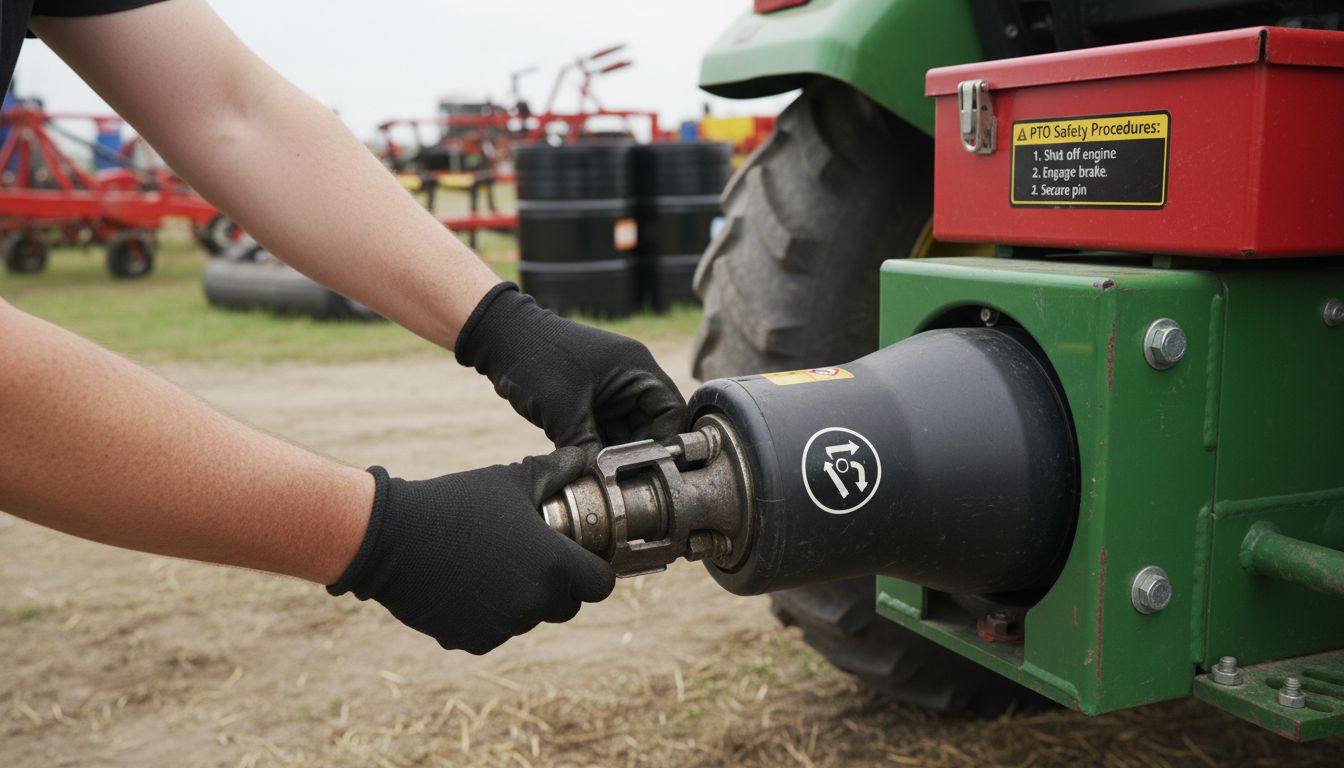 Always consult manufacturer guidelines and receive proper training before operating any PTO-driven agricultural equipment.
Types of Tractor PTO Systems Explained
Power Take-Off (PTO) systems come in several distinct configurations, each designed to meet specific agricultural machinery requirements. According to Tractor Data, there are three primary types of PTO systems that offer farmers varied operational capabilities and control mechanisms.
Primary PTO System Types
The main PTO system varieties include:
- Transmission PTO
- Directly connected to the tractor’s transmission
- Power transfer occurs when the tractor is moving
- Limited flexibility for implement operation
- Live (Two-Stage Clutch) PTO
- Allows independent engagement of the PTO shaft
- Enables operators to stop the tractor without stopping implement operation
- Provides more operational versatility
- Independent PTO
- Completely separate from transmission mechanics
- Can be engaged or disengaged without affecting vehicle movement
- Offers maximum control and precision for complex agricultural tasks
As Mahindra Tractor highlights, each PTO system type presents unique advantages depending on specific farming requirements. Farmers must carefully evaluate their equipment needs, implement compatibility, and operational demands when selecting an appropriate PTO system.
Choosing the right PTO system involves understanding the nuanced differences between transmission, live, and independent configurations. Factors like implement type, terrain, and specific agricultural tasks play crucial roles in determining the most suitable PTO mechanism for optimal performance and efficiency.
How Tractor PTO Transfers Power
The power transfer process in agricultural machinery represents a complex mechanical choreography that enables tractors to drive various implements efficiently. According to Agricol Bikaner, the PTO transfers power from the tractor’s engine through the transmission system, utilizing an intricate network of mechanical components to deliver rotational energy to attached equipment.
Power Transmission Mechanics
The fundamental power transfer occurs through several critical stages:
- Engine Power Generation
- Tractor’s engine creates rotational mechanical energy
- Power is initially generated through combustion processes
- Transmission Interface
- Mechanical energy routes through the transmission system
- Clutches and gears modulate and direct power flow
- Enables controlled power distribution
- PTO Shaft Engagement
- Rotating shaft connects directly to implement
- Transforms engine power into functional mechanical work
- Allows precise power delivery to agricultural tools
As Purdue University’s Agricultural Systems Engineering explains, the PTO driveline system efficiently translates rotational motion through specialized mechanical components like universal joints and rotating shafts.
Understanding this power transfer mechanism requires recognizing the precision engineering behind agricultural machinery. The PTO system isn’t just a simple connection but a sophisticated method of converting raw engine power into targeted, controlled mechanical work across diverse agricultural implements.
Typical Applications and Compatible Implements
Power Take-Off (PTO) systems are versatile power transmission mechanisms that enable tractors to operate a wide range of agricultural implements. According to Agricol Bikaner, PTOs are commonly used to power machinery like mowers, sprayers, and various agricultural equipment that require mechanical power directly from the tractor.
Primary Implement Categories
The diverse applications of PTO systems span multiple agricultural domains:
- Hay and Forage Processing
- Hay balers
- Forage choppers
- Rotary mowers
- Tedders and rakes
- Tillage and Soil Preparation
- Rotary tillers
- Seed drills
- Cultivators
- Disc harrows
- Crop Management Implements
- Sprayers
- Fertilizer spreaders
- Crop protection equipment
- Precision planting systems
As Purdue University’s Agricultural Systems Engineering explains, PTO systems efficiently transfer rotational motion to specialized agricultural tools, enabling farmers to perform complex tasks with a single piece of equipment.
Successful implement operation requires matching the PTO system’s specifications with the implement’s power requirements. Farmers must consider factors like rotational speed, horsepower transmission, and mechanical compatibility to ensure optimal performance and prevent potential equipment damage.
Maintenance, Costs, and Safety Risks
Power Take-Off (PTO) systems require meticulous maintenance and careful operation to ensure both economic efficiency and operator safety. According to Penn State Extension, proper maintenance of PTO components is crucial to prevent mechanical failures and minimize long-term operational costs.
Maintenance Cost Considerations
Key maintenance factors impacting PTO system economics include:
- Regular Inspection
- Check shaft alignment and connections
- Inspect protective shields and guards
- Lubricate moving components
- Detect early signs of wear
- Replacement Expenses
- PTO shaft replacements can range $200-$800
- Shield and guard repairs average $100-$300
- Annual maintenance costs typically $300-$500
- Preventative Strategies
- Schedule quarterly professional inspections
- Replace worn components immediately
- Use high-quality lubricants
- Follow manufacturer maintenance guidelines
As University of Arkansas Extension emphasizes, PTO shafts present significant safety hazards, including potential entanglement risks that can result in severe injuries or fatalities.
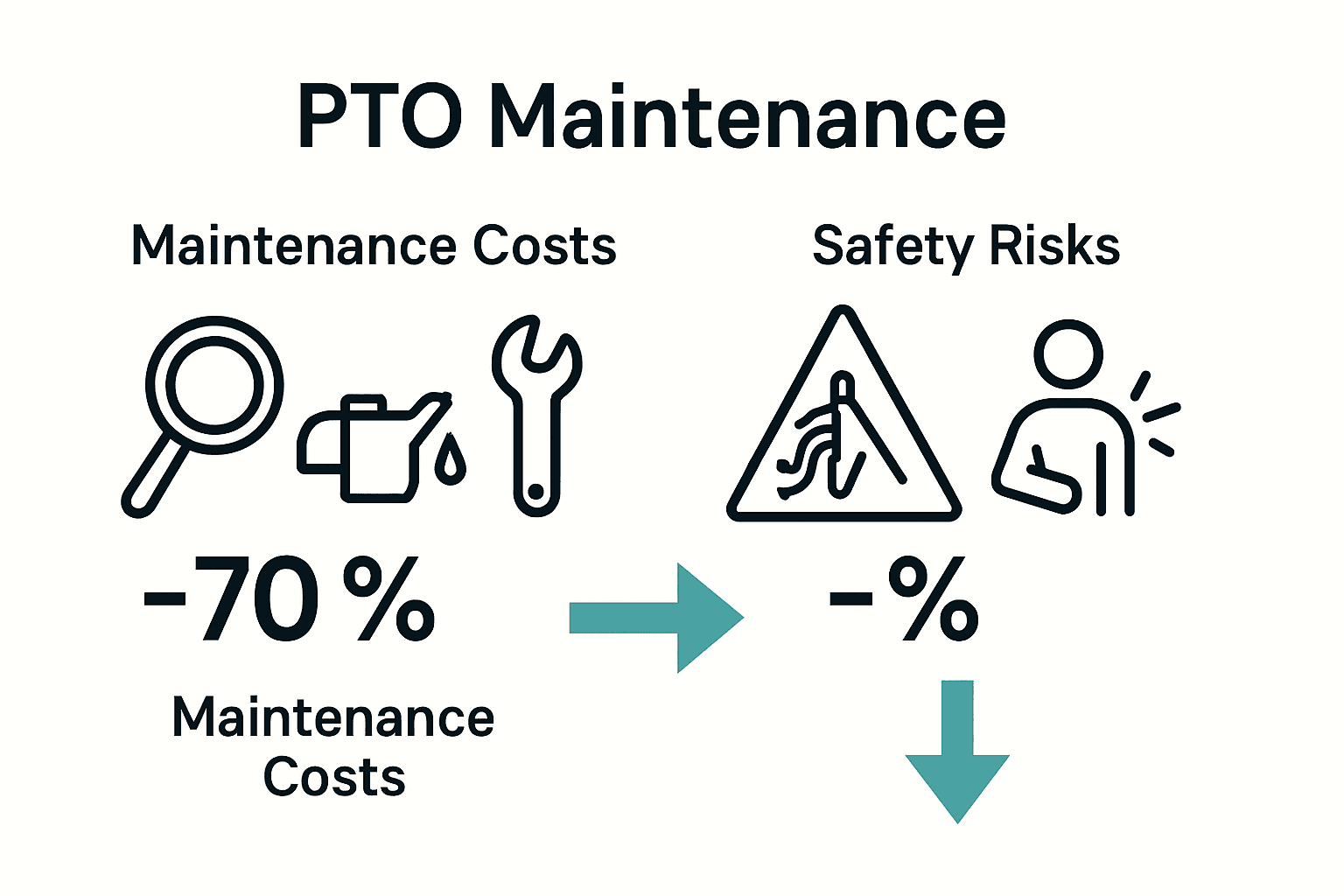
Ultimately, comprehensive PTO maintenance transcends mere cost management. It represents a critical investment in equipment longevity, operational efficiency, and most importantly, human safety. Operators must prioritize regular inspections, immediate repairs, and strict adherence to safety protocols to protect both their machinery and themselves.
Keep Your Tractor PTO Running Smoothly with Reliable Parts
Understanding the critical role of your tractor’s Power Take-Off system is the first step to safe and efficient farming. The article highlights key challenges such as maintaining correct PTO shaft alignment, matching the right rotational speed, and ensuring operator safety through proper maintenance. These pain points can lead to costly repairs or dangerous accidents if not addressed promptly.
At pexlivanidis.com, we understand the urgency of keeping your PTO and other tractor components in top shape. With over 20,000 agricultural parts, including PTO shafts, protective shields, and replacement components, we provide quality and dependable solutions tailored to your needs. Don’t wait until a breakdown disrupts your work. Explore our extensive inventory today to find the exact parts your equipment demands. Visit our site now and benefit from free shipping on orders over 100€ within Greece to keep your farm moving forward without delay.
Need expert advice or want to check availability? Reach out via the contact options on our website or sign up for our newsletter to stay informed about offers and new arrivals. Your tractor deserves the best care — start safeguarding your PTO’s performance by choosing reliable parts from pexlivanidis.com.
Frequently Asked Questions
What is a Tractor PTO?
A Power Take-Off (PTO) is a mechanical system that allows tractors to transfer engine power to various attached agricultural implements, enabling them to operate efficiently without their own power source.
What are the different types of Tractor PTO systems?
The three main types of PTO systems are Transmission PTO, Live (Two-Stage Clutch) PTO, and Independent PTO. Each type offers different advantages in terms of power delivery and operational flexibility.
How does a Tractor PTO transfer power to implements?
The PTO transfers power by connecting the tractor’s engine to the implement through a rotating shaft, which receives engine power via the transmission system and delivers it to perform mechanical work on agricultural tools.
What maintenance is required for Tractor PTO systems?
Regular maintenance for PTO systems includes inspecting shaft alignment, lubricating moving components, and checking for wear. It’s essential to conduct professional inspections and replace worn parts to ensure safety and optimal performance.