
Did you know that using the wrong tractor part can cut equipment life by up to 30 percent? For anyone who relies on farming machinery, choosing the right components means smoother operations and fewer costly repairs. Understanding the difference between OEM, aftermarket, and remanufactured tractor parts can help protect your investment, boost your machine’s performance, and safeguard your harvest season after season.
Key Takeaways
| Point | Details |
|---|---|
| Invest in OEM Parts | OEM tractor parts ensure precise fit, high quality, and long-term reliability, representing a strategic investment for machinery maintenance. |
| Understand Different Options | There are three main types of tractor parts: OEM, aftermarket, and remanufactured, each with unique benefits and risks that influence equipment performance. |
| Account for Total Cost | Consider the overall economic implications of parts selection, including potential downtime and maintenance costs, rather than just upfront expenses. |
| Beware of Non-OEM Risks | Non-OEM alternatives may offer initial savings but can lead to increased long-term expenses due to compatibility issues and reduced reliability. |
Table of Contents
- Defining Oem Tractor Parts And Their Role
- Distinguishing Oem, Aftermarket, And Genuine Parts
- Key Benefits Of Oem Tractor Parts For Operations
- Risks And Limitations Of Non-Oem Alternatives
- Cost, Warranty, And Long-Term Value Considerations
Defining OEM Tractor Parts and Their Role
When it comes to maintaining agricultural machinery, understanding Original Equipment Manufacturer (OEM) tractor parts can make a significant difference in your equipment’s performance and longevity. According to AgCompA, OEM parts are specifically manufactured by the original tractor manufacturer, ensuring a perfect fit and reliable performance.
These specialized components come with several key characteristics that distinguish them from alternative parts:
- Precision Engineering: Designed exactly to the manufacturer’s original specifications
- Guaranteed Compatibility: Engineered to match the specific make and model of your tractor
- Quality Assurance: Manufactured under strict quality control standards
- Direct Manufacturer Support: Often backed by warranties and technical documentation
While OEM parts typically come at a higher price point compared to aftermarket alternatives, they offer substantial long-term benefits for farmers and agricultural equipment operators. The investment translates into reduced risk of equipment failure, minimized downtime, and maintained machinery integrity. By choosing OEM parts, you’re essentially selecting a direct replacement that maintains your tractor’s original performance standards and helps preserve its overall value.
Ultimately, selecting OEM tractor parts is about balancing immediate cost with long-term reliability. Smart farmers understand that the slightly higher upfront expense can prevent potentially catastrophic equipment failures and expensive repairs down the line.
Distinguishing OEM, Aftermarket, and Genuine Parts
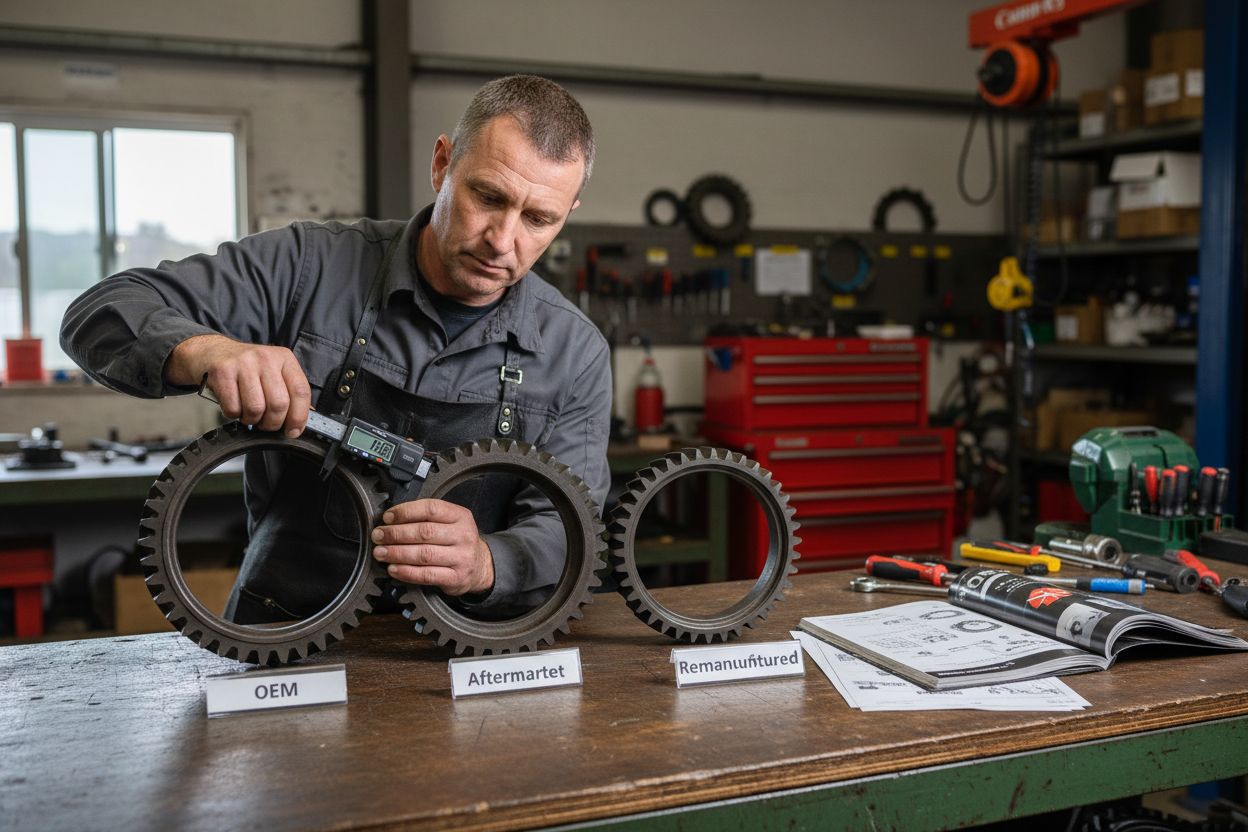
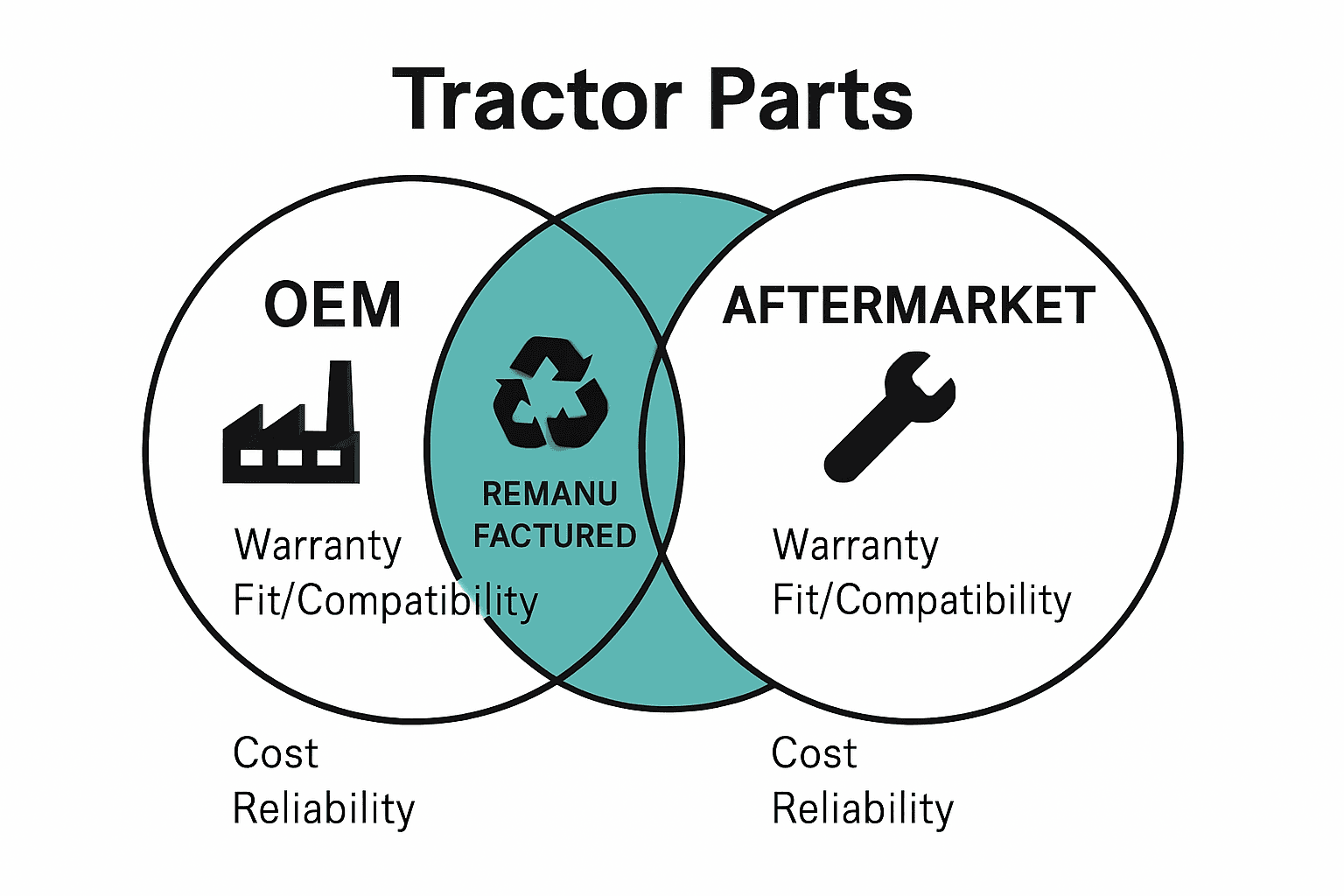
Navigating the world of tractor parts can feel like a complex maze, with three primary categories of components: Original Equipment Manufacturer (OEM), aftermarket, and remanufactured parts. Each category offers unique advantages and challenges for agricultural machinery owners, making informed selection crucial for equipment maintenance and performance.
Let’s break down the key differences:
Here’s a breakdown of the main types of tractor parts:
| Part Type | Manufacturer | Typical Price | Warranty Coverage | Fit & Performance |
|---|---|---|---|---|
| OEM | Original manufacturer | Highest | Full Manufacturer-backed |
Exact match |
| Aftermarket | Third-party | Lower | Limited or none | Varies Possible issues |
| Remanufactured | Specialist rebuilder | Moderate | Often included | Meets specs |
- OEM Parts: Manufactured directly by the tractor’s original manufacturer, guaranteeing exact specifications and compatibility
- Aftermarket Parts: Produced by third-party manufacturers, often at lower price points but with varying quality standards
- Remanufactured (‘Reman’) Parts: Rebuilt to original specifications, offering a middle ground between new OEM and generic aftermarket options
According to Southeastern Equipment, remanufactured parts present an interesting alternative that bridges the gap between brand-new and generic components. These parts are typically rebuilt to meet original manufacturing specifications, providing improved reliability and often coming with warranty protection at a lower cost than brand-new OEM parts.
Ultimately, the choice between these part types depends on your specific needs, budget constraints, and the critical nature of the equipment component. While OEM parts offer the highest assurance of quality and fit, aftermarket and remanufactured options can provide cost-effective solutions for farmers and equipment operators looking to balance performance and expense.
Key Benefits of OEM Tractor Parts for Operations
When it comes to maintaining agricultural machinery, OEM tractor parts represent more than just replacement components; they are a strategic investment in your equipment’s overall performance and longevity. According to Fries Ag and Turf, these specialized parts offer significant advantages that extend far beyond simple component replacement.
The core benefits of OEM tractor parts include:
- Precise Fit and Performance: Engineered to exact manufacturer specifications
- Extended Equipment Lifespan: Designed to minimize wear and reduce mechanical stress
- Manufacturer Warranty Coverage: Provides additional protection and peace of mind
- Enhanced Resale Value: Maintained equipment integrity attracts better market value
- Consistent Quality Control: Manufactured under strict industrial standards
By choosing OEM parts, farmers and equipment operators gain more than just a replacement part. These components ensure optimal machine functionality, reducing unexpected downtime and potential costly repairs. The precision engineering means each part integrates seamlessly with your existing machinery, maintaining the original design intent and performance characteristics.
Ultimately, while OEM parts might require a higher initial investment, they represent a smart long-term strategy for equipment management. The combination of superior performance, reliability, and manufacturer support makes them an essential choice for serious agricultural professionals who understand that equipment maintenance is not just an expense, but a critical investment in their operational success.
Risks and Limitations of Non-OEM Alternatives
When considering alternative parts for your agricultural machinery, it’s crucial to understand the potential pitfalls of non-OEM components. Aftermarket and generic parts might seem attractive due to their lower initial cost, but they often come with significant hidden risks that can compromise your tractor’s performance and longevity.
The primary risks associated with non-OEM alternatives include:
- Inconsistent Quality: Varying manufacturing standards can lead to unpredictable performance
- Potential Compatibility Issues: Imprecise design may cause poor fitment or mechanical stress
- Reduced Equipment Reliability: Higher likelihood of premature component failure
- Voided Manufacturer Warranties: Using non-original parts can invalidate existing equipment warranties
- Increased Long-Term Expenses: Initial savings can be quickly overshadowed by repair and replacement costs
These alternative parts often represent a false economy. While the upfront price might be lower, the potential for increased wear, reduced efficiency, and unexpected breakdowns can result in substantially higher expenses over time. Precision engineering is not just about immediate functionality, but about maintaining the intricate balance of complex machinery designed to operate under demanding agricultural conditions.
For farmers and equipment operators, the decision between OEM and non-OEM parts is fundamentally a risk management choice.
 Saving a few dollars today could mean significant operational disruptions, expensive repairs, and reduced equipment performance tomorrow. Smart operators understand that the cheapest option is rarely the most economical in the long run, especially when it comes to critical agricultural machinery that directly impacts productivity and profitability.
Cost, Warranty, and Long-Term Value Considerations
Understanding the total economic impact of tractor parts selection goes far beyond the initial purchase price. Farmers and agricultural equipment operators must consider a comprehensive approach that balances immediate expenses with long-term operational reliability and financial performance.
Key financial considerations include:
- Initial Purchase Cost: Not just the upfront price, but the potential future expenses
- Warranty Protection: Comprehensive coverage that safeguards your investment
- Replacement Frequency: How often parts need to be replaced under different quality scenarios
- Equipment Downtime: Potential productivity losses from premature part failures
- Resale and Depreciation: Impact of maintenance quality on overall equipment value
OEM parts might appear more expensive at first glance, but they represent a strategic investment in your machinery’s longevity. The precision engineering and manufacturer-backed warranties provide a level of financial protection that generic alternatives simply cannot match. By choosing high-quality components, you’re essentially purchasing insurance against unexpected breakdowns and costly repairs.
Ultimately, the most financially prudent approach is to view tractor parts as a critical infrastructure investment rather than a mere operational expense. Smart agricultural professionals recognize that minimizing total cost of ownership requires looking beyond the price tag and considering the broader economic implications of every parts selection decision. The goal is not just to save money, but to optimize your equipment’s performance, reliability, and long-term value.
Secure Your Tractor’s Future with Genuine OEM Parts from Pexlivanidis
Maintaining your tractor should never be a gamble, especially when your productivity and peace of mind are at stake. You have just learned how Original Equipment Manufacturer (OEM) tractor parts guarantee the right fit, unrivaled reliability, and expanded lifespan for your machinery. Skipping on quality can result in costly breakdowns, downtime, and headaches that no farmer needs—especially during peak season.
Make a decision today that protects your investment and supports your operation’s long-term success. Explore more than 20,000 specialized products at Pexlivanidis, your trusted source for OEM tractor parts, free shipping in Greece for orders over 100€, and complete product support. Whether you need quick product assistance or want to request a specific item, our product inquiry form makes it easy to connect with our team. Ready to upgrade your equipment with precision-fit parts? Visit Pexlivanidis now and experience the lasting value that only genuine components provide.
Frequently Asked Questions
What are OEM tractor parts?
OEM tractor parts are components manufactured by the original equipment manufacturer specifically for a tractor model, ensuring a precise fit and reliable performance.
What are the advantages of using OEM parts over aftermarket parts?
OEM parts offer guaranteed compatibility, consistent quality, and manufacturer support, which can minimize the risk of equipment failure and downtimes compared to aftermarket options.
How do OEM parts affect the resale value of equipment?
Using OEM parts helps maintain the integrity and functionality of the machinery, which can enhance its resale value by attracting better market offers.
What are the potential risks of using non-OEM parts?
Non-OEM parts may lead to inconsistent quality, compatibility issues, higher likelihood of premature failure, voided warranties, and increased long-term expenses, undermining equipment performance.