

Every Northern Greek farmer knows the frustration of a sudden tractor breakdown during peak season. This challenge often leads to a bigger question: which parts can you truly trust to keep your machinery running smoothly? Choosing the right certified tractor parts is more than a quick fix—it is about protecting your investment and field productivity for years to come. Learn how genuine certification gives you confidence, dispels myths, and lays a strong foundation for reliable, hard-working equipment.
Table of Contents
- Certified Parts Defined And Common Myths
- Key Types Of Certified Tractor Parts
- How Certification Ensures Performance And Safety
- Regulatory Standards And Compliance Requirements
- Risks And Costs Of Using Uncertified Parts
- Comparing Certified Vs. Uncertified Spare Parts
Key Takeaways
| Point | Details |
|---|---|
| Certified Parts Ensure Reliability | Using certified parts enhances equipment performance and safety due to rigorous testing and compliance with industry standards. |
| Certification Is Not a Cost | Investing in certified parts can save money in the long run by reducing maintenance and downtime expenses. |
| Uncertified Parts Pose Risks | Non-certified components can lead to machinery failures, financial losses, and voided warranties, jeopardizing farm operations. |
| Always Verify Certification | Request thorough certification documentation to ensure that parts meet the necessary quality and safety regulations. |
Certified Parts Defined and Common Myths
In agricultural equipment maintenance, understanding certified parts goes far beyond a simple label. Certification myths can significantly impact equipment reliability, making it crucial for Northern Greek farmers to distinguish fact from fiction.
A certified part represents more than just a stamp of approval. It means the component has been rigorously tested and verified to meet specific industry standards by recognized, independent credentialing bodies. These standards ensure the part will perform consistently under expected operational conditions, which is critical for tractors and agricultural machinery that endure demanding field environments.
Common myths about certified parts include:
- All certifications are equal: Not true. Authentic certification requires verification from accredited organizations, not just internal company declarations.
- Certified means expensive: Certification actually represents long-term value through improved reliability and reduced equipment downtime.
- Any replacement part works the same: Certified parts undergo specific performance and safety testing that generic alternatives do not.
Certification is not a marketing gimmick – it’s a proven method of ensuring equipment integrity and operational reliability.
Verification processes for certified parts typically involve multiple steps:
- Design evaluation
- Material quality testing
- Performance simulations
- Durability assessments
- Independent third-party validation
Farmers in regions like Northern Greece, where agricultural equipment represents a significant investment, cannot afford to gamble with uncertified components. The potential risks of using non-certified parts include accelerated equipment wear, potential machinery failures, and compromised operational efficiency.
Pro tip: Always request official certification documentation when purchasing replacement parts and verify the credentialing organization’s authenticity before making a purchase.
Key Types of Certified Tractor Parts
Understanding the various certified tractor parts is crucial for maintaining agricultural equipment’s performance and longevity. Premium replacement parts cover multiple critical systems that ensure tractors operate efficiently in demanding field conditions.
Certified tractor parts encompass several essential categories, each serving a specific function in machinery performance and reliability. These components undergo rigorous testing to meet industry standards, providing farmers with components that deliver consistent performance under challenging agricultural environments.
Key types of certified tractor parts include:
- Engine Components: Cylinder heads, pistons, crankshafts, and gasket sets
- Transmission Parts: Gears, clutch assemblies, drive shafts
- Hydraulic Systems: Pumps, valves, hoses, and seals
- Electrical Systems: Alternators, starters, wiring harnesses
- Brake Components: Brake pads, rotors, calipers, hydraulic lines
- Filtration Systems: Oil, air, fuel, and hydraulic filters
Certified parts represent more than just replacements – they are precision-engineered solutions designed to maintain equipment performance and reliability.
Each category of certified parts plays a critical role in overall machinery functionality. Engine components, for instance, directly impact power output and fuel efficiency. Transmission parts ensure smooth power transfer, while hydraulic systems control critical equipment movements.
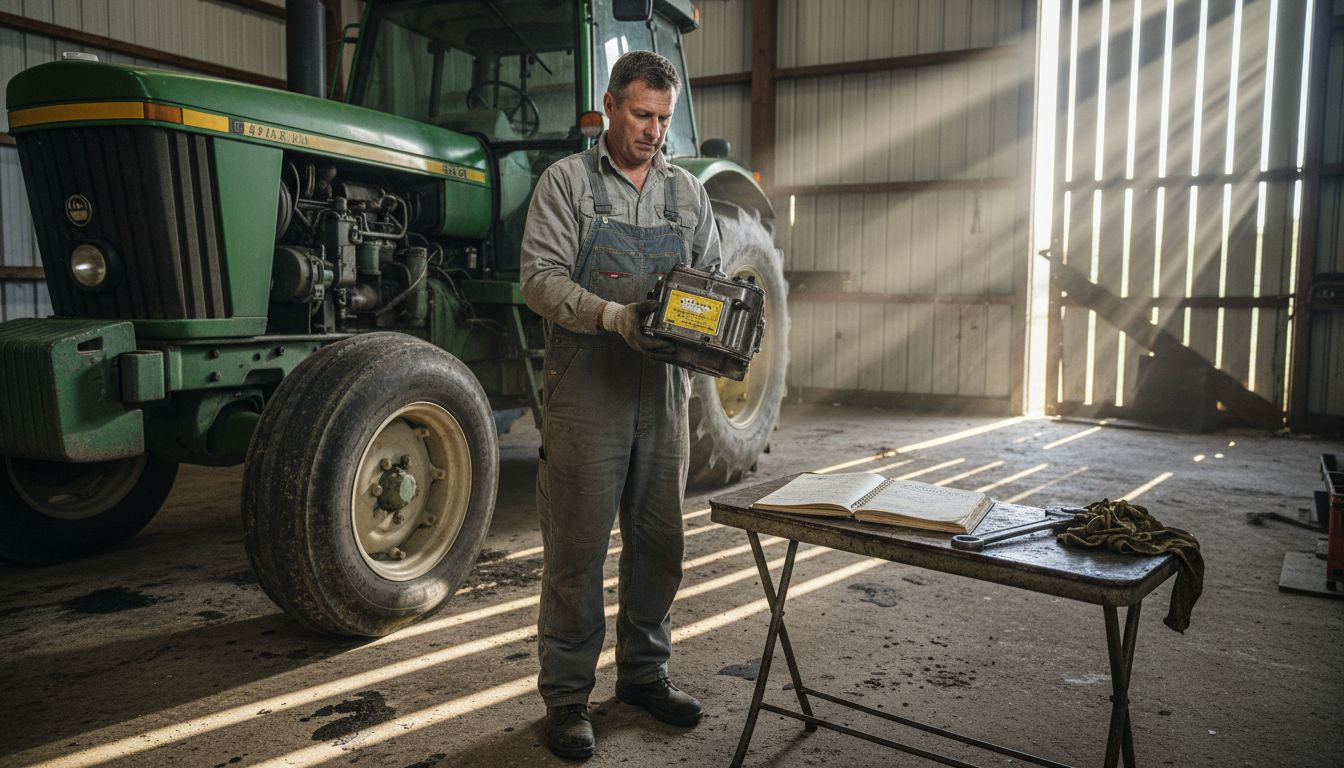
Here’s how different certified tractor part categories impact overall equipment reliability:
| Part Category | Main Function | Effect on Tractor Reliability |
|---|---|---|
| Engine Components | Generate and manage power | Directly affects power and fuel efficiency |
| Transmission Parts | Transfer engine output to wheels | Enables smooth operation and gear shifts |
| Hydraulic Systems | Control machinery movements | Powers essential functions and attachments |
| Electrical Systems | Supply electricity and startups | Ensures reliable starts and electrical safety |
| Brake Components | Stop or slow down machinery | Enhances operator safety and control |
| Filtration Systems | Remove contaminants from fluids | Prevents damage and extends system life |
Farmers in regions like Northern Greece must prioritize certified agricultural replacement parts that match their specific equipment requirements. Compatibility, performance standards, and durability are paramount considerations when selecting these critical components.
Pro tip: Always cross-reference part specifications with your tractor’s exact model number to ensure precise fitment and optimal performance.
How Certification Ensures Performance and Safety
Certification represents a critical safeguard for agricultural equipment reliability, providing farmers with a comprehensive system of quality assurance. Rigorous accreditation standards ensure that tractor parts meet stringent performance and safety requirements before reaching the market.
The certification process involves multiple layers of systematic evaluation designed to minimize equipment failure risks. International standards frameworks like ISO 9001 and ISO 45001 establish comprehensive guidelines that manufacturers must follow to validate their components’ reliability, durability, and safety.
Key aspects of the certification performance and safety verification include:
- Material Quality Testing: Verifying raw material composition and strength
- Stress Simulation: Replicating extreme operational conditions
- Dimensional Accuracy Checks: Ensuring precise manufacturing tolerances
- Durability Performance Assessments: Measuring component longevity under sustained use
- Safety Compliance Verification: Confirming parts meet industry safety regulations
Certification is not just a label – it’s a comprehensive quality assurance process that protects equipment performance and operator safety.
Northern Greek farmers face unique agricultural challenges that demand exceptional equipment reliability. Certified parts provide a critical defense against potential machinery failures by ensuring that every component has been meticulously tested and validated to perform under demanding field conditions.
The comprehensive testing protocols go beyond simple visual inspections. Manufacturers must demonstrate consistent production quality, implement robust quality management systems, and maintain ongoing compliance with evolving industry standards.
Pro tip: Always request complete certification documentation from your parts supplier to understand the specific testing and validation processes behind each component.
Regulatory Standards and Compliance Requirements
In the agricultural machinery sector, regulatory standards define critical compliance requirements that ensure parts meet essential safety and performance benchmarks. These complex frameworks protect equipment operators and maintain industry-wide quality control for replacement components.
Regulatory compliance involves multiple layers of systematic verification across different governmental and industry-specific agencies. Standard parts specifications establish precise guidelines for design, manufacturing, testing, and identification processes that manufacturers must rigorously follow.
Key regulatory compliance dimensions include:
- Safety Standards: Ensuring equipment meets minimum operational safety requirements
- Performance Specifications: Defining acceptable technical performance parameters
- Material Quality Regulations: Establishing raw material composition and durability criteria
- Environmental Compliance: Meeting emissions and sustainability guidelines
- Traceability Requirements: Documenting manufacturing and component history
Regulatory compliance is not a bureaucratic obstacle but a critical mechanism for protecting equipment operators and maintaining industry integrity.
For Northern Greek farmers, understanding these regulatory frameworks means recognizing that certified parts represent more than just replacements. Compliance certification provides a guarantee that components have undergone extensive testing and meet stringent national and international standards.
Manufacturers must continuously demonstrate adherence to evolving regulatory requirements, which involves regular audits, ongoing testing, and maintaining comprehensive documentation of their production processes and component performance.
Pro tip: Request detailed compliance documentation from parts suppliers, including specific regulatory standards met and verification process details.
Risks and Costs of Using Uncertified Parts
Uncertified parts represent a significant financial and operational gamble for agricultural equipment owners. Substantial risks emerge when using non-verified components, potentially compromising machinery performance and creating unforeseen economic challenges.
The consequences of installing uncertified parts extend far beyond immediate equipment functionality. Comprehensive risk assessments reveal multiple critical vulnerabilities that can dramatically impact agricultural operations and financial stability.
Specific risks associated with uncertified parts include:
- Machinery Performance Degradation: Reduced operational efficiency
- Increased Mechanical Failure Rates: Higher probability of unexpected breakdowns
- Voided Equipment Warranties: Potential loss of manufacturer protection
- Safety Compromises: Higher risk of operator injury
- Financial Losses: Unexpected repair and replacement costs
- Insurance Complications: Potential claim rejection
Uncertified parts are not a cost-saving measure – they are a potential financial disaster waiting to happen.
Northern Greek farmers face unique challenges where equipment reliability directly impacts agricultural productivity. Operational risks associated with uncertified parts can translate into significant economic losses, reduced crop yields, and compromised farm management efficiency.
Beyond immediate equipment performance, uncertified parts introduce complex legal and insurance complications. Farmers might find themselves personally liable for accidents or damages caused by non-compliant components, creating substantial financial and legal exposure.
Pro tip: Maintain comprehensive documentation of all parts used in your agricultural equipment, including certification details, to protect yourself against potential future liability claims.
Comparing Certified vs. Uncertified Spare Parts
The distinction between certified and uncertified spare parts represents a critical decision point for agricultural equipment maintenance. Quality standards fundamentally differentiate these component types, creating significant implications for machinery performance and long-term operational reliability.
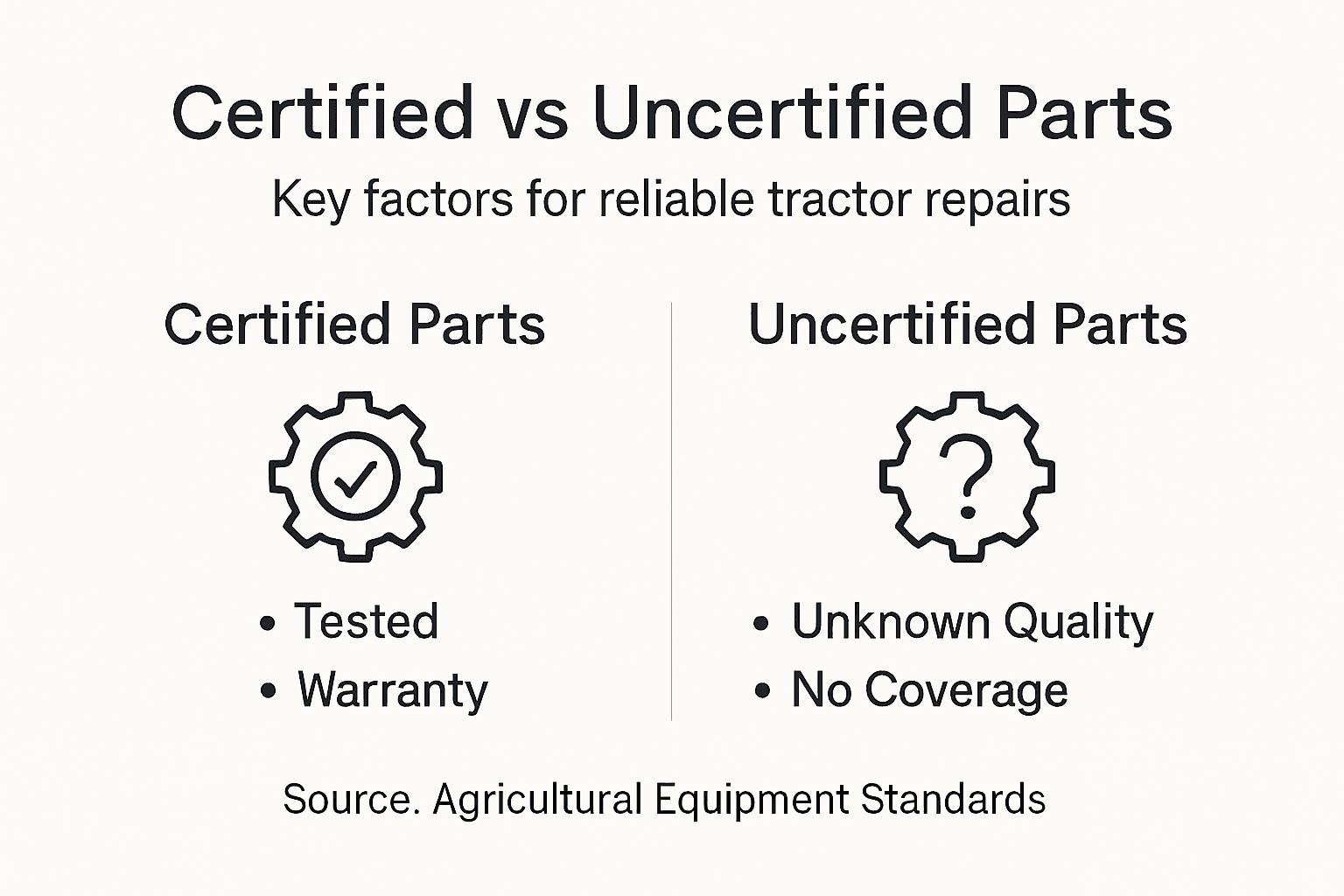
Comprehensive part selection involves analyzing multiple performance factors, with certified parts offering guaranteed quality and compliance at a potentially higher initial investment. Uncertified alternatives might seem economically attractive but carry substantial hidden risks that can compromise equipment functionality.
Key comparison dimensions include:
- Manufacturing Standards: Certified parts undergo rigorous quality control
- Performance Consistency: Predictable and reliable component behavior
- Warranty Implications: Maintaining equipment manufacturer protections
- Safety Compliance: Reduced operational risk and potential legal complications
- Long-Term Cost Effectiveness: Lower total ownership expenses
- Replacement Frequency: Extended component lifespan
Certified parts are not an expense – they are an investment in equipment reliability and operational continuity.
For Northern Greek farmers, the decision between certified and uncertified parts involves carefully weighing immediate cost savings against potential long-term financial and operational risks. Operational reliability remains the critical metric when selecting replacement components for agricultural machinery.
The economic calculus extends beyond initial purchase price. Uncertified parts potentially introduce higher maintenance costs, increased downtime, and greater risk of catastrophic equipment failure, which can far outweigh modest upfront savings.
Use this quick reference to compare certified and uncertified spare parts beyond initial cost:
| Criteria | Certified Parts | Uncertified Parts |
|---|---|---|
| Quality Assurance | Independently tested and verified | No formal testing or verification |
| Warranty Protection | Maintains manufacturer warranties | May void existing warranties |
| Total Cost Over Time | Lower due to fewer breakdowns | Higher from frequent repairs |
| Legal/Insurance Risk | Minimizes liability complications | Increased risk of claims rejection |
Pro tip: Calculate total ownership costs by considering not just the part price, but potential maintenance, replacement, and downtime expenses associated with component selection.
Choose Certified Parts for Guaranteed Tractor Reliability
When your agricultural equipment depends on certified parts to deliver consistent performance and safety, settling for anything less is a risk you cannot afford. The article highlights the crucial challenges of avoiding uncertified components that can lead to machinery failures, voided warranties, and costly downtime. Protect your investment by choosing parts that meet stringent quality and regulatory standards such as engine components, hydraulic systems, and filtration elements.
At pexlivanidis.com, we understand Northern Greek farmers need reliable solutions backed by real certification and durability. Our extensive inventory offers over 20,000 trusted agricultural machinery parts with free shipping on orders over 100€. Explore our selection of certified tractor spare parts built to strict compliance for long-lasting operation. Don’t compromise your equipment’s safety or your harvest this season. Visit us today to secure genuine parts and experience the confidence that certified components bring to your repairs.
Frequently Asked Questions
What are certified parts?
Certified parts are components that have been rigorously tested and verified by independent credentialing bodies to meet specific industry standards, ensuring reliable performance in agricultural equipment.
Why should I choose certified parts over uncertified ones?
Certified parts undergo quality control and extensive testing, providing predictable performance and reliability, whereas uncertified parts may compromise equipment functionality and safety.
What risks are associated with using uncertified parts?
Using uncertified parts can lead to increased mechanical failure rates, voided warranties, potentially higher maintenance costs, and safety risks for operators due to poor performance.
How does certification ensure the safety of tractor parts?
Certification involves systematic evaluations such as material quality testing and stress simulations to confirm that tractor parts can operate safely under defined conditions, significantly reducing the risk of equipment failure.