

Over half of american farmland now uses some form of conservation tillage, showing a shift in how crops are planted and fields are managed. This growing interest in zero-tillage machinery has roots in both environmental concerns and the push for more efficient farming. Understanding these advanced machines can help farmers make smart choices about soil health, equipment investment, and long-term productivity on american fields.
Table of Contents
- Zero-Tillage Machinery Defined and Explained
- Types of Zero-Tillage Equipment Available
- How Zero-Tillage Machinery Operates
- Benefits and Drawbacks for Farmers
- Costs, Maintenance, and Safety Considerations
Key Takeaways
| Point | Details |
|---|---|
| Zero-tillage approach | This method minimizes soil disturbance during planting, preserving soil structure and reducing environmental impact. |
| Types of machinery | Specialized equipment like direct seeders and no-till planters enhance planting efficiency while managing crop residues effectively. |
| Benefits for farmers | Key advantages include reduced soil erosion, improved water retention, and lower operational costs, although initial investment is required. |
| Maintenance and safety | Regular machinery maintenance and operator training are crucial for long-term success and minimizing risks associated with zero-tillage practices. |
Zero-Tillage Machinery Defined and Explained
Zero-tillage represents a groundbreaking agricultural approach that transforms traditional farming practices by minimizing soil disturbance during crop planting. According to Merriam-Webster, zero tillage is an agricultural method where crops are planted directly into undisturbed soil without prior plowing, strategically relying on herbicides for comprehensive weed control.
The core philosophy behind zero-tillage machinery centers on preserving soil structure and reducing environmental impact. As detailed by European Commission, this technique involves sowing crops directly into soil that remains untilled since the previous harvest, utilizing specialized strategies such as:
- Targeted herbicide application for weed management
- Mulching techniques to control vegetation growth
- Retaining crop stubble to prevent soil erosion
- Minimizing machinery passes across agricultural land
Zero-tillage machinery represents a sophisticated technological solution that enables farmers to plant crops with minimal soil disruption. These specialized machines are engineered to penetrate existing crop residue and deposit seeds precisely without turning or breaking the soil, maintaining its natural structure and microbial ecosystem. By reducing mechanical intervention, farmers can conserve soil moisture, improve organic matter retention, and potentially decrease fuel consumption and equipment wear associated with traditional tillage methods.
Types of Zero-Tillage Equipment Available
Zero-tillage agriculture relies on specialized machinery designed to plant crops with minimal soil disruption. SRFSI Research Center highlights that these advanced machines are multi-crop planters engineered to sow seeds directly into fields with existing crop residues, accommodating diverse agricultural needs.
Key zero-tillage equipment types include:
- Direct Seeders: Precision machines that penetrate crop residue and deposit seeds directly into undisturbed soil
- Strip Tillers: Equipment that prepares narrow seed strips while maintaining overall soil structure
- No-Till Planters: Comprehensive machines capable of handling multiple crop types
- Residue Managers: Specialized attachments that handle and redistribute crop residues during planting
A remarkable example of innovative zero-tillage technology is the Happy Seeder, as documented by Wikipedia. This specialized machine not only sows seeds directly into unprepared soil but also manages crop residues by chopping and depositing them as protective mulch. Particularly prevalent in regions with rice-wheat cropping systems, the Happy Seeder represents a technological breakthrough in sustainable agricultural practices.
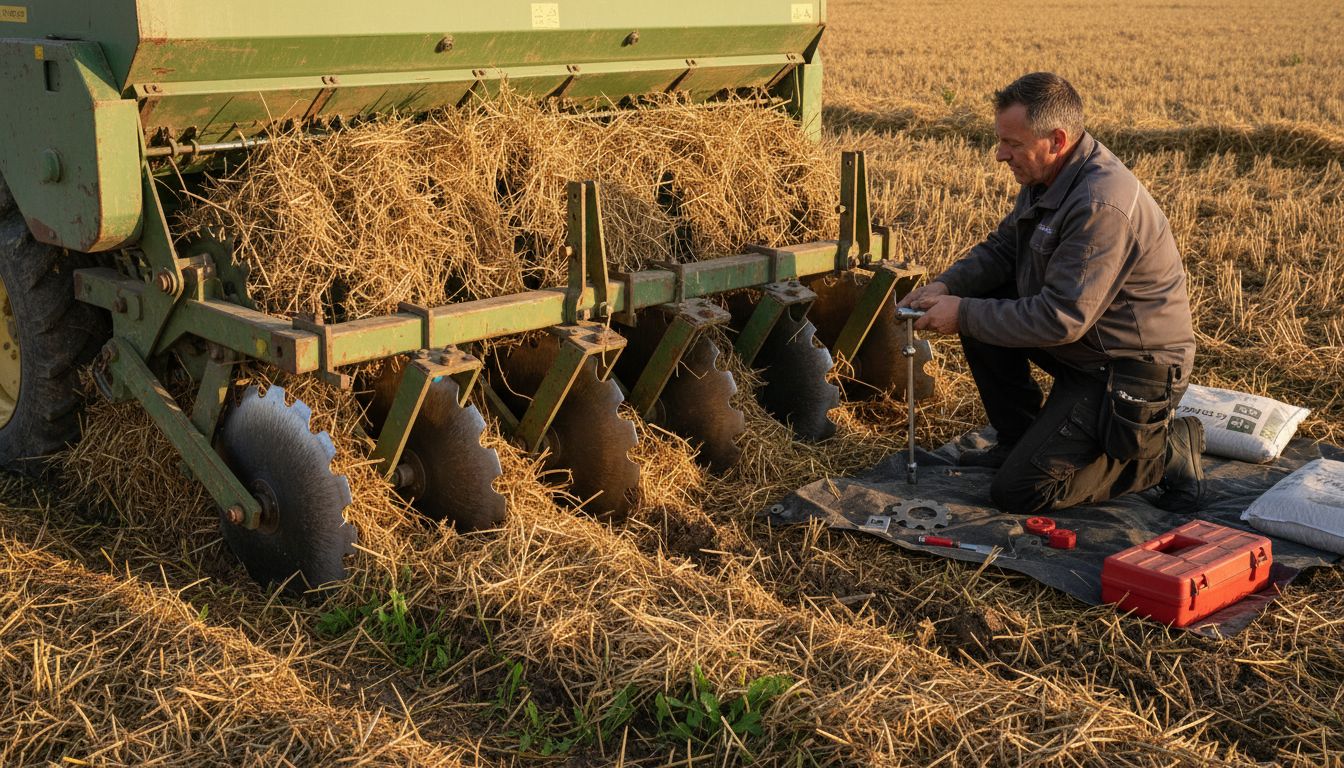
Modern zero-tillage equipment goes beyond simple seed placement, incorporating advanced features like precision GPS guidance, variable rate seeding, and real-time soil condition monitoring. These technological enhancements allow farmers to optimize planting strategies, reduce fuel consumption, minimize soil compaction, and maintain the natural ecological balance of agricultural landscapes. By investing in sophisticated zero-tillage machinery, farmers can simultaneously improve crop yields, reduce environmental impact, and enhance long-term soil health.
How Zero-Tillage Machinery Operates
Zero-tillage machinery represents a sophisticated agricultural technology designed to minimize soil disruption while maximizing planting efficiency. SRFSI Research Center explains that these machines operate by precisely opening narrow soil strips to place seeds and fertilizers simultaneously, ensuring minimal disturbance to the existing field ecosystem.
The operational mechanism of zero-tillage equipment involves several critical steps:
- Cutting through existing crop residue
- Creating precise seed placement channels
- Depositing seeds at controlled depths
- Applying fertilizer directly alongside seeds
- Maintaining minimal soil surface interference
A prime example of innovative zero-tillage technology is the Happy Seeder, as documented by Wikipedia. This specialized machine demonstrates remarkable versatility by chopping standing stubble, creating an optimal seedbed, and depositing seeds directly into the soil in a single operational pass. Such integrated functionality allows farmers to significantly reduce soil disturbance while conserving critical soil moisture.
Modern zero-tillage machinery incorporates advanced technological features like GPS-guided precision planting, variable rate seed and fertilizer application, and real-time soil condition sensors. These sophisticated systems enable farmers to make data-driven decisions, optimize planting strategies, and maintain consistent seed placement across varied field conditions. By combining mechanical innovation with precision agricultural techniques, zero-tillage equipment transforms traditional farming approaches, offering a more sustainable and efficient method of crop production.
Benefits and Drawbacks for Farmers
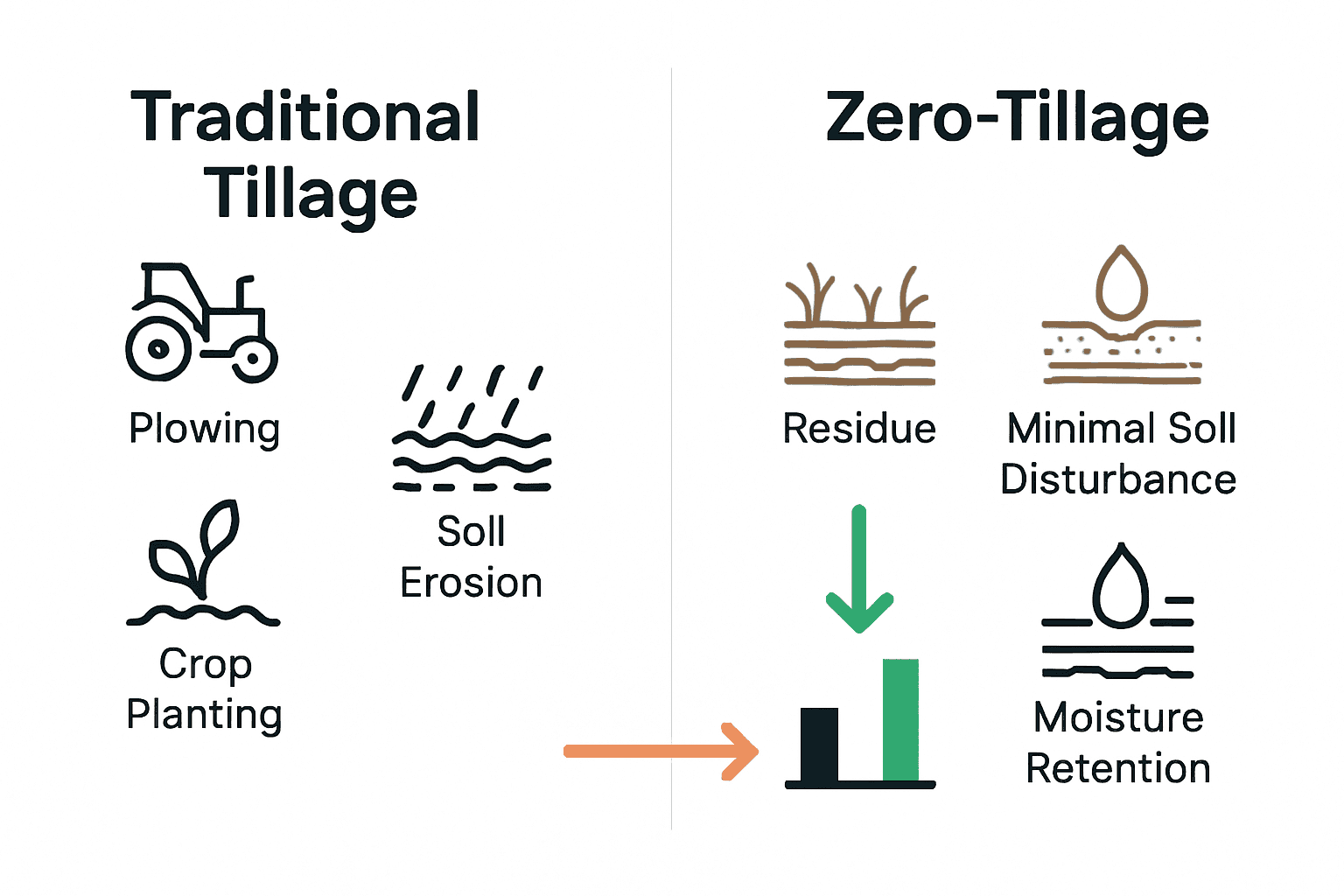
Zero-tillage agriculture presents farmers with a complex landscape of opportunities and challenges. According to Wikipedia, this innovative farming approach offers significant environmental benefits, including reduced soil erosion, improved water infiltration, and increased organic matter retention. However, these advantages come with their own set of considerations that farmers must carefully evaluate.
Key Benefits:
- Substantial reduction in soil erosion
- Enhanced water conservation
- Lower fuel and labor expenses
- Improved soil organic matter content
- Reduced equipment wear and maintenance costs
AgEcon Research highlights that zero tillage can lead to significant cost savings by reducing labor and fuel expenses. However, farmers must also anticipate potential initial challenges, such as:
Potential Drawbacks:
- Substantial upfront investment in specialized machinery
- Increased dependency on herbicides for weed management
- Potential learning curve in adapting new agricultural techniques
- Initial yield variations during transition periods
- Complex weed management strategies
Successful implementation of zero-tillage requires a holistic approach. Farmers must be prepared to invest in advanced machinery, develop sophisticated weed management techniques, and potentially modify their existing agricultural practices. While the long-term benefits of soil conservation and reduced operational costs are significant, the transition demands patience, strategic planning, and a willingness to embrace technological innovation in agricultural practices.
Costs, Maintenance, and Safety Considerations
Zero-tillage machinery represents a significant investment that requires careful financial planning and strategic maintenance. Wikipedia notes that while this approach can reduce costs associated with fuel and labor, farmers must be prepared for initial equipment investments and careful management of operational expenses.
Initial Cost Considerations:
- Specialized zero-tillage equipment purchases
- Potential upgrades to existing farm infrastructure
- Training and skill development for new technologies
- Herbicide and crop management system investments
- Software and precision agriculture tools
SRFSI Research Center emphasizes the critical importance of regular machinery maintenance, particularly focusing on components like tines and seed metering systems. Maintenance protocols should include:
- Routine inspection of mechanical components
- Lubrication of moving parts
- Calibration of seed and fertilizer systems
- Cleaning and storage best practices
- Replacement of worn mechanical elements
Safety remains paramount in zero-tillage operations. Operators must prioritize personal protective equipment, understand machine-specific safety protocols, and undergo comprehensive training. This includes understanding potential hazards like moving mechanical parts, chemical handling during herbicide application, and maintaining safe operational distances. By combining financial prudence, rigorous maintenance schedules, and a comprehensive safety approach, farmers can maximize the long-term benefits and minimize risks associated with zero-tillage agricultural technologies.
Maximize Your Zero-Tillage Success with Reliable Machinery Parts
Switching to zero-tillage farming means embracing precision and care to protect your soil while enhancing crop yields. This method depends heavily on well-maintained equipment like direct seeders and the innovative Happy Seeder to cut through residue and plant seeds with minimal disruption. But the challenge is clear: investing in and maintaining specialized zero-tillage machinery can become costly and technically demanding without the right support.
At pexlivanidis.com, we understand the importance of dependable tractor accessories and spare parts to keep your zero-tillage equipment running smoothly. Our extensive inventory of over 20,000 items offers you the chance to reduce downtime, improve efficiency, and lower fuel and labor expenses. Whether you need seed metering components, durable tines, or other critical parts, we provide fast shipping across Greece and expert guidance to help you make the best choices.
Ready to enhance your sustainable farming practices with top-quality machinery parts today? Explore our offerings at pexlivanidis.com and take advantage of wholesale options or personalized assistance to support your zero-tillage goals. Don’t wait to invest in the longevity and performance of your agricultural equipment—visit our store now and keep your farm moving forward.
Frequently Asked Questions
What is zero-tillage machinery?
Zero-tillage machinery is specialized agricultural equipment designed to plant crops with minimal soil disturbance. It enables farmers to sow seeds directly into undisturbed soil while preserving soil structure and reducing the environmental impact.
How does zero-tillage equipment operate?
Zero-tillage equipment operates by cutting through existing crop residue to create narrow channels for seed and fertilizer placement without significantly disturbing the soil structure. This process involves minimal surface interference, allowing for better moisture retention and soil health.
What are the benefits of using zero-tillage machinery?
The benefits of zero-tillage machinery include reduced soil erosion, improved water conservation, lower fuel and labor costs, enhanced soil organic matter retention, and a decrease in equipment wear and maintenance requirements.
What are the types of zero-tillage equipment available for farmers?
Key types of zero-tillage equipment include direct seeders, strip tillers, no-till planters, and residue managers. Each type is designed to meet specific agricultural needs while minimizing soil disturbance.