

Farm machinery terms might sound technical and dry at first, but they shape everything from safety on the job to how smoothly a harvest runs. Imagine this. Miscommunication in farm equipment instructions is a leading factor in costly workplace accidents and equipment breakdowns. You would think it is all about driving tractors or operating combines, right? Turns out, knowing the right terminology is what really makes or breaks operations for both veterans and newcomers in agriculture.
Table of Contents
- Defining Key Farm Machinery Terms
- The Importance of Understanding Farm Machinery Language
- How Farm Machinery Functions in Agriculture
- Common Types of Farm Machinery and Their Uses
- Interpreting Farm Machinery Specifications and Ratings
Quick Summary
| Takeaway | Explanation |
|---|---|
| Master machinery terminology for safety. | Understanding specific terms prevents miscommunication, reducing the risk of accidents and operational errors. |
| Categorize equipment functionally. | Distinguishing types of machinery, like tillage and harvesting, helps improve equipment operation and management. |
| Prioritize clear communication in teams. | Using standardized terminology fosters teamwork, enhances problem-solving, and boosts productivity among agricultural professionals. |
| Interpret performance metrics effectively. | Knowing specifications, such as horsepower and fuel efficiency, aids in making informed purchasing decisions and operational strategies. |
| Invest in training for skill sharing. | Regular training on machinery terminology facilitates knowledge transfer, promoting safety and efficiency in agricultural operations. |
Defining Key Farm Machinery Terms
Understanding farm machinery terminology is essential for farmers, agricultural professionals, and equipment operators who work with complex agricultural machinery. The world of agricultural equipment involves intricate systems and specialized vocabulary that can seem overwhelming to newcomers. According to the Food and Agriculture Organization, having a comprehensive understanding of these terms helps improve operational efficiency and equipment management.
Core Agricultural Equipment Categories
Farm machinery can be broadly categorized into several fundamental types that serve specific functions in agricultural production. These categories help farmers understand the purpose and application of different pieces of equipment
Below is a table summarizing core agricultural equipment categories and their primary functions for easier comparison and understanding.
| Equipment Category | Primary Function |
|---|---|
| Tillage Equipment | Prepares soil for planting by breaking, turning, loosening |
| Planting Equipment | Ensures precise seed placement and distribution |
| Harvesting Equipment | Collects and processes mature crops |
 :
:
- Tillage Equipment: Machines designed to prepare soil for planting by breaking, turning, and loosening the ground
- Planting Equipment: Specialized machinery used for precise seed placement and distribution
- Harvesting Equipment: Machines that collect and process mature crops from fields
Understanding Mechanical Components
Each piece of farm machinery consists of complex mechanical systems with unique terminology.
Powertrain, for instance, refers to the complete set of components that generate and transmit mechanical power from the engine to the working parts of the machine. This includes transmission systems, drive shafts, and differential mechanisms that enable agricultural equipment to perform various tasks efficiently.
Technical Terminology Essentials
North Dakota State University’s agricultural machinery experts emphasize the importance of understanding specific technical terms. Critical terminology like PTO (Power Take-Off) describes the mechanism that transfers mechanical power from a tractor’s engine to attached implements.
The following table organizes key technical farm machinery terms and their definitions, clarifying essential concepts for readers unfamiliar with this specialized vocabulary.
| Term | Definition |
|---|---|
| Powertrain | Set of components that generate and transmit mechanical power from the engine to the working parts of a machine |
| PTO | Mechanism transferring mechanical power from tractor engine to attached implements |
| Drawbar | Primary connection point between tractor and trailing equipment, allowing precise control and movement |
Mastering these terminologies not only improves communication among agricultural professionals but also enhances overall equipment maintenance, operational safety, and technical understanding of modern farming machinery.
The Importance of Understanding Farm Machinery Language
Effective communication in agricultural settings requires precise and standardized language that enables professionals to understand complex machinery systems quickly and accurately. According to Ohio State University’s Extension research, mastering farm machinery terminology is not just about vocabulary but about ensuring operational safety, efficiency, and professional collaboration.
Safety and Risk Mitigation
Understanding farm machinery language plays a critical role in preventing workplace accidents and equipment mishandling. Miscommunication can lead to dangerous operational errors that potentially result in significant personal injury or expensive machinery damage. Key safety considerations include:
- Precise Equipment Instructions: Clear terminology ensures workers understand exact operational procedures
- Technical Maintenance Communication: Accurate language helps mechanics diagnose and resolve equipment issues
- Training and Knowledge Transfer: Standardized terminology facilitates effective skill sharing among agricultural professionals
Professional Efficiency and Collaboration
Professional agricultural environments demand seamless communication between equipment operators, mechanics, manufacturers, and managers. Shared technical language creates a common understanding that streamlines workflow processes and reduces misunderstandings. When everyone speaks the same technical language, teams can troubleshoot problems faster, coordinate complex tasks more effectively, and maintain higher productivity levels.
Economic and Operational Impact
North Dakota State University Extension highlights that proper machinery language comprehension directly impacts economic performance. Misunderstandings can result in:
- Unnecessary equipment repairs
- Increased downtime
- Potential machinery replacement costs
- Reduced overall operational efficiency
By investing time in understanding farm machinery terminology, agricultural professionals create a more robust, safe, and efficient working environment that supports long-term business success.
How Farm Machinery Functions in Agriculture
Farm machinery represents the technological backbone of modern agricultural production, transforming traditional manual labor into sophisticated, efficient systems that dramatically enhance crop management and productivity. According to the Food and Agriculture Organization, these complex machines perform critical functions across multiple stages of agricultural production, from initial soil preparation to final crop harvesting.
Soil Preparation and Cultivation
The initial stage of agricultural production relies heavily on specialized machinery designed to prepare and condition the soil. Tractors and tillage equipment play a fundamental role in breaking, turning, and aerating soil, creating optimal conditions for seed germination. These machines accomplish several critical tasks:
- Primary Tillage: Breaking and inverting soil to control weeds and incorporate crop residues
- Secondary Tillage: Refining soil structure, creating a smooth seedbed
- Deep Ripping: Addressing soil compaction and improving root penetration
Planting and Crop Management
Modern planting machinery represents a remarkable technological advancement in agricultural precision. Seed drills and planters enable farmers to achieve exact seed placement, controlling depth, spacing, and distribution with unprecedented accuracy. These machines incorporate advanced technologies like:
- GPS-guided navigation systems
- Precision seed metering mechanisms
- Variable rate seeding technologies
- Real-time soil condition monitoring
Harvesting and Post Production
Harvesting machinery transforms the final stage of crop production, enabling rapid, efficient collection of mature crops with minimal loss. Combine harvesters represent the pinnacle of agricultural mechanization, performing multiple simultaneous functions:
- Cutting and collecting mature crops
- Separating grains from plant materials
- Cleaning and initial processing of harvested produce
- Measuring and recording yield data
These sophisticated machines reduce manual labor, increase operational speed, and provide farmers with unprecedented control over their agricultural production processes.
This table provides a concise overview of core farm machinery types used in each stage of agricultural production and their main purposes to enhance understanding of their roles.
| Stage | Machinery Examples | Main Purpose |
|---|---|---|
| Soil Preparation & Cultivation | Tractors, Tillers, Plows | Breaks, turns, and aerates soil; creates optimal seedbed |
| Planting & Crop Management | Seed Drills, Planters | Achieves exact seed placement and distribution |
| Harvesting & Post Production | Combine Harvesters | Cuts, separates, and processes mature crops; yields recording |
Common Types of Farm Machinery and Their Uses
Farm machinery represents a diverse ecosystem of specialized equipment designed to address specific agricultural challenges and optimize crop production processes. According to agricultural engineering research, understanding the nuanced roles of different machinery types is crucial for effective farm management and operational efficiency.
Soil Preparation and Cultivation Equipment
Tillage machinery forms the foundation of agricultural mechanization, preparing land for planting through various sophisticated mechanisms. These critical machines transform raw land into productive agricultural spaces by performing essential functions:
- Plows: Breaking and turning soil to incorporate organic matter
- Harrows: Breaking soil clumps and creating a smooth seedbed
- Cultivators: Controlling weeds and aerating soil around growing crops
Planting and Seeding Implements
Modern planting equipment represents a technological marvel in precision agriculture. Seed drills and planters enable farmers to achieve unprecedented accuracy in crop establishment, incorporating advanced technologies that optimize seed placement and growth conditions:
- Precise depth control mechanisms
- GPS-guided row alignment
- Variable rate seeding technologies
- Real-time soil condition monitoring systems
Harvesting and Post-Production Machinery
Harvesting machinery represents the culmination of agricultural mechanization, transforming crop collection from labor-intensive manual processes to highly efficient automated operations. Combine harvesters epitomize this technological evolution, performing multiple complex tasks simultaneously:
- Cutting mature crops
- Separating grain from plant materials
- Cleaning and initial processing of harvested produce
- Generating real-time yield and quality data
These sophisticated machines dramatically reduce manual labor requirements, increase operational speed, and provide farmers with unprecedented control over their agricultural production processes.
Interpreting Farm Machinery Specifications and Ratings
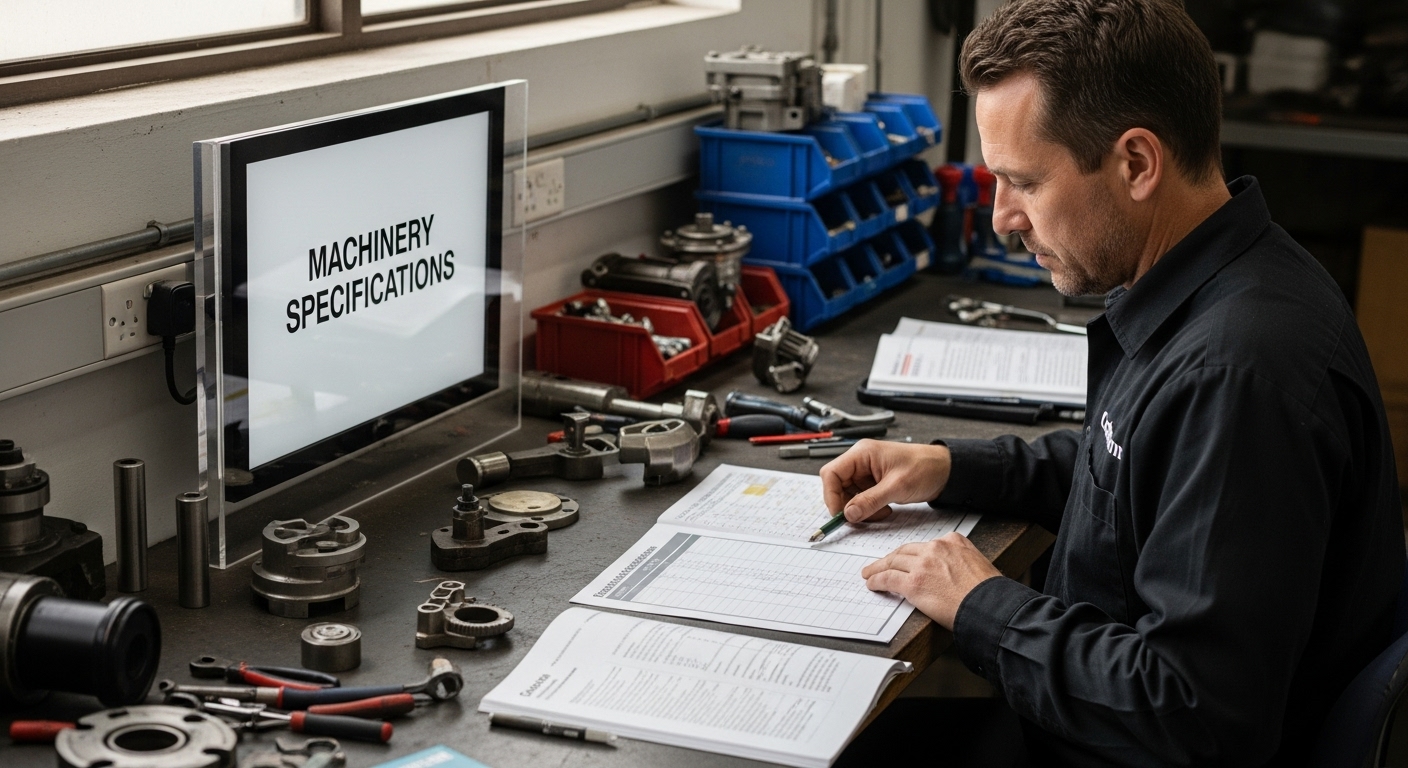
Understanding farm machinery specifications and ratings requires a systematic approach to decoding complex technical information that directly impacts agricultural equipment performance and efficiency. According to Rutgers NJAES agricultural safety guidelines, accurate interpretation of machinery specifications is crucial for making informed purchasing decisions and ensuring safe operational practices.
Technical Performance Metrics
Performance specifications provide critical insights into a machine’s capabilities and limitations. These technical metrics help farmers evaluate equipment suitability for specific agricultural tasks. Key performance indicators include:
- Horsepower Ratings: Measuring the machine’s power output and potential workload capacity
- Fuel Efficiency: Calculating energy consumption and operational cost-effectiveness
- Operating Weight: Determining ground pressure and potential soil impact
Equipment Compatibility and Operational Parameters
Modern farm machinery specifications extend beyond basic performance metrics, offering comprehensive information about equipment compatibility and operational requirements. Technical documentation provides detailed insights into:
- Recommended maintenance intervals
- Compatible implements and attachment specifications
- Precise operational temperature and environmental ranges
- Hydraulic system pressure and flow rate requirements
Safety and Compliance Ratings
Beyond performance metrics, farm machinery specifications include critical safety and compliance ratings that protect operators and ensure equipment reliability. These ratings encompass:
- Rollover protective structure (ROPS) certifications
- Noise emission levels
- Operator protection systems
- Structural integrity testing results
Mastering the ability to read and interpret these complex specifications empowers farmers to make strategic equipment decisions, optimize operational efficiency, and maintain the highest standards of workplace safety.
Turn Your Understanding of Tractor Terminology Into Real Solutions
Learning farm machinery terminology is vital, but having the right words without the right parts can lead to downtime and costly setbacks. In the article, you discovered how terms like PTO, powertrain, and harrows impact your day-to-day equipment management. You need confidence that when something breaks, you not only know what to call it, but exactly where to get a high-quality replacement fast. There is no room for guessing games when your harvest and bottom line are at stake.
Do not let complicated machinery language turn into real-world delays. At pexlivanidis.com you can match your new knowledge with our massive inventory of over 20,000 tractor accessories and spare parts. Find what you need with a simple search, fast shipping, and expert support. If you are ready to equip your operation with genuine solutions you can also use our product inquiry form or sign up for wholesale B2B membership for extra benefits. Visit pexlivanidis.com now to keep your machinery running smoothly and get ahead this season.
Frequently Asked Questions
What are the main types of farm machinery?
Farm machinery is broadly categorized into three main types: tillage equipment for soil preparation, planting equipment for precise seed placement, and harvesting equipment for collecting mature crops.
What does PTO (Power Take-Off) mean in farm machinery?
PTO, or Power Take-Off, is a mechanism that transfers mechanical power from a tractor’s engine to an attached implement, allowing the implement to perform its functions effectively.
How does understanding farm machinery terminology improve safety?
A comprehensive grasp of farm machinery terminology ensures clear communication regarding operational procedures, maintenance, and training, which helps prevent workplace accidents and miscommunication errors.
What is the significance of horsepower ratings in agricultural machinery?
Horsepower ratings indicate the power output of a machine, helping farmers evaluate its workload capacity and suitability for specific agricultural tasks, ultimately impacting efficiency and productivity.