

Farming has entered a new era driven by machinery that transforms everyday tasks into high-tech operations. Today’s tractors are no longer just powerful engines on wheels—they come packed with GPS systems and sensors so precise that farmers can save up to 20 percent on fertilizer and seeds simply by using smart equipment. It might sound like robots are taking over the countryside but the real change is even bigger. Farms powered by advanced machinery are not just faster or bigger—they are radically more efficient and making farming smarter than ever before.
Table of Contents
- What Is Agricultural Machinery And Its Role In Farming?
- Why Agricultural Machinery Matters For Productivity And Efficiency
- How Agricultural Machinery Works: Key Technologies Explained
- The Impact Of Agricultural Machinery On Modern Farming Practices
- Key Concepts In Agricultural Machinery: Types And Their Benefits
Quick Summary
| Takeaway | Explanation |
|---|---|
| Agricultural machinery enhances farm efficiency. | It reduces labor needs and increases productivity by automating numerous farming tasks. |
| Precision agriculture improves resource management. | This technology optimizes planting, fertilization, and therapeutic interventions for better crop yields. |
| Investing in modern machinery supports economic growth. | Mechanization allows for increased land management with lower labor costs, boosting farm revenues. |
| Advanced technologies enable real-time decision-making. | Systems like GPS and data analytics provide farmers with insights that improve operational effectiveness. |
| Sustainable practices can be supported by mechanization. | While efficient, machinery use must consider environmental impacts like soil management and carbon emissions. |
What is Agricultural Machinery and Its Role in Farming?
Agricultural machinery represents the technological backbone of modern farming, transforming traditional agricultural practices into sophisticated, efficient production systems. These power-driven equipment and tools enable farmers to manage extensive areas, reduce manual labor, and significantly increase productivity across various agricultural operations.
Understanding Agricultural Machinery Fundamentals
At its core, agricultural machinery encompasses a diverse range of specialized equipment designed to perform critical farming tasks. According to the Food and Agriculture Organization (FAO), these machines include tractors, planters, harvesters, irrigation systems, and specialized implements that mechanize processes once performed manually. By integrating advanced technologies, agricultural machinery allows farmers to optimize resource utilization, reduce physical strain, and improve overall agricultural output.
Key components of agricultural machinery typically include:
- Power transmission systems
- Mechanical operating mechanisms
- Advanced control interfaces
- Precision guidance technologies
- Specialized attachments for specific farming tasks
Transformative Impact on Agricultural Productivity
The introduction of agricultural machinery has revolutionized farming practices worldwide. Modern machines enable farmers to cultivate larger land areas with unprecedented efficiency, reducing human labor requirements and minimizing potential errors in agricultural processes. Precision agriculture technologies now allow farmers to monitor crop health, optimize fertilization, and manage resources with remarkable accuracy.
By integrating sophisticated sensors, GPS tracking, and data analytics, contemporary agricultural machinery provides farmers with real-time insights into their farming operations. These technological advancements help optimize planting strategies, predict potential challenges, and make informed decisions that directly impact crop yields and economic sustainability.
The benefits of agricultural machinery extend beyond immediate productivity. They represent a critical investment in agricultural modernization, supporting global food security, enhancing economic opportunities for farmers, and driving sustainable agricultural development across diverse geographical regions.
Why Agricultural Machinery Matters for Productivity and Efficiency
Agricultural machinery serves as a critical catalyst for transforming farming from labor-intensive traditional practices to streamlined, high-performance production systems. By integrating advanced technological solutions, these machines fundamentally reshape how farmers approach agricultural productivity and operational efficiency.
Enhancing Operational Performance
According to the Food and Agriculture Organization, mechanized agriculture dramatically improves farm performance across multiple dimensions. Modern agricultural machinery enables farmers to accomplish tasks with unprecedented speed, precision, and consistency. These machines reduce manual labor requirements while simultaneously increasing the scale and quality of agricultural operations.
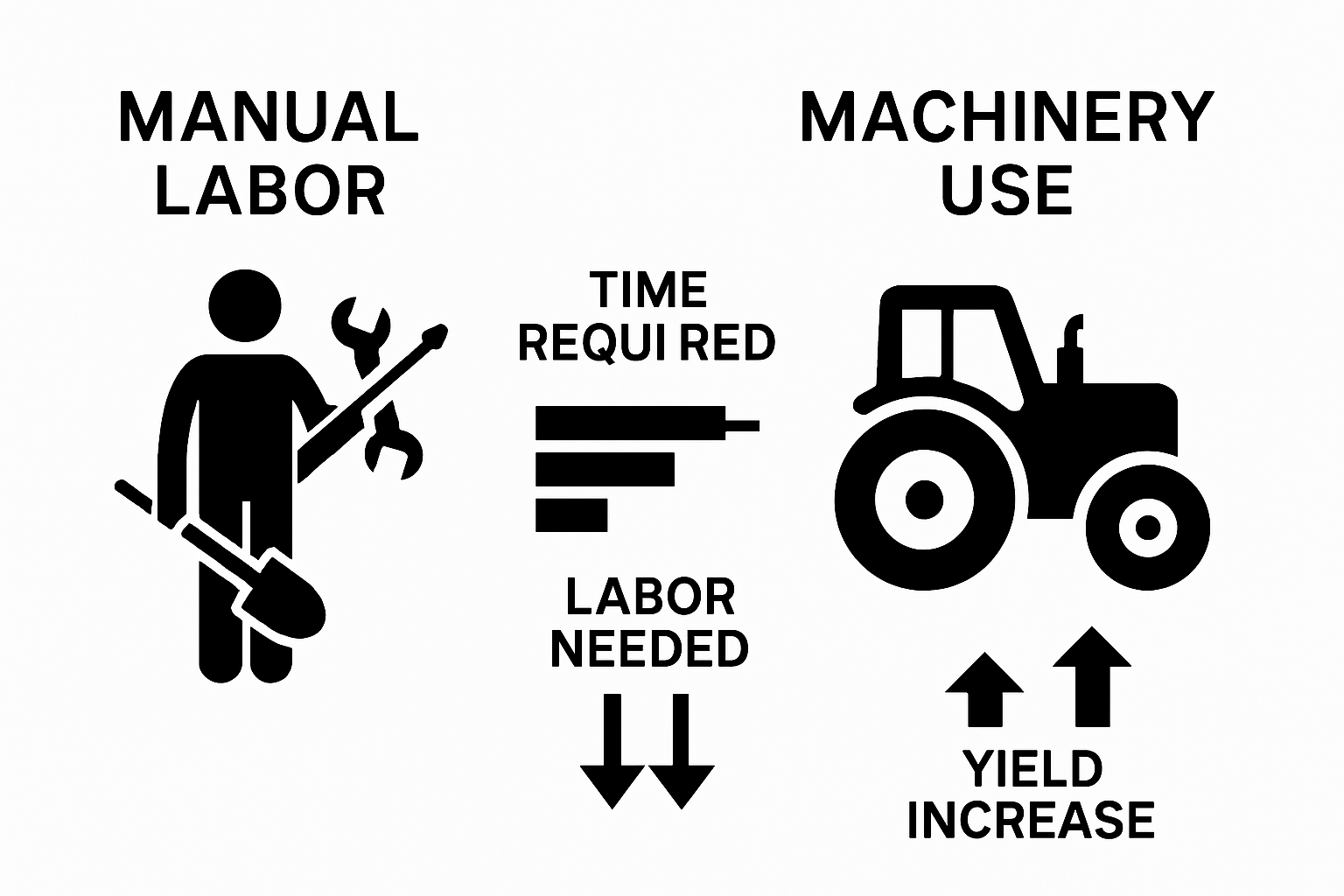
Key performance advantages of agricultural machinery include:
- Faster field preparation and planting cycles
- More accurate seed and fertilizer distribution
- Reduced time between critical farming stages
- Consistent implementation of agricultural techniques
- Minimized human error in complex farming processes
Economic and Resource Optimization
Beyond operational improvements, agricultural machinery delivers substantial economic benefits. Mechanization allows farmers to manage larger land areas with fewer human resources, significantly reducing labor costs and increasing potential revenue. Advanced machinery incorporates technologies like GPS guidance, precision sensors, and data analytics that enable farmers to optimize resource allocation, track crop health, and make data-driven management decisions.
The economic impact extends beyond individual farm productivity. By enabling more efficient agricultural practices, machinery contributes to broader food security objectives, supports sustainable farming methodologies, and helps agricultural enterprises remain competitive in increasingly complex global markets.
Ultimately, agricultural machinery represents more than just technological tools. These sophisticated systems are strategic investments that empower farmers to transform traditional agricultural practices, maximize resource utilization, and drive continuous improvement in farming productivity and efficiency.
How Agricultural Machinery Works: Key Technologies Explained
Agricultural machinery represents a sophisticated integration of mechanical engineering, electronics, and digital technologies designed to transform complex farming processes into streamlined, efficient operations. By combining advanced mechanical systems with intelligent technological solutions, these machines have revolutionized how agricultural tasks are conceptualized and executed.
Mechanical Power and Transmission Systems
At the foundation of agricultural machinery are robust power transmission systems that convert engine power into functional mechanical movement. Tractors and implements utilize intricate drivetrain technologies that translate rotational energy into precise agricultural actions such as plowing, planting, and harvesting. These systems incorporate multiple components including gearboxes, hydraulic mechanisms, and power take-off (PTO) units that enable smooth power transfer across different farming equipment.
Key mechanical components responsible for operational effectiveness include:
- Transmission gearboxes
- Hydraulic control systems
- Differential mechanisms
- Power transfer interfaces
- Mechanical linking systems
Digital Technologies and Precision Agriculture
According to the OECD, modern agricultural machinery increasingly integrates advanced digital technologies that transform traditional farming approaches. Precision agriculture technologies like GPS guidance systems, automated steering, and real-time data collection enable farmers to make highly informed decisions about crop management, resource allocation, and operational efficiency.
These digital technologies facilitate:
- Automated field mapping
- Precise resource application
- Real-time performance monitoring
- Advanced crop health tracking
- Predictive maintenance capabilities
By combining mechanical power with intelligent digital systems, agricultural machinery has evolved from simple manual tools to complex, interconnected technological platforms. These sophisticated machines not only perform physical tasks but also generate actionable insights that help farmers optimize their agricultural operations, reduce resource waste, and improve overall productivity.
The Impact of Agricultural Machinery on Modern Farming Practices
Agricultural machinery has fundamentally reshaped farming practices, transforming agriculture from a manual, labor-intensive occupation to a technologically sophisticated and data-driven industry. By introducing advanced mechanical and digital technologies, these machines have revolutionized how farmers approach crop production, resource management, and overall agricultural sustainability.
Transforming Agricultural Workflows
Modern agricultural machinery enables farmers to accomplish complex tasks with unprecedented precision and efficiency. Sophisticated equipment allows for faster field preparation, more accurate planting, and optimized crop management. By reducing manual labor requirements, these machines enable farmers to manage larger land areas with fewer human resources, dramatically increasing potential agricultural output.
Key workflow transformations include:
- Rapid field preparation and cultivation
- Precise seed and fertilizer application
- Enhanced crop monitoring capabilities
- Reduced physical labor demands
- Consistent and standardized agricultural processes
Environmental and Sustainability Considerations
According to the Smithsonian Environmental Research Center, the introduction of motorized agricultural equipment has complex environmental implications. While machinery has significantly increased farming efficiency, it has also introduced challenges related to soil management, resource utilization, and ecological impact.
Significant environmental considerations include:
- Potential soil degradation from intensive machinery use
- Increased carbon emissions from mechanized equipment
- Reduced manual intervention in ecological processes
- Changes in landscape and agricultural ecosystem dynamics
- Potential for more sustainable resource management
By integrating advanced technologies with traditional agricultural knowledge, modern machinery represents a critical tool in addressing global food security challenges. These sophisticated systems not only enhance productivity but also provide farmers with unprecedented insights into crop management, resource optimization, and sustainable agricultural practices.
The table below highlights the main environmental and sustainability considerations discussed regarding the use of modern agricultural machinery.
| Environmental Consideration | Positive/Negative Impact | Explanation |
|---|---|---|
| Soil Degradation | Negative | Intensive use can lead to compaction and reduced fertility |
| Carbon Emissions | Negative | Motorized equipment increases greenhouse gas emissions |
| Reduced Manual Intervention | Mixed | Lowers physical labor but can disrupt natural processes |
| Sustainable Resource Management | Positive | Precision tech improves efficiency and reduces waste |
| Ecosystem Dynamics Change | Mixed | Alters traditional landscapes and agricultural cycles |
Key Concepts in Agricultural Machinery: Types and Their Benefits
Agricultural machinery encompasses a diverse range of specialized equipment designed to address specific agricultural processes and enhance overall farming efficiency. Understanding the various types of machinery and their unique benefits is crucial for farmers seeking to optimize their agricultural operations and improve productivity.
Core Agricultural Machinery Categories
Tractors serve as the foundational machinery in modern agriculture, providing power and versatility across multiple farming tasks. These powerful machines can be equipped with various attachments and implements to perform functions ranging from plowing and tilling to planting and harvesting. Beyond basic mechanical capabilities, contemporary tractors integrate advanced technologies like GPS guidance, precision controls, and data monitoring systems.
Key machinery categories include:
- Tillage equipment
- Planting and seeding machines
- Harvesting implements
- Irrigation systems
- Crop processing machinery
Performance and Operational Considerations
According to Iowa State University’s Extension and Outreach, selecting appropriate agricultural machinery requires careful evaluation of performance reliability under diverse field conditions. Farmers must consider factors such as equipment compatibility, operational efficiency, maintenance requirements, and specific agricultural context when choosing machinery.
Critical performance factors include:
- Consistent field preparation capabilities
- Accurate seed placement accuracy
- Adaptability to different terrain types
- Energy and fuel efficiency
- Long-term durability and maintenance costs
By understanding the nuanced characteristics of different agricultural machinery types, farmers can make informed decisions that align with their specific agricultural needs, regional conditions, and operational objectives.
To clarify the different types of agricultural machinery and their main benefits, the following table summarizes key categories alongside their core functions and advantages.
| Machinery Category | Core Function | Key Benefits |
|---|---|---|
| Tractors | Versatile power source for attachments and tasks | Enhanced productivity, multi-purpose use |
| Tillage Equipment | Soil preparation and cultivation | Faster, thorough field readiness |
| Planting/Seeding Machines | Precision planting of seeds | Improved seed placement, higher yields |
| Harvesting Implements | Crop collection and separation | Reduced labor, efficient harvesting |
| Irrigation Systems | Water distribution to crops | Optimized water use, better consistency |
| Crop Processing Machinery | Sorting, cleaning, and packaging | Streamlined post-harvest handling |
 Modern agricultural machinery represents a strategic investment in technological innovation, offering unprecedented opportunities to enhance farming productivity, sustainability, and economic viability.
Upgrade Your Productivity with Reliable Agricultural Machinery Parts
Struggling to maintain the high efficiency promised by modern agricultural machinery? As you have read, powerful equipment can only deliver its full potential when every component works reliably. Downtime from worn or faulty parts can instantly halt your progress, impact your yields, and add unnecessary stress to your day. Farmers in Thessaloniki, Kavala, and across Greece rely on quick access to premium tractor accessories and spare parts, as detailed in this article’s discussion on operational reliability and performance.
Take control of your farm’s uptime and safeguard your machinery investment today. Explore our massive inventory of over 20,000 products at pexlivanidis.com for essential tractor parts and accessories. Enjoy free shipping within Greece for orders over 100€ and discover how easy it is to keep your machines running at peak performance. Looking for bulk solutions or specialized support? Contact our expert team or consider a wholesale B2B membership to get even greater value. Act now to make consistent productivity your new standard.
Frequently Asked Questions
What are the primary benefits of using agricultural machinery?
Agricultural machinery enhances productivity, reduces labor costs, and improves operational efficiency. It allows farmers to cultivate larger areas quickly and accurately, leading to higher crop yields and better resource management.
How does agricultural machinery contribute to sustainable farming practices?
Modern agricultural machinery integrates advanced technologies that optimize resource usage and minimize waste. By utilizing precision agriculture techniques, farmers can reduce their environmental impact while maintaining high productivity levels.
What types of agricultural machinery are essential for modern farming?
Key categories of agricultural machinery include tractors, tillage equipment, planting and seeding machines, harvesting implements, and irrigation systems. Each type plays a vital role in various farming processes and contributes to overall efficiency.
How does precision agriculture technology improve the effectiveness of agricultural machinery?
Precision agriculture technology, such as GPS guidance and real-time data analytics, enables farmers to make informed decisions regarding crop management and resource allocation. This results in precise application and monitoring, enhancing productivity and reducing input costs.