

Farm equipment breakdowns can halt operations during the most crucial periods and unexpected downtime can cost farms thousands each season. Successful farmers know that keeping the right spare parts on hand is more than good practice—it is essential for maintaining productivity and protecting their bottom line. Understanding which parts matter, how to manage them, and why they are vital gives farms a clear edge when time and efficiency matter most.
Table of Contents
- Defining Spare Parts In Modern Farming
- Types Of Spare Parts For Agricultural Machinery
- How Spare Parts Ensure Farm Productivity
- Sourcing, Stocking, And Managing Spare Parts
- Cost Considerations And Common Mistakes In Parts Management
Key Takeaways
| Point | Details |
|---|---|
| Strategic Management | Effective spare parts management minimizes downtime and ensures continuous agricultural production. |
| Types of Spare Parts | Spare parts can be categorized into capital parts, consumables, inspection spares, and operational spares for better inventory management. |
| Impact on Productivity | High-quality spare parts are crucial for reducing equipment failures and enhancing overall farm productivity. |
| Financial Considerations | Efficient spare parts management avoids common pitfalls such as overstocking and understocking, balancing costs with operational continuity. |
Defining Spare Parts in Modern Farming
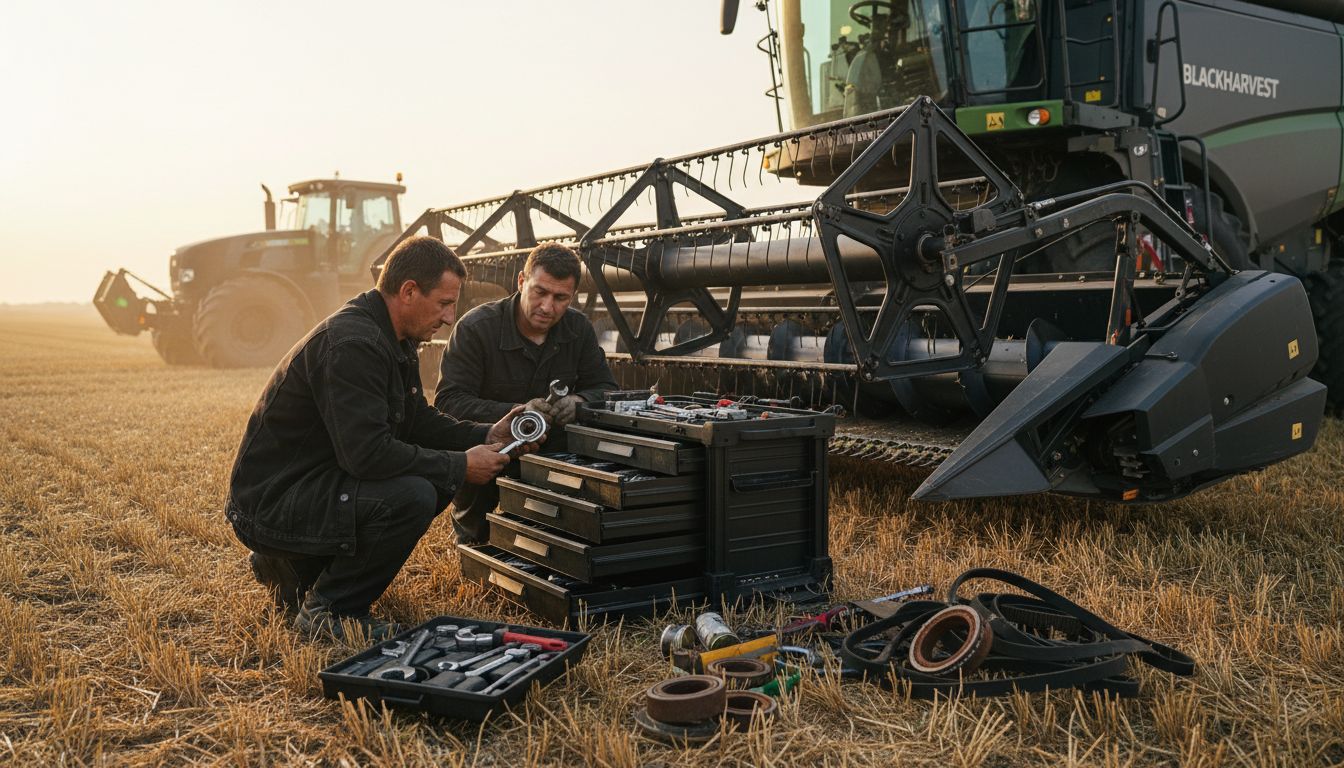
In the intricate world of agricultural machinery, spare parts represent the critical lifeline that keeps farming operations running smoothly. According to research from Wikipedia, spare parts are interchangeable components kept in inventory specifically for repairing or refurbishing machinery, playing a crucial role in maintaining operational efficiency across agricultural equipment.
The strategic management of spare parts goes far beyond simple replacement. Eastern Africa Research highlights that effectively managing reserves of spare parts is vital for ensuring continuous agricultural production. By minimizing equipment downtime, farmers can maintain consistent productivity levels and prevent potentially costly interruptions during critical farming seasons.
Understanding spare parts involves recognizing their diverse nature and importance. These components can range from small mechanical elements like bolts and gaskets to larger, more complex assemblies such as transmission systems or hydraulic components. Each part serves a specific function and contributes to the overall performance and longevity of agricultural machinery.
 Key characteristics of effective spare parts include:
- High durability and reliability
- Precise manufacturing specifications
- Compatibility with specific machinery models
- Cost-effectiveness for long-term equipment maintenance
Farmers and agricultural professionals who develop a strategic approach to spare parts management can significantly enhance their operational efficiency. This means not just having parts on hand, but understanding inventory needs, tracking component lifecycles, and establishing relationships with reliable suppliers who can provide high-quality replacements when needed.
Types of Spare Parts for Agricultural Machinery
Agricultural machinery relies on a complex ecosystem of spare parts, each serving a unique and critical function in maintaining equipment performance. According to Wikipedia, spare parts can be systematically categorized into four primary classifications: capital parts, consumables, inspection spares, and operational spares, each addressing different maintenance and operational requirements.
Research from Eurobearing reveals that several key components are fundamental to agricultural machinery functionality. These essential spare parts include:
- Bearings: Critical for reducing friction and enabling smooth mechanical movement
- Seals: Preventing fluid leakage and protecting internal machinery components
- Belts: Transmitting power between different mechanical systems
- Transmission systems: Enabling power transfer and speed regulation
Beyond these standard components, agricultural spare parts can be further subdivided based on their specific roles and replacement frequency. Operational spares, for instance, are immediately necessary components kept on hand to quickly replace parts that frequently wear out or fail. Capital parts, conversely, represent more significant investments representing major mechanical assemblies that are expensive but crucial for long-term equipment functionality.
Understanding the nuanced taxonomy of spare parts allows farmers and agricultural professionals to develop more strategic inventory management approaches. This involves not just purchasing parts, but creating a comprehensive maintenance strategy that anticipates potential equipment failures, reduces downtime, and optimizes overall machinery performance. By categorizing and tracking spare parts systematically, agricultural operations can significantly enhance their equipment reliability and operational efficiency.
How Spare Parts Ensure Farm Productivity
Spare parts are the unsung heroes of agricultural productivity, acting as a critical lifeline for maintaining continuous farm operations. According to Konya Agriculture, high-quality and compatible spare parts play a pivotal role in minimizing equipment failures, reducing repair costs, and ultimately enhancing overall farm productivity by ensuring consistent machinery performance.
The strategic importance of spare parts becomes evident when considering the potential consequences of equipment breakdown. Know-How emphasizes that the availability of spare parts is crucial in modern agriculture to maintain work continuity and reduce costly downtime. Farmers who proactively manage their spare parts inventory can prevent significant disruptions during critical farming periods such as planting, harvesting, or critical seasonal operations.
Effective spare parts management involves several key strategies that directly impact farm productivity:
- Predictive maintenance planning
- Regular equipment inspection
- Comprehensive inventory tracking
- Establishing relationships with reliable parts suppliers
- Maintaining a strategic reserve of critical components
Beyond immediate operational benefits, a robust spare parts strategy contributes to long-term economic efficiency. By investing in quality replacement components and implementing a systematic maintenance approach, farmers can extend the operational lifespan of expensive agricultural machinery, optimize equipment performance, and ultimately improve their farm’s overall economic resilience. This proactive approach transforms spare parts from mere replacement components to strategic assets that drive agricultural productivity and sustainability.
Sourcing, Stocking, and Managing Spare Parts
Effective spare parts management is a sophisticated process that goes far beyond simple inventory tracking. Eastern Africa Research demonstrates that efficient management of spare parts inventories using sophisticated stochastic models can dramatically improve procurement timing, reduce machinery downtime, and ensure seamless farm operations.
Research from ArXiv highlights the critical importance of joint optimization in spare parts management, emphasizing that strategic approaches can simultaneously enhance system reliability and cost-effectiveness. This means farmers must develop nuanced strategies that balance multiple considerations:
- Predicting potential equipment failure points
- Maintaining optimal inventory levels
- Establishing reliable supply chain connections
- Minimizing storage costs
- Ensuring rapid parts replacement capabilities
The practical implementation of a robust spare parts management system requires a multifaceted approach. This involves creating a comprehensive inventory tracking mechanism that accounts for part lifecycles, usage frequencies, and potential replacement timelines. Farmers should develop detailed records that document equipment age, maintenance history, and anticipated wear patterns, enabling more precise and proactive parts procurement strategies.
Ultimately, successful spare parts management is about creating a resilient ecosystem that supports continuous agricultural productivity. By treating spare parts as strategic assets rather than mere emergency replacements, farmers can transform their approach from reactive maintenance to predictive, strategic equipment management. This shift not only reduces unexpected downtime but also optimizes long-term equipment performance and operational efficiency.
Cost Considerations and Common Mistakes in Parts Management
Spare parts management is a delicate financial balancing act that requires strategic thinking and precise planning. Eastern Africa Research emphasizes the critical importance of analyzing optimal costs for spare parts reserves, highlighting the need to balance inventory expenses with the essential requirement of maintaining operational continuity in agricultural machinery.
Wikipedia reveals that inefficient spare parts management can lead to substantial financial risks. Common mistakes that farmers and agricultural operations frequently encounter include:
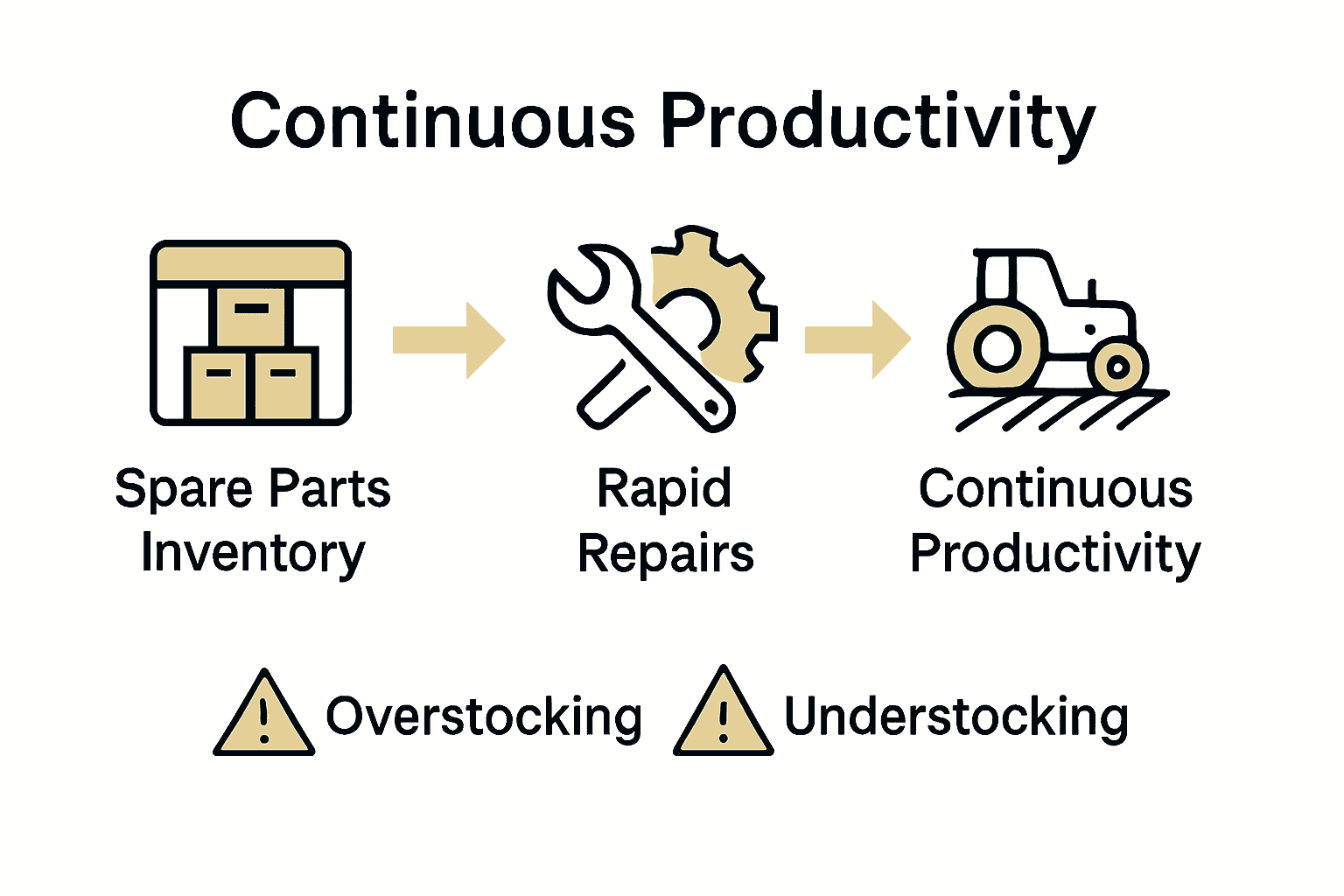
- Overstocking: Tying up capital in unnecessary inventory
- Understocking: Risking extended equipment downtime
- Improper storage: Reducing part quality and usable lifespan
- Inadequate tracking: Losing visibility into actual inventory needs
- Neglecting part depreciation: Failing to rotate or replace aging components
The financial implications of poor parts management extend far beyond immediate inventory costs. Farmers must develop a nuanced approach that considers not just the purchase price of spare parts, but also the potential opportunity costs of equipment downtime, repair inefficiencies, and long-term machinery performance. This means implementing robust inventory management systems that provide real-time tracking, predictive maintenance insights, and strategic procurement strategies.
Ultimately, successful parts management is about creating a dynamic, responsive system that adapts to changing equipment needs while maintaining strict financial discipline. By treating spare parts as strategic assets rather than mere inventory items, agricultural operations can transform potential financial burdens into opportunities for improved operational efficiency and long-term cost savings.
Keep Your Farm Running Smoothly With Reliable Spare Parts
Agricultural machinery depends on quality spare parts to avoid costly downtime and keep productivity high. If you have struggled with managing your spare parts inventory or faced unexpected equipment failures, you are not alone. The key challenge is having the right parts on hand when you need them — from bearings and belts to transmission components — all with guaranteed compatibility and durability.
At pexlivanidis.com, we understand the importance of strategic spare parts management to your farming success. With over 20,000 parts in stock including tractor accessories and essential machinery components, we make it easier than ever to source what you need quickly. Benefit from free shipping across Greece on orders above 100€ and get access to specialized support whether you are a retail customer or a wholesale member.
Don’t let equipment breakdowns slow you down in the critical farming seasons. Visit our online store today, explore our extensive product range, and secure the spare parts that will keep your operations running without interruption. Act now and turn spare parts into your farm’s most reliable advantage.
Frequently Asked Questions
What are spare parts in farming?
Spare parts in farming are interchangeable components that are kept in inventory to repair or refurbish agricultural machinery, critical for maintaining operational efficiency.
Why is effective spare parts management important for farmers?
Effective spare parts management minimizes equipment downtime during critical farming operations, ensuring continuous productivity and preventing costly interruptions.
What types of spare parts are essential for agricultural machinery?
Essential types of spare parts include bearings, seals, belts, transmission systems, and operational spares, each serving specific functions crucial to machinery performance.
How can farmers optimize their spare parts inventory?
Farmers can optimize spare parts inventory by using predictive maintenance planning, regular equipment inspections, and maintaining a strategic reserve of critical components to ensure rapid replacement when needed.