

Modern tractors would be nearly unrecognizable without hydraulics powering their movements. Hydraulic systems handle the heavy lifting, steering, and precise controls that make today’s farm equipment so powerful and efficient. With the right setup, farmers can raise massive attachments or steer through tough fields with just a gentle push of the lever. Understanding how these systems work unlocks real advantages, from smoother operation to easier equipment upkeep and long-term reliability.
Table of Contents
- Defining Tractor Hydraulics and Core Principles
- Types of Tractor Hydraulic Systems Explained
- Key Components and How They Operate
- Common Applications in Agricultural Machinery
- Maintenance, Troubleshooting, and Safety Measures
Key Takeaways
| Point | Details |
|---|---|
| Hydraulic System Functionality | Tractor hydraulics convert mechanical power into fluid-driven motion, enabling precise control of agricultural machinery with minimal physical effort. |
| Types of Hydraulic Systems | Open-center and closed-center systems have distinct functionalities, with closed-center systems providing higher efficiency and better control for complex implements. |
| Maintenance Importance | Regular maintenance of hydraulic systems, including fluid checks and filter replacements, is critical for preventing failures and ensuring reliable performance. |
| Safety Practices | Operators must prioritize safety by using protective equipment and adhering to standard procedures when working with high-pressure hydraulic systems. |
Defining Tractor Hydraulics and Core Principles
Hydraulics in tractors represent a sophisticated engineering system that transforms mechanical power into fluid-driven motion. Hydraulic systems enable farmers and agricultural operators to control complex machinery functions with remarkable precision and minimal physical effort. According to research from Agricultural Canada, these systems fundamentally convert mechanical energy into hydraulic energy through a series of interconnected components.
At its core, a tractor hydraulic system operates on several critical principles. The system consists of key elements that work synergistically to generate, transfer, and control fluid power. These primary components include:
- Hydraulic Pump: Converts mechanical rotation into fluid pressure
- Hydraulic Fluid: Serves as the power transmission medium
- Control Valves: Regulate fluid direction and pressure
- Hydraulic Cylinders: Transform fluid pressure into mechanical linear motion
- Reservoir: Stores and helps cool hydraulic fluid
The brilliance of hydraulic systems lies in their ability to multiply force exponentially. A small input force can generate substantial mechanical power, enabling tractors to lift heavy implements, control steering mechanisms, and operate complex agricultural attachments with minimal operator strain. As detailed in publications from Agricultural Canada, this power transmission occurs through incompressible fluid under precise pressure, allowing for nuanced and powerful mechanical movements.
Understanding hydraulics means recognizing the delicate balance between fluid dynamics, mechanical engineering, and operational efficiency. Modern tractor hydraulic systems represent a marvel of engineering – transforming simple rotational energy into powerful, controlled mechanical actions that drive agricultural productivity forward. Whether lifting a massive hay baler or adjusting a delicate planting implement, hydraulics provide farmers the technological muscle to work smarter, not harder.
Types of Tractor Hydraulic Systems Explained
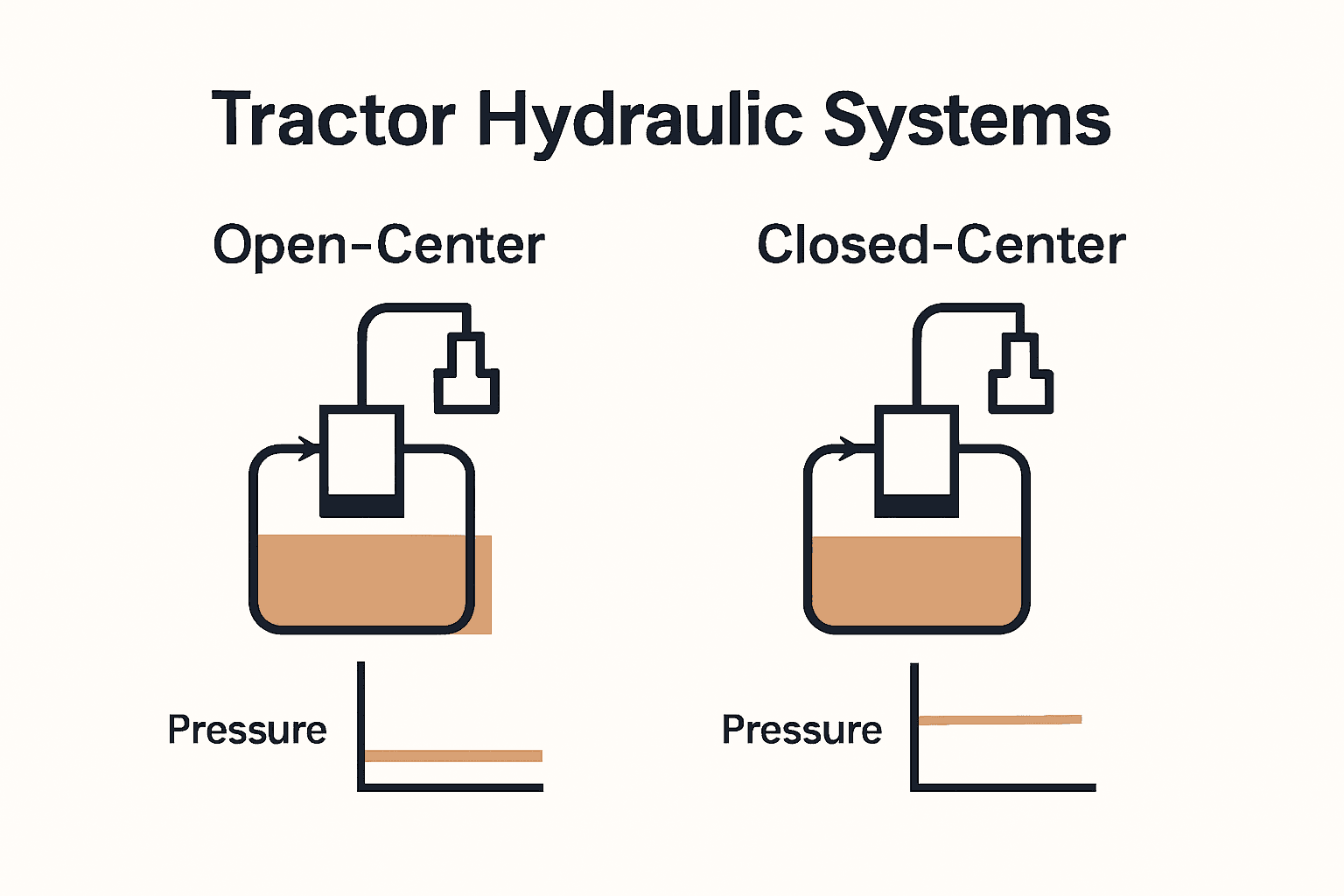
Tractor hydraulic systems are not one-size-fits-all technologies, but rather sophisticated designs tailored to specific agricultural operational requirements. According to research from Nigerian Open University, hydraulic systems primarily fall into two fundamental categories: open-center and closed-center systems, each with unique characteristics and performance capabilities.
Open-Center Hydraulic Systems
Open-center hydraulic systems represent a traditional design where hydraulic fluid continuously circulates through a central passage when no operational demands are being made. Key features of these systems include:
- Simple mechanical design
- Lower initial manufacturing costs
- Consistent fluid flow even when implements are not engaged
- Suitable for tractors with lower hydraulic demand
- Less precise fluid control compared to closed-center systems
These systems work by allowing hydraulic fluid to flow freely through a central passage when control valves are in a neutral position. This constant circulation helps maintain system temperature and ensures immediate fluid availability for rapid implement activation.
Closed-Center Hydraulic Systems
Closed-center hydraulic systems, as detailed by Nigerian Open University, represent a more advanced technological approach. In these systems, the hydraulic fluid remains stationary when no work is being performed, creating a more energy-efficient and precision-driven mechanism. Distinctive characteristics include:
- Higher pressure handling capabilities
- More precise fluid control
- Improved overall system efficiency
- Reduced energy wastage
- Better performance with complex agricultural implements
Modern agricultural machinery increasingly favors closed-center systems due to their ability to deliver targeted hydraulic power exactly when and where it’s needed. By blocking fluid flow when no work is required, these systems minimize energy losses and provide farmers with more responsive and efficient equipment operation.
Key Components and How They Operate
Hydraulic systems in tractors are complex networks of precisely engineered components working in seamless harmony. According to research from Agricultural Canada, these systems transform mechanical energy into powerful fluid-driven motion through a series of interconnected parts, each playing a critical role in overall system performance.
Primary Hydraulic Components
The heart of any tractor hydraulic system revolves around several key components, as detailed by UNESCO UNEVOC. These essential elements include:
- Hydraulic Pump: Converts mechanical rotation into fluid pressure
- Control Valves: Direct and regulate fluid flow
- Hydraulic Reservoir: Stores and helps cool hydraulic fluid
- Filters: Remove contaminants from hydraulic fluid
- Hoses and Couplers: Transport and connect fluid transmission lines
- Hydraulic Cylinders: Transform fluid pressure into linear mechanical motion
The hydraulic pump serves as the system’s primary power generator. By mechanically rotating and creating pressure, it forces hydraulic fluid through the system, enabling powerful mechanical actions. Modern tractor pumps typically utilize positive displacement designs, which ensure consistent fluid movement regardless of system load or operating conditions.
Operational Mechanics
Control valves represent the precision controllers of the hydraulic system. As explained by Agricultural Canada, these components determine fluid direction, pressure, and flow rate, effectively acting as the “brain” of the hydraulic mechanism. When an operator activates a control lever, the valve opens specific pathways, allowing pressurized fluid to drive hydraulic cylinders and perform desired mechanical actions like lifting implements or steering the tractor.
Understanding these components means recognizing their intricate interdependence. Each part must function perfectly to transform a farmer’s simple input into powerful, precise agricultural motion. From the moment hydraulic fluid is pressurized by the pump to its controlled release through valves and eventual mechanical conversion in cylinders, tractor hydraulic systems represent a remarkable fusion of fluid dynamics and mechanical engineering.
Common Applications in Agricultural Machinery
Hydraulic systems have revolutionized agricultural machinery, transforming how farmers interact with complex equipment. According to research from Agricultural Canada, these sophisticated systems enable precise control and powerful mechanical actions across numerous critical farming operations.
Implement Control and Manipulation
One of the most significant hydraulic applications involves implement management. Hydraulic systems allow farmers to raise, lower, and precisely position agricultural implements with minimal physical effort. These systems control attachments like:
- Plows and tillage equipment
- Seed drills and planters
- Hay balers and harvesters
- Spraying equipment
- Loading and lifting mechanisms
As detailed by UNESCO UNEVOC, hydraulic systems provide farmers unprecedented control, allowing instantaneous adjustments to implement depth, angle, and positioning with simple lever movements.
Steering and Operational Dynamics
Beyond implement control, hydraulic systems play a crucial role in tractor maneuverability and operational efficiency. Power steering mechanisms use hydraulic pressure to reduce steering effort, enabling operators to navigate complex agricultural terrains with minimal physical strain. This technology is particularly important when working in challenging field conditions that require precise turning and positioning.
Modern agricultural hydraulics represent more than mechanical systems – they are sophisticated technological solutions that dramatically enhance farming productivity. By converting simple operator inputs into powerful, precise mechanical actions, hydraulic systems have become the silent workhorses of contemporary agricultural machinery, transforming how farmers interact with their most critical tools and equipment.
Maintenance, Troubleshooting, and Safety Measures
Hydraulic systems are the lifeblood of agricultural machinery, demanding meticulous care and attention. According to research from Michigan State University Archives, proactive maintenance is not just recommended – it’s essential for preventing catastrophic system failures and ensuring long-term operational reliability.
Regular Maintenance Protocols
Maintaining a tractor’s hydraulic system involves several critical practices. As recommended by Solis Yanmar, farmers should focus on these key maintenance strategies:
- Hydraulic Fluid Checks: Monitor fluid levels and quality monthly
- Fluid Replacement: Change hydraulic oil at manufacturer-recommended intervals
- Filter Inspection: Replace hydraulic filters regularly
- System Cleanliness: Prevent contamination during fluid top-ups
- Seal and Hose Examination: Look for wear, cracks, or potential leakage points
The hydraulic fluid serves as the system’s critical medium, transmitting power and lubricating internal components. Contaminated or degraded fluid can rapidly accelerate wear and compromise system performance.

Troubleshooting Common Issues
Effective troubleshooting requires understanding potential hydraulic system warning signs. Common indicators of potential problems include:
- Unusual noise during operation
- Slow or jerky implement movement
- Visible fluid leaks
- Decreased system pressure
- Overheating of hydraulic components
Safety Considerations
Safety cannot be overstated when working with hydraulic systems. High-pressure fluids can cause serious injuries, and operators must always:
- Wear appropriate protective equipment
- Depressurize the system before performing maintenance
- Never use hands to check for hydraulic leaks
- Follow manufacturer’s recommended shutdown procedures
- Keep unauthorized personnel away during maintenance
By implementing rigorous maintenance practices and prioritizing safety, farmers can significantly extend their tractor’s hydraulic system lifespan and ensure reliable, efficient agricultural operations.
Keep Your Tractor Hydraulics Running Smoothly with Reliable Parts and Expert Support
Understanding how tractor hydraulics work reveals the importance of precise components like hydraulic pumps, control valves, and fluid systems. If you have faced challenges such as slow implement movements, leaks, or pressure drops, you know how crucial quality parts are to maintaining peak hydraulic performance and avoiding costly downtime. Whether you are troubleshooting worn hoses or replacing essential hydraulic filters, having quick access to a broad selection of dependable tractor accessories is key to sustaining your equipment’s power and efficiency.
Don’t let hydraulic issues slow your work. Explore our extensive inventory of agricultural machinery parts designed to match your tractor’s needs at pexlivanidis.com. Benefit from over 20,000 items available with free shipping for orders above 100€ and gain the advantage of expert guidance and wholesale options by registering today. Take the next step to secure your hydraulic system’s reliability and keep your tractor operating at full strength without delay. Visit our platform now and find the exact parts you need to keep your equipment performing flawlessly.
Frequently Asked Questions
What is the basic function of tractor hydraulics?
Tractor hydraulics convert mechanical power into fluid-driven motion, allowing for precise control of various agricultural implements and machinery with minimal physical effort.
What are the main components of a tractor hydraulic system?
The main components include the hydraulic pump, hydraulic fluid, control valves, hydraulic cylinders, and the reservoir. Each plays a critical role in generating, transferring, and controlling fluid power.
What are the differences between open-center and closed-center hydraulic systems?
Open-center systems allow continuous fluid flow and are simpler and more cost-effective, whereas closed-center systems remain stationary when not in use, providing higher efficiency, pressure handling, and precision.
How can I maintain the hydraulic system of my tractor?
Regular maintenance includes checking hydraulic fluid levels, changing the fluid at recommended intervals, inspecting filters, ensuring system cleanliness, and examining seals and hoses for wear or leaks.