

Farmers depend on machines that do far more than just save time. Modern tractors and harvesters have boosted agricultural productivity by over 200 percent in the past century. Choosing the right equipment can mean the difference between a successful harvest and costly setbacks. By understanding what sets tractors and harvesters apart, you can make smarter decisions about which tools fit your land, crops, and goals.
Table of Contents
- Defining Tractors And Harvesters In Agriculture
- Types And Variations Of Tractors And Harvesters
- Core Functions And Key Features Compared
- Role In Farming Operations And Applications
- Cost, Maintenance, And Ownership Implications
Key Takeaways
| Point | Details |
|---|---|
| Tractors and Harvesters Defined | Tractors are versatile power sources used for various agricultural tasks, while harvesters specialize in gathering and processing crops. |
| Types and Variations | Both tractors and harvesters come in multiple configurations designed for specific agricultural needs and terrain. |
| Core Functions | Tractors support a wide range of farming operations, whereas harvesters streamline the crop collection process, improving efficiency. |
| Cost and Maintenance | Investing in tractors and harvesters requires careful financial planning due to high purchase and maintenance costs, but they can yield significant productivity gains. |
Defining Tractors and Harvesters in Agriculture
Agriculture relies on sophisticated machinery to transform complex farming operations into efficient, streamlined processes. Tractors and harvesters represent two fundamental pieces of equipment that have revolutionized how farmers cultivate, manage, and harvest crops across diverse agricultural landscapes.
According to the EPA, tractors are sophisticated traction machines designed to provide mechanical, hydraulic, and electrical power to various agricultural implements. These versatile vehicles perform a wide range of critical crop production and handling operations. By delivering mechanical power, tractors enable farmers to perform tasks that would be impossible or incredibly labor-intensive by human effort alone.
Harvesters, in contrast, represent specialized machines focused on gathering and processing specific crop types. EPA notes that forage harvesters specifically are engineered to gather, chop, and discharge forage crops, typically working with crops harvested at high moisture levels. These machines dramatically reduce manual labor and increase efficiency in agricultural processing.
The primary distinctions between tractors and harvesters lie in their core functions and operational design. While EPA highlights that tractors serve as multipurpose power sources, harvesters are highly specialized for crop collection and initial processing. Understanding these differences helps farmers and agricultural professionals select the most appropriate machinery for their specific agricultural needs and operational requirements.
Types and Variations of Tractors and Harvesters
The agricultural machinery landscape is diverse, with specialized equipment designed to address specific farming challenges and crop requirements. Tractors and harvesters come in numerous configurations, each tailored to unique agricultural contexts and operational needs.
According to Wikipedia, tractors exhibit remarkable variety in their design and functionality. Key variations include:
- Row-crop tractors: Featuring adjustable tread width specifically for row crop cultivation
- Standard tractors: Equipped with fixed wheels for intensive fieldwork
- High-crop tractors: Designed with increased ground clearance for navigating tall crop environments
- Utility tractors: Multipurpose machines serving general farm operations
Wikipedia highlights that harvesters are equally specialized, with combine harvesters representing a pinnacle of agricultural engineering. These advanced machines consolidate multiple harvest processes – reaping, threshing, winnowing, and gathering – into a single, efficient operation. They can process an impressive range of crops, including wheat, rice, oats, rye, barley, corn, sorghum, millet, soybeans, flax, sunflowers, and canola.
Understanding these variations helps farmers and agricultural professionals select machinery that matches their specific terrain, crop type, and operational requirements.
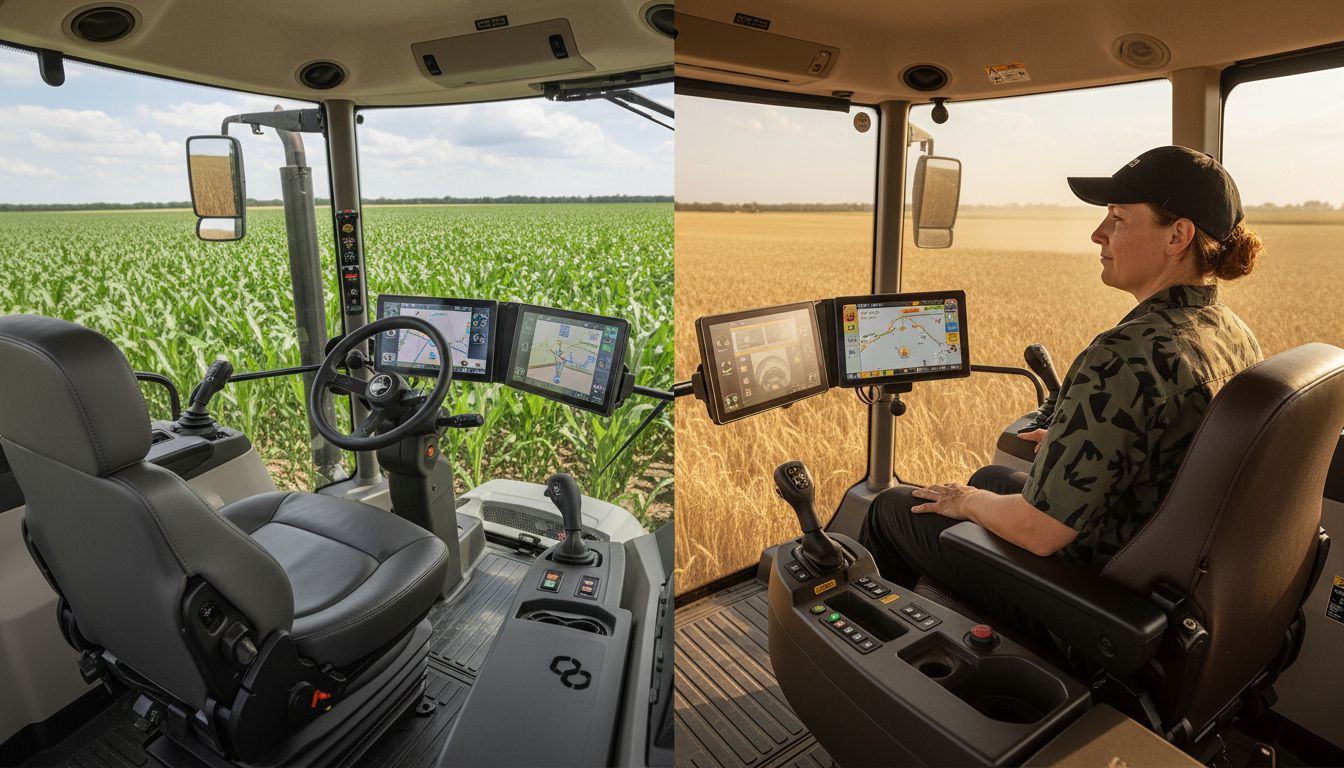 The right equipment can significantly enhance productivity, reduce labor costs, and optimize overall agricultural performance.
Core Functions and Key Features Compared
In the intricate world of agricultural machinery, tractors and harvesters play distinctly different yet complementary roles in crop production and management. Understanding their core functions helps farmers optimize their agricultural operations and select the most appropriate equipment for their specific needs.
According to the EPA, tractors are versatile powerhouses with impressive capabilities. They range from compact models under 40 horsepower to substantial machines exceeding 400 PTO (Power Take-Off) horsepower. These machines provide critical power and traction for various agricultural tasks, including:
- Drawbar operations: Pulling heavy implements and trailers
- PTO operations: Powering attached machinery and equipment
- Field preparation: Tilling, plowing, and seedbed development
- Transport: Moving materials and equipment across agricultural landscapes
In contrast, Wikipedia explains that harvesters are highly specialized machines designed to integrate multiple harvesting processes into a single, efficient operation. Combine harvesters represent the pinnacle of this technology, simultaneously performing reaping, threshing, winnowing, and gathering functions. This integrated approach dramatically reduces labor requirements and increases overall harvesting efficiency.
The primary distinction lies in their operational focus. While EPA highlights tractors as multipurpose power sources that prepare and support agricultural activities, harvesters are laser-focused on crop collection and initial processing. Their specialized design allows for precise crop handling, minimizing waste and maximizing agricultural productivity.
Role in Farming Operations and Applications
Agriculture demands sophisticated machinery that can transform complex manual tasks into efficient, streamlined processes. Tractors and harvesters are pivotal technologies that have fundamentally reshaped how farmers approach crop production, management, and harvesting.
Farmers Magazine provides comprehensive insights into the multifaceted roles of tractors in agricultural operations. These versatile machines are instrumental across numerous farming activities, including:
- Soil preparation: Breaking and conditioning ground for planting
- Planting: Precise seed placement and crop establishment
- Crop maintenance: Supporting ongoing agricultural care
- Harvesting support: Facilitating crop collection processes
- Transportation: Moving crops, equipment, and materials
- Livestock management: Supporting animal husbandry tasks
- Energy generation: Providing power for various farm operations
Wikipedia emphasizes that harvesters have equally transformative impacts, particularly in grain crop production. These specialized machines have dramatically reduced the human labor required in agriculture while simultaneously increasing overall productivity. By integrating multiple harvesting functions into a single pass, combine harvesters have revolutionized crop collection techniques.
The synergy between tractors and harvesters represents the pinnacle of agricultural mechanization. While tractors prepare, maintain, and support agricultural ecosystems, harvesters efficiently collect and process crops. Together, they enable farmers to manage larger areas, reduce manual labor, and optimize agricultural output with unprecedented precision and effectiveness.
Cost, Maintenance, and Ownership Implications
Agricultural machinery represents a substantial financial investment that requires careful consideration of long-term economic implications. Tractors and harvesters are complex technological assets that demand strategic financial planning and comprehensive maintenance strategies.
According to the EPA, the financial commitment for agricultural machinery can be significant. Large tractors can exceed $200,000, with models ranging from compact 40 horsepower units to robust 400 horsepower machines. The ownership costs extend far beyond the initial purchase price and encompass several critical considerations:
- Initial investment: Substantial upfront capital requirements
- Mechanical system maintenance: Regular servicing of complex mechanical components
- Hydraulic system upkeep: Ensuring fluid systems operate efficiently
- Electrical system management: Maintaining sophisticated electronic controls
- Implement compatibility: Additional costs for specialized attachments
Wikipedia highlights that combine harvesters, despite their high initial costs, can generate substantial long-term value. These machines offset their significant investment through increased productivity and dramatic labor cost reductions. The efficiency gains often justify the substantial financial commitment, transforming them from expenses into strategic agricultural investments.
Successful ownership requires a holistic approach that balances initial costs, ongoing maintenance expenses, and potential productivity improvements. Farmers must consider factors like equipment lifespan, repair frequency, technological obsolescence, and potential resale value when making machinery procurement decisions. Smart investment strategies can turn these complex machines from financial burdens into powerful tools for agricultural success.
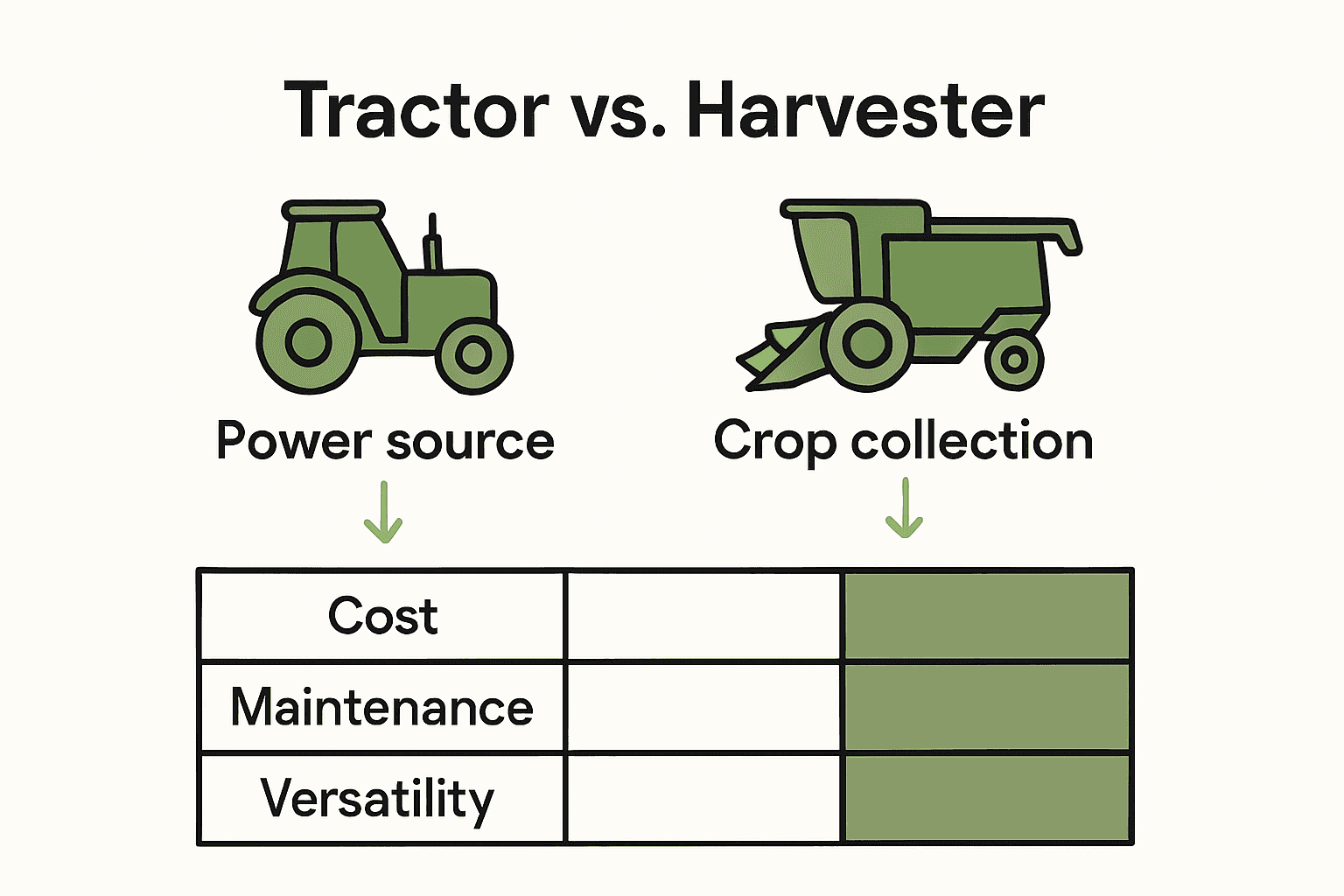
Equip Your Farm With the Right Parts to Keep Tractors and Harvesters Running Smoothly
Understanding the distinct roles and features of tractors and harvesters is just the start. The real challenge is ensuring these powerful machines operate efficiently every season. Whether it is the engine power of a tractor or the specialized mechanisms of a combine harvester, having reliable, high-quality parts is essential to avoid costly downtime and keep your agricultural operations on track.
At pexlivanidis.com, you can access a vast inventory of over 20,000 agricultural machinery parts designed to fit tractors and harvesters alike. Our selection covers everything from engine components to hydraulic systems, helping you maintain and enhance your equipment’s performance. Don’t wait until a breakdown impacts your harvest season. Discover the parts you need today and benefit from free shipping on orders over 100€ within Greece. Ready to upgrade your machinery parts and empower your farming operations visit pexlivanidis.com now and explore our easy-to-use product listings and support services.
Frequently Asked Questions
What is the primary function of a tractor in agriculture?
Tractors are versatile machines designed to provide power for various agricultural tasks, including soil preparation, planting, crop maintenance, transportation, and livestock management.
How do harvesters differ from tractors in their operations?
Harvesters are specialized machines focused on collecting and processing specific crops, integrating multiple functions like reaping, threshing, and gathering into a single operation, unlike tractors, which serve as multipurpose power sources.
What types of tractors are available for agricultural use?
There are several types of tractors, including row-crop tractors, standard tractors, high-crop tractors, and utility tractors, each designed for specific farming tasks and environments.
Why is the maintenance of tractors and harvesters important in agriculture?
Regular maintenance is crucial for tractors and harvesters to ensure efficient operation, reduce downtime, prolong equipment lifespan, and minimize unexpected repair costs.