

Most agricultural procurement managers in Thessaloniki and Kavala are surprised to learn that over 85 percent of successful supply partnerships use advanced B2B platforms with features modeled after leading American supply chains. When you are sourcing tractor accessories and spare parts, understanding the differences between agricultural B2B systems and standard retail sites is crucial. This overview uncovers hidden platform dynamics and debunks common myths, giving you a practical edge in building reliable supplier relationships for your business.
Table of Contents
- Agricultural B2B Explained and Common Myths
- Key Types and Transaction Models
- How Agricultural B2B Platforms Operate
- Essential Requirements for B2B Partnerships
- Risks, Costs, and Legal Responsibilities
Key Takeaways
| Point | Details |
|---|---|
| Understanding Agricultural B2B Complexity | Agricultural B2B platforms are unique ecosystems; they require advanced features to cater to specialized industry needs, distinguishing them from traditional consumer websites. |
| Transaction Model Insights | Key transaction models—standalone, integrated, and self-organizing—vary significantly in technology use and operational impact, emphasizing the need for careful selection based on business requirements. |
| Importance of Strategic Partnerships | Effective B2B relationships in agriculture require clear governance, mutual performance metrics, and robust communication frameworks to foster growth and innovation. |
| Navigating Legal and Risk Considerations | Firms must be proactive in managing legal responsibilities and risks by developing comprehensive contracts and ensuring compliance with applicable regulations. |
Agricultural B2B Explained and Common Myths
Agricultural B2B (business-to-business) platforms represent a complex ecosystem of supply chain interactions unique to the agricultural sector. Unlike traditional consumer markets, these platforms involve intricate networks of suppliers, wholesalers, and agricultural equipment providers working collaboratively. Emerging research on B2B platform dynamics reveals that these systems are far more nuanced than simple transactional marketplaces.
Many procurement managers mistakenly believe that agricultural B2B platforms operate similarly to standard retail websites. In reality, these specialized platforms require sophisticated features addressing unique industry challenges. Key differences include complex pricing structures, bulk ordering capabilities, specialized inventory management, and relationship-based transaction models. The myth that B2B platforms are merely enlarged versions of consumer websites fails to recognize the intricate operational requirements of agricultural supply chains.
The actual architecture of agricultural B2B platforms involves multiple interconnected elements:
- Advanced inventory tracking systems
- Customized wholesale pricing algorithms
- Integration with logistics and shipping networks
- Real-time product availability verification
- Specialized communication channels for business negotiations
Understanding these platform nuances is critical for agricultural procurement professionals seeking efficient supply chain management. By recognizing the specialized nature of B2B agricultural platforms, managers can leverage technology to streamline purchasing processes, reduce operational costs, and build more robust supplier relationships.
Pro Tip: Research Supplier Platform: Thoroughly evaluate potential B2B platforms by requesting comprehensive demos and checking their specific agricultural industry integrations before committing to a long-term partnership.
Key Types and Transaction Models
Agricultural B2B transaction models represent sophisticated frameworks for connecting suppliers, wholesalers, and equipment providers across complex market ecosystems. Comprehensive market platform research reveals three primary transaction model categories that define modern agricultural supply chain interactions: standalone, integrated, and self-organizing platforms.
Standalone transaction models function as independent marketplaces where agricultural suppliers list products and buyers browse inventories. These platforms typically feature basic search functions, product catalogs, and direct communication channels. By contrast, integrated transaction models incorporate advanced features like real-time inventory tracking, automated pricing algorithms, and seamless logistics management. These platforms enable more dynamic, responsive interactions between agricultural equipment providers and procurement managers.
The most sophisticated category, self-organizing transaction models, represents the cutting edge of agricultural B2B technology. These platforms leverage artificial intelligence and machine learning to:
- Predict supply and demand trends
- Automatically recommend optimal purchasing strategies
- Create dynamic pricing based on market conditions
- Match suppliers with most appropriate buyers
- Generate predictive maintenance insights for agricultural equipment
Understanding these transaction model nuances helps procurement professionals select platforms that align with their specific operational requirements. Each model offers unique advantages depending on the scale, complexity, and strategic goals of agricultural businesses.
Here’s a comparison of the three main agricultural B2B transaction models and their practical impact:
| Model Type | Core Technology Used | Business Impact | Suitable For |
|---|---|---|---|
| Standalone | Basic web interfaces | Direct purchasing, limited data | Small suppliers |
| Integrated | Inventory, logistics systems | Streamlined orders, better control | Medium enterprises |
| Self-Organizing | AI and machine learning | Automated decisions, predictive insights | Large industry players |
Pro Tip Technology Assessment: Conduct a comprehensive audit of your current procurement processes before selecting a B2B transaction platform, ensuring the chosen model genuinely matches your operational complexity and technological readiness.
How Agricultural B2B Platforms Operate
Systematic research on digital platform infrastructure reveals the complex operational mechanisms that drive modern agricultural B2B platforms. These digital ecosystems function as sophisticated technological networks that seamlessly connect suppliers, equipment manufacturers, and procurement managers through integrated communication and transaction systems.
The core operational framework of agricultural B2B platforms involves multiple interconnected technological components. User management systems create secure authentication protocols, while advanced algorithms enable precise product matching and inventory tracking. Innovative information technology approaches have transformed these platforms into intelligent networks capable of predicting market trends, automating pricing strategies, and facilitating real-time communication between stakeholders.
Key operational features of agricultural B2B platforms typically include:
- Secure user authentication protocols
- Advanced inventory management systems
- Real-time pricing and availability tracking
- Integrated communication channels
- Automated logistics and shipping coordination
- Machine learning-powered recommendation engines
- Comprehensive supplier and buyer profile management
Successful agricultural B2B platforms distinguish themselves through technological sophistication, user experience design, and the ability to simplify complex supply chain interactions. By leveraging cutting-edge technologies like artificial intelligence and blockchain, these platforms create transparent, efficient marketplaces that transcend traditional transactional limitations.
Pro Tip Platform Navigation: Develop a comprehensive onboarding strategy that includes thorough staff training and gradual platform integration to maximize technological adoption and minimize operational disruptions.
Essential Requirements for B2B Partnerships
Comprehensive research on multi-stakeholder agricultural partnerships reveals that successful B2B relationships in agriculture go far beyond simple transactional interactions. These partnerships require strategic alignment, robust communication frameworks, and a shared commitment to mutual growth and innovation.

The foundation of effective B2B partnerships lies in establishing clear organizational governance and performance management protocols. Collaborative partnership case studies demonstrate that successful relationships are built on transparent expectations, measurable performance indicators, and flexible adaptation mechanisms. Critical elements include developing shared strategic objectives, creating consistent communication channels, and establishing mechanisms for continuous performance evaluation and improvement.
Essential requirements for agricultural B2B partnerships typically include:
- Clearly defined partnership scope and objectives
- Mutually agreed performance metrics
- Transparent financial and operational reporting
- Robust risk management strategies
- Flexible contract structures
- Mechanisms for technological and knowledge sharing
- Commitment to sustainable and ethical practices
- Regular performance review and adaptation processes
Technological integration and trust-building mechanisms play crucial roles in establishing and maintaining successful partnerships. Modern agricultural B2B relationships demand sophisticated digital platforms that enable real-time collaboration, transparent information sharing, and agile response to market changes. By prioritizing mutual understanding, technological compatibility, and shared strategic vision, businesses can create resilient and productive partnerships.
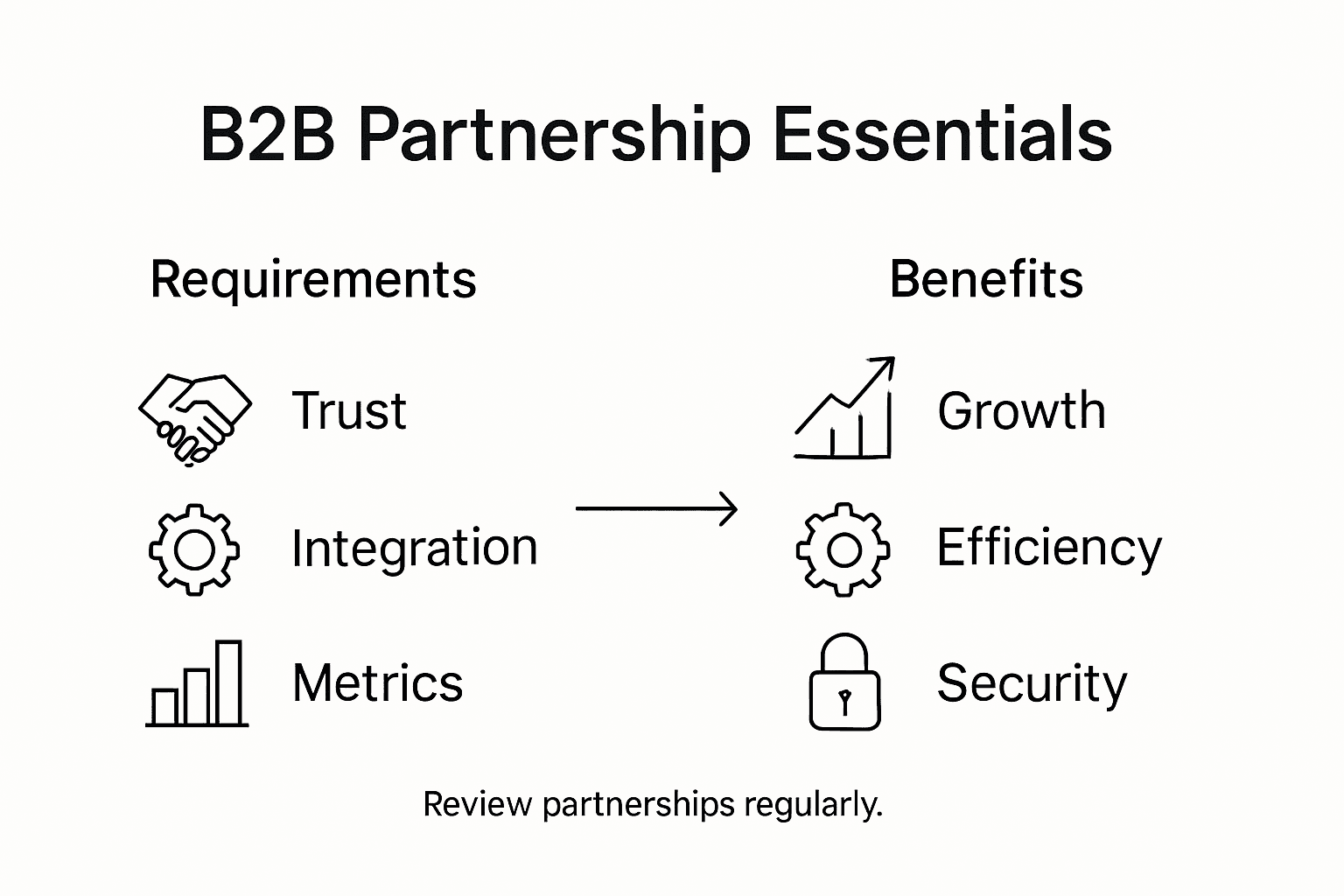
Review these critical partnership requirements and how they benefit agricultural businesses:
| Requirement | Why It Matters | Business Benefit |
|---|---|---|
| Governance protocols | Ensures clear roles | Reduces conflicts |
| Performance metrics | Tracks results | Improves accountability |
| Risk management strategies | Anticipates problems | Protects assets |
| Technology integration | Enables smooth communication | Boosts efficiency |
Pro Tip Partnership Assessment: Conduct thorough due diligence and periodic partnership reviews, using both quantitative performance metrics and qualitative relationship assessments to ensure ongoing alignment and mutual value creation.
Risks, Costs, and Legal Responsibilities
EU legal frameworks governing agricultural B2B transactions establish critical guidelines for managing risks and legal responsibilities in agricultural supply chain partnerships. These regulations create comprehensive protection mechanisms that define acceptable business practices, contractual obligations, and potential liability scenarios for agricultural equipment and supply transactions.
The legal landscape for agricultural B2B partnerships involves multiple complex considerations, including contract structure, financial risk allocation, and compliance requirements. Greek agricultural businesses must navigate intricate regulatory environments that mandate transparent pricing, fair payment terms, and explicit performance expectations. Key legal dimensions include intellectual property protections, liability limitations, dispute resolution mechanisms, and compliance with national and European Union trading standards.
Critical risks and legal responsibilities in agricultural B2B partnerships include:
- Precise contract language defining performance expectations
- Clear allocation of financial and operational risks
- Comprehensive insurance coverage requirements
- Intellectual property and technology transfer protocols
- Compliance with EU agricultural trading regulations
- Mechanisms for resolving contractual disputes
- Transparent pricing and payment terms
- Environmental and sustainability compliance standards
- Data protection and confidentiality agreements
Successful risk management demands a proactive approach that combines legal expertise, technological understanding, and strategic planning. Agricultural businesses must develop robust internal processes that anticipate potential challenges, create flexible response mechanisms, and maintain comprehensive documentation of all transactional interactions. By implementing sophisticated risk assessment strategies, companies can mitigate potential legal vulnerabilities and create more stable, predictable business partnerships.
Pro Tip Risk Management: Engage specialized legal counsel with specific expertise in agricultural B2B regulations to conduct comprehensive contract reviews and develop tailored risk mitigation strategies for your specific business context.
Streamline Your Agricultural Supply Chain with Trusted Spare Parts Solutions
Agricultural B2B platforms are transforming how supply chains operate in Greece by demanding efficient, tech-savvy solutions for managing inventory, pricing, and logistics. If you are facing challenges with complex order processing or seeking reliable partners for sourcing high-quality tractor accessories and spare parts, understanding these demands is key. With over 20,000 items in stock, pexlivanidis.com offers a robust platform tailored to meet the needs of both retail customers and wholesale members in Thessaloniki, Kavala, and beyond.
Unlock the power of advanced inventory management and streamlined communication by exploring our comprehensive product listings. Join our B2B membership for exclusive wholesale benefits and enjoy perks like free shipping on orders over 100 euros across Greece. Don’t let supply chain complexities hold your business back. Visit pexlivanidis.com today and experience the difference of a trusted, local partner dedicated to your agricultural equipment needs.
Frequently Asked Questions
What is Agricultural B2B?
Agricultural B2B refers to business-to-business platforms specifically designed for the agricultural sector, where suppliers, wholesalers, and equipment providers interact to streamline supply chain processes.
How do Agricultural B2B platforms differ from consumer marketplaces?
Unlike consumer marketplaces, Agricultural B2B platforms have complex pricing structures, bulk ordering capabilities, and specialized inventory management suited to the unique challenges faced in the agricultural supply chain.
What are the main transaction models in Agricultural B2B?
The primary transaction models in Agricultural B2B include standalone platforms, integrated platforms, and self-organizing platforms, each offering varying levels of sophistication and technological capabilities.
What are essential requirements for successful B2B partnerships in agriculture?
Successful B2B partnerships in agriculture require clear governance protocols, mutually agreed performance metrics, robust risk management strategies, and mechanisms for technological integration and knowledge sharing.