

Over 60 percent of transmission issues in Greek farms come down to misidentified parts or mismatched systems, especially when dealing with American tractor models. Repair technicians and operators know how just one compatibility error can sideline an entire season’s work. Gaining precise knowledge of tractor transmission systems equips you to spot common faults faster, choose reliable components, and adapt technology whether you use Greek, American, or other imported machinery.
Table of Contents
- What Tractor Transmission Systems Are
- Major Types of Tractor Transmission Systems
- How Tractor Transmissions Work Mechanically
- Choosing the Right Transmission for Repairs
- Common Mistakes and Compatibility Issues
Key Takeaways
| Point | Details |
|---|---|
| Tractor Transmission Functions | Tractor transmission systems efficiently transfer power from the engine to the wheels, enabling precise control for agricultural tasks. |
| Types of Transmissions | Major types include manual, automatic, hydrostatic, and continuously variable, each designed for specific operational needs and advantages. |
| Maintenance Importance | Regular checks and maintenance of the transmission system can significantly extend its lifespan and prevent costly repairs. |
| Compatibility Considerations | Ensuring compatibility between components is crucial to avoid mechanical issues, highlighting the importance of thorough assessments before repairs. |
What Tractor Transmission Systems Are
A tractor transmission system is the complex mechanical assembly responsible for transferring power from the engine to the wheels, enabling precise control of speed, direction, and mechanical output across agricultural machinery. These intricate systems translate rotational engine energy into practical mechanical movement, allowing farmers to navigate challenging terrain and perform demanding field operations with exceptional precision.
Tractor transmission systems typically consist of several core components that work harmoniously to convert engine power. These include critical transmission components and integration mechanisms such as gearboxes, clutches, drive shafts, and differential units. Each component plays a strategic role in managing power transfer, enabling farmers to adjust vehicle speed, implement implement depth control, and maintain optimal mechanical performance across diverse agricultural environments.
The primary transmission types found in modern tractors include manual, automatic, and hydrostatic configurations. Manual transmissions offer direct gear shifting controlled by the operator, providing mechanical simplicity and durability. Automatic transmissions utilize sophisticated hydraulic systems to change gears seamlessly, reducing operator fatigue. Hydrostatic transmissions use fluid dynamics to transfer power, enabling infinitely variable speeds and smoother acceleration, which proves particularly beneficial in precision farming applications.
Pro Tip: Regular transmission fluid checks and timely maintenance can extend your tractor’s transmission system lifespan by up to 40%, preventing costly repairs and ensuring consistent mechanical performance across challenging agricultural conditions.
Major Types of Tractor Transmission Systems
Tractor transmission systems represent diverse mechanical configurations designed to optimize power transfer and operational efficiency across agricultural machinery. Comparative analysis of transmission models reveals multiple technological approaches that address specific farming requirements, each with unique performance characteristics and operational advantages.
Modern agricultural tractors primarily utilize four primary transmission types. Manual transmissions offer direct mechanical control, allowing operators precise gear selection through traditional clutch and shift mechanisms. Automatic transmissions employ sophisticated hydraulic systems that seamlessly change gears, reducing operator fatigue and enhancing productivity. Hydrostatic transmissions use fluid dynamics for infinite speed variations, providing exceptional maneuverability in complex field conditions. Asymmetric gear configurations represent an emerging innovation, potentially improving power transmission efficiency and reducing mechanical wear.
Each transmission type presents distinct advantages for specific agricultural applications. Manual transmissions excel in durability and mechanical simplicity, making them ideal for rugged terrain and traditional farming practices. Automatic transmissions benefit operators managing complex implement attachments, enabling smoother transitions between tasks. Hydrostatic systems prove superior in precision agriculture, offering refined speed control for delicate operations like planting and crop maintenance. Continuously variable transmissions represent a technological bridge, providing seamless power delivery with minimal energy loss.
Pro Tip: When selecting a tractor transmission, consider your specific farming environment, typical tasks, and operator skill level to maximize performance and minimize long-term maintenance costs.
Here is a concise comparison of the major tractor transmission types and their typical applications:
| Transmission Type | Key Advantage | Ideal Usage Scenario |
|---|---|---|
| Manual | High durability, mechanical simplicity | Rugged terrain, basic farming tasks |
| Automatic | Reduces operator fatigue, seamless shifting | Frequent gear changes, complex implements |
| Hydrostatic | Infinite speed control, smooth operation | Precision planting, crop maintenance |
| Continuously Variable | Minimal energy loss, seamless delivery | Mixed tasks, modern precision farming |
How Tractor Transmissions Work Mechanically
Tractor transmission systems function through a complex series of mechanical interactions that transform engine power into precise agricultural movement. Lubricant flow dynamics within forward and reverse clutches illustrate the intricate mechanical processes that enable smooth power transfer, involving multiple interconnected components working in synchronized precision.
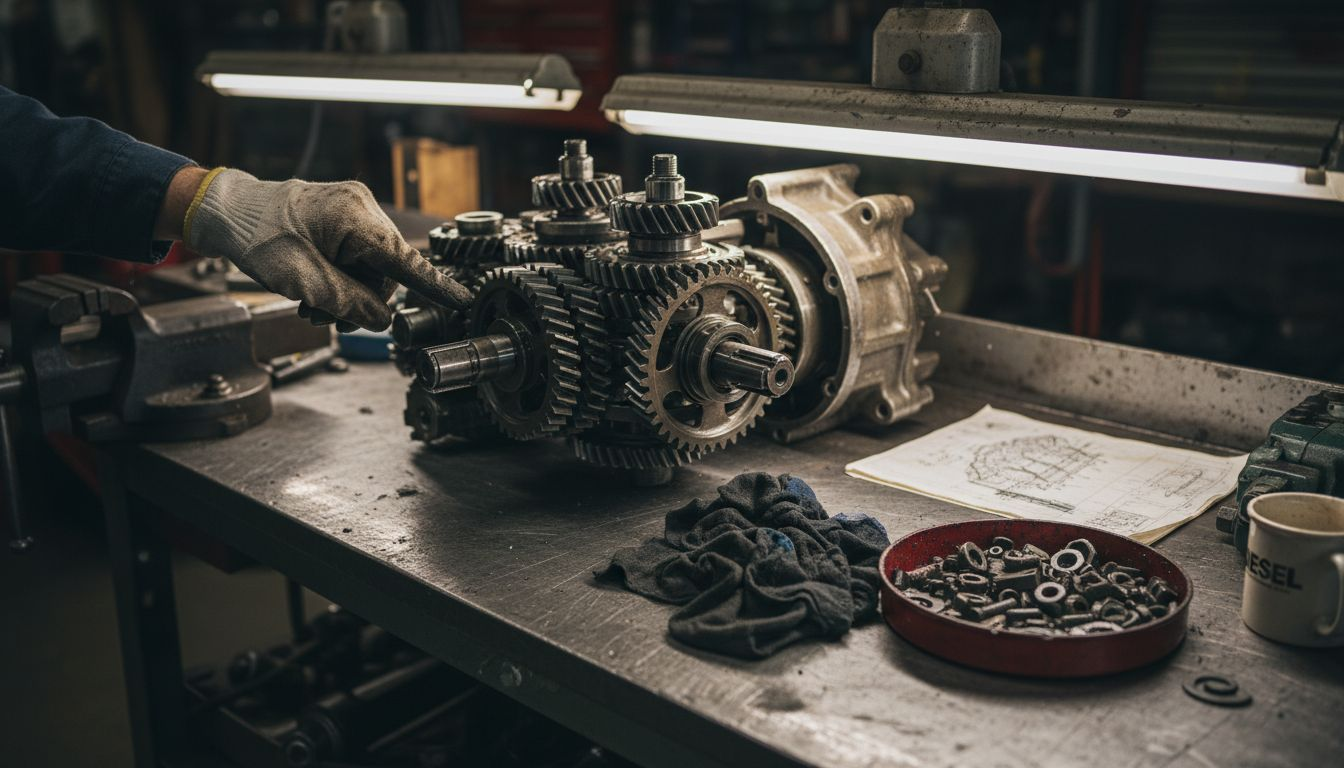
The mechanical core of tractor transmissions involves several critical components that translate rotational energy. Gearboxes serve as the primary mechanism for speed and power modulation, utilizing interlocking gear sets to adjust mechanical output. Disc-type gearbox configurations represent advanced engineering approaches that enhance transmission efficiency by optimizing power distribution and minimizing energy loss during mechanical transformation.
Power transmission begins with the engine’s crankshaft, which generates rotational force transferred through a clutch mechanism. This initial connection allows controlled engagement and disengagement of power flow. The gearbox then modulates this energy, using different gear ratios to adjust speed and torque. Differential units further distribute power between wheels, enabling effective traction and maneuverability across varied agricultural terrains. Synchronization mechanisms ensure smooth gear transitions, reducing mechanical stress and preventing transmission damage.
Pro Tip: Perform periodic transmission fluid analysis to detect early signs of mechanical wear, allowing preemptive maintenance and preventing costly transmission failures.
Choosing the Right Transmission for Repairs
Selecting the appropriate transmission for tractor repairs requires a comprehensive understanding of mechanical performance, operational requirements, and potential system vulnerabilities. Shifting quality analysis under hydraulic system challenges reveals critical considerations that farmers and technicians must evaluate when determining transmission repair strategies.
Multiple factors influence transmission repair and replacement decisions. Age and usage intensity play significant roles in determining whether a complete transmission overhaul or targeted component replacement is most appropriate. Agricultural environments with extreme conditions like high dust, temperature variations, and consistent heavy loads demand more rigorous transmission maintenance. Wet clutch switching performance provides crucial insights into transmission durability, highlighting the importance of understanding specific mechanical stress points before initiating repair processes.
Technicians should conduct comprehensive diagnostic assessments that evaluate multiple transmission characteristics. Key evaluation parameters include current wear levels, lubrication system integrity, gear synchronization efficiency, and overall mechanical tolerances. Manual transmissions typically offer more straightforward repair processes, while complex hydrostatic and continuously variable transmission systems require specialized diagnostic equipment and advanced technical expertise. Comparative analysis of repair costs, potential downtime, and long-term performance projections becomes essential when making definitive transmission repair decisions.
Pro Tip: Always document previous maintenance history and collect comprehensive performance data before initiating transmission repairs to ensure targeted, cost-effective interventions.
Common Mistakes and Compatibility Issues
Tractor transmission systems require meticulous attention to compatibility and potential mechanical vulnerabilities. Comprehensive integration of tractor engine, transmission, and implement controls reveals critical insights into the complex interactions that can lead to significant operational challenges when improper component matching occurs.
Farmers and technicians frequently encounter several common mistakes during transmission repairs and replacements. Mismatched gear ratios represent a primary compatibility issue, potentially causing excessive mechanical stress and premature component failure. Incorrect lubrication selections can dramatically reduce transmission lifespan, with incompatible fluids accelerating internal wear mechanisms. Overlooking subtle differences in mounting specifications, shaft dimensions, and torque requirements often results in seemingly inexplicable performance degradation that can compromise entire agricultural machinery systems.
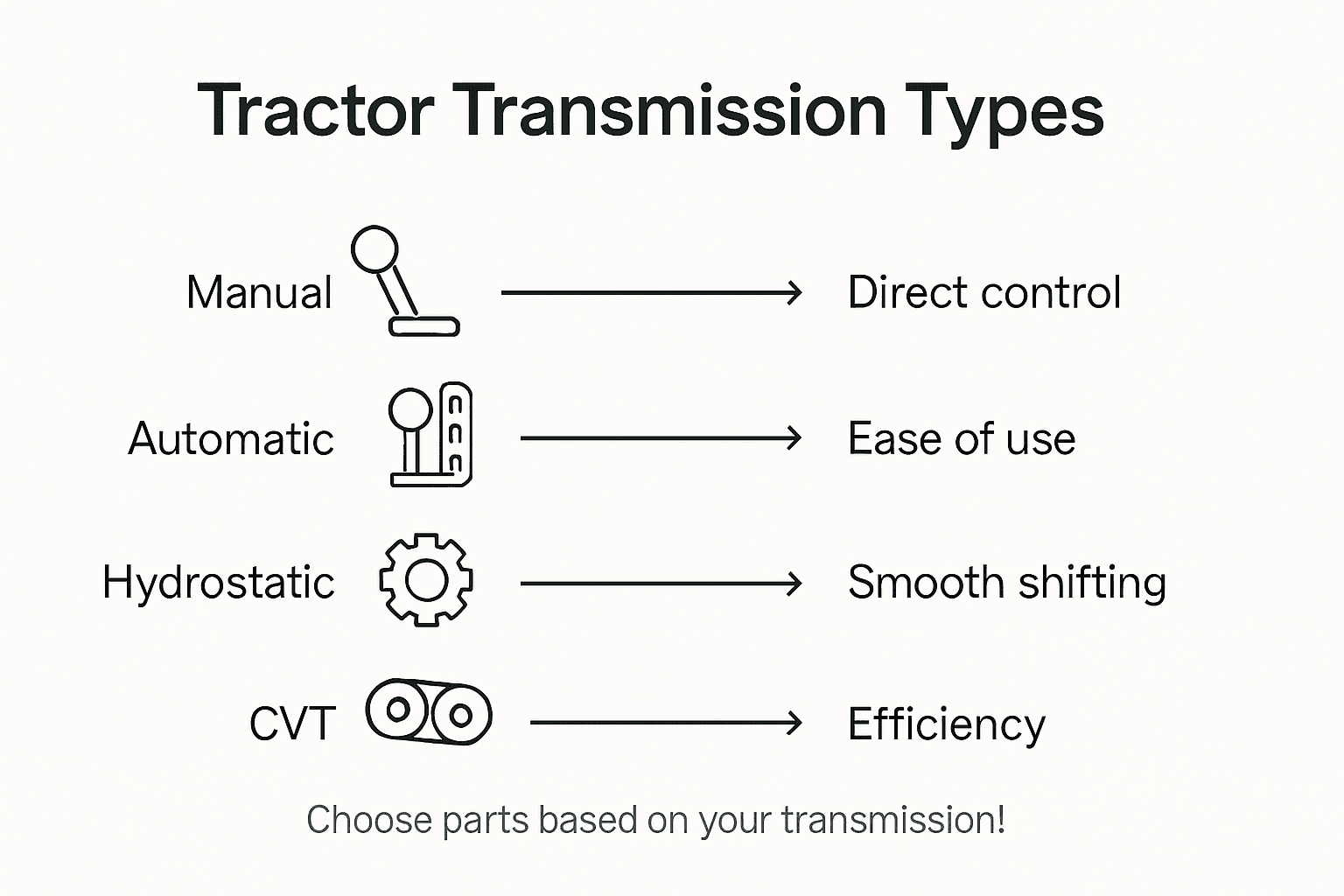
Diagnostic precision becomes paramount when addressing transmission compatibility challenges. Technicians must carefully evaluate multiple interconnected systems, recognizing that transmission modifications impact not just the immediate mechanical components but the entire tractor’s operational envelope. Electrical interface compatibility, hydraulic system pressures, and mechanical load distribution represent critical assessment areas. Vintage tractors pose additional complexity, with aftermarket parts potentially introducing unforeseen systemic risks that require sophisticated diagnostic approaches and deep mechanical understanding.
Pro Tip: Always cross-reference manufacturer specifications and conduct thorough compatibility testing before installing replacement transmission components to prevent costly systemic failures.
Below is a summary of common tractor transmission mistakes and how to prevent them:
| Mistake | Common Effect | Prevention Approach |
|---|---|---|
| Mismatched gear ratios | Mechanical stress, failure | Verify compatibility for each model |
| Wrong fluid type | Premature wear, reduced lifespan | Use only specified lubricants |
| Incorrect mounting | Performance loss, component strain | Measure dimensions and torque requirements |
| Overlooking system checks | Systemic faults, downtime | Audit electrical and hydraulic connections |
Maximize Your Tractor’s Performance with the Right Transmission Parts
Understanding the complexities of tractor transmission systems and the challenges involved in repairs can save you time and money. The article highlights common pain points like mismatched gear ratios, incorrect lubricants, and mechanical wear that affect transmission efficiency and longevity. If you want to avoid costly mistakes and boost your tractor’s reliability, selecting high-quality, compatible spare parts is crucial.
At Pexlivanidis, we offer an extensive inventory of over 20,000 agricultural machinery and tractor transmission parts designed to meet diverse operational needs. Whether you need components for manual, automatic, hydrostatic, or continuously variable transmissions, our platform provides easy product inquiries and expert support to help you make the right choice. Take control of your tractor’s performance today and explore our selection of tractor accessories and spare parts to ensure smooth repairs and prolonged transmission life.
Visit Pexlivanidis Agricultural Parts now and experience reliable shipping options across Greece. Don’t wait for mechanical failures to slow your work. Act now and get the right parts delivered to your doorstep. Check availability, contact us for advice, and keep your tractor operating at peak efficiency.
Frequently Asked Questions
What are the main types of tractor transmission systems?
The primary types of tractor transmission systems include manual, automatic, hydrostatic, and continuously variable transmissions. Each type has unique characteristics suited for different agricultural applications.
How do tractor transmissions work mechanically?
Tractor transmissions work by converting the engine’s rotational power into mechanical movement through components like gearboxes, clutches, and differential units. These components work together to manage speed and torque effectively.
What should I consider when choosing a transmission for my tractor?
When selecting a transmission, consider your specific farming environment, the typical tasks you perform, and the skill level of your operators to ensure optimal performance and minimize maintenance costs.
What are some common mistakes to avoid during tractor transmission repairs?
Common mistakes include mismatched gear ratios, using the wrong fluid type, incorrect mounting, and overlooking system checks. To prevent these issues, verify compatibility, use specified lubricants, and conduct thorough compatibility testing before repairs.