

Finding reliable tractor parts at the right price challenges many small-scale farmers in Greece, especially those working the land near Thessaloniki and Kavala. With online options multiplying, more operators are turning to modern e-commerce models inspired by american digital marketplaces. This shift opens new doors: you can access broader part selections, transparent pricing, and fast comparisons, making every euro count for your farm’s bottom line.
Table of Contents
- Machinery Parts E-Commerce Defined
- Types of Machinery Parts Platforms
- How Online Transactions Work
- Logistics and Inventory Management
- Cost Savings and Common Challenges
Key Takeaways
| Point | Details |
|---|---|
| E-commerce Transformation | Machinery parts e-commerce revolutionizes how agricultural businesses purchase components, enhancing procurement efficiency beyond traditional methods. |
| Platform Diversity | Various online platforms, such as B2C and B2B, cater to different users, offering unique advantages for both farmers and suppliers. |
| Advanced Technologies | Technologies like AI and machine learning improve logistics and inventory management, streamlining operations and reducing costs. |
| Cost Optimization | E-commerce leads to significant cost savings through reduced transaction fees and better supply chain management for agricultural equipment businesses. |
Machinery Parts E-Commerce Defined
E-commerce for machinery parts represents a transformative digital strategy that enables agricultural businesses to purchase essential equipment components through online platforms. This approach fundamentally changes how farmers and agricultural operators source critical replacement parts, moving beyond traditional supply chain limitations. Electronic commerce in the machinery sector has evolved rapidly, creating new opportunities for streamlined procurement processes.
The core mechanism of machinery parts e-commerce involves digital platforms that connect suppliers directly with end-users like farmers and agricultural equipment operators. These online marketplaces provide comprehensive catalogs, detailed product specifications, real-time inventory tracking, and seamless ordering capabilities. By leveraging digital technologies, businesses can access a wider range of parts, compare prices, and make more informed purchasing decisions without geographical constraints.
Key characteristics of effective machinery parts e-commerce platforms include robust search functionality, accurate technical specifications, transparent pricing, and integrated shipping options. Research indicates that successful e-commerce adoption in agricultural machinery sectors requires strong digital retail capabilities, enhanced information exchange mechanisms, and customer-centric after-sales services. These platforms not only simplify procurement but also contribute to rural economic development by creating more efficient supply networks.
Pro Tip: When exploring online machinery parts platforms, always verify the technical compatibility of parts with your specific equipment model before completing a purchase.
Types of Machinery Parts Platforms
Machinery parts e-commerce platforms are diverse and complex, serving different segments within the agricultural and industrial equipment markets. E-commerce models for machinery parts are primarily categorized into four primary formats: business-to-consumer (B2C), business-to-business (B2B), consumer-to-consumer (C2C), and consumer-to-business (C2B). Each platform type offers unique advantages for different stakeholders in the machinery parts ecosystem.
The global parts e-commerce landscape includes platforms segmented by multiple critical factors such as equipment type, parts category, and sales channel. These platforms range from original equipment manufacturer (OEM) direct portals to comprehensive aftermarket marketplaces. Specialized platforms cater to specific machinery types like tractors, excavators, and agricultural equipment, providing targeted solutions for farmers and industrial operators seeking precise replacement components.
Digital platforms increasingly leverage advanced technologies to enhance user experience and operational efficiency. Advanced e-commerce platforms now offer real-time inventory tracking, transparent pricing mechanisms, integrated shipping options, and detailed technical specifications. These features enable agricultural professionals to make informed purchasing decisions, reduce equipment downtime, and streamline procurement processes across different machinery segments.
Pro Tip: Compare multiple machinery parts platforms and evaluate their technical support, return policies, and compatibility verification services before committing to a single digital marketplace.
Here’s a comparison of different machinery parts e-commerce platform models:
| Platform Type | Primary Users | Example Use Case | Unique Advantage |
|---|---|---|---|
| B2C | Individual farmers | Buying a tractor part online | Direct access to retail catalogs |
| B2B | Equipment dealers, large farms | Bulk ordering for fleet maintenance | Volume pricing and bulk supply |
| C2C | Farmers, operators | Selling used parts to peers | Peer-to-peer cost savings |
| C2B | Businesses, suppliers | Accepting part buybacks from users | Inventory optimization for suppliers |
How Online Transactions Work
Online transactions for machinery parts represent a complex digital ecosystem that transforms traditional procurement processes. The transaction begins with product selection, where agricultural equipment owners browse comprehensive online catalogs, examine technical specifications, and compare pricing for specific machinery components. Customers can initiate purchases through vendor websites, specialized marketplaces, or integrated electronic data interchange (EDI) platforms, allowing for seamless and efficient procurement.

The transaction process involves multiple interconnected technological stages, including digital product representation, customer interaction mechanisms, and backend order processing systems. These platforms leverage advanced technologies to provide real-time inventory tracking, transparent pricing details, and integrated shipping options. Digital transaction ecosystems now incorporate sophisticated features like AI-driven personalization, social commerce integration, and advanced payment processing technologies that simplify the purchasing experience for agricultural machinery professionals.
Security and verification represent critical components of online machinery parts transactions. Modern platforms implement robust authentication protocols, secure payment gateways, and comprehensive order validation processes to ensure transaction integrity. These systems typically include verification steps such as parts compatibility checks, real-time inventory confirmation, shipping cost calculations, and automated documentation generation. By integrating these technological safeguards, online platforms minimize transaction risks and provide customers with transparent, reliable purchasing experiences.
Pro Tip: Always screenshot your online transaction confirmation and save the order number for future reference and potential customer support interactions.
Logistics and Inventory Management
Advanced machine learning techniques have revolutionized logistics and inventory management for machinery parts e-commerce, transforming traditional supply chain approaches. These sophisticated algorithms enable precise demand forecasting, optimize stock levels, and dramatically reduce inventory carrying costs for agricultural equipment suppliers. By predicting complex inventory requirements with unprecedented accuracy, businesses can maintain optimal stock levels while minimizing waste and maximizing operational efficiency.
Artificial Intelligence plays a critical role in modern inventory management systems, particularly for specialized machinery parts. AI-driven inventory solutions facilitate complex catalogue management, automate replenishment processes, and provide real-time inventory visibility across multiple warehousing locations. These intelligent systems can dynamically adjust stock levels, predict potential supply chain disruptions, and ensure rapid order fulfillment for agricultural equipment operators who depend on timely parts availability.
The integration of advanced technological solutions allows for comprehensive logistics tracking and management. Modern e-commerce platforms now offer sophisticated features like predictive maintenance scheduling, automated parts compatibility checking, and seamless inventory synchronization across different sales channels. These technologies enable businesses to provide more responsive, accurate, and efficient service, reducing equipment downtime and supporting the critical operational needs of agricultural professionals.
Pro Tip: Implement a digital inventory tracking system that provides real-time alerts for low-stock parts and automatic reorder suggestions to prevent unexpected supply shortages.
Below is a summary of advanced logistics and inventory management technologies in the sector:
| Technology | Main Function | Impact on Operations |
|---|---|---|
| Machine Learning | Demand forecasting | Minimizes stockouts, reduces surplus |
| Artificial Intelligence | Automated inventory tracking | Enables real-time warehouse oversight |
| Predictive Maintenance | Scheduling parts service | Prevents unplanned equipment downtime |
Cost Savings and Common Challenges
E-commerce cost optimization strategies have transformed operational efficiency for machinery parts suppliers, offering significant economic advantages over traditional procurement methods. By reducing transactional fees, minimizing overhead expenses, and streamlining inventory management, digital platforms enable agricultural equipment businesses to achieve substantial cost savings. These technological solutions eliminate numerous intermediary expenses associated with conventional parts purchasing, creating more direct and economical supply chain connections.
Machine learning technologies drive profound cost optimization by enhancing supply chain decision-making processes. Advanced algorithms help businesses predict demand more accurately, reduce excess inventory, and minimize warehousing expenses. However, implementing these sophisticated systems requires significant technological investment and specialized personnel training, presenting potential barriers for smaller agricultural equipment suppliers seeking digital transformation.
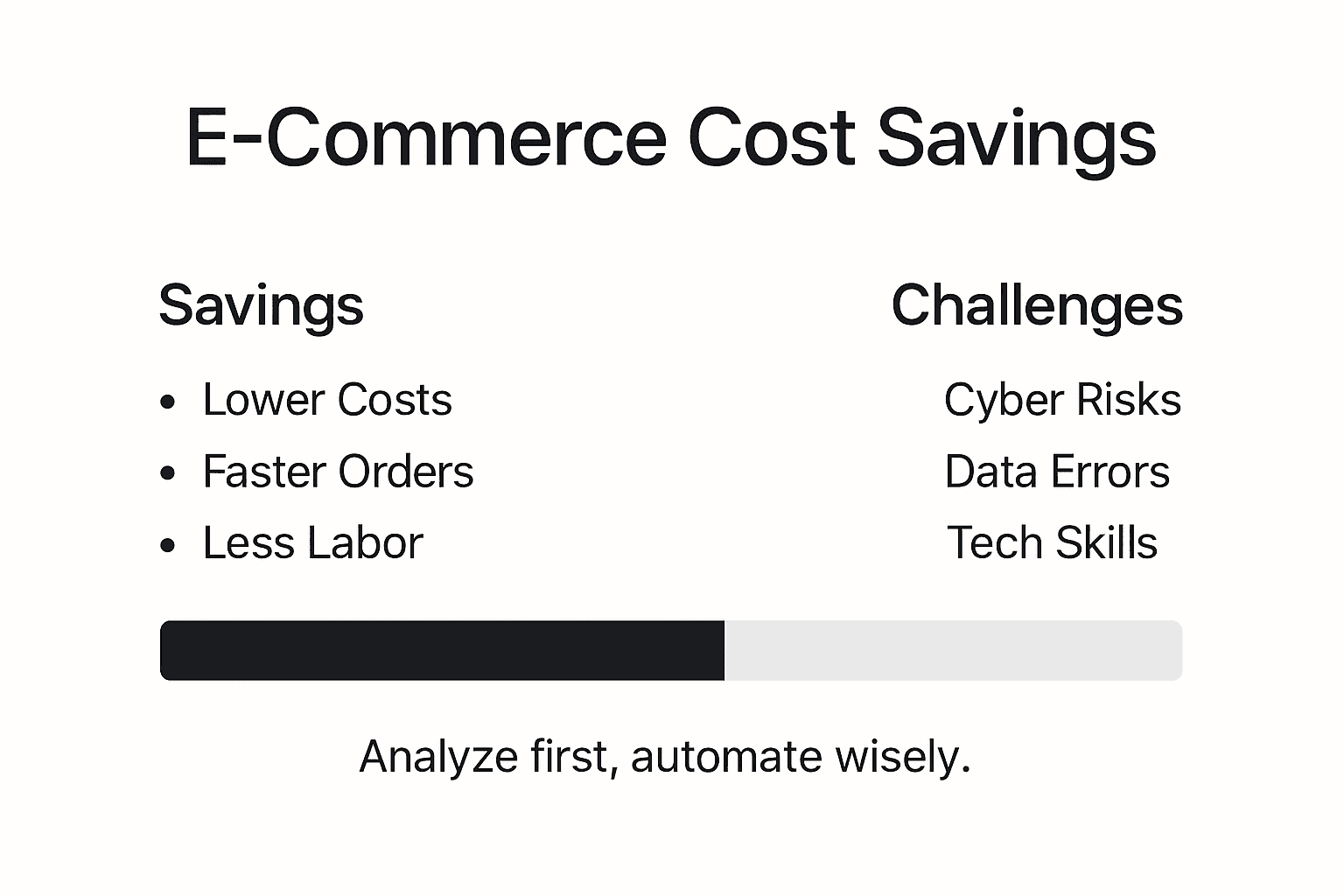
The primary challenges in machinery parts e-commerce include data quality management, technological complexity, and cybersecurity concerns. Businesses must develop robust strategies to address these potential obstacles, including implementing secure payment systems, maintaining accurate digital catalogues, and continuously updating technological infrastructure. While the potential cost savings are substantial, organizations must carefully navigate the technological and operational transitions required to fully leverage digital procurement platforms.
Pro Tip: Conduct a comprehensive cost-benefit analysis before implementing new e-commerce technologies, focusing on long-term operational efficiency rather than short-term expenses.
Streamline Your Machinery Parts Procurement and Boost Efficiency Today
E-commerce has reshaped how agricultural businesses source essential machinery parts by addressing challenges like limited inventory access and complex supply chains. If you find yourself struggling with equipment downtime or uncertain about parts compatibility, this article highlights key solutions such as digital platforms offering real-time inventory tracking, transparent pricing, and seamless ordering processes. These innovations save time and reduce costs — exactly what every farmer or equipment operator needs to maintain continuous productivity.
At Pexlivanidis, we understand these challenges deeply. Our expansive online store features over 20,000 tractor accessories and spare parts ready to ship with free delivery in Greece for orders above 100€. Whether you are managing retail purchases or looking for wholesale B2B membership benefits, our platform provides detailed product information and a robust search function to help you find the right component with confidence. Take the next step in transforming your machinery parts procurement by visiting Pexlivanidis Online Store. Get the parts you need fast and reliable — don’t wait for downtime to slow you down.
Frequently Asked Questions
What is machinery parts e-commerce?
Machinery parts e-commerce refers to the online platforms that allow agricultural businesses to purchase essential equipment components directly from suppliers. This digital strategy enhances procurement efficiency by providing access to comprehensive catalogs, real-time inventory tracking, and seamless ordering processes.
How do online transactions for machinery parts work?
Online transactions for machinery parts start with customers selecting products from online catalogs, reviewing specifications, and comparing prices. The purchase can be completed through vendor websites or marketplaces, where advanced technologies facilitate order processing, secure payment, and parts compatibility verification.
What are the key benefits of using e-commerce for machinery parts?
E-commerce for machinery parts offers several benefits, including reduced procurement costs, improved access to a wider range of parts, streamlined purchasing processes, and enhanced inventory management through real-time tracking and data-driven decision-making.
What challenges do businesses face when adopting e-commerce for machinery parts?
Businesses may encounter challenges such as data quality management, technological complexity, and cybersecurity concerns. Implementing secure payment systems and maintaining accurate digital catalogs are crucial for overcoming these obstacles and ensuring successful e-commerce operations.