

Over 70 percent of global farmers plan to invest in intelligent machinery by 2025, according to recent industry studies. As fields grow smarter, the stakes for sustainable, high-yield agriculture have never been higher. Modern machines do more than just replace manual labor. They are shaping a new era where precision, automation, and data analytics redefine how food is produced and harvested. The coming wave of innovations promises major shifts in both technology and what it means to farm successfully.
Key Takeaways
| Point | Details |
|---|---|
| Technological Innovation | Agricultural machinery by 2025 will be driven by precision agriculture, autonomous systems, and electrification, enhancing efficiency and sustainability. |
| Smart Integration | The future of farming focuses on interconnected systems that leverage data analytics and machine learning to optimize agricultural processes. |
| Economic Transformation | Investments in modern machinery are shifting towards collaborative models that enhance operational efficiency and reduce capital risks for farmers. |
| Adoption Challenges | The transition to advanced agricultural technology faces hurdles including high costs, regulatory scrutiny, and the need for significant training. |
Table of Contents
- Defining Agri-Machinery Trends For 2025
- Major Categories And Innovations Explained
- Smart Technologies And Automation Integration
- Sustainability And Energy Efficiency Advances
- Economic Impact And Cost Considerations
- Challenges, Risks, And Adoption Barriers
Defining Agri-Machinery Trends for 2025
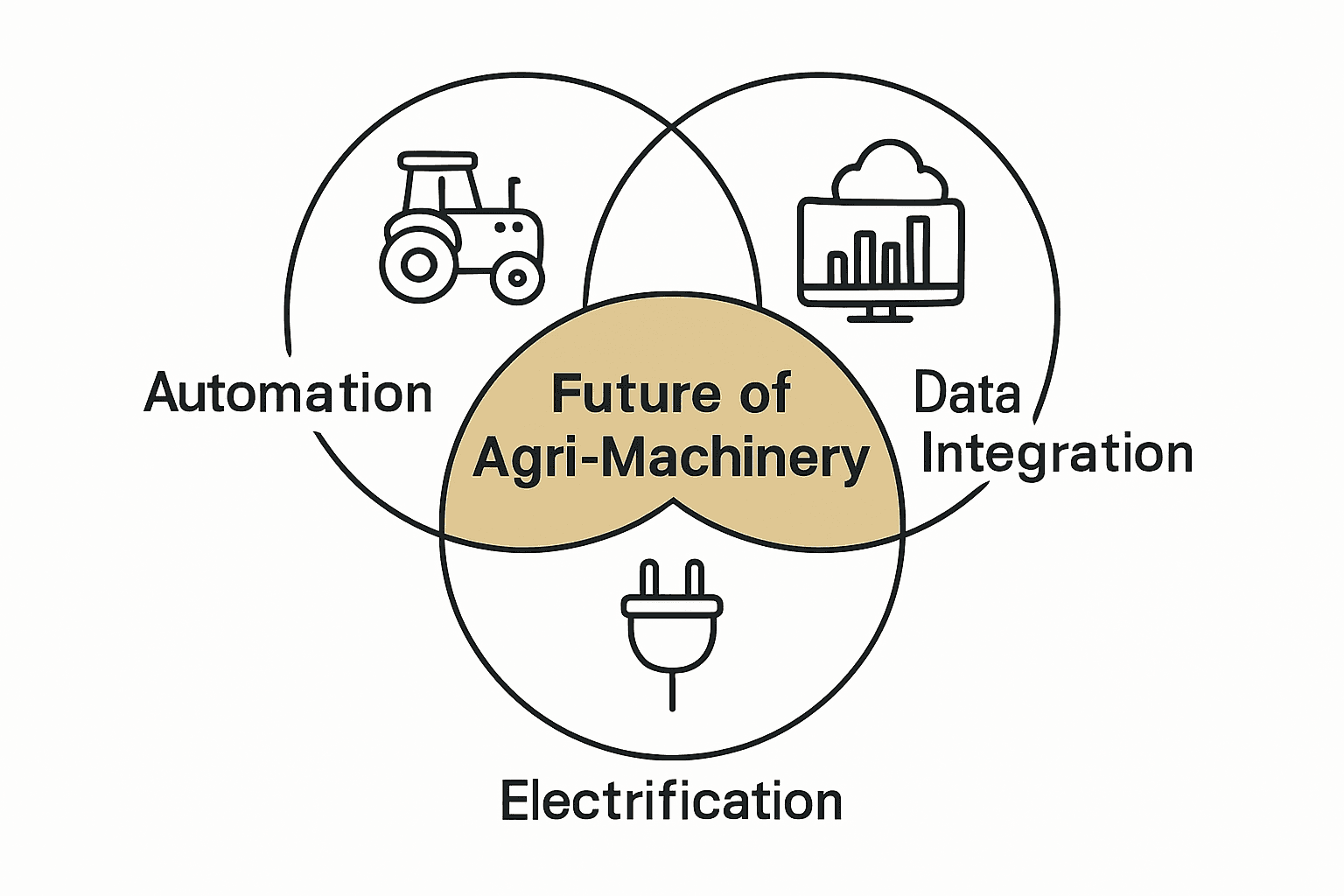
Agriculture is rapidly transforming, and machinery stands at the heart of this revolution. Agricultural machinery in 2025 will look dramatically different from what farmers have traditionally known, driven by technological innovation, sustainability demands, and efficiency requirements.
Several key trends are reshaping the agricultural equipment landscape:
- Precision Agriculture: Advanced GPS and sensor technologies enabling ultra-targeted farming approaches
- Autonomous Equipment: Self-driving tractors and robotic farming machines reducing human labor
- Electrification: Shift towards electric and hybrid agricultural machinery to reduce carbon emissions
- Smart Connectivity: Integrated digital systems allowing real-time equipment monitoring and performance tracking
The most significant shift will be toward intelligent agricultural systems that integrate data analytics, machine learning, and advanced sensor networks. These systems won’t just perform tasks – they’ll optimize entire farming processes, predicting maintenance needs, analyzing soil conditions, and recommending precise interventions.
Farmers adopting these technologies won’t just upgrade equipment – they’ll fundamentally transform how agricultural production operates. The future of farming is smart, connected, and increasingly automated, with machinery becoming less about raw power and more about intelligent, precise performance.
Major Categories and Innovations Explained
According to Farmonaut Research, agricultural machinery innovations in 2025 are categorized into seven critical domains that are revolutionizing farming practices worldwide. Precision farming technologies are transforming traditional agricultural approaches by integrating advanced digital solutions across multiple equipment categories.
Key machinery innovations include:
Here’s a summary of major agricultural machinery innovations for 2025:
| Innovation Category | Key Features | Main Benefits |
|---|---|---|
| Precision Planting/Seeding | GPS guidance Advanced sensors |
Accurate seed placement Higher yields |
| Automated Irrigation | Smart water controls IoT integration |
Water savings Optimal crop hydration |
| AI-Based Sprayers | Crop health analysis Variable-rate spraying |
Reduced chemical use Targeted protection |
| Autonomous Harvesting | Self-driving combines AI navigation |
Labor savings Efficient harvesting |
| Post-Harvest Sorting | Automated grading Fast processing |
Quality assurance Faster market readiness |
| Forestry Machinery | Enhanced safety Precision tools |
Lower risk Resource efficiency |
| Drone-Enabled Systems | Aerial imagery Automated mapping |
Farm monitoring Data-driven planning |
- Precision Planting/Seeding Machines: Advanced equipment using GPS and sensor technologies for ultra-accurate seed placement
- Automated Irrigation Systems: Smart water management technologies reducing water consumption and optimizing crop hydration
- AI-Based Sprayers: Intelligent crop protection systems that analyze plant health and apply treatments with extreme precision
- Autonomous Harvesting Machines: Self-driving combines with AI guidance for efficient crop collection
- Post-Harvest Sorting Equipment: Technological systems for rapid and accurate crop grading and processing
- Forestry Machinery: Advanced logging and forest management equipment with enhanced safety features
- Drone-Enabled Systems: Aerial monitoring and precision agriculture platforms for comprehensive farm management
As AgriTec Research highlights, these innovations are not just about technological sophistication but about creating more sustainable, efficient, and intelligent farming ecosystems. The future of agricultural machinery is deeply interconnected, with technologies working seamlessly to optimize every aspect of agricultural production from soil preparation to harvest and processing.
Smart Technologies and Automation Integration
Smart agricultural technologies are rapidly transforming farming from a traditional labor-intensive industry to a cutting-edge, data-driven ecosystem. Farmonaut Research reveals that emerging technologies are creating unprecedented levels of automation and intelligent decision-making in agricultural operations.
Key smart technology integrations include:
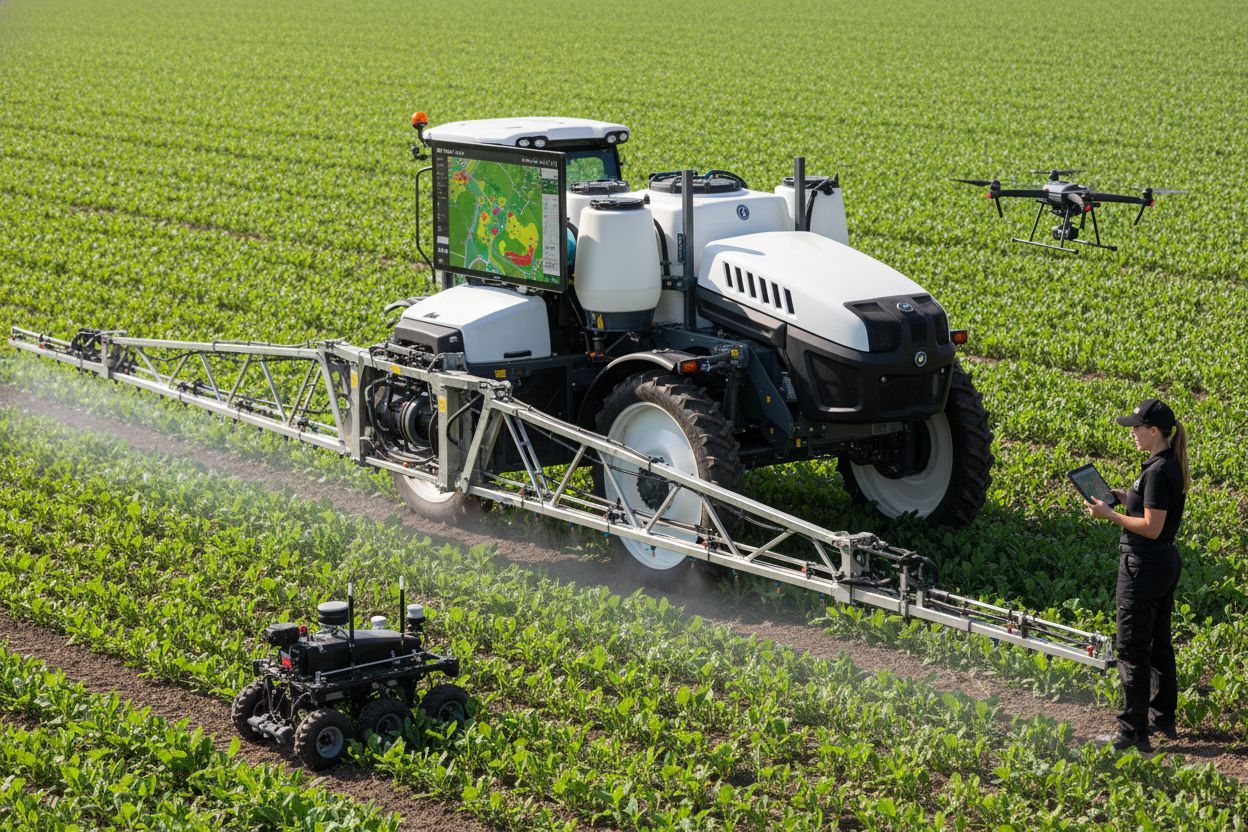
- Autonomous Systems: Robotic machinery equipped with lidar and AI technologies
- IoT Connectivity: Real-time data transmission and equipment monitoring
- Predictive Analytics: Machine learning algorithms for crop health and yield predictions
- Early Disease Detection: AI-powered imaging systems identifying potential plant health issues before visual symptoms appear
According to Autonomous Agricultural Machinery Market Research, by 2025 approximately one-third of new tractors will feature full autonomy. These intelligent machines will not just perform tasks but actively coordinate with entire farm management platforms, creating synchronized and highly efficient agricultural operations.
The true power of these smart technologies lies in their ability to transform raw data into actionable insights. Farmers can now access comprehensive advisory interfaces powered by artificial intelligence, enabling precision interventions that optimize resource usage, minimize environmental impact, and dramatically improve overall agricultural productivity.
Sustainability and Energy Efficiency Advances
Electrification is revolutionizing agricultural machinery, presenting a critical pathway toward sustainable farming practices. According to Global Agriculture Equipment Market Report, companies like Solectrac, Mahindra, and Yanmar are pioneering electric and hybrid farming equipment that dramatically reduce carbon emissions and operational costs.
Key sustainability innovations include:
- Zero-Emission Machinery: Electric tractors and tillers replacing traditional diesel equipment
- Energy-Efficient Design: Reduced power consumption and enhanced battery technologies
- Lower Operational Costs: Significantly reduced fuel and maintenance expenses
- Reduced Carbon Footprint: Direct contribution to environmental conservation
CSIR Research highlights remarkable advancements in electric agricultural technologies, particularly emphasizing user-friendly designs that make sustainable farming accessible to diverse agricultural communities, including women farmers.
The future of agricultural machinery is green. By integrating electric technologies, farmers can simultaneously reduce environmental impact, lower operational expenses, and enhance overall farming efficiency. These sustainable solutions represent more than technological upgrades—they’re a comprehensive approach to responsible, forward-thinking agricultural production.
Economic Impact and Cost Considerations
Agricultural machinery investments are rapidly evolving from pure capital expenses to strategic technology platforms that generate long-term economic value. Autonomous Agricultural Machinery Market Research reveals a transformative approach to equipment economics, emphasizing cooperative models and intelligent cost management strategies.
Key economic considerations for modern agricultural machinery include:
- Predictive Maintenance: Reducing unexpected equipment downtime and repair costs
- Shared Ownership Models: Lowering individual capital investment barriers
- Advanced Fleet Management: Optimizing equipment utilization and operational efficiency
- Advisory Interface Integration: Providing real-time economic performance insights
- Reduced Labor Costs: Autonomous systems minimizing manual workforce requirements
The economic landscape of agricultural machinery is shifting from traditional ownership toward collaborative, technology-driven approaches. Farmers can now access sophisticated equipment through flexible investment models that distribute financial risks and maximize technological benefits.
These emerging economic strategies represent more than cost-saving techniques—they’re comprehensive ecosystem transformations. By leveraging intelligent machinery platforms, agricultural businesses can dramatically improve financial performance, reduce operational complexities, and create more sustainable, adaptive farming enterprises that respond dynamically to market and environmental challenges.
Challenges, Risks, and Adoption Barriers
Technological transformation in agricultural machinery isn’t without significant hurdles. The Verge’s investigative report highlights critical challenges, particularly around John Deere’s autonomous machines, revealing complex barriers that extend beyond mere technological capabilities.
Key adoption challenges include:
- High Initial Investment Costs: Prohibitively expensive advanced machinery
- Regulatory Scrutiny: Increasing government oversight on technological implementations
- Repair Restrictions: Manufacturer limitations on equipment modifications
- Technical Complexity: Steep learning curves for traditional farmers
- Data Privacy Concerns: Risks associated with extensive agricultural data collection
Academic research from ArXiv reveals another critical dimension—the intricate energy consumption patterns in robotic agricultural platforms. The study emphasizes that automation improvements must carefully balance task efficiency, time, and energy use to prevent unintended sustainability and economic trade-offs.
Successful technological adoption requires more than just cutting-edge machinery. Farmers must navigate complex ecosystems of regulatory compliance, financial investment, technological training, and strategic implementation. The transition isn’t just about buying new equipment—it’s about fundamentally reimagining agricultural operational strategies in an increasingly digital and interconnected world.
Keep Your Farm Future-Ready With Trusted Agri-Machinery Parts
The agricultural world is moving fast toward smart, sustainable, and automated farming. As the “Agri-Machinery Trends 2025: Complete Guide” reveals, farmers like you are facing big changes. Whether it is smart sensors or autonomous systems, the need for reliable and compatible parts is now more important than ever. Downtime and delays can be costly when implementing precision technologies, and sourcing the right spare parts quickly is vital for efficiency, accuracy, and peace of mind.
Stay ahead of breakdowns and new tech challenges by partnering with a supplier that truly understands modern agriculture. Browse over 20,000 premium tractor accessories and machinery components at pexlivanidis.com and see how our extensive stock and tailored support keep your equipment performing through every season of change. Need help identifying parts for precision planting or want parts delivered fast anywhere in Greece? Use our product inquiry and availability form to connect with our team. The future of farming is arriving fast—equip your business to meet it today.
Frequently Asked Questions
What are the major trends in agricultural machinery for 2025?
Key trends include precision agriculture, autonomous equipment, electrification, and smart connectivity. These innovations aim to improve efficiency, sustainability, and data-driven decision-making in farming.
How is precision agriculture changing farming practices?
Precision agriculture utilizes advanced GPS and sensor technologies to optimize planting, irrigation, and chemical application. This results in higher yields and more sustainable resource usage by allowing farmers to apply interventions precisely where needed.
What benefits do autonomous agricultural machines provide?
Autonomous agricultural machines, like self-driving tractors, reduce the need for human labor, increase efficiency in operations, and enable continuous farming activities, thereby helping farmers manage larger areas with less workforce.
How does electrification impact agricultural machinery?
Electrification leads to the development of zero-emission machinery, such as electric tractors. This transition reduces carbon emissions, lowers operational costs, and promotes sustainable farming practices, making it easier for farmers to operate more environmentally friendly.