

More than one hundred thousand american agricultural workers face equipment-related injuries every year, making safety a concern that affects families and businesses across the country. Keeping farms running smoothly means more than just regular maintenance, it relies on clear strategies to spot hazards before disaster happens. By understanding what goes into a reliable safety checklist, farm owners and operators can protect people, safeguard investments, and set new standards for american agricultural practices.
Table of Contents
- Defining Agricultural Equipment Safety Checklists
- Essential Components Of A Safety Checklist
- Inspection Steps For Tractors And Implements
- Legal Compliance And Industry Standards
- Common Hazards And Prevention Measures
Key Takeaways
| Point | Details |
|---|---|
| Importance of Safety Checklists | Safety checklists are essential in agricultural settings for identifying hazards and preventing accidents, ensuring both equipment functionality and operator protection. |
| Critical Components | Effective safety checklists should include assessments of power sources, mechanical systems, and operational protocols to create a robust safety framework. |
| Comprehensive Inspections | Regular inspections of tractors and agricultural implements are vital for verifying safety systems and minimizing the risk of mechanical failures. |
| Legal Compliance | Adhering to industry standards and regulations not only protects workers but also promotes operational integrity and professional excellence in agricultural practices. |
Defining Agricultural Equipment Safety Checklists
A safety checklist in agricultural settings represents a systematic approach to identifying potential hazards and preventing workplace accidents before they occur. According to research from the aaem, these critical tools serve as comprehensive risk management instruments designed to ensure equipment functionality and operator protection.
At its core, an agricultural equipment safety checklist functions as a structured process that methodically evaluates machinery, environmental conditions, and operational protocols. The checklist helps farmers and agricultural workers conduct thorough pre-operation inspections, identifying potential mechanical failures, safety risks, and operational vulnerabilities. As highlighted by en, these documents are crucial for maintaining task consistency and completeness, particularly in high-risk work environments.
Effective safety checklists typically encompass multiple critical components:
- Comprehensive equipment inspection protocols
- Mechanical system functionality assessments
- Personal protective equipment (PPE) verification
- Environmental and operational risk evaluations
- Documentation and tracking of maintenance records
By implementing rigorous safety checklists, agricultural professionals can significantly reduce workplace accidents, minimize equipment downtime, and create a culture of proactive risk management. These systematic approaches transform reactive safety responses into strategic, preventative practices that protect both human workers and expensive agricultural machinery.
Essential Components of a Safety Checklist
Safety checklists for agricultural equipment represent a critical line of defense against potential workplace accidents and mechanical failures. According to research from agcentric, comprehensive safety evaluations must extend beyond simple mechanical inspections to encompass a holistic approach to risk management.
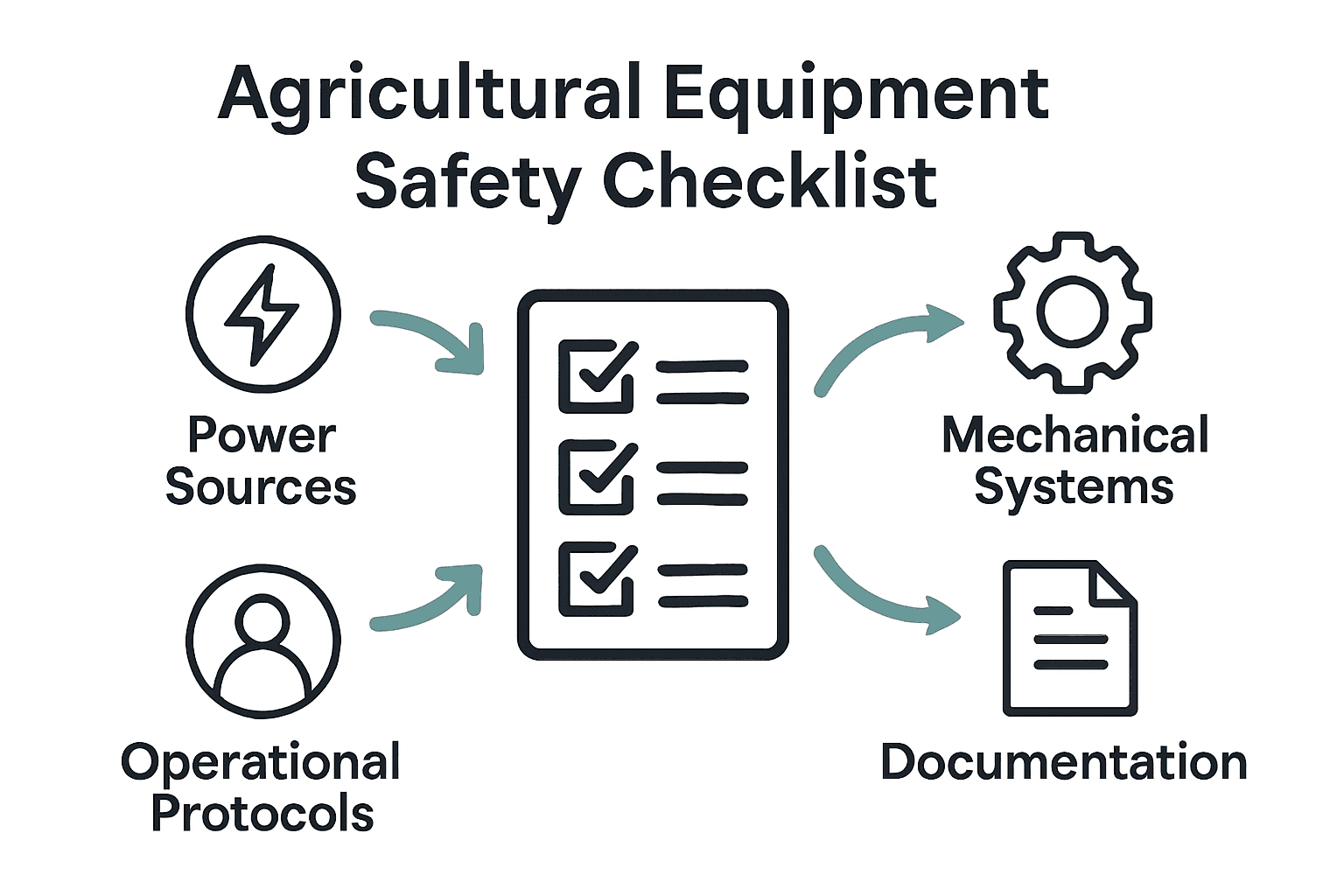
The fundamental components of an effective agricultural equipment safety checklist typically involve multiple interconnected assessment areas. case4learning highlights that these components should strategically address both mechanical and operational risks. Key elements include:
- Power Source Assessment
- Electrical system integrity
- Fuel line and connection evaluations
- Battery condition and terminal connections
- Mechanical System Inspection
- Drive train and transmission functionality
- Hydraulic system pressure and leak checks
- Bearing and lubrication point examinations
- Operational Safety Protocols
- Personal protective equipment verification
- Emergency shut-off mechanism testing
- Operational environment risk assessment
- Documentation and Maintenance Tracking
- Service history records
- Previous repair documentation
- Scheduled maintenance compliance
By meticulously addressing each of these critical domains, agricultural professionals can create a robust safety framework that minimizes potential risks and ensures optimal equipment performance.
 The goal is not merely compliance but creating a proactive safety culture that prioritizes worker protection and machinery longevity.
Inspection Steps for Tractors and Implements
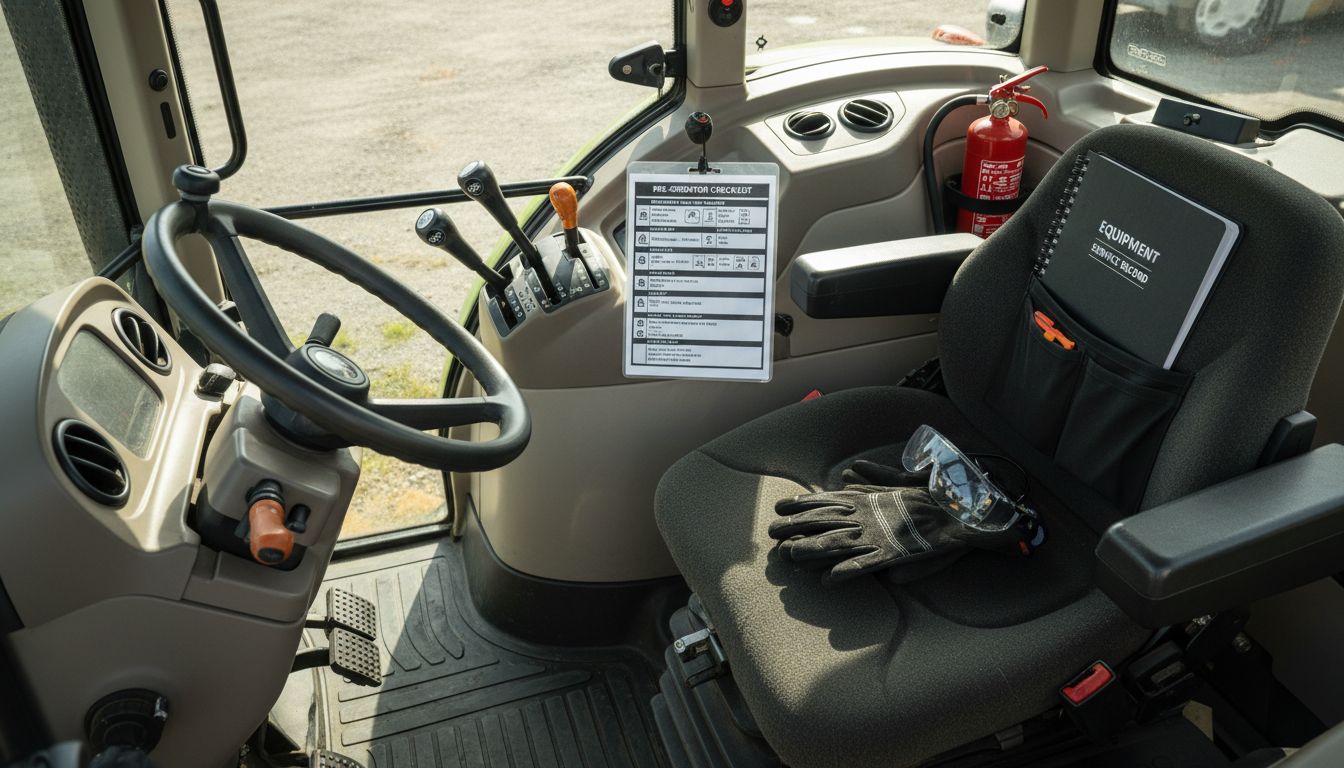
Tractor safety begins with a comprehensive and systematic inspection process that addresses both mechanical functionality and operator protection. As highlighted by en, these inspections are critical for preventing potentially catastrophic workplace accidents and ensuring the reliable performance of agricultural machinery.
The inspection process for tractors and implements requires a methodical approach that covers multiple critical systems. According to research on en, special attention must be paid to Roll-Over Protection Structures (ROPS), which are fundamental to operator safety. A thorough inspection typically involves several key assessment areas:
Pre-Operation Mechanical Inspection:
- Structural Integrity Checks
- Frame and chassis examination for cracks or deformation
- Welding points and structural connection assessments
- Mounting points for implements and attachments
- Safety System Verification
- Roll-Over Protection Structure (ROPS) comprehensive evaluation
- Seat belt condition and attachment mechanism
- Emergency stop and kill switch functionality
- Critical Mechanical Systems
- Brake system pressure and responsiveness
- Tire condition, inflation, and tread integrity
- Steering mechanism alignment and fluid levels
- Implement Connection Points
- Hydraulic coupling integrity
- Three-point hitch alignment and lock mechanisms
- Power take-off (PTO) shaft condition and guards
By executing a rigorous, multifaceted inspection process, agricultural professionals can significantly reduce the risk of equipment failure and operator injury. These systematic checks transform routine maintenance into a proactive safety strategy that protects both valuable machinery and human operators.
Legal Compliance and Industry Standards
Agricultural equipment safety extends far beyond routine maintenance, encompassing a complex landscape of legal requirements and industry-mandated standards. According to en, international regulations have established comprehensive frameworks to ensure the consistent safety of agricultural machinery control systems across global markets.
The International Organization for Standardization (ISO) has developed critical standards that serve as benchmarks for equipment design, operation, and safety protocols. en highlights the importance of ISO 13849, which provides detailed specifications for machinery control systems, focusing on achieving functional safety through rigorous design and validation processes. These standards address multiple critical dimensions of equipment safety:
Key Compliance Requirements:
- Design and Engineering Standards
- Control system safety validation
- Risk assessment and mitigation protocols
- Comprehensive system failure mode evaluations
- Operational Safety Regulations
- Mandatory safety feature implementations
- Operator protection mechanism requirements
- Emergency shutdown system specifications
- Documentation and Reporting
- Detailed equipment safety records
- Incident reporting and tracking protocols
- Maintenance and inspection documentation
- Training and Certification
- Operator safety training requirements
- Equipment-specific operational certification
- Periodic skills and knowledge reassessment
By adhering to these comprehensive standards, agricultural businesses not only protect their workers and equipment but also demonstrate a commitment to professional excellence and risk management. Compliance becomes more than a legal obligation it transforms into a strategic approach to workplace safety and operational integrity.
Common Hazards and Prevention Measures
Agricultural machinery operations involve numerous inherent risks that demand proactive and comprehensive safety strategies. Research from mdpi emphasizes the critical need for systematic hazard identification and targeted prevention measures to protect workers in high-risk agricultural environments.
The landscape of potential hazards is complex and multifaceted. According to wtconsultancy, certain machinery components present particularly elevated risks, with Power Take-Off (PTO) systems standing out as especially dangerous without proper safety protocols. Understanding these risks requires a nuanced approach to prevention:
Critical Hazard Categories:
- Mechanical Entanglement Risks
- Rotating shaft and PTO system dangers
- Unguarded moving component exposure
- Clothing and limb entrapment potential
- Operational Environment Threats
- Uneven terrain navigation challenges
- Visibility and spatial awareness limitations
- Unexpected terrain-related equipment instability
- Ergonomic and Physical Strain Hazards
- Repetitive motion injuries
- Prolonged vibration exposure
- Improper lifting and equipment handling techniques
- Equipment Interaction Dangers
- Unexpected machinery start-up scenarios
- Implement connection point failures
- Hydraulic system pressure risks
By systematically addressing these potential hazards through comprehensive training, rigorous equipment maintenance, and continuous risk assessment, agricultural professionals can create safer working environments that minimize the potential for catastrophic accidents and protect both human operators and valuable machinery.
Ensure Safety and Reliability with Quality Agricultural Equipment Parts
The Complete Guide to Agricultural Equipment Safety Checklist highlights the critical need for proactive risk management and thorough inspections to prevent accidents and equipment failures. If you want to protect your machinery and your team by following the best safety protocols, having dependable tractor accessories and spare parts is essential. Missing or worn components can turn a simple maintenance check into a dangerous situation.
At pexlivanidis.com, we understand these challenges and offer over 20,000 high-quality parts designed to keep your agricultural equipment operating safely and efficiently. From essential tractor accessories to critical mechanical system components, we provide reliable solutions that help you meet safety standards and maintain your machinery’s longevity. Don’t compromise on safety or performance. Visit our main site now to browse our extensive inventory and take advantage of free shipping on orders over 100€.
Secure your farm operations today by investing in trustworthy parts that support your safety checklist goals. Explore pexlivanidis.com and partner with a supplier that understands the importance of agricultural equipment safety and compliance.
Frequently Asked Questions
What is an agricultural equipment safety checklist?
An agricultural equipment safety checklist is a systematic tool used to identify potential hazards, conduct pre-operation inspections, and ensure proper equipment functionality and operator safety in agricultural settings.
What are the essential components of an effective safety checklist for agricultural equipment?
Key components include power source assessments, mechanical system inspections, operational safety protocols, and documentation and maintenance tracking to ensure comprehensive evaluations and risk management.
How can a safety checklist help reduce workplace accidents in agriculture?
By implementing a rigorous safety checklist, agricultural professionals can proactively identify and mitigate risks, thereby minimizing the chances of accidents, reducing equipment downtime, and fostering a culture of safety and responsibility.
What are common hazards associated with agricultural machinery, and how can they be prevented?
Common hazards include mechanical entanglement risks, operational environment threats, ergonomic hazards, and equipment interaction dangers. Prevention measures include regular training, stringent maintenance, and continuous risk assessments to create a safer working environment.