

Did you know that farm equipment makes up nearly 15 percent of operational costs on an average farm each year? Choosing the right agricultural machinery can shape your productivity and profitability for seasons to come. With careful planning, you can match equipment to your farm’s unique needs while maintaining financial balance and peace of mind as your business grows.
Quick Summary
| Key Point | Explanation |
|---|---|
| 1. Assess agricultural needs and budget | Understand current equipment and farm size before making purchases. This includes analyzing operational requirements and financial limits to guide decisions. |
| 2. Research machinery options thoroughly | Evaluate both new and used equipment, focusing on reliability, technology, and total ownership costs, which include maintenance and fuel efficiency. |
| 3. Evaluate supplier reputation and support | Prioritize reputable brands with strong customer service and warranty. Investigate reliability through reviews and seek local recommendations. |
| 4. Conduct detailed inspections of equipment | Examine crucial components and request maintenance logs to ensure machinery condition before purchase. Consider hiring an expert for an unbiased evaluation. |
| 5. Verify after-sales service and warranty terms | Review warranty details and after-sales support offerings to ensure effective long-term maintenance and potential repair needs are covered. |
Table of Contents
- Step 1: Assess Your Agricultural Needs And Budget
- Step 2: Research And Compare Machinery Options
- Step 3: Evaluate Supplier Reputation And Support
- Step 4: Inspect Equipment Quality And Compatibility
- Step 5: Verify After-Sales Service And Warranty
Step 1: Assess Your Agricultural Needs and Budget
Successfully choosing the right agricultural machinery starts with understanding your specific farm requirements and financial landscape. In this step, you will map out your operational needs and create a realistic budget that aligns with your farm’s strategic goals.
Begin by conducting a comprehensive inventory of your current equipment. Walk through your farm and document every piece of machinery you own and its current condition. According to research from Farmstand App, creating an inventory helps you pinpoint labor bottlenecks and identify precisely where new machinery could deliver maximum impact.
Next, analyze your farm’s size and type to determine machinery requirements. Are you managing a small vegetable plot or a sprawling grain operation? Different farm scales demand different equipment strategies. Pay special attention to seasonal versus year-round machinery needs. As insights from Agrimag suggest, understanding whether you need equipment seasonally or continuously will significantly influence your purchasing decisions.
Pro Tip: Don’t just think about today’s needs. Consider your farm’s potential growth and how equipment might support future expansion.
Budget development requires careful consideration. Explore multiple financing options including bank loans, hire purchase agreements, and available agricultural grants. Compare new versus used equipment prices and factor in long-term maintenance costs. Your goal is finding machinery that delivers value without straining your financial resources.
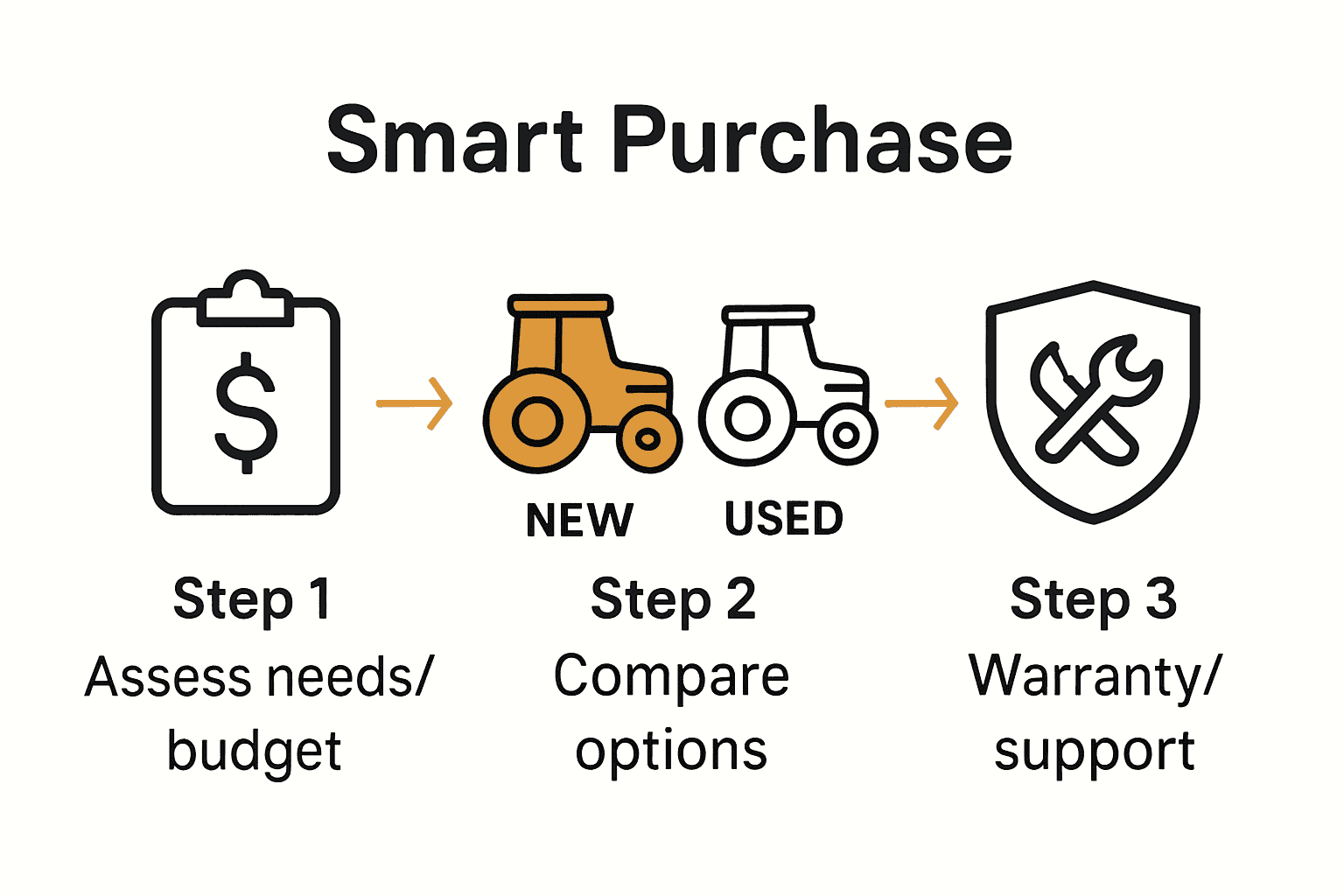
Here’s a summary of key considerations for assessing your agricultural needs and budget:
| Category | Details to Evaluate | Example Factors |
|---|---|---|
| Current Equipment | Inventory and condition | Age of machines Repair needs Ongoing costs |
| Farm Size & Type | Scale and operation style | Acreage Crops/livestock Labor needs |
| Usage Needs | Seasonal vs. year-round | Harvest equipment Planting tools |
| Financing Options | Ways to fund purchase | Bank loans Grants Hire purchase |
| Cost Factors | Price & long-term value | New vs. used Maintenance costs |
By completing this assessment, you are setting a strong foundation for smart agricultural machinery investment. In the next step, you will research specific equipment models that match your identified needs and budget parameters.
Step 2: Research and Compare Machinery Options
After assessing your agricultural needs and budget, the next critical phase is exploring and comparing machinery options that align with your farm’s requirements. This step will help you navigate the complex landscape of equipment selection with confidence and strategic insight.
Start by understanding the spectrum of purchasing possibilities. According to GC Magazine, farmers have multiple avenues for acquiring equipment including auctions, trade-ins, subsidies, leasing, and cooperative purchasing programs. Each option presents unique advantages and potential cost savings.
Carefully evaluate both new and used machinery options. Research from Farmstand App suggests focusing on late-model used machinery that offers modern features at a significantly reduced cost. When examining second-hand equipment, conduct thorough inspections and request comprehensive service histories.
Pro Tip: Always request maintenance records and have a professional mechanic inspect used machinery before purchasing.
Prioritize equipment with proven reliability and compatibility with your existing farm infrastructure.
Look into certified pre-owned programs that offer additional warranties and quality assurances. Compare total ownership costs including purchase price, maintenance expenses, fuel efficiency, and potential technology upgrades.
Consider technological capabilities alongside pricing. While a premium might seem steep, advanced features can dramatically improve productivity and long-term operational efficiency. Compare specifications across different models and manufacturers to ensure you are making an informed decision.
In the next step, you will learn how to verify equipment specifications and negotiate the best possible terms for your agricultural machinery investment.
Step 3: Evaluate Supplier Reputation and Support
After researching machinery options, the next crucial step is thoroughly evaluating supplier reputation and support systems. This assessment will protect your investment and ensure you have reliable backup for your agricultural equipment.
According to insights from Jensen Tractor Ranch, investing in reputable brands with strong service networks is fundamental to long-term machinery success. Focus on manufacturers known for durability and comprehensive customer support.
Begin by investigating the supplier’s market reputation. Read customer reviews, seek recommendations from other farmers in your region, and examine the manufacturer’s track record for reliability. Look beyond marketing materials and dig into genuine user experiences. Pay attention to details like parts availability, service response times, and warranty coverage.
Pro Tip: Local agricultural equipment dealer networks can provide invaluable insights about different brand performance and support quality.
Examine the supplier’s technical support infrastructure. Do they offer comprehensive training programs? Can they provide rapid maintenance services? Understand their repair turnaround times and availability of replacement parts. A supplier with robust local support can make a significant difference in minimizing equipment downtime.
Consider the manufacturer’s innovation history and commitment to technological advancement. Brands that consistently invest in research and development are more likely to provide cutting edge solutions and responsive customer service.
In the next step, you will learn how to negotiate final purchase terms and secure the best possible deal for your agricultural machinery investment.
Step 4: Inspect Equipment Quality and Compatibility
Once you have researched potential machinery options, a meticulous inspection becomes critical to ensuring your investment meets operational requirements. This step will guide you through a comprehensive evaluation process that protects your agricultural equipment investment.
According to Farmonaut, a thorough inspection requires examining multiple critical components. Start with the engine and transmission performance. Listen for unusual sounds, check for smooth operation, and look for signs of excessive wear or potential future maintenance challenges.
Research from Farmstand App recommends carefully evaluating hydraulic systems, structural integrity, and complete maintenance history. Pay special attention to the machine’s technological compatibility with your existing farm equipment and operational requirements.
Pro Tip: Always request and review comprehensive maintenance logs before finalizing any equipment purchase.
Inspect physical components systematically. Examine the chassis for structural damage, check tire conditions, test electronic systems, and verify the cabin and control interfaces are in good working order. For used machinery, minor wear is acceptable but significant damage could indicate deeper mechanical issues.
Consider hiring a professional agricultural equipment mechanic to conduct an independent assessment.
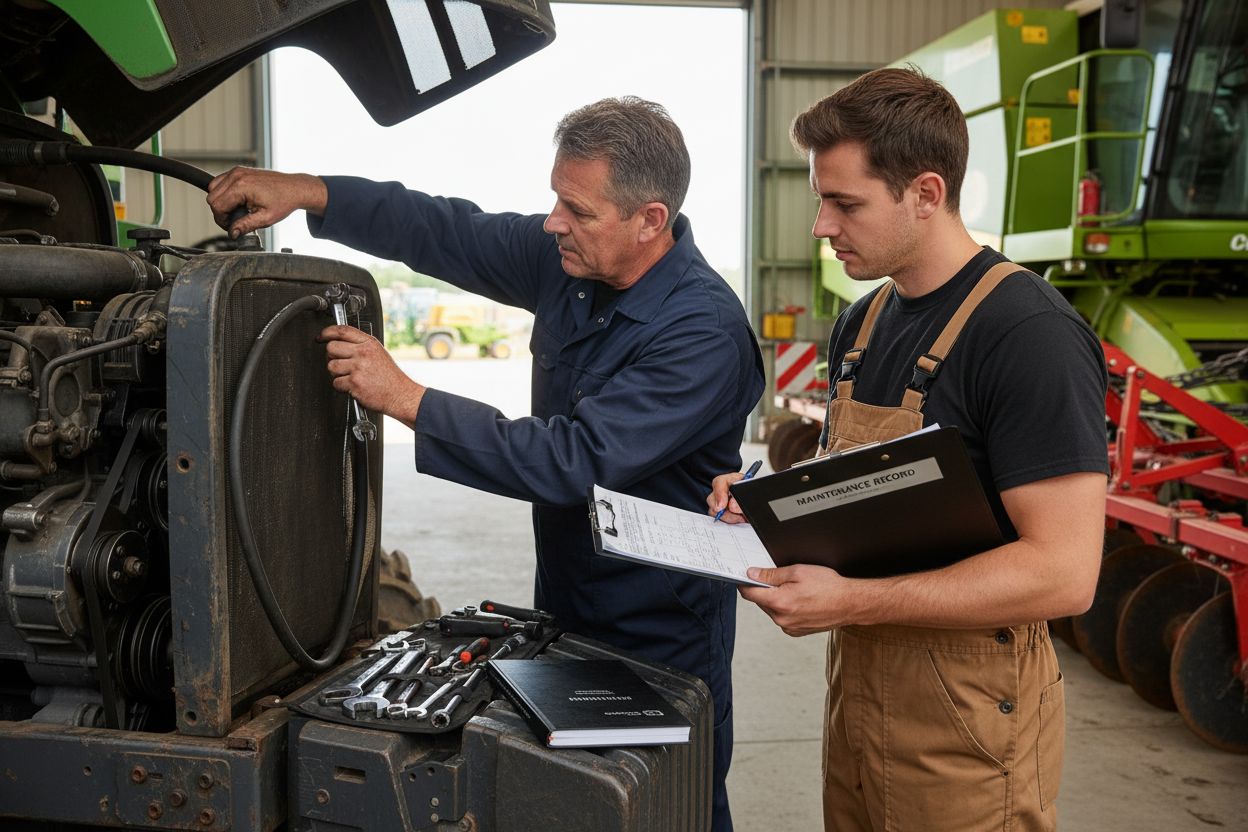 Their expertise can uncover potential problems that might not be immediately apparent to an untrained eye. They can provide an objective evaluation of the machinery’s true condition and potential longevity.
In the next step, you will learn how to negotiate final purchase terms and secure the most advantageous deal for your specific agricultural machinery needs.
Step 5: Verify After-Sales Service and Warranty
After carefully inspecting your potential agricultural machinery, understanding and verifying the after-sales service and warranty becomes a critical final checkpoint in your purchasing journey. This step ensures you have comprehensive protection and support for your significant investment.
Start by requesting a detailed written warranty documentation from the supplier. Review the terms meticulously to understand exactly what components are covered and for how long. Pay close attention to exclusions and conditions that might void your warranty protection.
Examine the depth of the supplier’s after-sales support infrastructure. Does the company offer onsite repairs? What is their typical response time for service calls? Understand the geographical coverage of their maintenance network and how quickly they can provide replacement parts or technical assistance.
Pro Tip: Request references from other farmers who have worked with this supplier to verify the real-world reliability of their warranty and service commitments.
Dig into the specifics of warranty coverage. Some warranties might cover parts but not labor. Others might have prorated coverage that decreases over time. Understand the difference between manufacturer warranties and dealer warranties, and confirm which specific protections apply to your purchase.
Consider additional service plans or extended warranty options. While these might come with extra costs, they can provide peace of mind and potentially save significant expenses in future equipment repairs. Evaluate the cost benefit ratio of these extended protection plans carefully.
In the final step, you will learn how to complete your purchase and ensure a smooth transition of your new agricultural machinery into your farming operations.
Unlock Success With the Right Agricultural Machinery Support
Getting the most out of your machinery investment means more than just picking the best model. As you saw in the article, assessing your needs, verifying equipment quality, and ensuring ongoing support are all critical for long-term success. Many farmers face frustration when they purchase expensive equipment only to discover parts are hard to find, repairs take too long, or technical support is lacking. Without easy access to replacement tractor accessories and spare parts, even the most reliable machines can fall short during busy seasons.
Why risk costly downtime or disappointment with limited part availability? At pexlivanidis.com, you get direct access to over 20,000 agricultural machinery parts, fast shipping, and expert assistance tailored to your farm’s unique needs. Whether you need compatible components, urgent replacements, or B2B solutions, our platform makes it easy to keep your equipment in top shape. Visit our main site today to discover our expansive inventory and experience how seamless machinery support can transform your farming results. Take control of your agricultural future now while premium parts and exclusive service offers are available.
Frequently Asked Questions
How do I assess my agricultural machinery needs before purchasing?
To assess your agricultural machinery needs, conduct a comprehensive inventory of your current equipment and evaluate its condition. Then, analyze your farm’s size and type to identify necessary equipment and create a budget that aligns with your operational goals.
What should I consider when creating a budget for agricultural machinery?
When creating a budget for agricultural machinery, factor in the purchase price, maintenance costs, and financing options. Explore different funding avenues, including loans and grants, to ensure you secure machinery that provides value without straining your finances.
How can I effectively compare new and used agricultural machinery options?
To effectively compare new and used agricultural machinery options, focus on late-model used machines that offer modern features at a lower cost. Inspect these options thoroughly and consider total ownership costs, including maintenance and fuel efficiency, to make a well-informed decision.
What key factors should I evaluate regarding supplier support when buying machinery?
Evaluate the supplier’s market reputation, technical support infrastructure, and warranty coverage before making a purchase. Look for suppliers that offer prompt service and have a strong track record in customer support to minimize equipment downtime.
How can I ensure a thorough inspection of used agricultural machinery?
To ensure a thorough inspection of used agricultural machinery, physically check critical components like the engine, hydraulic systems, and structural integrity. Consider hiring a qualified mechanic for an independent evaluation to detect any potential issues or future maintenance needs.
What details should I review regarding warranties and after-sales service?
When reviewing warranties and after-sales service, scrutinize the specifics of what is covered, the duration, and any conditions that may void the warranty. Ensure that the supplier has reliable after-sales support, including fast response times and access to replacement parts, to protect your investment.