

Did you know that over 60 percent of machinery breakdowns on farms are caused by preventable maintenance issues? Keeping agricultural equipment in top condition can prevent costly repairs and dangerous accidents. With careful attention to preparation, inspection, replacement, lubrication, and testing, you can protect your investment while keeping farm operations running smoothly and safely.
Table of Contents
- Step 1: Prepare Tools And Safety Equipment
- Step 2: Inspect Machinery For Wear And Damage
- Step 3: Replace Worn Or Faulty Parts
- Step 4: Lubricate And Clean All Moving Components
- Step 5: Test Machinery For Proper Function
Quick Summary
| Key Point | Explanation |
|---|---|
| 1. Wear appropriate safety gear | Use helmets, goggles, gloves, and ear protection to minimize injury risks when maintaining machinery. |
| 2. Inspect machinery thoroughly | Regularly check for wear and potential damage in key components to prevent costly breakdowns later. |
| 3. Replace worn parts promptly | Address significant wear with genuine replacement parts to maintain equipment reliability and safety. |
| 4. Clean and lubricate components | Ensure all moving parts are clean and properly lubricated to reduce friction and prevent premature wear. |
| 5. Conduct functional testing | Test machinery post-maintenance to verify proper operation and ensure safety during use. |
Step 1: Prepare Tools and Safety Equipment
Preparing your workspace and protecting yourself are the first critical steps before performing any agricultural machinery maintenance. Your goal is to create a safe environment that minimizes potential risks and ensures you can work efficiently.
According to umass.edu, proper safety preparation involves selecting and wearing appropriate protective gear. This means outfitting yourself with safety essentials such as:
- Sturdy helmets that protect against overhead impacts
- Impact resistant goggles to shield your eyes
- Durable work gloves that provide hand protection
- Hearing protection like earmuffs or earplugs
- Steel toed safety shoes with good traction
Beyond personal protective equipment, gather all necessary maintenance tools before starting work. This includes your standard mechanic toolset wrenches, socket sets, torque wrenches, jack stands, and any specialized tools specific to your agricultural machinery. Organize your tools within easy reach and ensure they are clean and in good working condition.
Warning: Always avoid wearing loose clothing or dangling jewelry that could get caught in moving machinery parts. Tie back long hair and remove any accessories that might pose an entanglement risk. Your personal safety is paramount when working with complex agricultural equipment.
With your safety gear on and tools prepared, you are now ready to begin the detailed inspection and maintenance process. Stay alert, work methodically, and prioritize safety at every step.
Step 2: Inspect Machinery for Wear and Damage
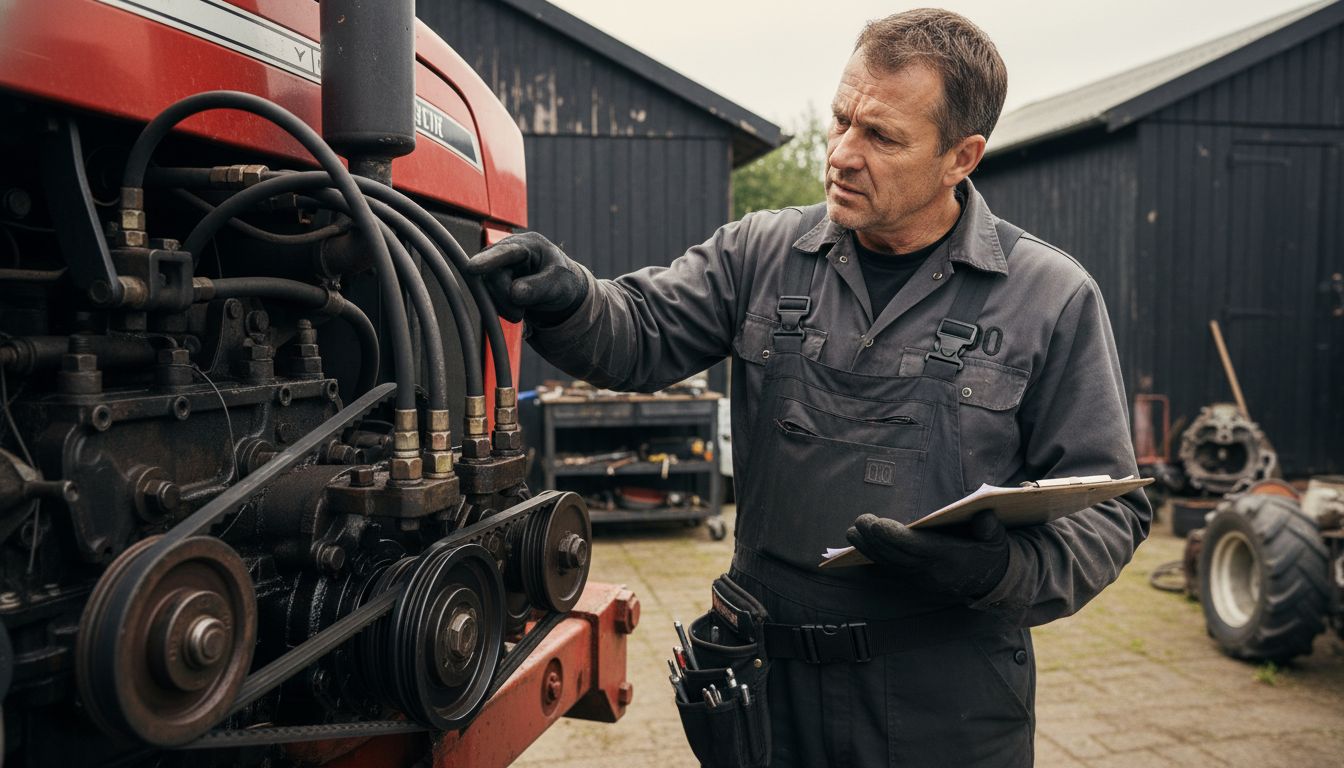
Now that you are properly equipped and prepared, the next crucial step is conducting a thorough inspection of your agricultural machinery to identify potential wear or damage before it becomes a serious problem. Your goal is to catch small issues early and prevent costly breakdowns during critical farming operations.
According to umass.edu, regular inspections are essential for maintaining machinery performance. Start by systematically checking key components such as hydraulic lines for any signs of leakage, examining belts for developing cracks, and ensuring all bolts and pins remain securely fastened. Research from njaes.rutgers.edu emphasizes the importance of scrutinizing critical mechanical elements like brakes, hitches, safety chains, springs, and shackles for potential wear or structural damage.
During your inspection, pay special attention to areas that experience high stress or frequent movement. Look for subtle indicators of potential problems such as unusual rust patterns, slight misalignments, or microscopic cracks that could signal impending failure. Run your hands carefully along metal surfaces feeling for irregularities metal burrs or unexpected rough spots that might indicate structural compromise.
Warning: Never rush through an inspection. Take your time and document any concerns you discover. A few extra minutes spent carefully examining your equipment can save hours of potential downtime and prevent expensive repairs or dangerous equipment failures.
With your thorough inspection complete, you are now ready to move on to the next maintenance stage preparing to address any issues you have identified. Stay methodical and patient your machinery will thank you for the careful attention.
Step 3: Replace Worn or Faulty Parts
After carefully inspecting your agricultural machinery, the next critical step is addressing any worn or damaged components to ensure optimal performance and prevent potential equipment failure. Your goal is to systematically replace parts that show signs of significant wear or compromise.
According to njaes.rutgers.edu, it is crucial to replace worn or broken parts immediately rather than attempting temporary fixes. Never compromise equipment integrity with makeshift repairs. Follow the manufacturers specifications precisely when selecting replacement components to maintain your machinery’s reliability.
Pay special attention to high stress areas and components that directly impact operational safety. umass.edu recommends changing oil and oil filters regularly and replacing hydraulic oil every couple of years or more frequently with heavy equipment use. This practice helps maintain optimal machinery performance and prevents long term mechanical degradation.
Warning: Always use genuine replacement parts from authorized manufacturers or suppliers. Generic or counterfeit parts might seem cheaper but can compromise equipment safety and potentially void your machinery warranty.
With your worn parts replaced and systems checked, you are now ready to move forward with the next stages of your maintenance routine.
Remember that consistent and thorough maintenance is the key to extending your agricultural machinery’s operational life and reliability.
Step 4: Lubricate and Clean All Moving Components
With your machinery inspected and faulty parts replaced, the next crucial maintenance step is thoroughly lubricating and cleaning all moving components. This process helps reduce friction, prevent premature wear, and ensure smooth operational performance of your agricultural equipment.
According to umass.edu, frequent greasing of equipment and careful lubrication of cables and chains is essential to reduce friction and extend the service life of your machinery. Research from files.eric.ed.gov reinforces this point emphasizing that proper lubrication should follow a consistent schedule using manufacturer recommended lubricants and procedures.
Begin by thoroughly cleaning all components to remove dirt, dust, and accumulated grime before applying lubricant. Use appropriate cleaning solvents that will not damage metal surfaces, and ensure all moving parts are completely dry before applying grease or oil. Pay special attention to pivot points, bearings, chains, and other high friction areas that experience significant mechanical stress during operation.
Warning: Always use the specific type and grade of lubricant recommended by your equipment manufacturer. Using incorrect or low quality lubricants can cause more harm than good, potentially leading to increased wear or mechanical failure.
With your machinery now properly cleaned and lubricated, you have completed a critical step in maintaining its long term performance and reliability.
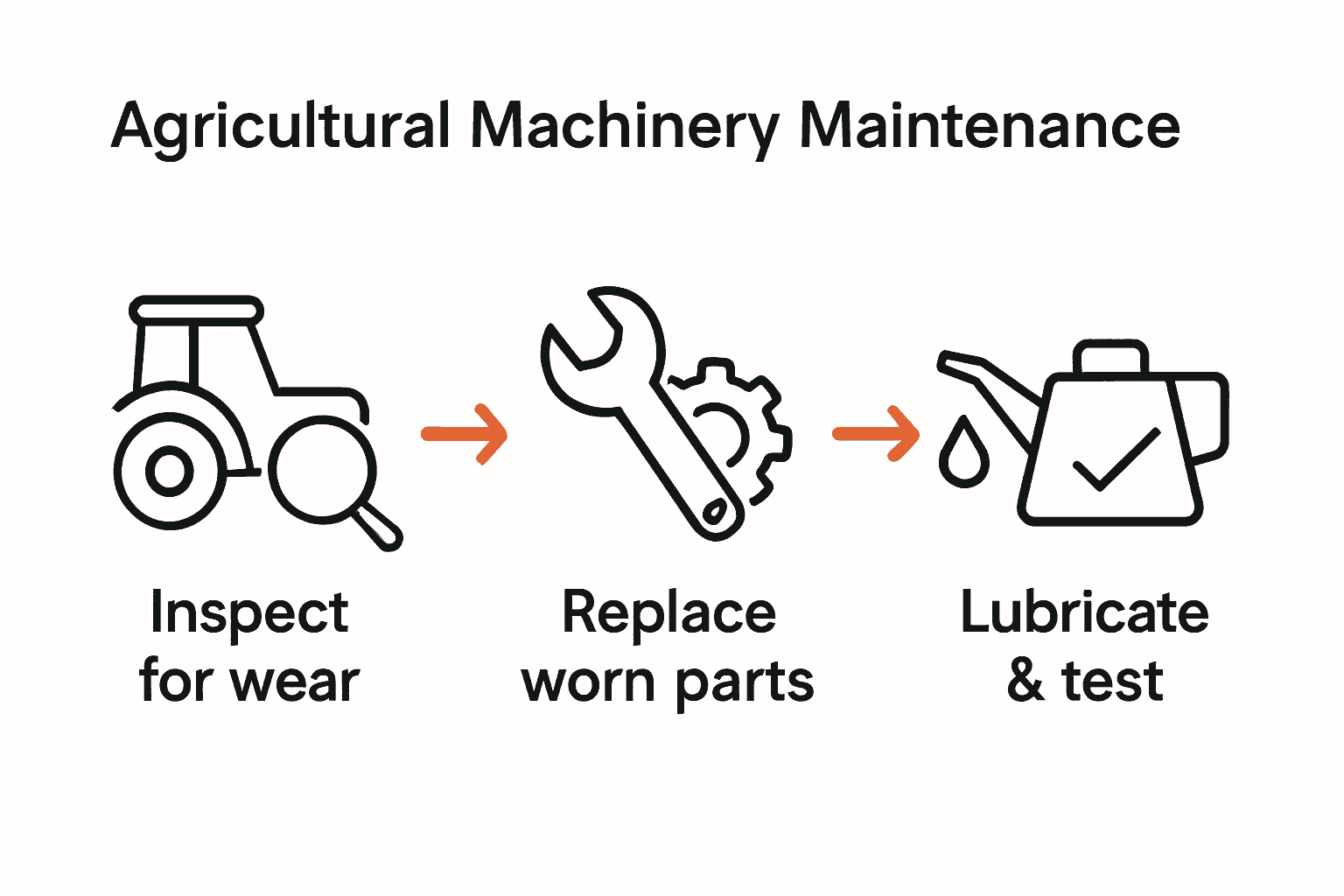 The next phase of your maintenance routine will build upon this careful preparation.
Step 5: Test Machinery for Proper Function
After meticulously maintaining your agricultural machinery, the final and most critical step is conducting a comprehensive functional test to verify that all systems are operating correctly and safely. Your objective is to confirm that the maintenance work has restored your equipment to peak performance.
Research from files.eric.ed.gov emphasizes the importance of testing machinery after maintenance tasks such as inspection, repair, and lubrication. According to umass.edu, you should carefully listen for any unusual sounds, detect any strange odors, and closely monitor the equipment’s responses during the testing phase.
Start by running the machinery through a complete operational cycle at various speeds and load conditions. Pay close attention to how smoothly components interact, checking for any vibrations, unexpected noises, or performance inconsistencies. Observe hydraulic systems for proper pressure, check electrical connections for stable performance, and ensure all mechanical movements are fluid and precise.
Warning: During testing, maintain a safe distance and use proper safety equipment. Never attempt to adjust or touch moving parts while the machinery is running. If you notice any abnormal behavior, immediately shut down the equipment and reassess your maintenance work.
With your machinery successfully tested and confirmed to be functioning correctly, you have completed a thorough maintenance process that will help ensure reliable performance and extend the operational life of your agricultural equipment.
Keep Your Agricultural Machinery Running Smoothly With Trusted Parts and Support
Maintaining your agricultural machinery involves careful inspection, timely replacement of worn parts, and proper lubrication to avoid costly breakdowns and dangerous failures. When you face challenges like identifying worn hydraulic lines or needing genuine replacement components, having a reliable source for quality tractor accessories and spare parts becomes essential. Avoid the frustration and safety risks caused by substandard materials or delayed repairs by securing your equipment with trusted products designed to fit and perform.
Get proactive with your machinery care today by exploring the extensive inventory of over 20,000 agricultural machinery parts at pexlivanidis.com. Benefit from free shipping within Greece on orders over 100€ and access wholesale options tailored for your business needs. Don’t wait for a breakdown to disrupt your operations. Visit our product listings to find the exact parts recommended in professional maintenance guides that will keep your equipment reliable and safe through every use.
Frequently Asked Questions
How often should I inspect my agricultural machinery for maintenance?
Regular inspections are essential and should be conducted at least every season or after significant usage. Systematically check for wear and damage to catch potential issues early and prevent costly breakdowns.
What protective gear do I need for agricultural machinery maintenance?
You should wear sturdy helmets, impact-resistant goggles, durable gloves, and steel-toed safety shoes. Ensure you have all safety essentials on before starting any maintenance work to minimize risks.
What should I focus on during the machinery inspection process?
Pay special attention to hydraulic lines, belts, bolts, brakes, and other high-stress components for signs of wear or damage. Conduct a thorough check to identify irregularities or weaknesses that could lead to equipment failure.
Why is it important to replace worn or faulty parts immediately?
Replacing worn or damaged parts helps maintain the machinery’s integrity and prevents temporary fixes that could lead to further problems. Always replace compromised components as soon as they are identified to ensure optimal performance.
How do I properly lubricate moving components in my machinery?
Start by cleaning all moving parts to remove dirt, then apply the manufacturer-recommended lubricants to pivot points, chains, and bearings. Frequent lubrication reduces friction and can extend your machinery’s service life by approximately 20%.
What steps should I follow to test machinery after maintenance?
Run the machinery through a complete operational cycle at various speeds to check for unusual sounds, vibrations, or performance issues. Monitor hydraulic systems and electrical connections to ensure stable performance and safe operation.