

Every season brings new challenges for farmers in Thessaloniki and Kavala, especially when machinery downtime threatens their harvest. The choice of genuine parts plays a key role in keeping tractors and equipment running smoothly, helping avoid costly breakdowns when it matters most. By relying on authentic components engineered specifically for your machinery, you benefit from superior durability, perfect compatibility, and dependable performance that protects both productivity and your investment well into the future.
Table of Contents
- Genuine Parts Explained For Machinery Owners
- Types Of Genuine Versus Aftermarket Components
- Performance And Reliability Benefits For Tractors
- Warranty, Safety, And Legal Implications
- Cost Comparison And Long-Term Savings
- Risks Of Counterfeit And Non-Original Parts
Key Takeaways
| Point | Details |
|---|---|
| Genuine Parts Ensure Reliability | Genuine parts are precision-engineered by original manufacturers, offering superior compatibility and durability compared to aftermarket options. |
| Long-Term Cost Savings | Although genuine parts may have higher upfront costs, they reduce replacement frequency and maintenance expenses, leading to significant long-term savings. |
| Safety and Warranty Considerations | Using genuine parts maintains manufacturer warranties and ensures compliance with safety standards, protecting against legal and financial risks. |
| Risks of Counterfeit Parts | Counterfeit parts carry substantial risks, including operational failures and voided warranties, highlighting the importance of sourcing authentic components. |
Genuine parts explained for machinery owners
When it comes to maintaining farm machinery, understanding the critical role of genuine parts is paramount for ensuring long-term equipment performance and reliability. Authentic spare components manufactured by original equipment manufacturers represent more than simple replacements they are precision-engineered solutions designed specifically for your agricultural equipment.
Genuine parts differ significantly from aftermarket alternatives in several key aspects. These components are meticulously crafted to meet exact specifications of the original machinery, offering superior compatibility and durability. Unlike generic replacements, genuine parts undergo rigorous testing to guarantee optimal performance under demanding agricultural conditions. They are precisely engineered to integrate seamlessly with existing machinery systems, reducing potential mechanical failures and unexpected downtime that can disrupt critical farming operations.
The economic benefits of choosing genuine parts extend far beyond initial purchase price. While aftermarket components might seem more affordable upfront, they often lead to more frequent replacements and potential equipment damage. Agricultural machinery spare parts are categorized into mechanical, electrical, and hydraulic components, each playing a crucial role in maintaining overall machinery functionality. Genuine parts minimize long-term maintenance costs by providing reliable performance and reducing the likelihood of cascading mechanical issues.
Pro Tip: Before purchasing replacement parts, always verify the specific model number and consult your machinery’s original documentation to ensure perfect compatibility and optimal performance.
Types of genuine versus aftermarket components
In the world of agricultural machinery, understanding the fundamental differences between genuine parts and aftermarket components is crucial for making informed maintenance decisions. OEM spare parts represent a distinct category of replacement components that stand apart from generic alternatives in multiple critical aspects.
Genuine components can be broadly categorized into several key types, each designed for specific machinery systems. Mechanical parts include critical elements like bearings, gears, and transmission components that require precision engineering. Electrical components encompass sensors, wiring harnesses, and control modules that demand exact specifications. Hydraulic parts such as pumps, valves, and seals represent another specialized category where compatibility is paramount. These genuine parts are meticulously manufactured to meet original equipment manufacturer standards, ensuring perfect integration and optimal performance.
Aftermarket components, by contrast, present significant variability in quality and design. Reliability differences between OEM and aftermarket parts can be substantial, with aftermarket options often lacking the rigorous testing and quality control of genuine parts. While these alternatives might appear more cost-effective initially, they frequently compromise machinery performance and potentially introduce long-term reliability issues. Farmers must carefully evaluate the trade-offs between immediate cost savings and potential future maintenance expenses when considering aftermarket replacements.
Pro Tip: When comparing parts, request detailed specifications and compatibility documentation from manufacturers to ensure you understand the precise performance characteristics of both genuine and aftermarket components.
Here is a side-by-side comparison outlining the primary differences between genuine and aftermarket agricultural machinery parts:
| Criteria | Genuine Parts | Aftermarket Parts |
|---|---|---|
| Engineering Quality | Precision-manufactured | Quality varies by maker |
| Compatibility | Exact fit for machine models | May require modifications |
| Warranty Impact | Maintains manufacturer coverage | Often voids equipment warranty |
| Performance Consistency | Predictable, reliable results | Potential performance fluctuations |
| Long-term Cost | Reduces replacements and repairs | Can increase maintenance costs |
| Safety Standard | Meets strict OEM requirements | May not meet regulatory standards |
Performance and reliability benefits for tractors
Tractor performance hinges critically on the quality of parts used in maintenance and repair. Genuine parts contribute significantly to maintaining optimal machinery functionality, ensuring farmers can rely on their equipment during crucial agricultural operations. The precision engineering behind authentic components directly impacts a tractor’s overall efficiency and longevity.
The performance benefits of genuine parts extend across multiple critical mechanical systems. Engine components manufactured to original specifications guarantee consistent power transmission and fuel efficiency. Hydraulic systems benefit from perfectly matched seals, valves, and pumps that minimize friction and reduce unnecessary wear. Agricultural machinery performance standards demonstrate that properly selected genuine parts can improve fuel consumption by up to 15% and reduce mechanical breakdowns by preventing premature component degradation.
Reliability represents another crucial advantage of using genuine tractor parts. These components undergo rigorous testing to withstand harsh agricultural environments, from dusty fields to extreme temperature variations. By maintaining precise tolerances and using high-quality materials, genuine parts prevent unexpected machinery failures during critical farming periods. This reliability translates into reduced downtime, lower long-term maintenance costs, and consistent agricultural productivity.
Pro Tip: Develop a comprehensive maintenance log tracking part replacements and performance metrics to identify the most reliable components for your specific tractor model and farming conditions.
Warranty, safety, and legal implications
Maintaining agricultural machinery involves more than mechanical considerations. Agricultural machinery safety regulations highlight critical legal and warranty implications that farmers must carefully understand when selecting replacement parts. The choice between genuine and aftermarket components can significantly impact equipment certification, insurance coverage, and overall operational safety.
Warranty protection represents a fundamental concern for farm equipment owners. Manufacturers typically structure warranty agreements to require the use of genuine parts, creating a direct link between component selection and continued equipment coverage. Using non-original components can potentially invalidate manufacturer warranties, leaving farmers exposed to substantial financial risks. This means that seemingly economical aftermarket part choices might ultimately result in significantly higher long-term expenses if they compromise the original equipment warranty.
Safety considerations extend beyond simple warranty protection. Non-genuine parts may not meet the stringent engineering standards required for agricultural machinery, potentially creating significant operational risks. Equipment that does not conform to original manufacturer specifications can compromise machine performance, increase accident potential, and create legal liability issues for farm operators. These risks can include potential equipment failures during critical agricultural operations, which might result in personal injury, property damage, or substantial productivity losses.
Pro Tip: Always document part replacements meticulously and retain original manufacturer specifications to maintain clear evidence of proper maintenance and parts usage.
Cost comparison and long-term savings
Farmers frequently miscalculate the true economic impact of parts selection, focusing solely on immediate purchase prices. Genuine parts economic analysis reveals a comprehensive financial picture that extends far beyond initial equipment investment. While aftermarket components might appear less expensive, the total cost of ownership tells a dramatically different story.
The long-term financial strategy surrounding parts selection involves multiple economic considerations. Genuine parts demonstrate superior durability, reducing replacement frequency and minimizing unexpected downtime. Comparative parts cost analysis indicates that authentic components can lower maintenance expenses by up to 40% over a machine’s operational lifecycle. These savings accumulate through reduced repair frequencies, enhanced machinery performance, and extended equipment longevity, effectively offsetting higher upfront purchasing costs.
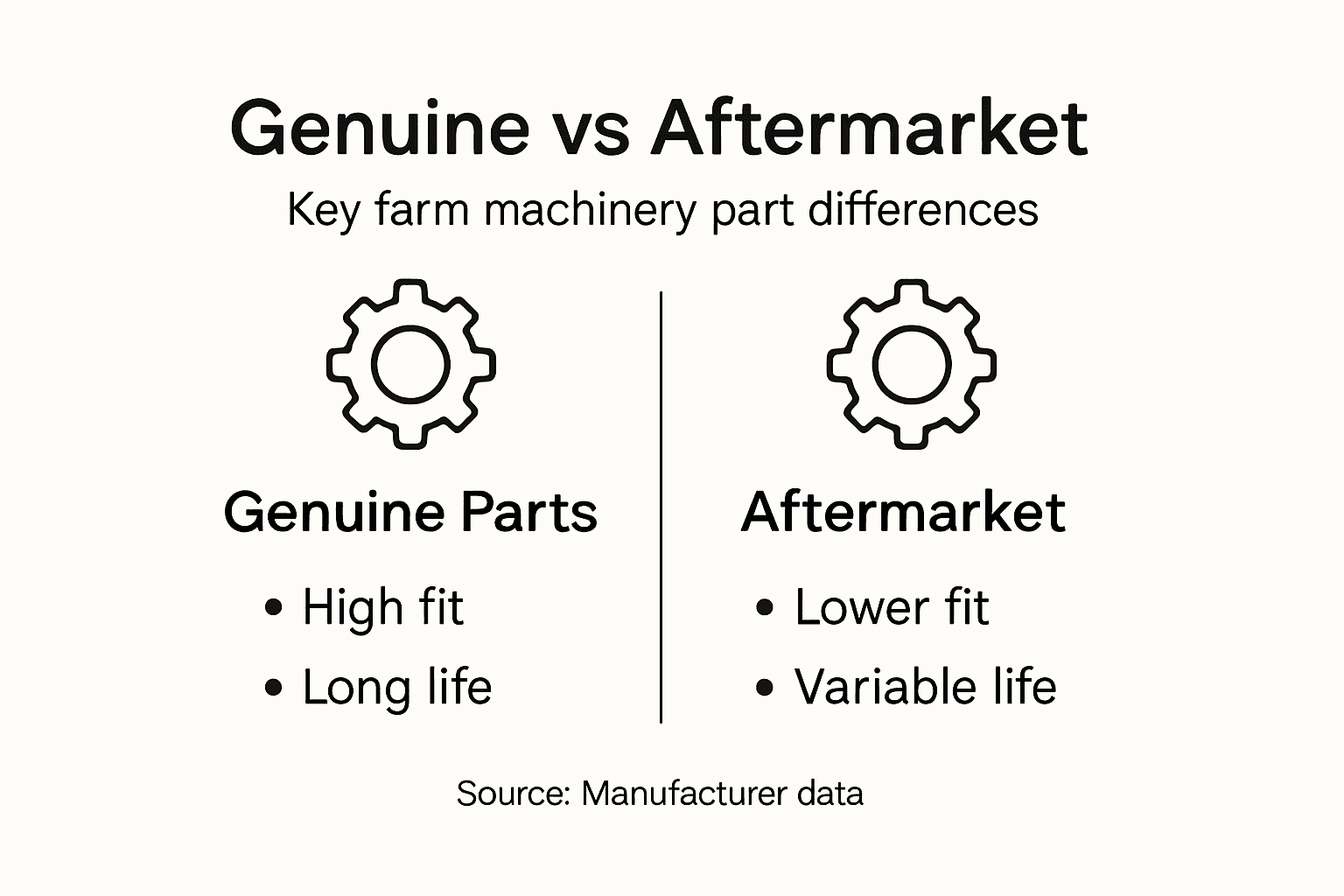
Maintenance expenses represent another critical financial dimension in parts selection. Aftermarket components often introduce hidden costs through increased mechanical stress, accelerated wear patterns, and potential system incompatibilities. Genuine parts, engineered with precise specifications, minimize these risks by ensuring optimal system integration. The predictable performance of original manufacturer components allows farmers to budget more accurately, reducing financial uncertainties associated with equipment maintenance and potential emergency repairs.
Pro Tip: Calculate your equipment’s total cost of ownership by tracking not just part prices, but also maintenance frequency, downtime hours, and performance metrics to make truly informed purchasing decisions.
Risks of counterfeit and non-original parts
Counterfeit agricultural machinery parts represent a significant and often overlooked threat to farm equipment integrity and operational safety. Counterfeit components are unauthorized replicas that mimic genuine parts but lack the rigorous engineering standards and quality control implemented by original manufacturers. These inferior parts can create catastrophic risks that extend far beyond simple mechanical performance issues.
The structural vulnerabilities of non-original parts manifest in multiple critical areas of machinery functionality. Manufacturing shortcuts and substandard materials compromise critical mechanical tolerances, potentially leading to unexpected equipment failures during high-stress agricultural operations. Inferior parts may appear visually similar to genuine components but often lack the precise engineering specifications required for consistent performance. These discrepancies can result in reduced hydraulic efficiency, increased mechanical friction, accelerated component wear, and potentially dangerous operational instabilities.
Economic and safety implications of using counterfeit parts extend beyond immediate mechanical risks. Unauthorized replacement components frequently void manufacturer warranties, leaving farmers financially exposed to potential equipment damage. These parts can introduce unpredictable performance variations that compromise machinery reliability, increase maintenance frequencies, and potentially create dangerous operational scenarios. The potential long-term expenses associated with equipment damage and unexpected breakdowns far outweigh any initial cost savings from choosing non-original parts.
This summary highlights how part selection affects equipment economics and operational risk:
| Factor | Genuine Parts Advantage | Non-Original/Counterfeit Drawback |
|---|---|---|
| Operational Downtime | Minimal due to reliability | Increased due to sudden failures |
| Maintenance Frequency | Fewer interventions needed | More frequent replacements required |
| Equipment Lifespan | Extends overall machine life | Often shortens service life |
| Risk of Major Failure | Substantially reduced | Elevated due to subpar materials |
| Long-term Savings | Greater through reduced repairs | Low as breakdowns add hidden costs |
Pro Tip: Always request detailed part certification documentation and cross-reference serial numbers with manufacturer databases to verify authentic component origins before installation.
Choose Genuine Parts for Reliable Farm Machinery Performance
Maintaining your agricultural equipment with genuine parts is essential to avoid costly breakdowns and preserve your tractor’s safety and warranty. The article highlights key challenges such as the risk of premature wear, compatibility issues, and the financial impact of aftermarket or counterfeit components. These problems can lead to unexpected downtime, higher maintenance costs, and compromised machinery reliability.
At Pexlivanidis.com, we understand these concerns. With over 20,000 genuine tractor accessories and spare parts available, you can easily find precision-engineered components that match your equipment specifications perfectly. Benefit from free shipping on orders above 100€ within Greece and explore options for retail or wholesale purchases tailored to your needs.
Don’t settle for less when it comes to your farm machinery. Visit Pexlivanidis.com now to secure authentic parts that enhance your equipment’s performance and longevity. Act today to protect your investment and keep your operations running smoothly with parts you can trust.
Frequently Asked Questions
What are genuine parts for farm machinery?
Genuine parts are authentic spare components manufactured by original equipment manufacturers (OEM) designed specifically for agricultural equipment. They ensure precise compatibility, durability, and optimal performance.
How do genuine parts differ from aftermarket components?
Genuine parts are meticulously engineered to meet the exact specifications of original machinery, while aftermarket parts vary in quality and design. Genuine parts undergo rigorous testing, ensuring consistency and reliability, whereas aftermarket options may compromise performance.
What are the long-term benefits of using genuine parts?
Using genuine parts can significantly reduce long-term maintenance costs by minimizing unexpected breakdowns and increasing equipment lifespan. They provide reliable performance, thus lowering replacement frequency and ensuring the overall efficiency of farm machinery.
Can using aftermarket parts void my equipment warranty?
Yes, using non-original or aftermarket components can potentially invalidate your equipment warranty. Manufacturers typically require the use of genuine parts to maintain warranty coverage, highlighting the importance of selecting the right components.