

Upgrading a tractor can feel like a major leap, especially when every hour of downtime cuts into your season. Most people think the benefits are just about raw horsepower or bigger tires. But here is the real surprise: systematic tractor assessments can cut unnecessary upgrade expenses by up to 30 percent, saving you money before you even touch a wrench. The smartest upgrades start long before the toolbox comes out.
Table of Contents
- Step 1: Assess Your Current Equipment And Needs
- Step 2: Research Compatible Upgrades For Your Tractor
- Step 3: Gather Necessary Tools And Materials
- Step 4: Execute The Upgrades Systematically
- Step 5: Test Upgraded Features And Monitor Performance
- Step 6: Conduct Regular Maintenance For Longevity
Quick Summary
| Key Point | Explanation |
|---|---|
| 1. Conduct a Thorough Equipment Assessment | Inspect vital components like engine and hydraulics to identify performance gaps and upgrade needs. |
| 2. Research Compatible Upgrades | Review manufacturer documentation and consult experts for feasible upgrade options that meet operational demands. |
| 3. Gather Essential Tools and Materials | Prepare a well-equipped workspace with necessary tools and safety gear to facilitate smooth upgrades. |
| 4. Execute Upgrades Methodically | Document existing configurations and follow manufacturer specifications carefully to ensure successful installations. |
| 5. Perform Regular Maintenance | Establish a maintenance schedule to monitor and preserve the performance of upgraded features for longevity. |
Step 1: Assess Your Current Equipment and Needs
Successful tractor upgrades start with a comprehensive evaluation of your current machinery and operational requirements. Understanding your equipment’s precise condition and performance capabilities is the foundation for making strategic improvements that deliver real value.
Begin by conducting a thorough physical inspection of your tractor. Look closely at critical components including the engine, transmission, hydraulic systems, and structural integrity. Document existing wear patterns, rust locations, and mechanical performance during recent operations. According to Purdue University Extension, systematic assessment helps farmers identify potential upgrade opportunities and prevent unnecessary expenses.
Key Inspection Areas:
- Engine compression and oil consumption
- Transmission shifting performance
- Hydraulic system responsiveness
- Tire condition and alignment
- Electrical system functionality
- Visible structural damage or stress points
Next, calculate your tractor’s current operational efficiency by tracking metrics like fuel consumption, maintenance frequency, and actual field performance. Compare these measurements against manufacturer specifications and your specific agricultural needs. Consider factors such as horsepower requirements, implement compatibility, and the types of tasks you routinely perform.
Prioritize upgrades based on performance gaps and potential return on investment. Some modifications might offer immediate productivity improvements, while others could provide long-term operational benefits. Remember that not all upgrades require extensive financial investment some strategic adjustments can significantly enhance your tractor’s performance without substantial cost.
Carefully document your findings, creating a comprehensive assessment that will guide your subsequent upgrade decisions. This methodical approach ensures you make informed choices tailored to your specific agricultural requirements, maximizing both equipment performance and operational efficiency.
Step 2: Research Compatible Upgrades for Your Tractor
Transitioning from your initial equipment assessment, the next critical phase involves thoroughly researching compatible upgrades that will genuinely enhance your tractor’s performance. This step requires strategic investigation and careful consideration of potential modifications that align with your specific agricultural operational needs.
Start by consulting your tractor’s manufacturer documentation and detailed technical specifications. These resources provide essential insights into recommended upgrade paths, potential compatibility constraints, and performance enhancement opportunities. According to Society of Automotive Engineers, understanding your equipment’s baseline configuration is fundamental to making informed upgrade decisions.
Critical Research Focus Areas:
- Hydraulic system performance modifications
- Engine efficiency enhancements
- Electrical system upgrades
- Precision agriculture technology integration
- Fuel consumption optimization strategies
Explore specialized agricultural equipment forums, manufacturer websites, and professional agricultural technology networks to gather comprehensive information. Engage with local agricultural machinery dealers, extension service professionals, and experienced farmers who can provide practical insights based on real-world performance experiences. These interactions can reveal nuanced upgrade recommendations that technical documentation might not capture.
Carefully evaluate each potential upgrade against several key criteria: cost effectiveness, expected performance improvement, installation complexity, warranty implications, and long-term reliability. Not all upgrades deliver equivalent value some modifications might provide marginal benefits while others can dramatically transform your tractor’s operational capabilities.
Utilize online comparison tools, technical review platforms, and manufacturer specification databases to cross reference potential upgrades. Create a detailed spreadsheet documenting each potential modification, including estimated costs, expected performance gains, potential challenges, and implementation requirements. This systematic approach ensures you make data driven decisions tailored to your specific agricultural operational context.
Step 3: Gather Necessary Tools and Materials
Successful tractor upgrades demand meticulous preparation and a comprehensive collection of specialized tools and materials. This crucial stage bridges the gap between research and implementation, ensuring you have everything needed to execute your planned modifications efficiently and safely.
According to National Center for Appropriate Technology, establishing a well-equipped workspace is fundamental to any tractor upgrade project. Begin by creating a dedicated work area with sufficient lighting, clean surfaces, and adequate space for disassembly and reassembly of tractor components.
Essential Tool Categories:
- Mechanical hand tools
- Precision measurement instruments
- Safety equipment
- Diagnostic and testing devices
- Lubrication and cleaning supplies
Invest in high-quality tools that match your specific tractor model and planned upgrades. Socket wrench sets, torque wrenches, jack stands, and hydraulic jacks form the foundation of your toolkit. Precision measuring instruments like calipers and micrometers will help ensure accurate modifications. Include specialized tools recommended by your tractor’s manufacturer to guarantee proper fitment and prevent potential damage during the upgrade process.
Safety cannot be overlooked. Acquire comprehensive personal protective equipment including heavy-duty gloves, safety glasses, steel-toed boots, and hearing protection. Consider having a fire extinguisher and first aid kit readily available in your workspace. Organize your tools systematically using toolboxes or wall-mounted pegboards to maintain efficiency and prevent misplacement during complex upgrade procedures.
To help you identify, prepare, and use the necessary tools efficiently, here is a table summarizing essential categories, examples, and their primary purposes during tractor upgrades.
| Tool/Material Category | Example Tools/Materials | Purpose |
|---|---|---|
| Mechanical Hand Tools | Socket wrench sets, torque wrenches | For loosening, tightening, and assembling parts |
| Precision Measurement | Calipers, micrometers | To ensure accurate modifications and alignments |
| Safety Equipment | Gloves, safety glasses, steel-toed boots | For operator safety during all upgrade steps |
| Diagnostic Devices | Multimeter, hydraulic testers | To assess system performance and detect issues |
| Lubrication & Cleaning | Lubricants, cleaning supplies | For component maintenance and preparation |
Budget carefully for both tools and upgrade materials. While initial investment might seem substantial, quality tools represent a long-term asset that will serve you through multiple projects. Consider purchasing professional-grade tools incrementally if immediate full investment is challenging. Alternatively, explore tool rental options for specialized equipment required for specific upgrade tasks.
Step 4: Execute the Upgrades Systematically
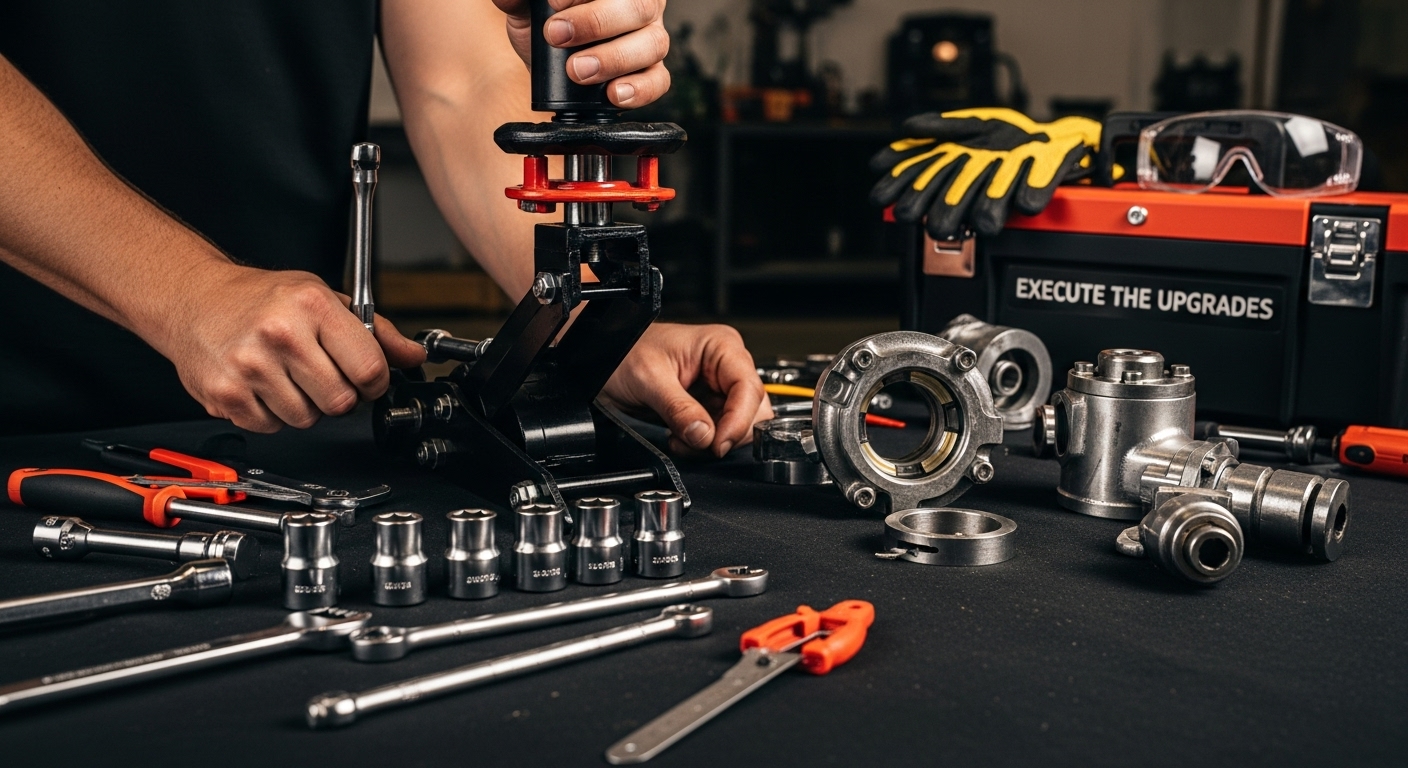
Successful tractor upgrades demand a methodical approach that combines technical precision with careful planning. This critical stage transforms your research and preparation into tangible equipment improvements, requiring patience, attention to detail, and a structured workflow.
Begin by completely documenting your starting point. Take detailed photographs of the current configuration and create a comprehensive baseline record of your tractor’s existing systems. According to Pennsylvania State University Extension, systematic documentation helps track modifications and provides crucial reference points for future maintenance.
Critical Execution Considerations:
- Work in a clean, well-organized workspace
- Follow manufacturer specifications precisely
- Use torque specifications for all fasteners
- Clean components thoroughly before installation
- Double-check alignment and fitment
Proceed with upgrades in a logical sequence, focusing on one system or component at a time. Start by disconnecting the battery and preparing your workspace with proper lighting and support equipment. Carefully remove existing components, keeping track of each part’s location and orientation. Clean mounting surfaces meticulously and inspect for any signs of wear or damage that might compromise your upgrade.
When installing new components, apply a systematic approach. Use precision measurement tools to ensure perfect alignment. Apply appropriate lubricants, sealants, or thread-locking compounds as recommended by manufacturer specifications. Work slowly and deliberately, avoiding rushed modifications that could introduce errors.
After completing each upgrade, perform careful visual inspections and preliminary tests before fully reassembling the tractor. Check for proper clearances, smooth mechanical operation, and correct electrical connections. Create a detailed log documenting each modification, including specific parts used, installation date, and any observations during the process.
This documentation will prove invaluable for future maintenance and potential troubleshooting.
Step 5: Test Upgraded Features and Monitor Performance
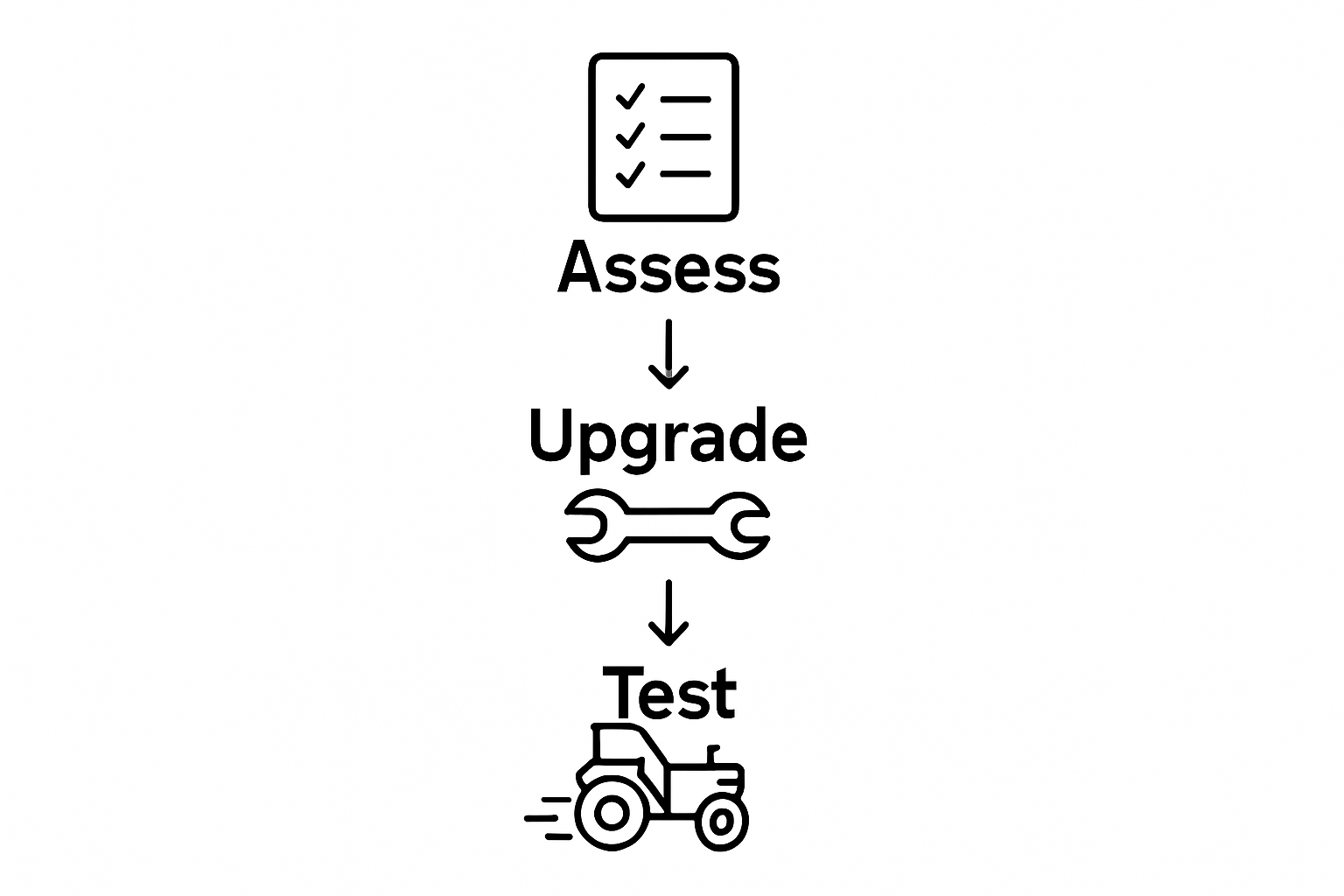
After meticulously executing your tractor upgrades, the critical phase of comprehensive performance testing begins. This step transforms theoretical improvements into verifiable operational enhancements, ensuring your modifications deliver the expected benefits and operational efficiency.
According to Nebraska Tractor Test Laboratory, systematic performance evaluation requires a structured approach that goes beyond simple operational checks. Start by conducting controlled tests in various operational conditions, simulating the diverse agricultural environments your tractor will encounter.
Performance Testing Parameters:
- Fuel consumption rates
- Power output consistency
- Hydraulic system responsiveness
- Temperature and pressure measurements
- Operational noise levels
- Mechanical vibration analysis
Initiate testing with low-stress scenarios, gradually increasing complexity and workload. Begin in a controlled environment like a flat field or dedicated testing area, where you can carefully monitor and record performance metrics. Use precision measurement tools to capture detailed data about each upgraded component’s functionality. Pay close attention to subtle changes in engine performance, transmission smoothness, and overall mechanical responsiveness.
Document every observation meticulously. Create a comprehensive log that tracks performance variations, including date, environmental conditions, operational parameters, and any unexpected behaviors. This detailed record will serve as a valuable reference for future maintenance and help identify potential areas requiring further refinement.
Remember that true performance validation occurs over extended periods. While initial tests provide immediate insights, the real measure of your upgrades will emerge through sustained use across multiple agricultural tasks. Be prepared to make incremental adjustments based on your observations, understanding that optimal performance often requires patient fine tuning and systematic refinement.
Step 6: Conduct Regular Maintenance for Longevity
Transitioning from performance testing to sustained operational excellence requires a disciplined approach to regular maintenance. Your carefully executed tractor upgrades represent a significant investment that demands consistent care to preserve performance and extend equipment lifespan.
According to Heavy Equipment College, proactive maintenance is the cornerstone of equipment reliability. Develop a comprehensive maintenance schedule that goes beyond manufacturer recommendations, incorporating the specific nuances of your recent upgrades and operational conditions.
Critical Maintenance Focus Areas:
- Engine fluid levels and quality
- Hydraulic system integrity
- Electrical system performance
- Mechanical component lubrication
- Wear and stress point inspections
Establish a routine that combines daily quick inspections with more thorough weekly and monthly comprehensive evaluations. During daily checks, examine critical systems for any signs of unusual wear, fluid leaks, or performance irregularities. Look closely at areas modified during your upgrade process, paying special attention to new components and their integration points.
Implement a meticulous documentation system tracking every maintenance activity. Create detailed logs recording fluid changes, component inspections, and any minor adjustments. This documentation serves multiple purposes: tracking maintenance history, identifying potential emerging issues, and maintaining warranty compliance for newly upgraded components.
Consider investing in predictive maintenance technologies that can provide early warning of potential system failures. Infrared temperature sensors, vibration analysis tools, and advanced diagnostic equipment can help you identify potential issues before they escalate into significant problems. Remember that consistent, preventative maintenance is significantly more cost effective than reactive repairs, protecting both your equipment investment and operational productivity.
Your Tractor Upgrade Journey Starts Here
Ready to turn your DIY tractor upgrades into real results but struggling to source the precise parts and quality accessories you need? After completing detailed assessments and performing systematic upgrades, it can be frustrating when the right engine components, hydraulic systems, or essential accessories are not at your fingertips. Whether you are dealing with compatibility concerns, limited availability, or the need for trustworthy spare parts to finish your project, pexlivanidis.com is your one-stop online store.
With over 20,000 agricultural machinery parts in stock and free shipping within Greece on qualifying orders, you can finally access the tools and parts you need to keep your tractor working at its best. Do not let delays hold back your next field test or maintenance routine. Browse, search, or register for even more options through the main site and get expert product support tailored to your exact tractor model. Finish your upgrade strong—visit pexlivanidis.com right now and give your tractor the reliable edge it deserves.
Frequently Asked Questions
What are the key areas to inspect on my tractor before upgrades?
Important areas to inspect include the engine compression, transmission performance, hydraulic system responsiveness, tire condition, electrical system functionality, and any visible structural damages.
How do I evaluate the cost-effectiveness of potential tractor upgrades?
Evaluate potential upgrades by considering their expected performance improvements, installation complexity, warranty implications, and long-term reliability against their costs.
What essential tools do I need for upgrading my tractor?
You will need a variety of mechanical hand tools, precision measurement instruments, safety equipment, diagnostic devices, and lubrication and cleaning supplies to effectively execute tractor upgrades.
How can I conduct performance testing after completing tractor upgrades?
Conduct performance tests by monitoring fuel consumption rates, power output consistency, and hydraulic responsiveness in controlled environments. Document all observations to track improvements and make further refinements.