

Every hour a tractor sits idle can ripple across an entire farm operation, leading to unexpected delays and sizable expenses. Research shows equipment downtime can reduce agricultural productivity by up to 20 percent, highlighting how critical it is to keep tractors running smoothly. For farmers, understanding the causes and solutions behind operational interruptions means more than just fixing a machine—it’s about protecting harvests and profits. This guide breaks down what downtime really means, why it matters, and how new technologies reshape the battle against lost time in the field.
Table of Contents
- Defining Downtime In Tractor Operations
- Key Tractor Technologies Minimizing Interruptions
- Preventive Maintenance Systems And Schedules
- Common Causes Of Tractor Downtime
- Best Practices For Maximizing Tractor Uptime
Key Takeaways
| Point | Details |
|---|---|
| Understanding Downtime | Downtime in tractor operations includes all interruptions, emphasizing the importance of tracking Mean Down Time (MDT) to enhance productivity. |
| Technological Advancements | Implementing autonomous technologies and predictive maintenance significantly minimizes unexpected breakdowns and enhances operational efficiency. |
| Preventive Maintenance Strategy | A robust preventive maintenance system is critical for extending equipment life and reducing operational disruptions through proactive scheduling and inspections. |
| Addressing Common Causes | Identifying and addressing mechanical failures and maintenance inadequacies can greatly reduce tractor downtime and improve overall farm productivity. |
Defining Downtime In Tractor Operations
In agricultural operations, downtime represents a critical challenge that directly impacts farm productivity and economic performance. According to Wikipedia, downtime refers to periods when equipment becomes unavailable or unable to perform its primary function, which in tractor operations can translate to substantial financial losses.
Downtime isn’t just about equipment standing still – it encompasses a complex range of operational interruptions. Mean Down Time (MDT) provides a comprehensive metric for understanding these disruptions. As defined by Wikipedia, MDT represents the average duration a system remains non-operational, including repair time, maintenance activities, and administrative delays.
For farmers and agricultural professionals, understanding downtime involves recognizing multiple potential interruption sources:
- Mechanical equipment failures
- Scheduled maintenance procedures
- Parts replacement requirements
- Unexpected breakdowns
- Logistical challenges in repair and replacement
Effective downtime management requires a proactive approach. By tracking MDT and implementing strategic maintenance protocols, farmers can minimize operational interruptions and maximize their agricultural machinery’s reliability and performance. The goal isn’t eliminating downtime entirely – which is impossible – but reducing its frequency and duration through intelligent planning and preventative strategies.
Key Tractor Technologies Minimizing Interruptions
Tractor technologies have dramatically evolved to address the persistent challenge of operational interruptions. Autonomous technologies are at the forefront of this transformation, with Wikipedia highlighting driverless tractors as a revolutionary approach that utilizes GPS and advanced sensor systems to perform agricultural tasks without direct human intervention.
Predictive maintenance represents another critical technological advancement in minimizing tractor downtime. According to Wikipedia, this approach leverages data analysis and machine learning to anticipate equipment failures before they actually occur. By identifying potential issues in advance, farmers can schedule maintenance proactively, dramatically reducing unexpected breakdowns and operational disruptions.
The key technologies reducing tractor interruptions include:
- Advanced sensor networks
- Real-time diagnostic systems
- Machine learning predictive algorithms
- Automated performance monitoring
- Remote diagnostic capabilities
These technologies work synergistically to create a comprehensive approach to minimizing downtime.
Sophisticated onboard computer systems continuously monitor critical tractor components, analyzing performance metrics and detecting subtle variations that might indicate impending mechanical issues. This continuous monitoring allows for immediate intervention, scheduling maintenance precisely when needed and preventing more significant, time-consuming breakdowns that could halt agricultural operations for extended periods.
Preventive Maintenance Systems And Schedules
Preventive maintenance is the strategic backbone of reducing tractor downtime and ensuring consistent agricultural productivity. According to research from arXiv, preventive maintenance involves systematic inspections, servicing, and repairs specifically designed to prevent equipment failures before they disrupt critical farming operations.
Effective maintenance scheduling requires meticulous planning and resource allocation. As outlined by the Food and Agriculture Organization, successful preventive maintenance systems must strategically plan maintenance activities during non-peak periods, ensuring minimal disruption to overall farm productivity. This approach transforms maintenance from a reactive challenge to a proactive operational strategy.
Key components of an effective preventive maintenance system include:
- Regular mechanical inspections
- Comprehensive equipment diagnostics
- Precise lubrication and component replacement schedules
- Detailed maintenance documentation
- Performance tracking and trend analysis
Implementing a robust preventive maintenance system isn’t just about fixing problems – it’s about anticipating and preventing them. By developing a comprehensive maintenance schedule that considers each tractor’s unique operational demands, farmers can significantly extend equipment lifecycle, reduce unexpected breakdowns, and optimize overall agricultural machinery performance.
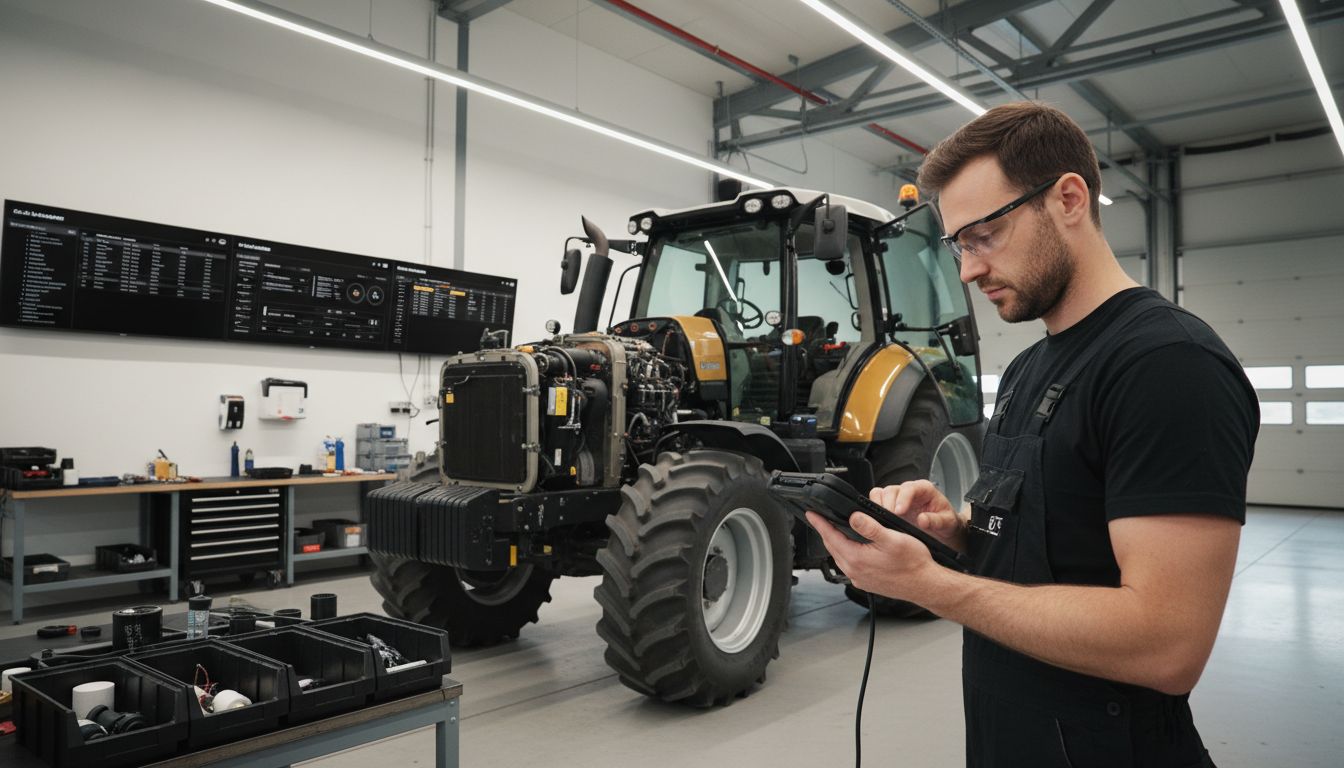 The goal is creating a predictive, proactive maintenance culture that treats equipment care as a critical investment in farm productivity.
Common Causes Of Tractor Downtime
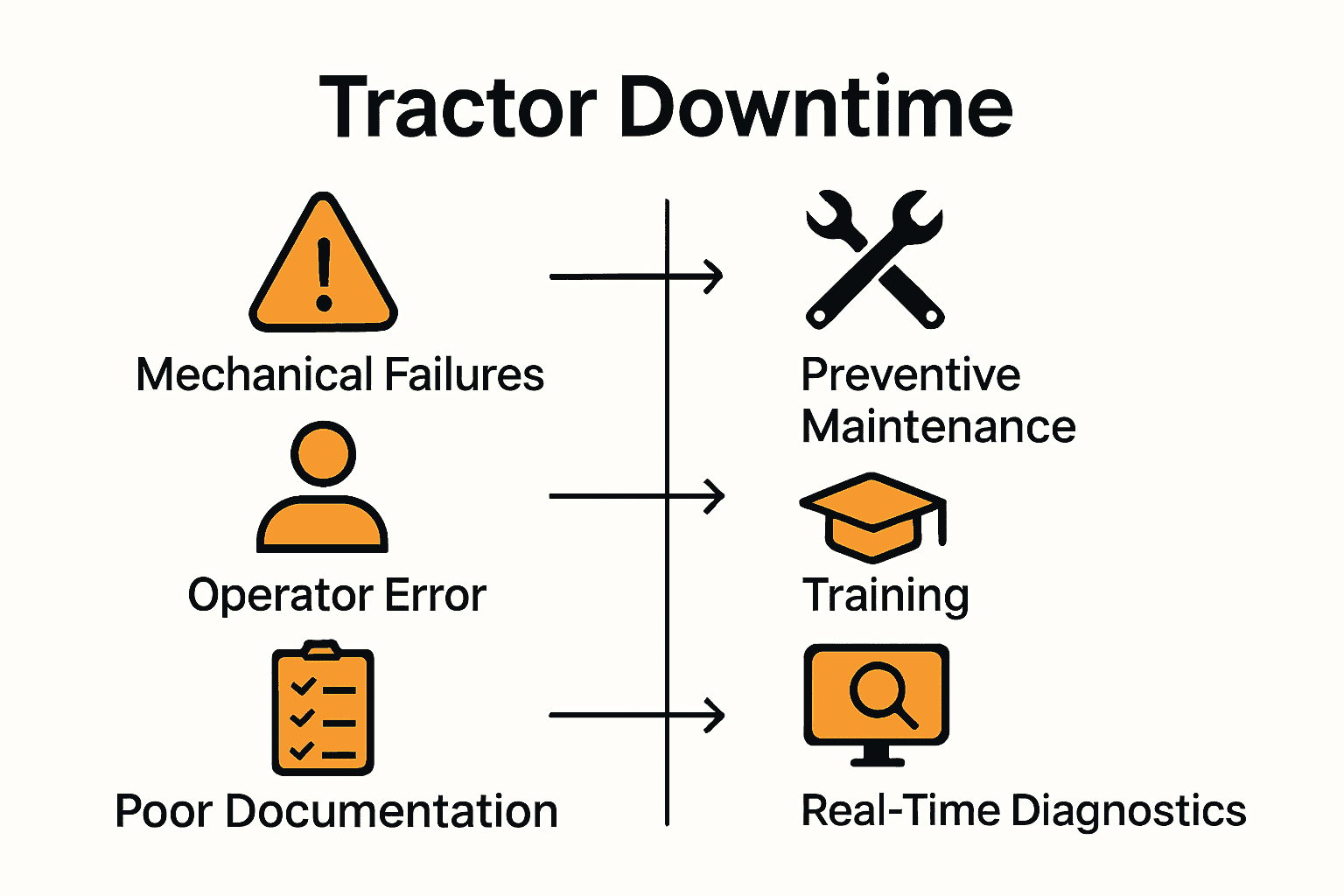
Mechanical failures represent the most significant source of tractor operational interruptions. Research from IEOM Society highlights that common causes of tractor downtime stem from mechanical issues, inadequate maintenance practices, and operator-related errors. Understanding these root causes is crucial for developing comprehensive strategies to minimize equipment downtime.
The complexity of tractor operations introduces multiple potential failure points. Wikipedia emphasizes that Overall Equipment Effectiveness (OEE) provides a critical framework for analyzing downtime, considering factors like equipment availability, performance quality, and operational efficiency. Low OEE scores often indicate systemic issues that extend beyond isolated mechanical problems.
Key contributors to tractor downtime include:
- Lack of regular lubrication
- Worn or damaged mechanical components
- Electrical system failures
- Fuel system complications
- Improper operator handling
- Insufficient maintenance documentation
- Environmental stress and harsh working conditions
Addressing these challenges requires a holistic approach that combines proactive maintenance, operator training, and continuous equipment monitoring. By recognizing and systematically addressing these common downtime causes, agricultural professionals can significantly reduce operational interruptions, optimize equipment performance, and ultimately improve farm productivity and economic efficiency.
Best Practices For Maximizing Tractor Uptime
Maintenance-centered strategies are the cornerstone of maximizing tractor operational efficiency. According to research from the International Journal of Flexible Manufacturing Research, implementing both preventive and predictive maintenance approaches can significantly reduce equipment downtime. This approach involves utilizing advanced technologies like telematics and fleet management systems to proactively monitor and manage agricultural machinery performance.
Controlled Traffic Farming (CTF) offers another innovative approach to minimizing tractor interruptions. As explained by Wikipedia, this method confines machinery to specific lanes, which reduces soil compaction and improves overall field conditions. By strategically managing equipment movement, farmers can minimize potential mechanical stress and environmental challenges that contribute to equipment downtime.
Key best practices for maximizing tractor uptime include:
- Implementing comprehensive digital maintenance tracking
- Regular and systematic equipment inspections
- Utilizing real-time diagnostic technologies
- Training operators in advanced machinery management
- Creating detailed maintenance documentation
- Investing in high-quality replacement parts
- Developing predictive maintenance protocols
Successful tractor uptime management requires a holistic approach that combines technological innovation, proactive maintenance, and strategic operational planning. By integrating advanced monitoring systems, continuous training, and precision agricultural techniques, farmers can transform equipment maintenance from a reactive challenge to a predictive, efficiency-driven strategy that minimizes interruptions and maximizes agricultural productivity.
Keep Your Tractor Running Strong and Cut Downtime Dramatically
Minimizing tractor downtime means tackling challenges like mechanical failures and maintenance management head-on. The article highlights the critical role of preventive maintenance, predictive technologies, and real-time diagnostics in reducing interruptions. If you are striving to keep your fleet performing at peak efficiency while extending tractor lifespan, reliable access to high-quality parts and accessories is essential. Avoid prolonged repairs caused by worn components and unforeseen breakdowns by sourcing trusted equipment tailored to your needs.
Discover a wide selection of tractor spare parts and accessories at pexlivanidis.com. Whether you are an individual farmer or managing a large operation, their extensive inventory of over 20,000 items and solutions for wholesale buyers will support your maintenance-centered strategy. Explore proven components that align with advanced maintenance systems and ensure your machinery’s uptime is maximized. Get started now by visiting Pexlivanidis Tractor Parts to browse parts designed to help you reduce downtime and boost productivity today.
Frequently Asked Questions
What is downtime in tractor operations?
Downtime in tractor operations refers to periods when equipment is unavailable or unable to perform its primary function, leading to potential financial losses and decreased productivity.
How can predictive maintenance help reduce tractor downtime?
Predictive maintenance uses data analysis and machine learning to predict equipment failures before they happen, allowing farmers to schedule maintenance proactively and reduce unexpected breakdowns.
What are some common causes of tractor downtime?
Common causes of tractor downtime include mechanical failures, inadequate maintenance practices, operator-related errors, worn components, and environmental stressors affecting equipment performance.
How can Controlled Traffic Farming (CTF) minimize tractor interruptions?
Controlled Traffic Farming confines machinery to specific lanes, reducing soil compaction and improving field conditions, which can minimize mechanical stress and potential downtime for tractors.