

Every farm in Northern Greece faces the challenge of turning limited resources into greater yield and profit. With productivity relying on how efficiently land, labor, and machinery are used, knowing the principles behind farm productivity is key to making smarter choices. This article empowers farmers and machinery operators with actionable strategies, practical accessory recommendations, and step-by-step advice for optimizing tractor parts and maximizing operational efficiency.
Table of Contents
- Farm Productivity Defined And Core Principles
- Key Tractor Accessories And Their Purposes
- Modern Technology Upgrades For Farming Efficiency
- Best Practices For Selecting And Using Tractor Parts
- Common Mistakes That Lower Productivity
- Cost And Safety Implications Of Implement Upgrades
Key Takeaways
| Point | Details |
|---|---|
| Farm Productivity Metrics | Understanding single-factor and total factor productivity helps farmers make informed decisions to enhance efficiency and sustainability. |
| Importance of Tractor Accessories | Selecting the right tractor accessories can significantly improve operational capabilities and ensure safety during agricultural tasks. |
| Technological Advancements | Implementing modern agricultural technologies can optimize resource allocation, improve crop management, and enhance overall farm performance. |
| Common Productivity Pitfalls | Addressing mistakes such as inefficient resource allocation and technology resistance is crucial for maintaining high productivity levels in farming operations. |
Farm Productivity Defined and Core Principles
Farm productivity represents the critical measure of agricultural efficiency, determining how effectively farmers transform available resources into valuable agricultural outputs. Agricultural productivity measurement involves complex calculations that reveal a farm’s true performance potential.
At its core, farm productivity encompasses several essential components:
- Input utilization: Measuring how efficiently resources like land, labor, and equipment are used
- Output generation: Calculating total crop yield, livestock production, or economic value created
- Technological integration: Assessing how modern techniques improve overall agricultural performance
- Economic efficiency: Evaluating the financial return relative to resources invested
Modern agricultural experts recognize that productivity isn’t just about producing more—it’s about producing smarter. This means understanding the intricate balance between technological advancements, resource management, and strategic decision-making.
Productivity is not merely about increasing output, but optimizing the entire agricultural system for maximum efficiency.
Farmers can assess their productivity through multiple indicators, including:
- Single-factor productivity (measuring output relative to one specific input)
- Total factor productivity (comprehensive evaluation of all production elements)
- Technical efficiency metrics
- Economies of scale assessment
Understanding these metrics allows farmers to make data-driven decisions that enhance their operational performance and economic sustainability.
Pro tip: Regularly track your farm’s key productivity indicators to identify improvement opportunities and make strategic operational adjustments.
Key Tractor Accessories and Their Purposes
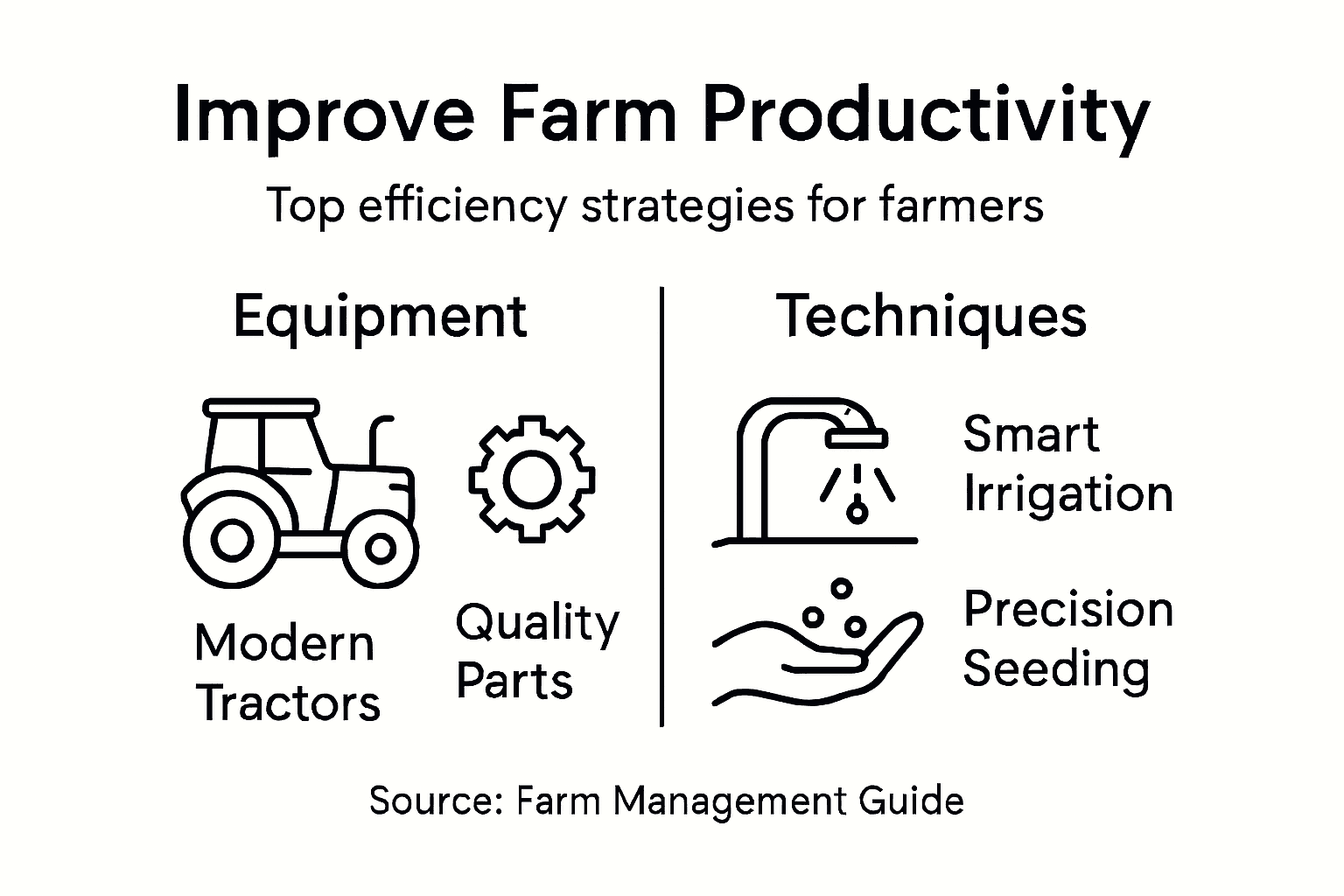
Tractor accessories play a crucial role in enhancing agricultural efficiency and operational capabilities. Tractor safety accessories are essential components that not only improve performance but also protect farmer safety during complex agricultural operations.
The most critical tractor accessories include:
- Power take-off (PTO) systems: Enable power transmission to various implements
- Hydraulic systems: Control lifting and positioning of heavy agricultural equipment
- Three-point hitches: Allow seamless attachment of different farming implements
- Safety structures: Protect operators during potentially dangerous field operations
Functional accessories transform tractors from basic machines into versatile agricultural workhorses. Each accessory serves a specific purpose, expanding the tractor’s capabilities beyond simple transportation and basic field work.
Modern tractor accessories are engineered to maximize operational efficiency and minimize potential safety risks.
Farmers can optimize their equipment through strategic accessory selection:
- Evaluate specific farm terrain and crop requirements
- Assess implementation needs across different agricultural stages
- Consider compatibility with existing machinery
- Prioritize safety features and operational versatility
These accessories dramatically enhance a tractor’s functionality, allowing farmers to perform complex tasks with greater precision and reduced physical strain.
Here’s a comparison of common tractor accessories and the main problems they help solve:
| Accessory Type | Main Benefit | Operational Problem Addressed |
|---|---|---|
| Power take-off (PTO) | Powers multiple implements | Need for versatile machinery |
| Hydraulic systems | Lifts and positions equipment | Handling heavy or complex attachments |
| Three-point hitch | Easy implement connection | Slow or difficult equipment changes |
| Safety structures | Protects operators | Risk of injury during operation |
Pro tip: Regularly inspect and maintain tractor accessories to ensure optimal performance and extend their operational lifespan.
Modern Technology Upgrades for Farming Efficiency
Modern agricultural technology represents a revolutionary approach to enhancing farm productivity through sophisticated digital and mechanical innovations. Agricultural machinery upgrades are transforming traditional farming practices by introducing precision, efficiency, and data-driven decision-making capabilities.
Key technological upgrades that significantly improve farm performance include:
- GPS-enabled precision farming systems: Allow exact field mapping and resource allocation
- Drone surveillance technology: Provide comprehensive crop health monitoring
- Automated irrigation controllers: Optimize water usage and crop hydration
- Sensor-based equipment monitoring: Enable real-time machinery performance tracking
- Advanced data analytics platforms: Support strategic agricultural management
Digital agricultural technologies are reshaping how farmers approach crop management, resource allocation, and operational planning. These innovations provide unprecedented insights into farm performance, enabling more strategic and efficient agricultural practices.
Technology transforms agriculture from a traditional practice into a sophisticated, data-driven industry.
Farmers can implement technological upgrades through a systematic approach:
- Assess current technological infrastructure
- Identify specific performance improvement areas
- Research compatible technological solutions
- Develop a phased implementation strategy
- Train staff on new technological systems
The integration of modern technologies creates a comprehensive ecosystem of agricultural management, dramatically reducing manual labor and increasing overall farm productivity.
The following table summarizes how modern technology upgrades impact farm productivity and sustainability:
| Technology Upgrade | Productivity Impact | Sustainability Benefit |
|---|---|---|
| Precision GPS systems | Reduces input waste | Improves resource efficiency |
| Drone monitoring | Enables rapid crop analysis | Early detection reduces chemical use |
| Automated irrigation | Optimizes water usage | Prevents water overuse |
| Equipment sensors | Minimizes breakdowns | Extends machinery lifespan |
| Data analytics | Informs better decisions | Supports long-term farm planning |
Pro tip: Invest in modular technological upgrades that can be incrementally integrated into existing farm systems to minimize disruption and maximize return on investment.
Best Practices for Selecting and Using Tractor Parts
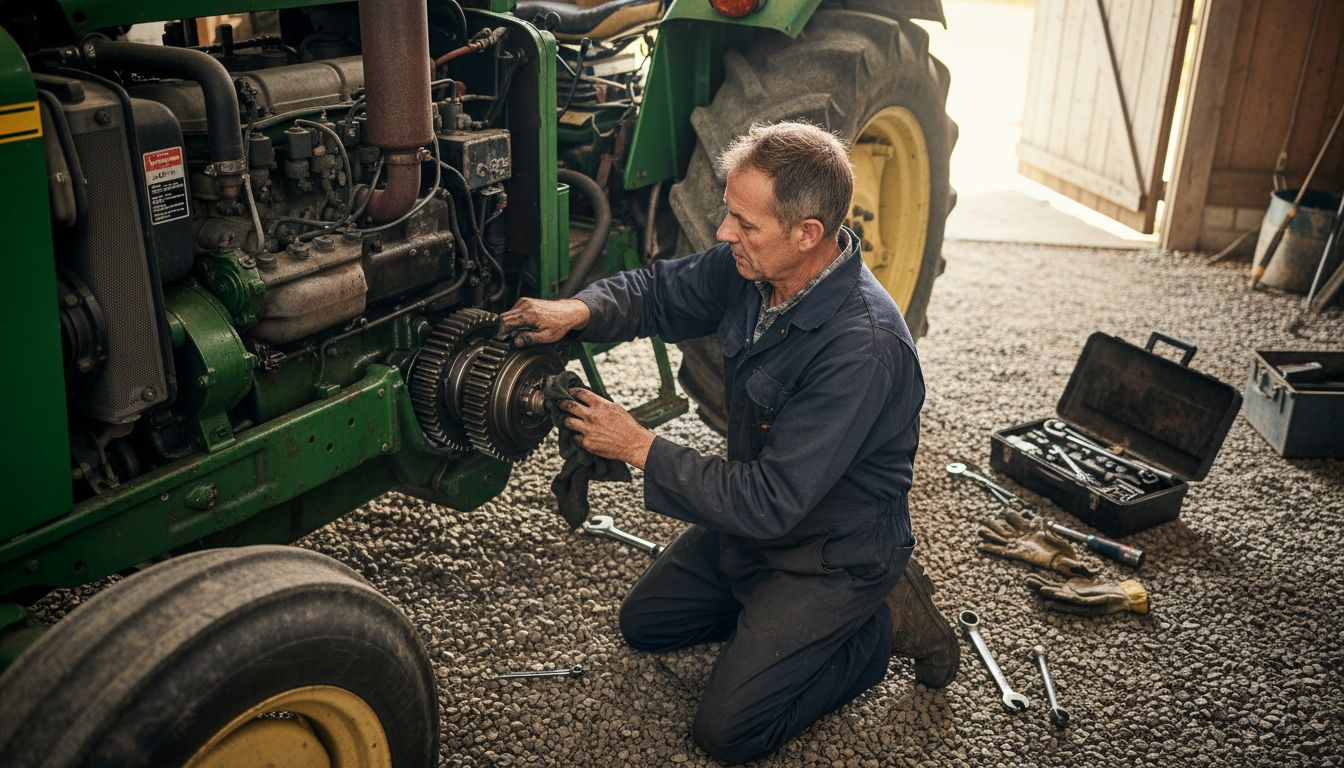
Selecting and utilizing tractor parts requires a strategic approach that balances performance, compatibility, and long-term operational efficiency. Tractor test data analysis provides crucial insights into matching equipment specifications with specific agricultural requirements.
Key considerations for tractor part selection include:
- Compatibility assessment: Ensuring parts match existing machinery specifications
- Performance metrics: Evaluating horsepower, hydraulic capacity, and power transfer capabilities
- Durability standards: Selecting parts designed for specific agricultural environments
- Maintenance requirements: Understanding long-term care and replacement cycles
- Cost-effectiveness: Balancing initial investment with expected operational performance
Mechanical compatibility represents the foundation of effective tractor part selection. Farmers must carefully examine technical specifications, understanding how individual components interact within the broader agricultural system.
Precision in part selection determines the overall efficiency and reliability of agricultural machinery.
Successful tractor part implementation follows a systematic approach:
- Conduct comprehensive machinery assessment
- Research detailed technical specifications
- Verify manufacturer recommendations
- Consider environmental operating conditions
- Plan for regular maintenance and potential upgrades
Understanding the intricate relationship between different tractor components enables farmers to make informed decisions that optimize equipment performance and operational longevity.
Pro tip: Create a detailed documentation system tracking each tractor part’s performance, replacement history, and maintenance schedule to support long-term equipment management.
Common Mistakes That Lower Productivity
Productivity in agriculture demands strategic management and continuous improvement. Agricultural productivity indicators reveal critical patterns of performance that farmers must understand to avoid common operational pitfalls.
Major mistakes that systematically undermine farm productivity include:
- Inefficient resource allocation: Mismanaging land, labor, and capital investments
- Technology resistance: Failing to adopt modern agricultural innovations
- Inadequate data tracking: Neglecting comprehensive performance measurement
- Sustainability ignorance: Overlooking long-term environmental impact
- Scaling misconceptions: Expanding without strategic efficiency planning
Operational inefficiency represents a significant barrier to agricultural success. Farmers frequently underestimate the complex interconnections between technological adoption, resource management, and sustainable practices.
Productivity decline often stems from systemic overlooking of holistic agricultural performance metrics.
Key strategies for avoiding productivity-limiting mistakes include:
- Implement comprehensive performance tracking systems
- Invest in continuous technological education
- Develop adaptive management approaches
- Prioritize sustainable agricultural practices
- Create data-driven operational strategies
Recognizing and addressing these common mistakes requires a proactive, informed approach to agricultural management that balances immediate operational needs with long-term strategic goals.
Pro tip: Develop a monthly review process that critically examines your farm’s key performance indicators to systematically identify and address potential productivity bottlenecks.
Cost and Safety Implications of Implement Upgrades
Implement upgrades represent a complex intersection of financial investment and operational safety for agricultural operations. Tractor safety considerations reveal critical factors that farmers must carefully evaluate when modernizing equipment.
Key cost and safety implications include:
- Direct equipment expenses: Initial purchase and installation costs
- Maintenance requirements: Long-term upkeep and replacement investments
- Safety enhancement: Reducing potential workplace accident risks
- Performance optimization: Improving overall operational efficiency
- Risk management: Minimizing potential liability and insurance complications
Financial planning demands a comprehensive approach to understanding the multifaceted impacts of implement upgrades. Farmers must balance immediate financial constraints with long-term safety and productivity considerations.
Strategic implement upgrades transform equipment from a potential liability into a sustainable productivity asset.
Comprehensive upgrade evaluation requires:
- Conducting thorough cost-benefit analysis
- Assessing current equipment safety limitations
- Researching modern safety technologies
- Calculating potential productivity improvements
- Evaluating long-term financial implications
Successful implement upgrades go beyond simple equipment replacement, representing a strategic investment in farm safety, efficiency, and future operational capabilities.
Pro tip: Develop a comprehensive upgrade strategy that prioritizes safety features while maintaining financial prudence, focusing on incremental improvements that provide measurable operational benefits.
Boost Your Farm Productivity with Reliable Machinery Parts Today
Improving farm productivity efficiently requires tackling challenges like inefficient resource use and integrating the right technology. This article highlights key pain points such as optimizing tractor accessories and selecting compatible parts to enhance output and safety. If you are seeking durable spare parts and smart tractor accessories that align with these critical concepts, your journey to a more productive farm starts here.
Discover a vast inventory of over 20,000 agricultural machinery parts at pexlivanidis.com. Whether you need power take-off components or hydraulic systems, our selection supports your goal of maximizing operational efficiency while reducing costly downtime. Take advantage of free shipping in Greece on orders over 100€ and explore wholesale options through our B2B membership program.
Don’t let equipment issues hold your farm back. Visit our online store now to find the exact tractor parts you need. Enhance your farm productivity efficiently today by choosing quality products designed to deliver performance, safety, and long-term value.
Frequently Asked Questions
What is farm productivity and why is it important?
Farm productivity is a measure of agricultural efficiency that indicates how effectively farmers transform resources into outputs. It is crucial for optimizing resources, enhancing profitability, and ensuring sustainable agricultural practices.
How can I assess my farm’s productivity?
You can assess your farm’s productivity by measuring key indicators such as single-factor productivity, total factor productivity, technical efficiency metrics, and economies of scale assessment. Regular data tracking helps identify improvement opportunities.
What role does technology play in improving farm productivity?
Modern technology, such as GPS-enabled systems, drone surveillance, and automated irrigation, enhances farm productivity by providing precise data and improving resource allocation, ultimately leading to smarter farming practices.
What are some common mistakes that lower farm productivity?
Common mistakes include inefficient resource allocation, resistance to adopting new technologies, inadequate data tracking, neglecting sustainability practices, and expanding without effective efficiency planning.