

Most American farmers rely on their equipment to push through long hours in unforgiving conditions. One overlooked mistake—neglecting proper lubrication—can lead to breakdowns that cost thousands and disrupt entire seasons. Keeping machinery running smoothly is not just about saving time. It helps protect your investment, prevents premature wear, and extends your equipment’s lifespan. This guide reveals the essentials behind effective farm equipment lubrication so you can confidently manage maintenance and avoid costly setbacks.
Table of Contents
- What Is Lubrication For Farm Equipment?
- Types Of Lubricants And Their Applications
- How Lubrication Protects Critical Machinery Parts
- Proper Lubrication Intervals And Techniques
- Common Lubrication Mistakes And Their Consequences
Key Takeaways
| Point | Details |
|---|---|
| Importance of Lubrication | Proper lubrication reduces friction, protects machinery, and extends equipment lifespan in demanding agricultural conditions. |
| Types of Lubricants | Various lubricant types, including mineral, synthetic, and vegetable-based, each serve distinct applications based on equipment needs and environmental factors. |
| Routine Maintenance | Establish and adhere to specific lubrication intervals for different equipment components to prevent wear and ensure optimal performance. |
| Avoiding Mistakes | Using incorrect lubricants or improper maintenance can lead to severe machinery failures and increased costs; always follow manufacturer recommendations. |
What Is Lubrication for Farm Equipment?
Lubrication represents a critical maintenance process for agricultural machinery, designed to reduce friction and protect mechanical components from premature wear. When farm equipment operates under demanding conditions, proper lubrication acts as a protective barrier against mechanical stress, ensuring optimal performance and extended equipment lifespan.
At its core, farm equipment lubrication involves applying specialized substances between moving mechanical parts to minimize friction, dissipate heat, and prevent potential power loss. These lubricants create a thin film that separates metal surfaces, reducing direct contact and wear. Agricultural machinery experiences extreme operational conditions – from dusty fields to intense temperature variations – making robust lubrication essential for maintaining equipment integrity and preventing unexpected breakdowns.
The primary functions of lubrication extend beyond simple friction reduction. Lubricants provide comprehensive protection for agricultural machinery, including corrosion prevention, temperature regulation, and performance optimization. Different types of lubricants – such as oils, greases, and synthetic compounds – are strategically selected based on specific equipment requirements, operating environments, and manufacturer recommendations.
Pro Maintenance Tip: Always consult your equipment’s manual for precise lubrication intervals and recommended lubricant types, as using the wrong product can potentially cause more harm than good to your valuable agricultural machinery.
Types of Lubricants and Their Applications
Farm equipment lubricants represent a complex ecosystem of specialized products designed to address the unique mechanical challenges of agricultural machinery. Farm equipment lubricant categories include animal lubricants, vegetable oils, and mineral lubricants, each engineered to perform under specific operational conditions and mechanical requirements.
Mineral lubricants dominate the agricultural machinery landscape, offering robust performance across diverse equipment types. These petroleum-based products provide excellent thermal stability, superior wear protection, and consistent viscosity across temperature ranges. Synthetic lubricants have also gained significant traction, delivering enhanced performance characteristics like extended service intervals and superior protection in extreme temperature environments.
Biolubricants represent an innovative, environmentally conscious alternative emerging in agricultural machinery maintenance, derived from renewable natural sources. These sustainable lubricant solutions are increasingly utilized in engine lubrication, gear systems, and transmission fluids. Vegetable-based lubricants, in particular, offer biodegradability and reduced environmental impact while maintaining competitive performance metrics compared to traditional petroleum-based products.
Here is a comparison of lubricant types and their key characteristics for farm equipment:
| Lubricant Type | Main Source | Key Advantages | Environmental Impact |
|---|---|---|---|
| Mineral Oil | Petroleum-based | High thermal stability | Non-biodegradable |
| Synthetic | Chemically engineered | Extended intervals, all temps | Potential for lower emissions |
| Vegetable-based | Plant oils | Biodegradable, safe handling | Low environmental risk |
| Animal-based | Animal fats | Good lubricity at low temps | Renewable, but prone to spoilage |
Pro Equipment Selection Tip: Always match your lubricant selection to your specific machinery requirements, considering factors like operating temperature, equipment age, manufacturer recommendations, and environmental conditions to maximize equipment performance and longevity.
How Lubrication Protects Critical Machinery Parts
Mechanical protection represents the primary function of lubrication in agricultural equipment, creating a critical defense mechanism against wear and operational stress. Lubrication forms a protective film between moving surfaces, minimizing direct contact and reducing component deterioration, which is essential for preserving the intricate mechanical systems found in modern farm machinery.
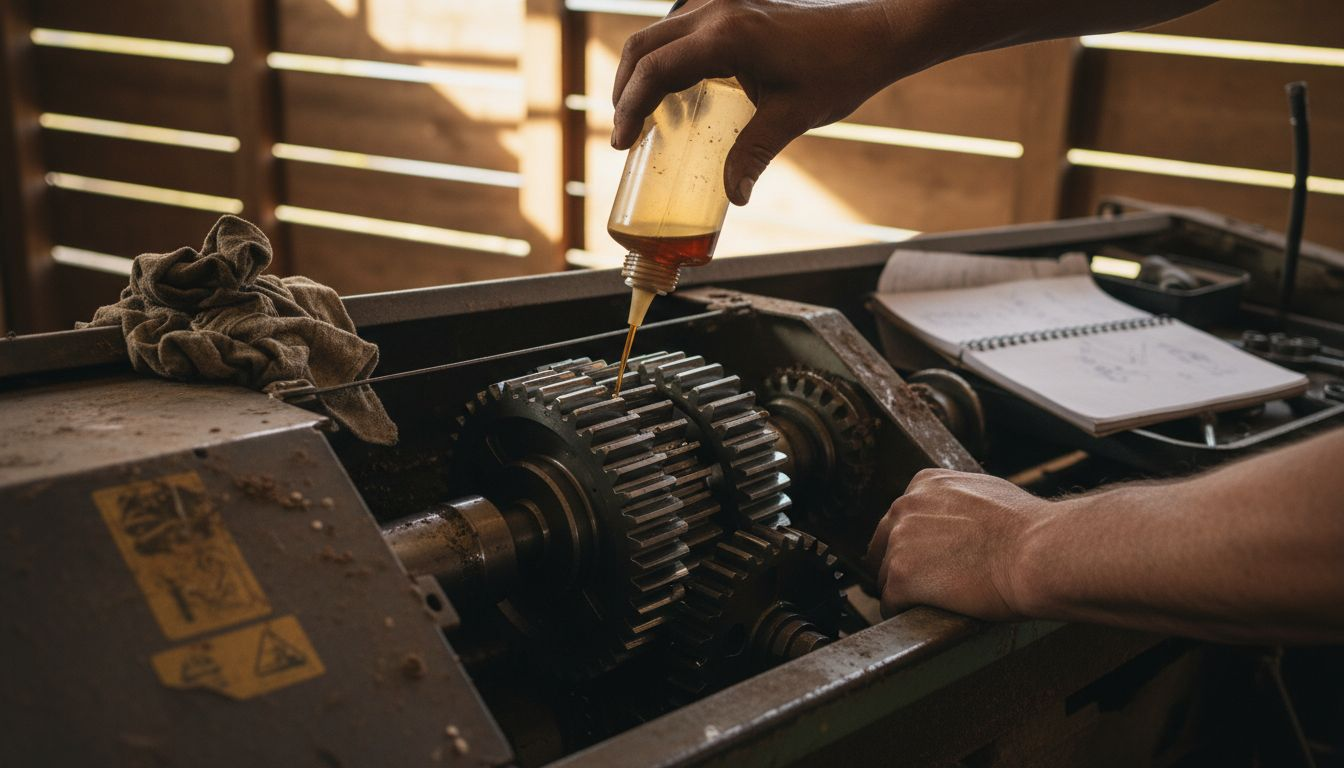
The protective capabilities of lubricants extend across multiple critical machinery components, including bearings, gears, axles, and transmission systems. By establishing a microscopic barrier between metal surfaces, lubricants prevent direct metal-to-metal contact, dramatically reducing friction, heat generation, and the mechanical wear that can compromise equipment functionality. This protective mechanism is particularly crucial in agricultural environments where machinery operates under extreme conditions, including dust, temperature fluctuations, and continuous high-stress performance.
Proper lubrication strategies ensure reduced maintenance requirements and optimized operating costs, ultimately extending the functional lifetime of expensive agricultural equipment. The lubricant’s role goes beyond simple friction reduction, acting as a comprehensive protective system that manages heat dissipation, prevents corrosion, seals against contaminants, and maintains the precision engineering of sophisticated farm machinery components.
Pro Maintenance Insight: Implement a regular lubrication inspection schedule, checking lubricant levels, quality, and potential contamination at least quarterly to catch potential mechanical issues before they escalate into costly equipment failures.
Proper Lubrication Intervals and Techniques
Establishing appropriate lubrication intervals and techniques is fundamental to preventing mechanical wear and maintaining agricultural equipment efficiency. Agricultural machinery operates under extreme conditions that demand precise and consistent lubrication strategies, with each equipment type requiring a unique approach to maintenance and lubricant application.
Typical lubrication intervals vary significantly depending on equipment type, usage intensity, and manufacturer recommendations. Tractors, combines, and heavy agricultural machinery typically require more frequent lubrication checks, often ranging from every 8 to 50 operating hours. Critical components like bearings, gears, and hydraulic systems demand meticulous attention, with operators needing to monitor lubricant quality, viscosity, and potential contamination during routine inspections.
The following table summarizes typical lubrication needs for major farm equipment components:
| Component | Lubricant Type | Inspection Frequency |
|---|---|---|
| Bearings | Grease or oil | Every 8-24 hours |
| Gears/Transmissions | Gear oil or synthetic | Every 24-50 hours |
| Hydraulic Systems | Hydraulic fluid | Every 50 hours |
| Engine | Engine oil | Every 50-100 hours |
Implementing proper lubrication practices involves selecting suitable lubricants and adhering to precise maintenance schedules, which directly impact equipment performance and longevity. Farmers should develop comprehensive lubrication protocols that include systematic visual inspections, lubricant sampling, and documentation of maintenance activities. Advanced techniques such as condition monitoring, spectrographic oil analysis, and predictive maintenance can help identify potential mechanical issues before they escalate into costly equipment failures.
Pro Maintenance Strategy: Create a detailed lubrication log for each piece of equipment, tracking application dates, lubricant types, and observed machinery performance to establish a data-driven approach to preventative maintenance.
Common Lubrication Mistakes and Their Consequences
Neglecting proper lubrication can lead to catastrophic machinery failures, dramatically increasing operational risks and maintenance costs. Agricultural equipment represents a significant financial investment, and seemingly minor lubrication errors can trigger cascading mechanical problems that compromise entire machinery systems.
One of the most prevalent lubrication mistakes involves using incorrect lubricant types or mixing incompatible products. Farmers often unknowingly select lubricants based on price or availability, disregarding specific manufacturer recommendations. This practice can cause chemical reactions within machinery components, accelerating wear, reducing performance, and potentially voiding equipment warranties. Viscosity mismatches, contamination, and improper lubricant storage further compound these risks, leading to premature component degradation.
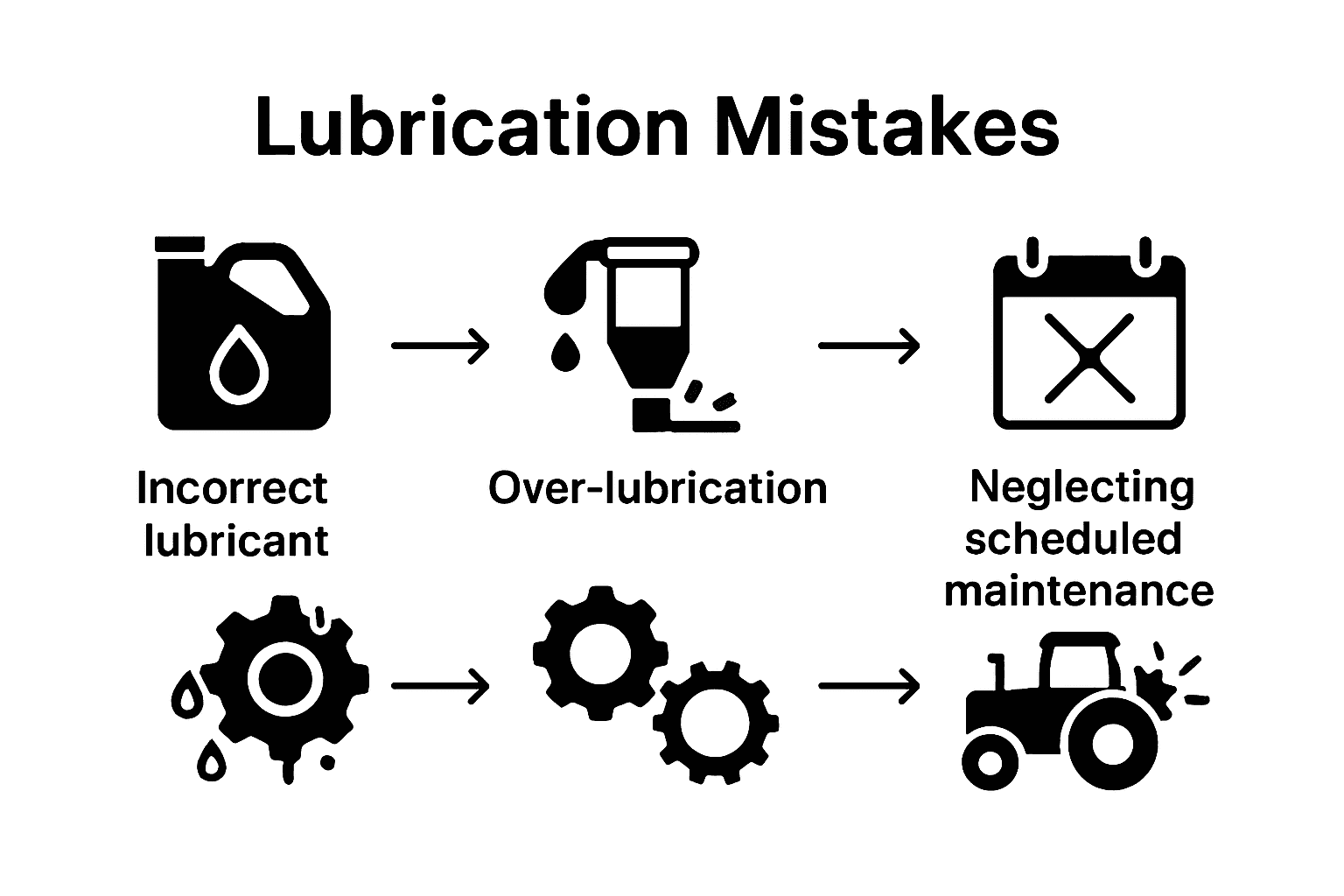
Inadequate lubrication practices can result in severe consequences such as corrosion, reduced performance, and dramatically shortened equipment lifespan. Common mistakes include infrequent lubrication intervals, over-lubrication, using contaminated lubricants, and failing to conduct regular lubricant quality assessments. These errors create microscopic damage mechanisms that progressively compromise mechanical integrity, with potential repair costs far exceeding the expense of proper maintenance.
Pro Prevention Strategy: Develop a color-coded lubrication tracking system for each piece of equipment, documenting lubricant type, application date, and inspection notes to systematically prevent maintenance oversights.
Protect Your Farm Equipment with the Right Parts from PexLivanidis
Maintaining proper lubrication is essential to prevent costly mechanical wear and extend the life of your agricultural machinery. If you are dealing with challenges like selecting the correct lubricants, avoiding contamination, or following rigorous maintenance schedules you understand how critical every component is in ensuring smooth operation. Choosing high-quality spare parts and accessories that meet manufacturer standards supports effective lubrication and equipment longevity.
At PexLivanidis we offer a comprehensive range of agricultural machinery parts designed to keep your tractors and farm equipment running at peak performance. From reliable tractor accessories to specialized spare parts every item is selected to help you avoid the common lubrication pitfalls discussed in the article. Don’t wait for machinery failures to disrupt your work. Explore our large inventory with over 20,000 items, enjoy free shipping within Greece on qualifying orders, and get your equipment the care it deserves today.
Discover how the right parts can boost your maintenance routine and safeguard your investment by visiting PexLivanidis Online Store. Take action now and create a detailed lubrication and repair plan using our trusted products to secure uninterrupted farm productivity.
Frequently Asked Questions
What is the importance of lubrication for farm equipment?
Lubrication is crucial for reducing friction and protecting mechanical components in agricultural machinery from wear and damage. It also helps optimize performance and prolong the equipment’s lifespan by forming a protective barrier against mechanical stress.
What are the different types of lubricants used in farm equipment?
Farm equipment lubricants include mineral oils, synthetic lubricants, vegetable-based oils, and animal fats. Each type is selected based on specific equipment requirements, operating conditions, and manufacturer recommendations to ensure optimal performance.
How often should I lubricate my farm equipment?
Lubrication intervals vary based on equipment type and usage intensity. Generally, critical components like bearings and gears should be inspected and lubricated every 8 to 50 operating hours, depending on the equipment’s specific maintenance guidelines.
What are common lubrication mistakes and their consequences?
Common mistakes include using the wrong lubricant type, infrequent lubrication, and contamination. These errors can lead to mechanical failures, reduced performance, and a significantly shortened lifespan of the equipment, resulting in higher repair costs.