

Nearly 50 percent of unexpected farm equipment failures can be traced back to poor or skipped lubrication. For anyone working in agriculture, reliable machinery is more than a convenience. It represents the difference between a productive harvest and costly delays. Understanding how proper lubrication works—and why it matters—can help keep tractors, harvesters, and other vital equipment running stronger for longer seasons.
Key Takeaways
| Point | Details |
|---|---|
| Importance of Lubrication | Lubrication is essential for extending the life and efficiency of agricultural equipment, significantly reducing wear and preventing breakdowns. |
| Different Lubricant Types | Choosing the appropriate lubricant type—mineral, synthetic, or specialty—affects machinery performance and reliability. |
| Economic Benefits | Regular lubrication minimizes maintenance costs and downtime, enhancing overall operational efficiency and prolonging equipment lifespan. |
| Best Practices | Implement a systematic lubrication management system to prevent contamination and ensure consistent, proactive maintenance of equipment. |
Table of Contents
- What Lubrication Means For Agricultural Equipment
- Types Of Lubricants And Their Applications
- Benefits Of Regular Equipment Lubrication
- Risks And Costs Of Skipping Lubrication
- Best Practices For Effective Lubrication
What Lubrication Means for Agricultural Equipment
Lubrication isn’t just another maintenance task. It’s the silent guardian that keeps agricultural machinery running smoothly, preventing costly breakdowns and extending equipment life. When you understand lubrication, you protect your most significant investments: your tractors, harvesters, and specialized farming equipment.
At its core, lubrication reduces friction between moving mechanical parts. Think of it like blood flowing through your body’s veins – lubricants are the lifeblood of agricultural machinery. They perform several critical functions:
- Reduces mechanical wear by creating a protective film between metal surfaces
- Dissipates heat generated by mechanical friction
- Prevents corrosion by blocking moisture and oxidation
- Helps seal components against dust, dirt, and external contaminants
For farmers and agricultural equipment operators, proper lubrication translates directly into operational efficiency. A well-lubricated machine experiences less downtime, lower repair costs, and more consistent performance across challenging agricultural environments. Whether you’re working in the rocky fields of northern Greece or the flat plains of Thessaloniki, understanding lubrication means protecting your equipment’s longevity and your farm’s productivity.
Types of Lubricants and Their Applications
Navigating the world of agricultural equipment lubrication means understanding the different lubricant types that keep your machinery running smoothly. Not all lubricants are created equal, and choosing the right one can mean the difference between peak performance and premature equipment failure.
Mineral-Based Lubricants
Traditional mineral oils remain a popular choice for many agricultural applications. Derived from refined crude oil, these lubricants offer:
- Good general-purpose protection
- Lower initial cost
- Suitable for standard temperature ranges
- Effective for older equipment designs
Synthetic Lubricants
Synthetic lubricants represent the cutting edge of machinery protection. Engineered at a molecular level, these advanced lubricants provide superior performance in extreme conditions. They excel in:
- High-temperature environments
- Extreme cold weather operations
- Extended maintenance intervals
- Reduced friction and wear
Specialty Agricultural Lubricants
Some agricultural equipment requires specialized lubrication solutions. Multipurpose greases and hydraulic fluids are critical for specific machinery components like:
Here’s a comparison of the main agricultural lubricant types and their applications:
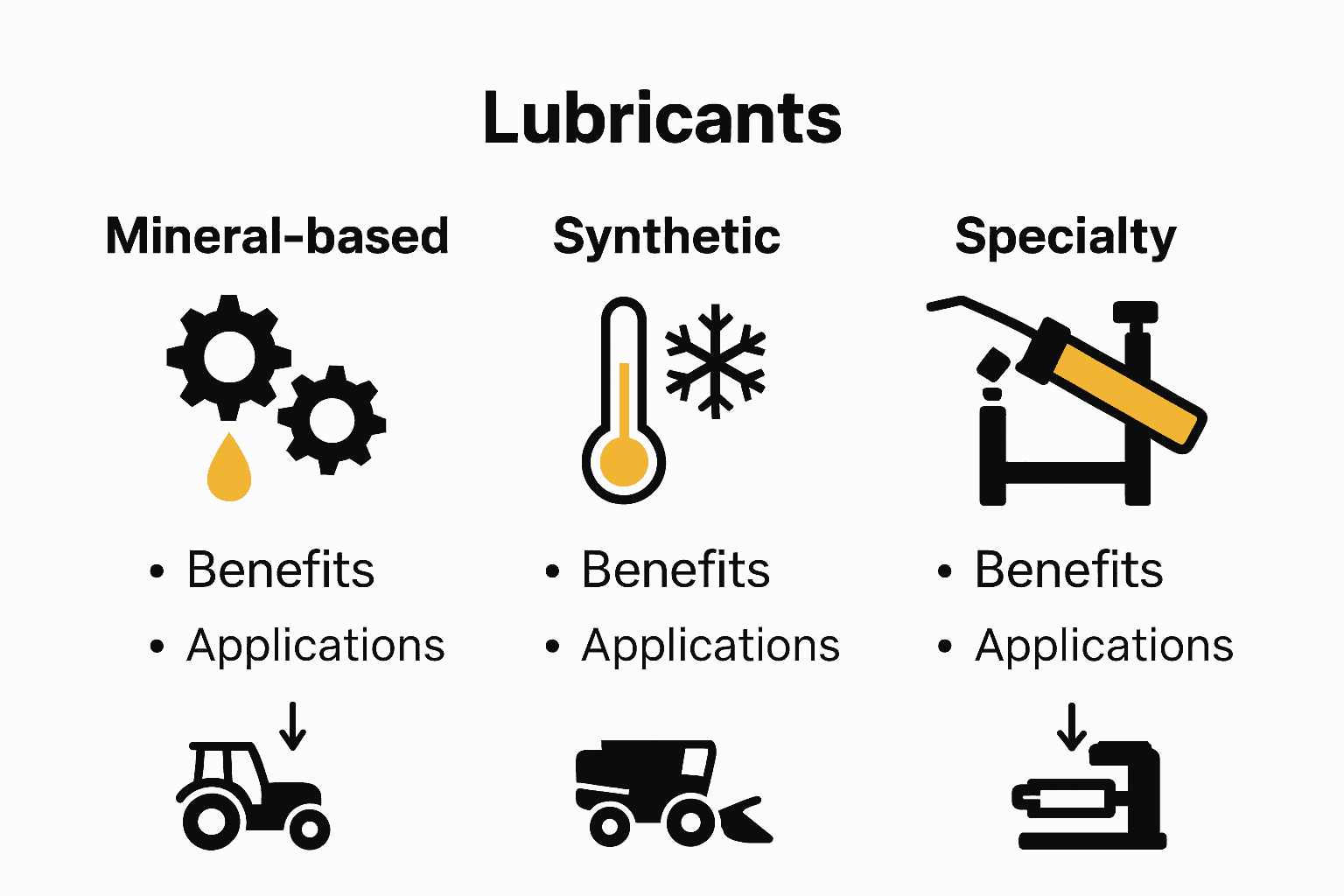
| Lubricant Type | Key Benefits | Typical Use Cases |
|---|---|---|
| Mineral-Based Oils | General protection Low cost Good for standard temps |
Older equipment General farming machinery |
| Synthetic Lubricants | High/low temp performance Longer intervals Reduces wear |
Modern engines Extreme conditions |
| Specialty Lubricants | Tailored protection Handles unique loads & parts |
Hydraulic systems Bearings Complex joints |
- Tractor transmission systems
- Harvester bearings
- Hydraulic lift mechanisms
- Complex mechanical joints
Choosing the right lubricant isn’t just about protection – it’s about optimizing your equipment’s performance, reducing maintenance costs, and ensuring your agricultural machinery continues to perform reliably across diverse working conditions.
Benefits of Regular Equipment Lubrication
Regular lubrication is the heartbeat of agricultural machinery maintenance, transforming routine care into a strategic investment for your equipment’s longevity and performance. Farmers who understand this principle can significantly extend the operational life of their expensive machinery while minimizing unexpected breakdowns.
Extending Equipment Lifespan
Consistent lubrication creates a protective barrier that dramatically reduces mechanical wear. By preventing direct metal-to-metal contact, you’re essentially giving your agricultural equipment a shield against premature aging. The benefits are clear:
- Reduces friction-related mechanical damage
- Prevents premature component failure
- Maintains optimal mechanical tolerances
- Preserves equipment’s original manufacturing specifications
Economic Impact
Beyond mechanical protection, regular lubrication delivers substantial economic advantages. Think of lubrication as a small investment that prevents massive repair costs. The financial benefits include:
- Lower maintenance and repair expenses
- Reduced equipment downtime
- Extended intervals between major equipment replacements
- Improved overall operational efficiency
Performance and Reliability
Properly lubricated machinery performs consistently across challenging agricultural environments. Whether you’re working in the demanding terrains of Thessaloniki or the variable climate zones of Greece, well-maintained equipment ensures your farm operates at peak productivity. Regular lubrication isn’t just maintenance – it’s a critical strategy for agricultural success.
Risks and Costs of Skipping Lubrication
Neglecting lubrication is like driving a car without oil – a recipe for catastrophic equipment failure. Agricultural machinery represents a significant financial investment, and skipping routine lubrication can transform a minor maintenance task into a major economic disaster. The consequences extend far beyond simple mechanical wear.
Mechanical Destruction
Without proper lubrication, agricultural equipment suffers immediate and severe mechanical consequences:
- Accelerated component wear
- Increased friction and heat generation
- Rapid deterioration of critical mechanical interfaces
- Premature bearing and gear system failures
Financial Implications
The true cost of skipping lubrication goes well beyond repair expenses. Each moment of equipment downtime represents lost productivity and potential revenue. Consider the financial risks:
- Unexpected machinery replacement costs
- Extended repair times
- Lost agricultural production windows
- Reduced equipment resale value
- Higher long-term maintenance expenses
Operational Reliability
Farmers depend on equipment functioning precisely when needed. Inadequate lubrication introduces unpredictability into your agricultural operations. A single equipment failure during critical planting or harvesting periods can translate into thousands of euros in potential losses. Smart farmers understand that preventative maintenance isn’t an expense – it’s an investment in consistent, reliable agricultural performance.
Best Practices for Effective Lubrication
Effective lubrication goes far beyond simply applying oil or grease to machinery. It’s a strategic approach that requires precision, knowledge, and consistent methodology. Farmers and agricultural equipment operators must develop a comprehensive lubrication management system to protect their valuable investments.
Contamination Prevention
According to Machinery Lubrication, maintaining cleanliness is critical in lubrication management. Your lubrication strategy should focus on:
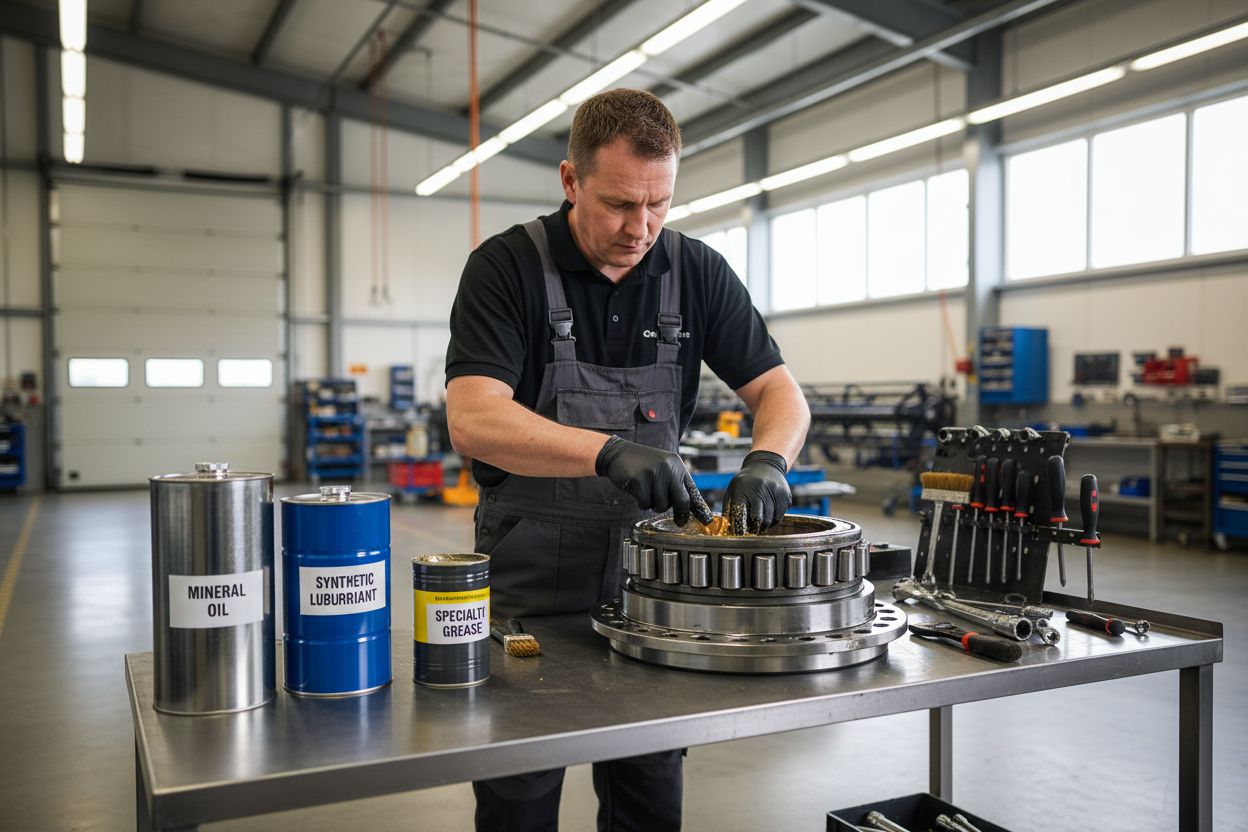
- Storing lubricants in sealed, contamination-free containers
- Using color-coded tools to prevent lubricant mixing
- Clearly labeling all lubricant containers
- Creating dedicated storage areas for different lubricant types
Systematic Lubrication Approach
Developing a structured lubrication routine transforms maintenance from a reactive to a proactive process. This means:
- Creating detailed lubrication schedules
- Tracking equipment lubrication history
- Using precision measurement tools
- Implementing regular equipment inspection protocols
Training and Knowledge
Lubrication is a specialized skill that requires ongoing education. Invest in:
- Regular staff training sessions
- Understanding equipment-specific lubrication requirements
- Learning about different lubricant characteristics
- Staying updated on emerging lubrication technologies
Remember, effective lubrication isn’t an expense – it’s an investment in your agricultural equipment’s longevity and performance.
Protect Your Equipment and Keep Your Farm Moving
Are you worried about unexpected breakdowns or expensive repairs from poorly maintained machinery? As highlighted in “The Essential Guide to Lubricating Agricultural Equipment,” improper lubrication is one of the biggest threats to your equipment’s reliability and your farm’s bottom line. When routine maintenance gets missed, even a single failed part can lead to costly delays and lost productivity. If you want to keep your tractors and harvesters running for years to come, having immediate access to the right spare parts and tractor accessories is just as important as using the best lubricants.
Discover peace of mind and unbeatable variety at pexlivanidis.com. With over 20000 products in stock, lightning-fast product searches, and secure transactions, we ensure you never run out of essential components. Enjoy free shipping throughout Greece on orders over 100 euros and explore special wholesale options for serious professionals. Protect your machinery and keep your harvest on schedule—visit pexlivanidis.com now to find exactly what your equipment needs today.
Frequently Asked Questions
What is lubrication and why is it important for agricultural equipment?
Lubrication is the process of applying a substance to reduce friction between moving parts of machinery. It’s crucial for agricultural equipment as it prevents costly breakdowns, extends the equipment’s life, reduces mechanical wear, dissipates heat, and protects against corrosion.
What are the different types of lubricants used in agricultural equipment?
The main types of lubricants used are mineral-based lubricants, synthetic lubricants, and specialty agricultural lubricants. Mineral oils are cost-effective for general use, synthetic lubricants offer superior performance in extreme conditions, and specialty lubricants are designed for specific machinery needs.
How often should agricultural equipment be lubricated?
The frequency of lubrication depends on the equipment type and usage conditions. A structured lubrication schedule based on equipment requirements and inspection protocols is recommended to ensure optimal performance and longevity.
What are the risks of neglecting lubrication in agricultural machinery?
Neglecting lubrication can lead to accelerated wear, increased friction, and severe mechanical failures. This results in unexpected repair costs, downtime, lost productivity, and higher long-term maintenance expenses.