

Knowing how to keep agricultural machinery running smoothly is a daily challenge for operators and repair professionals across Northern Greece. Understanding the mechanical transmission fundamentals can make the difference between reliable equipment and costly downtime. With common misconceptions often leading to unnecessary repairs or unsafe practices, this guide cuts through the confusion, providing clear explanations and practical insight into how tractor transmission systems really work.
Table of Contents
- Mechanical Transmission Fundamentals And Misconceptions
- Types Of Mechanical Transmission Systems In Tractors
- How Mechanical Transmission Works In Agricultural Machinery
- Key Components And Features Explained
- Risks, Maintenance Costs, And Common Mistakes
- Comparing Mechanical To Alternative Transmission Systems
Key Takeaways
| Point | Details |
|---|---|
| Understanding Transmission Complexity | Mechanical transmissions involve intricate interactions beyond simple gearboxes, crucial for efficient machinery operations. |
| Maintenance is Essential | Regular inspections and proper lubrication are vital to prevent mechanical failures and optimize performance. |
| Diverse Transmission Types | Tractors employ various transmission systems tailored to specific agricultural tasks, impacting overall efficiency and effectiveness. |
| Innovations in Alternatives | Emerging electric and hydrostatic systems present opportunities for enhanced precision and efficiency, though initial costs can be high. |
Mechanical transmission fundamentals and misconceptions
Mechanical transmissions represent sophisticated power transfer systems that transform mechanical energy across agricultural machinery. At their core, these devices use interconnected gears to modify speed, torque, and directional movement, enabling complex machinery operations. Mechanical transmission systems) are essential components that allow agricultural equipment to operate efficiently under varying working conditions.
Many operators harbor significant misunderstandings about how transmissions function. One common misconception is equating transmissions with simple gearboxes, when in reality, transmissions encompass more complex mechanical interactions. Engineering research reveals that persistent alternative mental models can impede accurate understanding of mechanical power transfer principles. These misconceptions frequently stem from incomplete technical knowledge and oversimplified perspectives on machinery dynamics.
Understanding mechanical transmission fundamentals requires recognizing their multifaceted nature. Key components include:
- Gear systems that modify rotational speed
- Power transfer mechanisms
- Torque conversion elements
- Directional change capabilities
Successful agricultural machinery operators must develop nuanced comprehension of these systems, moving beyond surface level understanding to grasp the intricate interactions between mechanical components.
The following table summarizes common misconceptions about mechanical transmissions and their actual explanations:
| Misconception | Actual Explanation | Impact on Operation |
|---|---|---|
| Transmissions are just simple gearboxes | Transmissions involve complex gear systems | Underestimating maintenance needs |
| Speed adjustment only affects travel | Speed and torque both change simultaneously | Can cause inefficient power use |
| Gears can be shifted at any time | Shifting incorrectly can damage components | Increased risk of mechanical failure |
| All tractors use the same transmission | Transmission types vary by application | Improper equipment selection |
Pro tip: Always inspect transmission components for wear and lubrication before extended machinery operations to prevent potential mechanical failures and optimize performance.
Types of mechanical transmission systems in tractors
Agricultural tractors utilize diverse mechanical transmission systems designed to optimize power transfer and operational efficiency across varying farming conditions. These transmission systems are engineered to handle different agricultural tasks, ranging from light field work to heavy-duty agricultural operations. The primary types of tractor transmission systems include gear-driven, hydrostatic, and continuously variable transmissions (CVTs), each offering unique performance characteristics.
Traditional mechanical transmissions typically incorporate multi-speed gearboxes that provide precise forward and reverse speed options. Tractor transmission designs have evolved to include sophisticated hydro-mechanical and hydrostatic variants that offer enhanced speed and torque control. These advanced systems enable farmers to achieve more nuanced power management, allowing for smoother acceleration and more efficient energy transfer across different agricultural terrains and tasks.
The primary categories of mechanical transmission systems in tractors include:
- Manual gear transmissions with fixed ratios
- Hydrostatic transmissions with variable speed control
- Continuously variable transmissions (CVTs)
- Powershift transmissions with electronic gear shifting
Each transmission type presents unique advantages depending on specific agricultural requirements, machinery design, and operational complexity. Row crop tractors, general-purpose tractors, and specialized agricultural machines feature transmission systems tailored to their specific operational demands.
Pro tip: Regularly consult your tractor’s manufacturer guidelines to understand the specific maintenance requirements for your transmission system and optimize its long-term performance.
How mechanical transmission works in agricultural machinery
Mechanical transmission in agricultural machinery represents a sophisticated power transfer system that converts engine power through complex gear arrangements to meet diverse farming requirements. At its core, the transmission system acts as a critical intermediary between the engine and agricultural implements, transforming raw mechanical energy into precisely controlled movement and force. This intricate process allows tractors and farm equipment to adapt power output to specific tasks like plowing, planting, and harvesting.
Agricultural machinery transmissions operate through a network of interconnected mechanical components including gear trains, clutches, and drive shafts. These systems are engineered to provide multiple speed options and torque variations, enabling farmers to maintain optimal performance across different terrain and crop conditions. The transmission’s primary functions include:
- Adjusting rotational speed
- Modifying power transfer efficiency
- Enabling directional changes
- Controlling implement interaction
The mechanical transmission’s design incorporates multiple gear ratios that allow operators to match engine power with specific agricultural tasks. By utilizing different gear configurations, farmers can optimize fuel consumption, reduce mechanical strain, and enhance overall equipment performance. This dynamic power management ensures that tractors can efficiently handle everything from light field preparation to heavy-duty harvesting operations.

Pro tip: Perform regular transmission fluid checks and maintain proper lubrication to prevent premature wear and ensure smooth power transfer in your agricultural machinery.
Key components and features explained
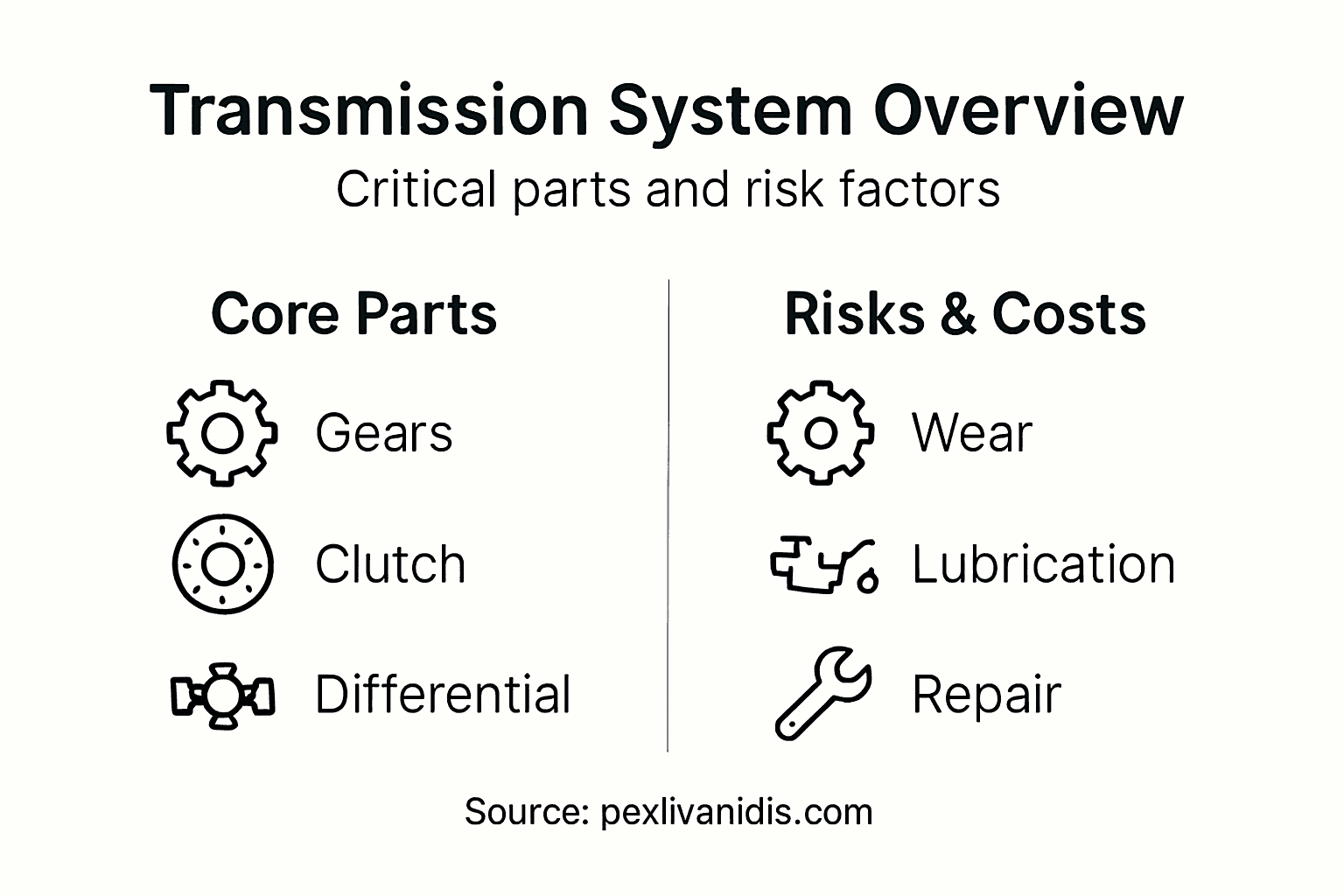
Mechanical transmission systems incorporate several critical key transmission components that work in precise synchronization to transfer power efficiently. These essential elements include input shafts, gear sets, clutches, differentials, and output shafts, each playing a unique role in converting engine power into controlled mechanical movement. The intricate interaction between these components determines the overall performance and reliability of agricultural machinery transmission systems.
Innovative transmission design has evolved to include advanced features that enhance power transfer efficiency. Modern transmission systems integrate sophisticated technologies such as synchronizers, power take-off units, and multiple gear ratios. These features enable operators to optimize performance across diverse agricultural environments, allowing for precise power management and adaptability to varying field conditions.
The primary components of mechanical transmissions include:
- Input shaft: Receives initial power from the engine
- Gear sets: Modify speed and torque
- Clutch system: Enables smooth power engagement and disengagement
- Differential: Distributes power between wheels
- Output shaft: Transfers modified power to implements
- Power take-off (PTO) unit: Connects to external agricultural equipment
Pro tip: Conduct periodic inspections of transmission components, paying special attention to gear wear, lubrication levels, and shaft alignment to prevent unexpected machinery failures.
Risks, maintenance costs, and common mistakes
Mechanical transmissions in agricultural machinery present significant safety risks and maintenance challenges that demand careful attention from operators and farm managers. Unguarded moving parts, potential mechanical failures, and complex system interactions create substantial workplace hazards that can lead to severe accidents if proper precautions are not implemented. Understanding these risks is crucial for preventing equipment damage, reducing downtime, and protecting worker safety.
Maintenance activities in mechanical systems involve complex risk management that goes beyond simple equipment upkeep. Common mistakes that dramatically increase operational costs and safety risks include:
- Neglecting scheduled maintenance intervals
- Improper lubrication of transmission components
- Ignoring manufacturer safety guidelines
- Insufficient worker training on equipment operation
- Failing to conduct regular safety inspections
- Not isolating energy sources during repair work
The economic impact of these mistakes can be substantial, with potential repair costs ranging from minor component replacements to complete transmission system overhauls. Transmission failures can result in significant agricultural productivity losses, making proactive maintenance and risk management essential for farm operations. Operators must develop a comprehensive approach that combines regular inspections, proper training, and strict adherence to safety protocols.
Pro tip: Develop a comprehensive maintenance log documenting every inspection, repair, and component replacement to track transmission system health and predict potential future failures.
Comparing mechanical to alternative transmission systems
Traditional mechanical transmissions in agricultural machinery have long been the standard, but emerging technologies are challenging their dominance. Hybrid and electric drivetrains are introducing innovative alternatives that promise improved efficiency, reduced emissions, and enhanced power management. These emerging systems offer compelling advantages that address some of the inherent limitations of classic mechanical transmission designs.
Alternative transmission technologies present distinct operational characteristics compared to traditional mechanical systems. The primary alternative transmission types include:
- Hydrostatic transmissions
- Provides infinite speed variation
- Enables smooth operational transitions
- Continuously Variable Transmissions (CVTs)
- Seamless ratio changes
- Improved fuel economy
- Electric drive systems
- High precision control
- Fewer mechanical components
- Enhanced efficiency for precision agriculture
While mechanical transmissions remain robust and straightforward, alternative systems demonstrate significant potential for improving agricultural machinery performance. Electric and hybrid technologies particularly show promise in reducing operational costs, minimizing environmental impact, and providing more sophisticated power management. However, challenges such as initial investment costs, battery technology limitations, and infrastructure requirements continue to temper widespread adoption.
This comparison table highlights differences between mechanical, hydrostatic, and electric transmission systems in agricultural equipment:
| Transmission Type | Main Advantage | Limitation | Best Use Case |
|---|---|---|---|
| Mechanical | Robust construction, simple repair | Limited speed flexibility | Heavy-duty field operations |
| Hydrostatic | Smooth variable speed control | Lower efficiency at high power | Tasks needing frequent speed changes |
| Electric | High precision, low emissions | High upfront cost, battery limits | Precision farming, short tasks |
Pro tip: Evaluate your specific agricultural operational needs comprehensively before transitioning from mechanical to alternative transmission systems, considering factors like terrain, crop type, and long-term maintenance requirements.
Ensure Peak Performance with Reliable Mechanical Transmission Parts
Understanding the complex nature of mechanical transmissions and their crucial role in farm machinery highlights the importance of using high-quality, durable components. Issues like gear wear, improper lubrication, and frequent maintenance demands can lead to costly breakdowns and safety risks. If you want to avoid these challenges and extend the life of your equipment, sourcing trusted tractor accessories and spare parts designed for efficient power transfer is essential.
At pexlivanidis.com, we offer a comprehensive selection of over 20,000 agricultural machinery parts including critical transmission components. Whether you are seeking gears, clutches, or drive shafts, our inventory supports both retail and wholesale customers in Thessaloniki, Kavala, and surrounding regions. Take control of your farm machinery’s reliability today and browse our tractor accessories and spare parts to secure the components that keep your transmission running smoothly. Visit pexlivanidis.com now and order with confidence to benefit from expert support and free shipping on qualifying orders.
Frequently Asked Questions
What are the main components of a mechanical transmission system in agricultural machinery?
The key components of a mechanical transmission system include the input shaft, gear sets, clutch system, differential, output shaft, and power take-off (PTO) unit. Each part plays a vital role in converting engine power into controlled movement and performance.
How does a hydrostatic transmission differ from a traditional mechanical transmission?
A hydrostatic transmission provides smooth variable speed control and allows for infinite speed variation, making it ideal for tasks that require frequent speed changes. In contrast, traditional mechanical transmissions offer fixed gear ratios and are often seen as more robust for heavy-duty operations.
What are common misconceptions about mechanical transmissions in agricultural machinery?
Many believe that transmissions are simply gearboxes, overlooking the complexity of power transfer systems that include various mechanical interactions. Misunderstandings often lead to inadequate maintenance and operational inefficiencies.
What maintenance practices are essential for mechanical transmissions?
Regularly inspect transmission components for wear and lubrication, adhere to scheduled maintenance intervals, and maintain proper training on equipment operation. Documenting maintenance activities can also help track the system’s health and anticipate potential failures.