

Did you know that poor axle design can slash a tractor’s efficiency by up to 20 percent? Many farmers underestimate the advanced engineering inside these critical components. Axles handle more than just holding wheels in place, influencing everything from power delivery to field stability. Recognizing how different axle designs and features work can mean the difference between smooth harvests and costly machine breakdowns for anyone working the land.
Key Takeaways
| Point | Details |
|---|---|
| Axle Design is Critical | Tractor axles play a vital role in performance, stability, and efficiency. Proper understanding enables smarter maintenance and operational strategies. |
| No One-Size-Fits-All | Different farming conditions require specialized axle types tailored for specific tasks and environments. Choosing the right axle enhances productivity and minimizes risks. |
| Maintenance is Essential | Regular inspections and proper lubrication are keys to prolonging axle life and performance. Ignoring issues can lead to costly equipment damage and downtime. |
| Understanding Components Matters | Knowledge of axle components, such as bearings and beams, aids in making informed decisions regarding repairs and upgrades for optimal functionality. |
Table of Contents
- Tractor Axles Explained: Fundamentals and Myths
- Main Types of Tractor Axles Compared
- How Tractor Axles Function in Machinery
- Key Features and Parts of a Tractor Axle
- Common Problems and Maintenance Tips
Tractor Axles Explained: Fundamentals and Myths
Tractor axles are far more complex than most farmers realize. These critical mechanical components do much more than simply connecting wheels to your tractor – they are sophisticated engineering marvels that determine vehicle performance, stability, and overall operational efficiency.
According to the “Fundamentals of Tractor Design” textbook, axle design plays a pivotal role in several key areas:
- Torque Transmission: Axles transfer power from the engine to the wheels
- Chassis Integration: They provide structural support for the entire vehicle
- Traction Control: Influence how effectively the tractor grips different terrain
- Stability Management: Ensure balanced weight distribution during operation
Many farmers believe all axles are created equal. Not true. Modern agricultural engineering has developed specialized axle configurations designed for specific farming conditions. Front axles might handle steering and light load bearing, while rear axles manage primary power transmission and heavy lifting. The myth that “one axle fits all” can lead to significant performance limitations and potential equipment damage.
Understanding your tractor’s axle system isn’t just technical knowledge – it’s a strategic advantage. By recognizing how these components interact, you can make smarter maintenance decisions, optimize performance, and potentially extend your equipment’s operational lifespan. Smart farmers know their machinery’s strengths and limitations.
Main Types of Tractor Axles Compared
Tractor axles aren’t a one-size-fits-all solution. Different farming environments and operational needs demand specialized axle configurations that can dramatically impact performance, maneuverability, and overall machine efficiency.
According to TractorData’s article on front axle types, farmers have several front axle configurations to choose from:
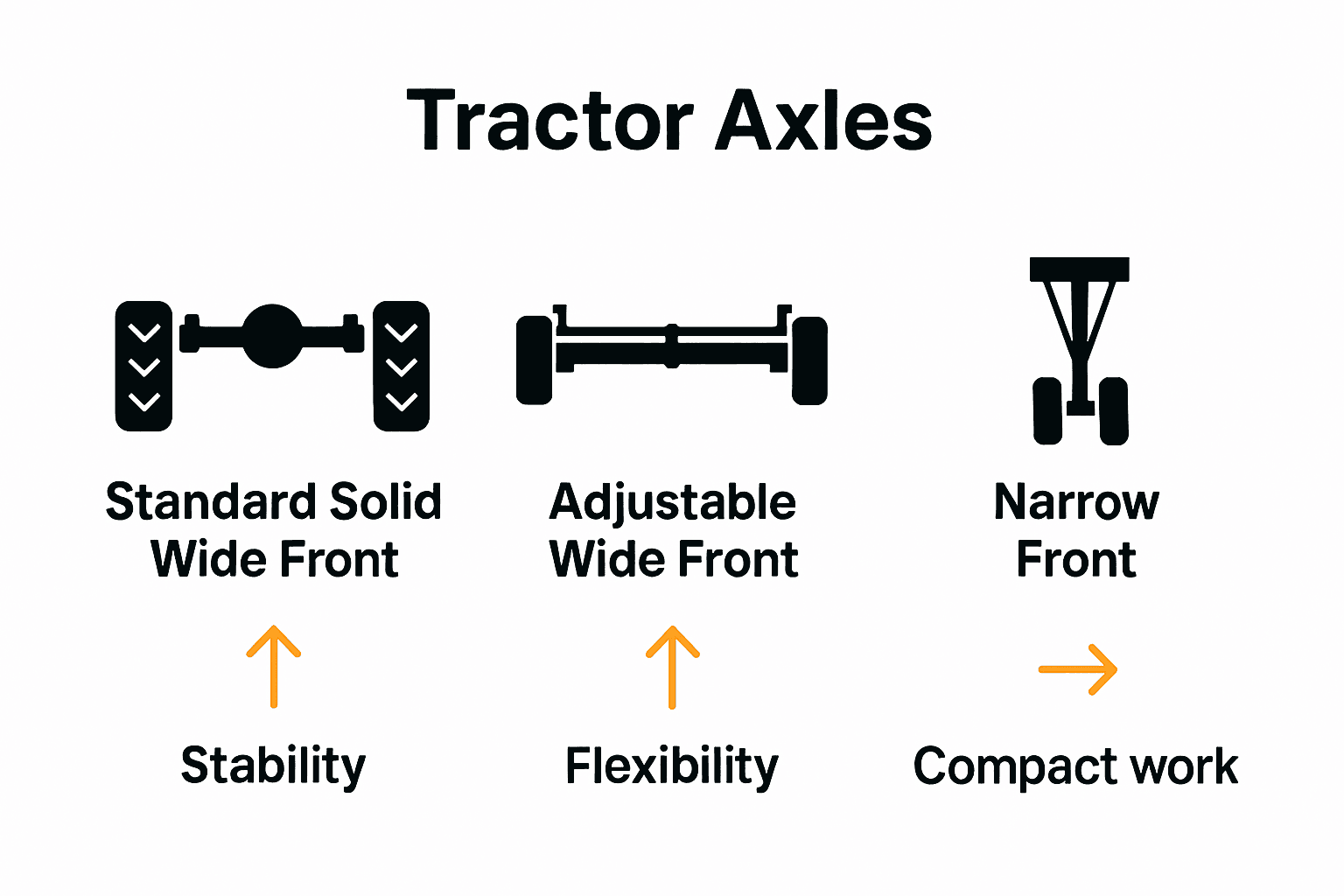
- Standard Solid Wide Front: Traditional design providing robust stability
- Adjustable Wide Front: Offers flexibility for varying row crop spacing
- Narrow Front: Ideal for tight spaces and reduced soil compaction
Braking and Drive Systems represent another critical differentiator in axle design. BPW’s agricultural axle overview highlights three primary axle types:
- Unbraked Axles: Basic load-bearing configuration
- Self-Steering AGRO Turn Axles: Enhanced maneuverability for complex terrains
- Hydraulic Drive AGRO Drive Axles: Maximum traction and power transmission
The right axle isn’t just about moving forward – it’s about optimizing your tractor’s interaction with soil, terrain, and specific agricultural tasks. Each configuration brings unique advantages, whether you’re navigating delicate crop rows or handling heavy-duty fieldwork.
 Smart farmers understand that axle selection is a strategic decision that directly impacts productivity, fuel efficiency, and long-term equipment performance.
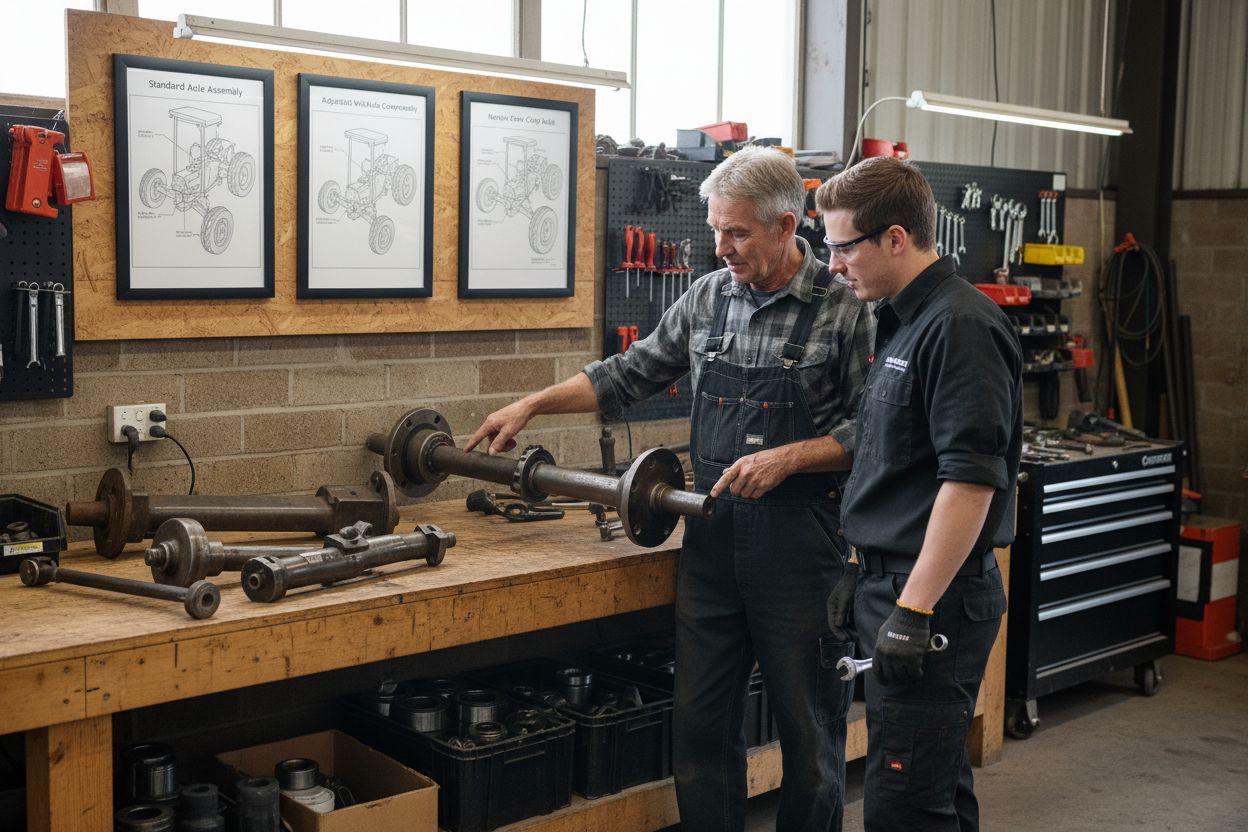
Choosing the appropriate axle type means considering factors like your specific crop, field layout, soil conditions, and typical load requirements. It’s not just engineering – it’s agricultural problem-solving at its finest.
Here’s a side-by-side comparison of main tractor axle types and their key characteristics:
| Axle Type | Key Features | Advantages |
|---|---|---|
| Standard Solid Wide Front | Rigid construction Stable support |
Enhanced stability Simple, durable design |
| Adjustable Wide Front | Movable axle width Fits various crop rows |
Greater field adaptability Improved maneuverability |
| Narrow Front | Compact Tight turning radius |
Ideal for row crops Minimizes soil compaction |
| Unbraked Axle | Load-bearing No integrated brakes |
Cost-effective Lower maintenance |
| Self-Steering AGRO Turn | Automatic steering Complex design |
Superior turning in tight fields Reduces crop damage |
| Hydraulic Drive AGRO Drive | Powered by hydraulics All-wheel drive |
Maximum traction Handles heavy loads |
How Tractor Axles Function in Machinery
Tractor axles are the silent workhorses of agricultural machinery, translating engine power into ground movement through an intricate dance of mechanical engineering. Think of them like the skeleton of your tractor – providing structure, support, and critical movement pathways.
The primary functions of tractor axles can be broken down into several key mechanical roles:
- Power Transmission: Transferring rotational energy from the engine to the wheels
- Load Distribution: Spreading the tractor’s weight evenly across different surfaces
- Steering Mechanism: Enabling directional control and maneuverability
- Suspension Support: Absorbing ground irregularities and maintaining vehicle stability
At the core of axle functionality is torque management. When your tractor’s engine generates power, the axles must efficiently convert that energy into forward momentum while managing complex variables like terrain resistance, load weight, and ground conditions. Front axles typically handle steering dynamics, while rear axles manage primary power transmission and bear the heaviest operational loads.
Understanding axle mechanics is like understanding the nervous system of your tractor. Each component works in sophisticated harmony – wheel bearings reduce friction, differential gears distribute power between wheels, and axle materials determine strength and flexibility. The right axle doesn’t just move you forward; it ensures smooth, efficient, and precise agricultural operations. Smart farmers recognize that axle performance isn’t just about movement – it’s about maximizing every inch of farming potential.
Key Features and Parts of a Tractor Axle
A tractor axle is a sophisticated system of interconnected components, each playing a critical role in machinery performance. According to the “Fundamentals of Tractor Design” textbook, axle engineering involves complex structural considerations that go far beyond simple mechanical connections.
Primary Components
The main parts of a tractor axle include:
- Axle Beam: The primary structural element supporting load and transferring power
- Wheel Bearings: Enables smooth rotational movement and reduces friction
- Steering Knuckles: Allows directional control and wheel articulation
- King Pins: Provides pivotal connection points for steering mechanisms
BPW’s agricultural axle overview highlights several advanced design features:
- Corrosion-Resistant Coated Beams: Extending axle longevity in harsh agricultural environments
- Camber Design: Optimizing tire wear and vehicle stability
- High-Quality Roller Bearings: Ensuring smooth power transmission
- Hydromechanical Steering Systems: Enhancing maneuverability
The structural integrity of an axle depends on precise engineering and material selection. Fatigue loading, beam dimensions, and load-bearing capacities are meticulously calculated to ensure maximum performance and reliability. Smart farmers understand that these aren’t just mechanical parts – they’re the backbone of agricultural productivity.
Choosing the right axle components means understanding your specific farming needs, terrain challenges, and operational demands. It’s a strategic decision that impacts everything from fuel efficiency to long-term equipment maintenance.
Common Problems and Maintenance Tips
Tractor axles are robust machinery components, but they’re not invincible. Understanding potential issues and implementing proactive maintenance can save farmers significant time, money, and operational disruptions.
Most common axle problems stem from several key sources:
- Excessive Load Stress: Overloading beyond manufacturer specifications
- Environmental Wear: Exposure to mud, sand, and extreme temperature variations
- Inadequate Lubrication: Friction-related component degradation
- Impact Damage: Unexpected terrain collisions or improper operation
Preventative maintenance requires a strategic approach:
- Regular Inspection: Check for visible wear, cracks, or alignment issues
- Lubrication Schedule: Apply high-quality lubricants at manufacturer-recommended intervals
- Load Management: Never exceed your tractor’s rated weight capacity
- Careful Operation: Minimize sudden impacts and aggressive maneuvers
Warning Signs that demand immediate professional attention include:
- Unusual vibrations during operation
- Uneven tire wear
- Grinding or clicking sounds from the axle area
- Visible rust or structural deformation
- Reduced steering responsiveness
Smart farmers treat axle maintenance like preventive healthcare for their equipment. Just as you wouldn’t ignore warning signs in your body, you shouldn’t overlook potential axle issues. Regular, thorough maintenance isn’t an expense – it’s an investment in your agricultural productivity and equipment longevity.
Take the Guesswork Out of Tractor Axle Maintenance and Parts
Reading about the technical details of tractor axles in our Complete Guide is one thing, but turning that knowledge into action is what keeps your farm running smoothly. If you have ever experienced unexpected breakdowns, struggled to find compatible axle components, or worried about equipment downtime, you are not alone. Many farmers know the frustration of axle issues, especially when dealing with complex configurations or trying to ensure the right fit for power transmission and stability.
At pexlivanidis.com, we make it easy to source the exact axle parts and accessories you need. Our marketplace features over 20,000 high-quality tractor products and our product inquiry forms ensure you find the right match for your unique machinery. Avoid the risk of costly repairs or extended downtime. Visit our main site, discover our inventory, or reach out directly through the contact page for expert support. Get your tractor axle solutions today and act now while free shipping is available in Greece on qualifying orders.
Frequently Asked Questions
What are the main functions of tractor axles?
Tractor axles play several critical roles, including power transmission from the engine to the wheels, load distribution across various surfaces, enabling steering control, and providing suspension support to absorb ground irregularities.
What are the different types of tractor axles available?
Tractors feature various axle types, such as Standard Solid Wide Front, Adjustable Wide Front, Narrow Front, Unbraked Axles, Self-Steering AGRO Turn Axles, and Hydraulic Drive AGRO Drive Axles, each designed for specific agricultural needs and conditions.
How can I maintain my tractor axles for optimal performance?
To maintain tractor axles, regularly inspect them for visible wear or alignment issues, adhere to a lubrication schedule, manage load to avoid exceeding capacity, and operate the tractor carefully to minimize impact damage.
What are common problems associated with tractor axles?
Common problems include excessive load stress, environmental wear from mud and temperature extremes, inadequate lubrication leading to degradation, and impact damage from rough terrain, which can affect the axle’s performance and longevity.