

More than 90 percent of modern tractors rely on a PTO system to power everything from mowers to balers. Without this key component, farms would need separate engines for each tool, costing far more time and money. Understanding how a tractor PTO works and why it matters can help you make smart choices about equipment and safety. This guide breaks down the basics, highlights common PTO types, and shows you how this ingenious system transforms any tractor into a true workhorse.
Table of Contents
- What Is A Tractor PTO? Core Concepts Explained
- Types Of Tractor PTOs And Key Differences
- How A Tractor PTO Works In Practice
- Common Applications And Compatible Implements
- Safe Operation And Typical PTO Hazards
- Mistakes To Avoid When Using A PTO
Key Takeaways
| Point | Details |
|---|---|
| Understanding PTO Types | Familiarize yourself with the different PTO types (Type 1, Type 2, Type 3) to select the right implement for specific tasks depending on their rotational speeds and requirements. |
| Safe Operation Practices | Adhere to safety protocols by using manufacturer shields, wearing appropriate clothing, and ensuring machinery is shut down before maintenance to mitigate hazards associated with PTO systems. |
| Maintaining PTO Efficiency | Regularly inspect and maintain PTO components to prevent wear and mechanical failures, ensuring optimal performance during operation. |
| Proper Attachment Procedures | Always verify compatibility and secure attachment of implements to the PTO to avoid accidents and damage during operation. |
What Is a Tractor PTO? Core Concepts Explained
A power take-off (PTO) is the mechanical powerhouse that transforms your tractor from a simple transportation vehicle into a versatile agricultural workhorse. According to Wikipedia, a PTO is “a device that transfers mechanical power from a tractor’s engine to an attached implement, enabling the implement to perform its intended function by utilizing the tractor’s power source.”
At its core, a PTO works like a mechanical transmission hub, connecting your tractor’s rotational engine power to various agricultural tools and machinery. This ingenious system allows farmers to power a wide range of implements without requiring separate engines for each piece of equipment. Imagine having a universal power socket that can drive everything from hay balers and mowers to wood chippers and irrigation pumps.
The mechanics of a PTO are relatively straightforward but remarkably effective. Power transmission occurs through a rotating shaft that extends from the tractor’s rear, typically spinning at standardized speeds like 540 or 1000 revolutions per minute (RPM). This rotating shaft connects directly to implements via specialized coupling mechanisms, allowing smooth power transfer. Key features of a robust PTO system include:
- Standardized connection interfaces
- Multiple speed configurations
- Robust mechanical design
- Quick and secure attachment mechanisms
Understanding your tractor’s PTO isn’t just technical knowledge it’s fundamental to maximizing your agricultural equipment’s versatility and efficiency. Whether you’re managing a small family farm or operating large-scale agricultural operations, the PTO represents the critical link between your tractor’s raw mechanical power and the specific tasks you need to accomplish.
Types of Tractor PTOs and Key Differences
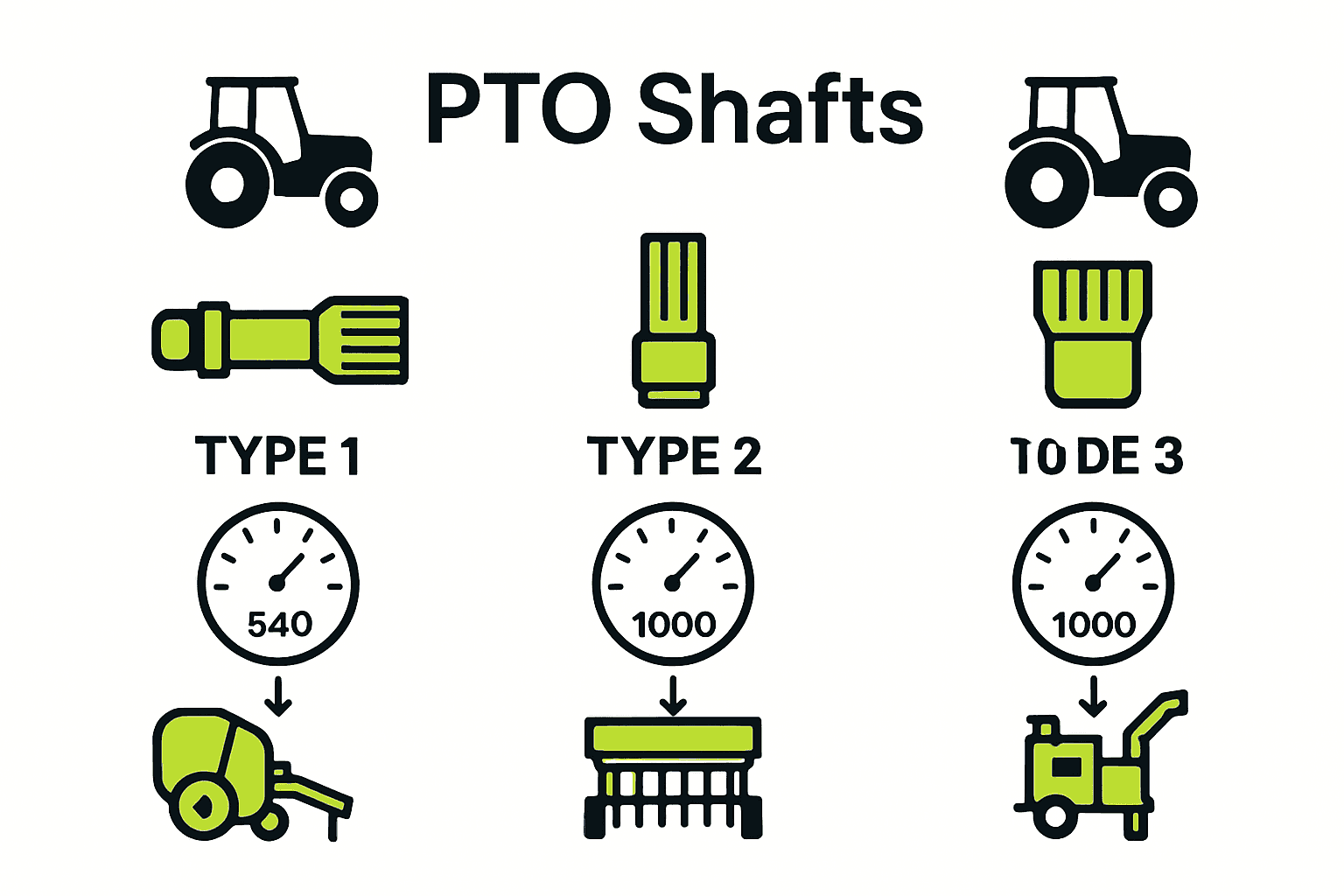
Tractor PTOs are not a one-size-fits-all solution. Standardization is critical in ensuring compatibility and optimal performance across different agricultural implements. According to TractorData, there are specific PTO types defined by their rotational speeds and shaft dimensions: Type 1 operates at 540 RPM with a 1 3/8-inch, 6-spline shaft; Type 2 runs at 1,000 RPM with a 1 3/8-inch, 21-spline shaft; and Type 3 also operates at 1,000 RPM but features a 1 3/4-inch, 20-spline shaft.
The variations in PTO types are not arbitrary but purposefully designed to match different agricultural machinery requirements. Shaft speed is a crucial differentiator that determines the implement’s performance and efficiency. Lower speed PTOs like Type 1 (540 RPM) are typically used for heavier, more demanding tasks such as tillage equipment and large hay balers, while higher speed PTOs like Type 2 and Type 3 (1,000 RPM) are ideal for precision implements like seed drills and smaller rotary equipment.
Comparing PTO Types offers insight into their specialized applications:
- Type 1 PTO (540 RPM)
- Best for heavy-duty agricultural machinery
- Standard on most mid-sized tractors
- Suitable for implements requiring substantial torque
- Type 2 PTO (1,000 RPM)
- Faster rotational speed
- Preferred for lighter, high-precision implements
- Common in modern, advanced agricultural equipment
Understanding these differences helps farmers and agricultural professionals select the right tractor and implements for specific farming operations.
 The nuanced design of PTO types reflects the agricultural industry’s commitment to precision, efficiency, and matching power transmission to exact operational needs.
How a Tractor PTO Works in Practice
A power take-off (PTO) system transforms your tractor into a multi-functional powerhouse by converting engine rotational energy into usable mechanical power for attached implements. The process begins inside the tractor’s transmission, where a specialized shaft connects directly to the engine’s rotational mechanism, allowing precise power transfer without requiring separate motors for each agricultural tool.
The mechanical magic happens through a complex yet elegant system of gears, shafts, and coupling mechanisms. When you engage the PTO lever, an internal clutch connects the tractor’s transmission to the rotating shaft, which extends from the rear of the tractor. This shaft spins at standardized speeds – typically 540 or 1,000 RPM – creating a reliable power source that can drive everything from mowers and balers to irrigation pumps and wood chippers.
Practical PTO operation involves several critical steps:
- Select appropriate PTO speed setting
- Ensure implement is correctly attached
- Engage PTO lever slowly and smoothly
- Monitor implement performance
- Disengage PTO before stopping the tractor
Critical safety considerations are paramount when working with PTOs. Operators must maintain proper clothing, avoid loose items that could catch in rotating mechanisms, and always remain aware of the spinning shaft’s potential hazards. Modern tractors include multiple safety features like shields and automatic shut-off mechanisms to protect operators from potential mechanical risks during agricultural operations.
Common Applications and Compatible Implements
The versatility of a tractor’s power take-off (PTO) system is truly remarkable, enabling farmers to transform a single machine into a multi-purpose agricultural powerhouse. According to Wikipedia, PTOs are commonly used to power implements such as balers, mowers, and tillers, allowing these attachments to perform tasks like harvesting, cutting, and soil preparation by utilizing the tractor’s engine power.
Agricultural implements connected to PTOs span a wide range of functional categories, each designed to address specific farming needs. Harvesting implements like hay balers, crop harvesters, and threshers rely on consistent PTO power to process and collect crops efficiently. Soil preparation tools such as rotary tillers, plows, and cultivators use PTO power to break, turn, and prepare ground for planting. Additionally, maintenance implements like brush cutters, snow blowers, and wood chippers demonstrate the PTO’s incredible adaptability beyond traditional farming tasks.
Key PTO-Compatible Implements include:
- Harvesting Equipment
- Hay balers
- Crop harvesters
- Grain combines
- Forage harvesters
- Soil Management Tools
- Rotary tillers
- Disc harrows
- Seed drills
- Cultivators
- Specialty Implements
- Wood chippers
- Snow blowers
- Irrigation pumps
- Generators
Choosing the right implement requires careful consideration of your tractor’s PTO specifications, including shaft speed, horsepower requirements, and physical coupling mechanisms. Farmers must match their implement’s power needs precisely with their tractor’s PTO capabilities to ensure optimal performance and prevent potential mechanical damage.
Safe Operation and Typical PTO Hazards
A power take-off (PTO) system, while incredibly useful, represents one of the most dangerous components on modern agricultural machinery. The rotating shaft’s high-speed mechanical action creates significant entanglement risks that can transform a routine farming task into a potentially life-threatening situation within milliseconds.
The primary hazards associated with PTO systems stem from their exposed rotating components. Entanglement dangers are particularly severe, with loose clothing, hair, drawstrings, or jewelry capable of being instantly caught and wrapped around the spinning shaft. The rotational speed of 540 or 1,000 RPM means that any contact can result in immediate and catastrophic injury. Professional farmers and agricultural workers must understand that a moment’s distraction or carelessness near an engaged PTO can lead to severe trauma, including crushing, amputation, or fatal accidents.
Critical Safety Precautions for PTO Operation:
- Always use manufacturer-provided PTO shields
- Wear tight-fitting clothing without loose elements
- Keep long hair tied back securely
- Remove jewelry before operating machinery
- Never step over or work near a rotating PTO shaft
- Ensure complete machinery shutdown before performing maintenance
- Teach all operators comprehensive safety protocols
Modern tractors incorporate multiple safety mechanisms to mitigate PTO-related risks. Automatic shields, emergency shut-off switches, and warning labels are standard features designed to protect operators. However, technological safeguards are no substitute for attentive, informed operation. Consistent training, awareness, and a culture of safety are the most effective defenses against potential PTO-related accidents in agricultural settings.
Mistakes to Avoid When Using a PTO
Operating a power take-off (PTO) system requires precision, awareness, and a deep understanding of potential mechanical risks. Even experienced farmers can inadvertently make critical errors that compromise equipment performance and personal safety. The most fundamental mistake is treating the PTO as a routine piece of machinery, when in reality, it demands constant respect and meticulous attention.
One of the most dangerous errors is improper implement attachment. Farmers sometimes rush the connection process, failing to ensure proper alignment, secure coupling, or compatibility between the tractor’s PTO specifications and the implement’s requirements. Incorrect attachment can lead to sudden implement disconnection, shaft damage, or catastrophic mechanical failure. Another common mistake involves neglecting regular maintenance and inspection of PTO components, which can result in unexpected wear, reduced efficiency, and increased risk of mechanical breakdown.
Top Mistakes to Avoid When Using a PTO:
- Wearing loose or baggy clothing near rotating shafts
- Bypassing or removing safety shields
- Attempting repairs with the PTO engaged
- Ignoring manufacturer’s recommended RPM settings
- Failing to lubricate PTO components regularly
- Operating machinery without proper training
- Connecting incompatible implements
Prevention requires a proactive approach to equipment management. Before each operation, conduct a thorough equipment inspection, verify all safety mechanisms are functional, and ensure you fully understand the specific requirements of both the tractor and the attached implement. Remember that a moment of carelessness can transform a routine agricultural task into a potentially life-altering incident.
Optimize Your Tractor PTO Performance With Trusted Parts and Accessories
Understanding the critical role your tractor’s power take-off (PTO) plays in powering vital agricultural implements brings one clear challenge: ensuring every component functions safely and efficiently. Whether dealing with different PTO types, shaft speeds, or the need for secure, compatible attachments, you face the pressure of avoiding costly downtime and preventing hazardous accidents. The article highlights the importance of correct PTO operation and maintenance to safeguard both your machinery and yourself.
Don’t let PTO-related issues slow down your farm work or compromise safety. At pexlivanidis.com, you can explore an extensive inventory of over 20,000 agricultural machinery parts, including high-quality PTO components designed to meet stringent specifications. Benefit from free shipping in Greece on orders over 100€, and enjoy dedicated support to find the right parts for your PTO speed and tractor model. Act now to secure the reliability and safety of your tractor’s PTO system by visiting pexlivanidis.com and take control of your farm’s productivity and protection today.
Frequently Asked Questions
What is a power take-off (PTO) on a tractor?
A power take-off (PTO) is a mechanism that transfers mechanical power from a tractor’s engine to attached implements, allowing them to perform their functions by utilizing the tractor’s power source.
What are the different types of tractor PTOs?
There are three main types of tractor PTOs: Type 1 (540 RPM with a 1 3/8-inch, 6-spline shaft), Type 2 (1,000 RPM with a 1 3/8-inch, 21-spline shaft), and Type 3 (1,000 RPM with a 1 3/4-inch, 20-spline shaft). Each type is designed for specific agricultural tasks and implements.
How does a PTO system work in practical applications?
A PTO system converts engine rotational energy into mechanical power for attached implements. When the PTO lever is engaged, a clutch connects the tractor’s transmission to a rotating shaft, which drives various tools such as mowers, balers, and irrigation pumps, operating at standardized speeds.
What safety precautions should be taken when operating PTO systems?
Key safety precautions include using manufacturer-provided shields, wearing tight-fitting clothing, keeping long hair tied back, never working near a rotating shaft, ensuring machinery is fully shut down for maintenance, and receiving proper training on PTO operation.