

Every American farmer knows that a well-weighted tractor can make or break a day in the field. Tractor ballast is not just an extra detail—it is the foundation for safer, more efficient farm work. With studies showing that proper ballasting can cut fuel usage by up to 15 percent, getting the balance right means better traction, reduced equipment wear, and real savings. Understanding what tractor ballast is and how it works gives both new and experienced operators an edge.
Table of Contents
- Defining Tractor Ballast And Its Core Function
- Types Of Tractor Ballast And Key Differences
- How Tractor Ballast Improves Efficiency And Safety
- Practical Applications Across Farming Tasks
- Choosing Ballast: Costs, Risks, And Best Practices
Key Takeaways
| Point | Details |
|---|---|
| Tractor Ballast Enhances Performance | Properly balanced tractor ballast minimizes wheel slippage and improves traction, enabling better power transfer during operations. |
| Types of Ballast Offer Flexibility | Farmers can choose from removable weights, liquid ballast, or cast-iron weights to match equipment needs and operational conditions. |
| Safety and Efficiency Benefits | Effective ballasting lowers the center of gravity, reducing rollover risks and enhancing stability, while also improving fuel efficiency. |
| Regular Assessment is Crucial | Ongoing evaluation of ballast setup based on specific tasks ensures optimal performance and minimizes equipment wear and operational costs. |
Defining Tractor Ballast and Its Core Function
Tractor ballast represents the strategic weight added to agricultural machinery to optimize performance, stability, and operational efficiency. At its core, ballasting is a precision technique designed to enhance how tractors interact with terrain and agricultural implements.
The fundamental purpose of tractor ballast involves controlling weight distribution and improving traction. By carefully adding weight to specific points on a tractor, operators can significantly reduce wheel slip, manage soil compaction, and maximize power transfer from the engine to the ground. This process isn’t simply about adding random weight, but strategically positioning mass to balance the machine’s dynamic capabilities.
Proper ballasting addresses several critical agricultural performance factors. These include:
- Minimizing unnecessary wheel slippage
- Reducing soil compression during field operations
- Optimizing fuel consumption rates
- Enhancing overall machine stability
- Protecting expensive tractor components from unnecessary stress
Optimizing tractor ballasting requires understanding your specific agricultural context, terrain characteristics, and the implements being used. Farmers and equipment operators must consider factors like axle weight distribution, tire configuration, and the specific demands of their cultivation practices to achieve the most effective ballast setup.
Types of Tractor Ballast and Key Differences
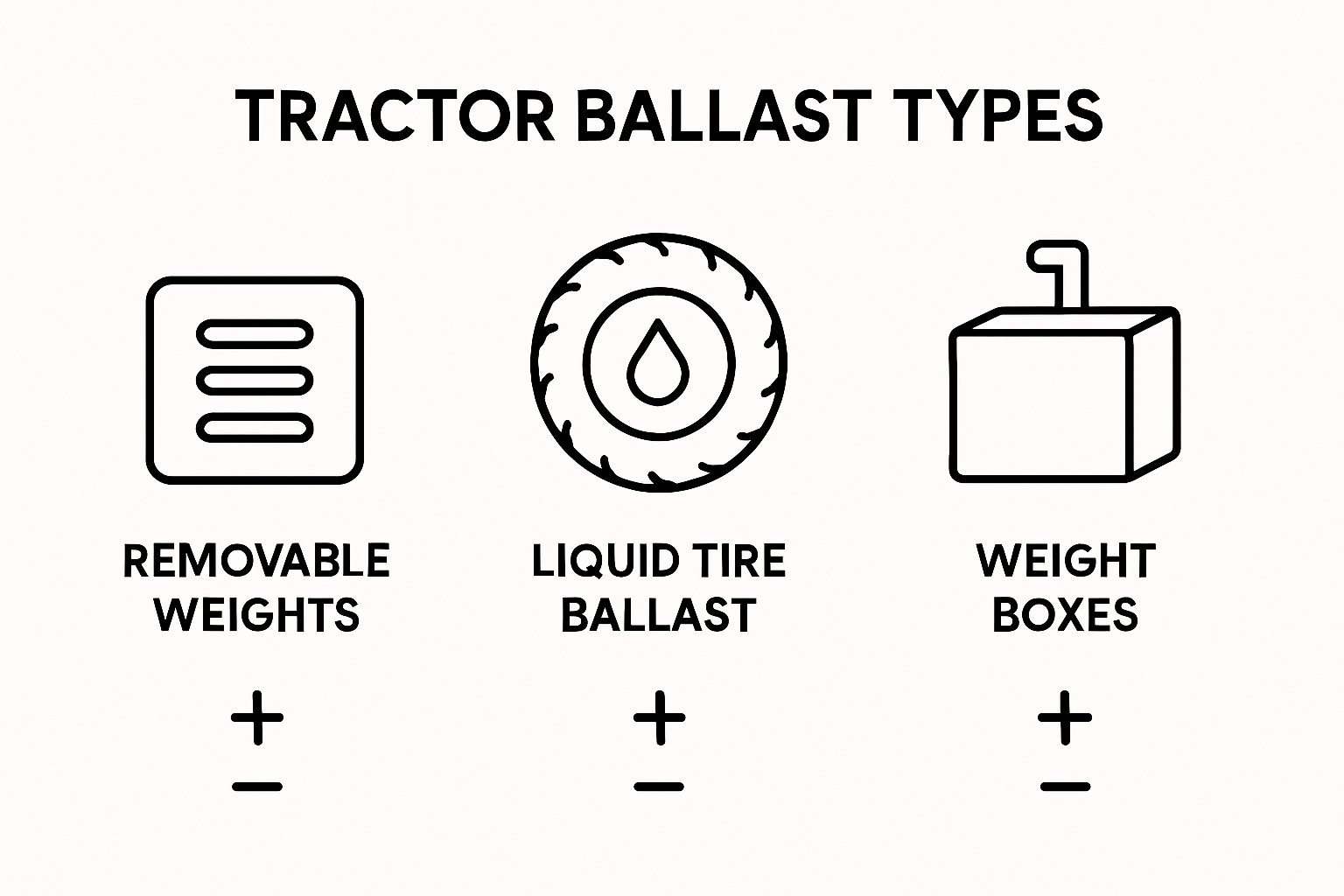
Tractor ballast encompasses several distinct categories, each offering unique advantages for agricultural machinery performance. Farmers can choose from removable weights, cast-iron additions, and liquid ballasting methods that provide flexibility in managing tractor weight and operational efficiency.
The primary types of tractor ballast include:
- Removable Weights: These include suitcase weights and wheel weights that can be quickly attached or detached depending on specific field requirements. They offer maximum adaptability for changing agricultural conditions.
- Liquid Ballast: Typically involving water or calcium chloride solutions injected directly into tires. This method provides an efficient way to add weight while maintaining tire balance and reducing overall equipment complexity.
- Cast-Iron Weights: Solid metal weights that can be strategically positioned on the tractor’s frame or wheels to optimize weight distribution and control power transfer during complex field operations.
Each ballast type presents distinct considerations for farmers. Removable weights allow quick adjustments but may require more manual labor. Liquid ballast offers seamless weight integration but can complicate tire maintenance. Cast-iron weights provide stable mass distribution but might increase overall equipment weight. The optimal choice depends on specific farming conditions, implement requirements, and the unique demands of individual agricultural operations.
How Tractor Ballast Improves Efficiency and Safety
Tractor ballast plays a critical role in enhancing agricultural machinery performance, directly impacting both operational efficiency and operator safety. Proper ballasting dramatically improves traction efficiency and reduces overall operating costs, making it an essential consideration for serious farmers and agricultural professionals.
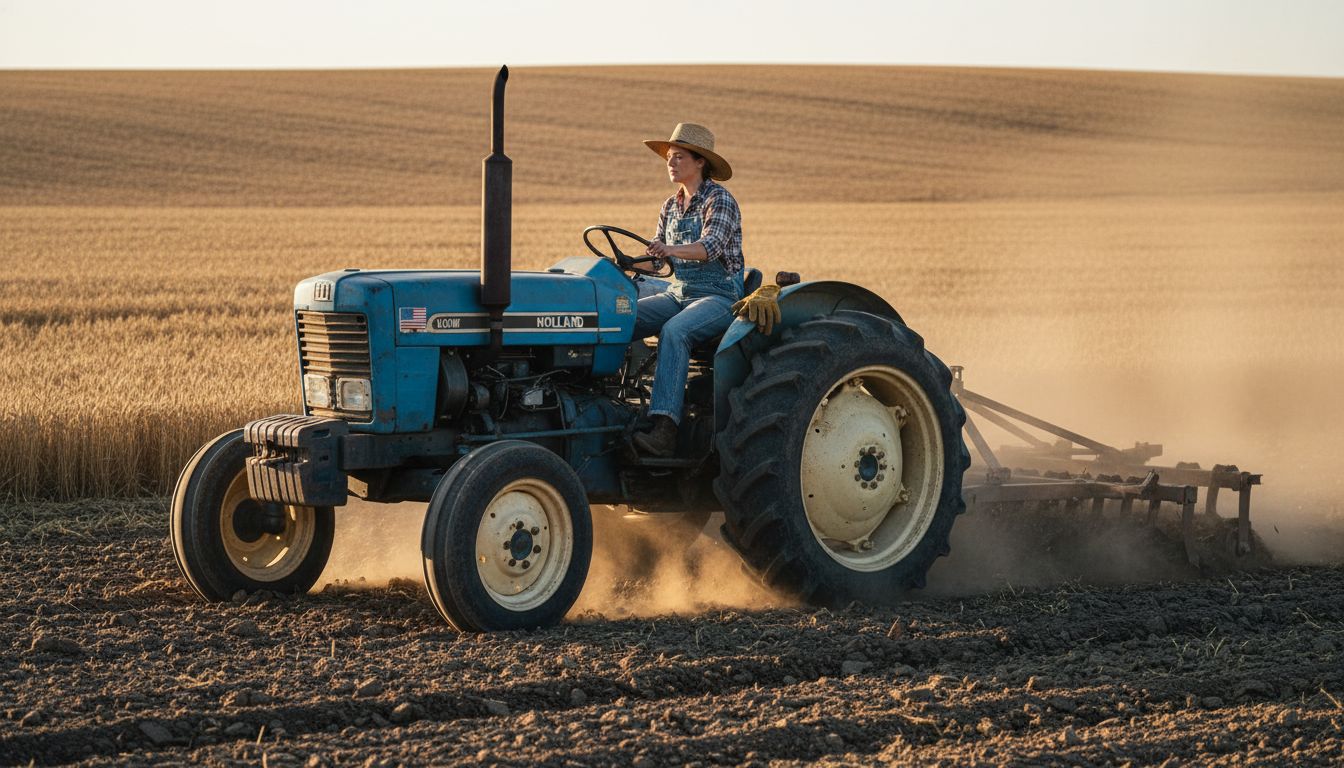
The safety benefits of strategic ballasting are substantial. By lowering the tractor’s center of gravity, ballast significantly reduces the risk of rollovers and provides enhanced stability during challenging field operations. This weight distribution method increases tire contact with the ground, creating more predictable and controlled machine movement, which directly translates to improved operator confidence and reduced accident potential.
Key efficiency improvements from proper ballasting include:
- Increased drawbar power
- Reduced specific fuel consumption
- Minimized wheel slippage
- Enhanced overall traction
- Reduced mechanical wear on tractor components
Moreover, strategic ballasting helps distribute mechanical stress more evenly across the tractor’s frame and components. By preventing excessive strain on individual parts, farmers can extend equipment lifespan, reduce maintenance costs, and ensure more consistent performance across diverse agricultural terrains and challenging working conditions.
Practical Applications Across Farming Tasks
Tractor ballast demonstrates remarkable versatility across different agricultural operations, adapting seamlessly to varying field conditions and task requirements. Farmers can optimize equipment performance by strategically adjusting ballast and tire pressures throughout the agricultural season, ensuring maximum efficiency from primary tillage to delicate planting tasks.
Controlling tire slippage remains crucial for efficient field operations, with ballast playing a pivotal role in achieving precise mechanical performance. Different farming tasks demand unique weight configurations, making adaptable ballasting a critical skill for agricultural professionals.
Specific ballasting applications include:
- Primary Tillage: Heavy ballast for maximum ground penetration and power transfer
- Planting Operations: Lighter ballast configurations for reduced soil compression
- Harvesting: Balanced weight distribution to maintain stability with loaded implements
- Hay Baling: Strategic weight positioning to optimize pulling capacity
- Precision Agriculture: Minimal ballast to reduce soil disturbance
The key to successful ballasting lies in understanding each task’s unique mechanical demands. By carefully matching tractor weight to specific agricultural activities, farmers can minimize fuel consumption, reduce equipment wear, and maximize overall operational efficiency across diverse farming environments.
Choosing Ballast: Costs, Risks, and Best Practices
Tractor ballast selection requires a nuanced approach that balances performance, efficiency, and long-term equipment preservation. Over-ballasting and under-ballasting both present significant operational risks that can dramatically impact farming productivity, making precise weight management crucial for agricultural success.
Farmers must navigate several critical considerations when selecting ballast. Excessive weight increases rolling resistance, wastes fuel, and accelerates drivetrain wear. Conversely, insufficient ballast leads to tire slippage, reduced traction, and premature tire degradation. The optimal ballast strategy involves matching weight precisely to specific farming tasks, implement requirements, and ground conditions.
Key cost and risk factors include:
- Fuel Consumption: Improper ballasting directly increases fuel expenditure
- Equipment Longevity: Incorrect weight distribution accelerates mechanical wear
- Soil Health: Excessive ballast can cause significant soil compaction
- Operational Efficiency: Precise ballasting improves overall tractor performance
- Implement Compatibility: Different attachments require unique weight configurations
Successful ballast management demands ongoing assessment and adjustment. Farmers should regularly evaluate their equipment’s performance, monitor tire wear, track fuel consumption, and remain flexible in their approach. By understanding the delicate balance between weight, traction, and efficiency, agricultural professionals can optimize their machinery’s performance while minimizing unnecessary operational expenses.
Enhance Tractor Performance with Expert Ballast Solutions
Understanding the crucial role of tractor ballast in improving traction, stability, and efficiency highlights a key challenge for every farmer and agricultural professional. Properly balancing your tractor can reduce costly issues like wheel slip, soil compaction, and excessive fuel consumption. Finding the right ballast accessories tailored to your tractor’s needs is essential to protect your investment and boost productivity in the field.
At pexlivanidis.com , we offer a vast selection of tractor accessories and spare parts designed to help you achieve optimal ballast configurations. Whether you need removable weights, cast-iron ballast, or components for liquid ballasting, our inventory of over 20,000 products ensures you will find reliable, high-quality solutions to meet your farming demands. Explore our range today to improve your tractor’s performance, extend equipment lifespan, and lower operational costs. Don’t wait to enhance your agricultural machinery’s capabilities. Visit our online store now and take the first step toward smarter ballast management.
Frequently Asked Questions
What is tractor ballast?
Tractor ballast refers to the weight added to a tractor to enhance its performance, stability, and operational efficiency by optimizing weight distribution and improving traction on various terrains.
Why is tractor ballast important for farming?
Proper tractor ballast is crucial as it minimizes wheel slippage, reduces soil compaction, optimizes fuel consumption, and enhances overall stability, which contributes to better agricultural performance and equipment longevity.
What are the different types of tractor ballast available?
The main types of tractor ballast include removable weights, liquid ballast (such as water or calcium chloride in tires), and cast-iron weights, each offering unique advantages based on farming needs and conditions.
How does improper ballasting affect tractor performance?
Improper ballasting can lead to increased fuel consumption, reduced traction, accelerated mechanical wear, and potential soil compaction, ultimately impacting operational efficiency and farm productivity.