

Did you know that using the wrong tractor part can reduce your equipment’s lifespan by up to 30 percent? Your machinery is one of your most valuable assets, so every component matters. Choosing between OEM and aftermarket parts can influence not just performance but also your farm’s bottom line. Understanding what sets original equipment manufacturer parts apart helps you make choices that keep your tractor running smoothly and reliably season after season.
Key Takeaways
| Point | Details |
|---|---|
| Precision and Compatibility | OEM parts ensure perfect fit and precise engineering for agricultural machinery, enhancing performance and longevity. |
| Warranty and Support | Using OEM parts maintains warranty coverage and ensures access to full manufacturer support, mitigating risks associated with repairs. |
| Long-term Cost Efficiency | Although OEM parts have a higher upfront cost, they offer significant long-term savings through reduced maintenance and enhanced equipment lifespan. |
| Myths About Aftermarket Parts | Not all aftermarket parts are subpar; reputable brands can match OEM quality, but careful evaluation of each component is essential for performance reliability. |
Table of Contents
- Oem Tractor Parts Explained And Defined
- Key Differences: Oem Vs Aftermarket Parts
- Benefits Of Choosing Oem Tractor Parts
- Impact On Warranty, Safety, And Performance
- Cost Considerations And Long-Term Value
- Common Misconceptions About Oem Tractor Parts
OEM Tractor Parts Explained and Defined
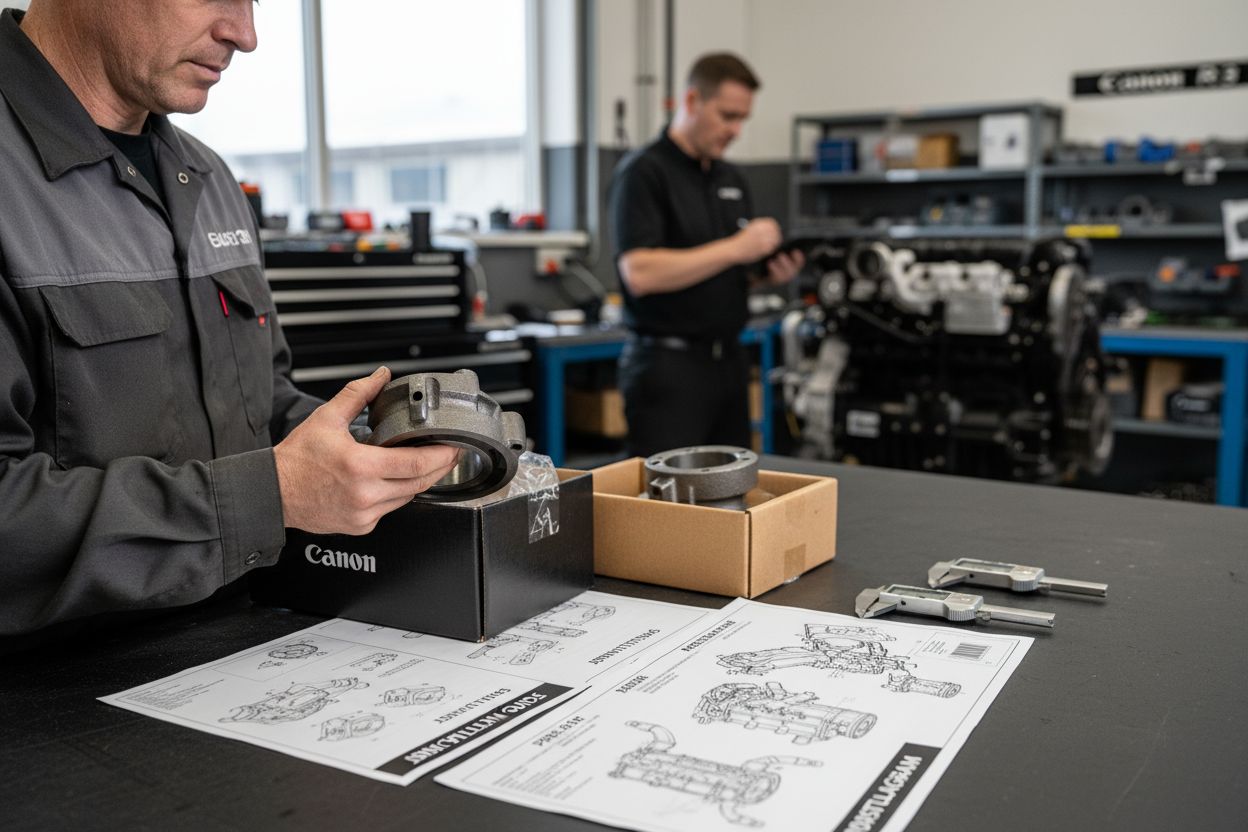
When you’re working with agricultural machinery, understanding OEM parts can make a massive difference in your equipment’s performance and longevity. According to research, OEM (Original Equipment Manufacturer) parts are components produced by the same manufacturer that originally built the equipment, engineered to match exact specifications, materials, and engineering tolerances.
What sets OEM tractor parts apart is their precision. These parts are not generic replacements but carefully designed components that integrate seamlessly with your specific machinery. As research from equipment manufacturing experts indicates, OEM parts ensure:
- Perfect dimensional matching
- Original design specifications
- Consistent material quality
- Guaranteed performance standards
Choosing OEM parts means you’re selecting components that have been meticulously crafted to work exactly as the original manufacturer intended. They eliminate guesswork and potential compatibility issues that can arise with aftermarket alternatives. By using OEM tractor parts, you’re essentially maintaining your equipment’s original engineering integrity, which can translate to improved reliability, reduced maintenance complications, and potentially longer equipment lifecycle.
Key Differences: OEM vs Aftermarket Parts
When it comes to tractor parts, farmers face a critical choice between Original Equipment Manufacturer (OEM) and aftermarket parts. According to research from equipment manufacturing experts, these two options present distinctly different propositions for machinery maintenance and performance.
OEM parts come directly from the original equipment manufacturer, guaranteeing precise engineering and compatibility. By contrast, aftermarket parts are produced by third-party manufacturers. As research indicates, while aftermarket components can be more budget-friendly, they introduce potential risks:
- Potential compatibility challenges
- Variable quality standards
- Possible warranty complications
- Inconsistent performance metrics
The key trade-off emerges in cost versus reliability. Aftermarket parts often cost significantly less, which can be tempting for budget-conscious farmers. However, the potential risks can outweigh initial savings.
Reputable aftermarket brands might match OEM quality, but without the same guaranteed specifications. Professional mechanics often recommend OEM parts for critical systems where precision matters most, especially in high-stress agricultural equipment where a single component failure could disrupt entire farming operations.
Here’s a comparison of OEM and aftermarket tractor parts:
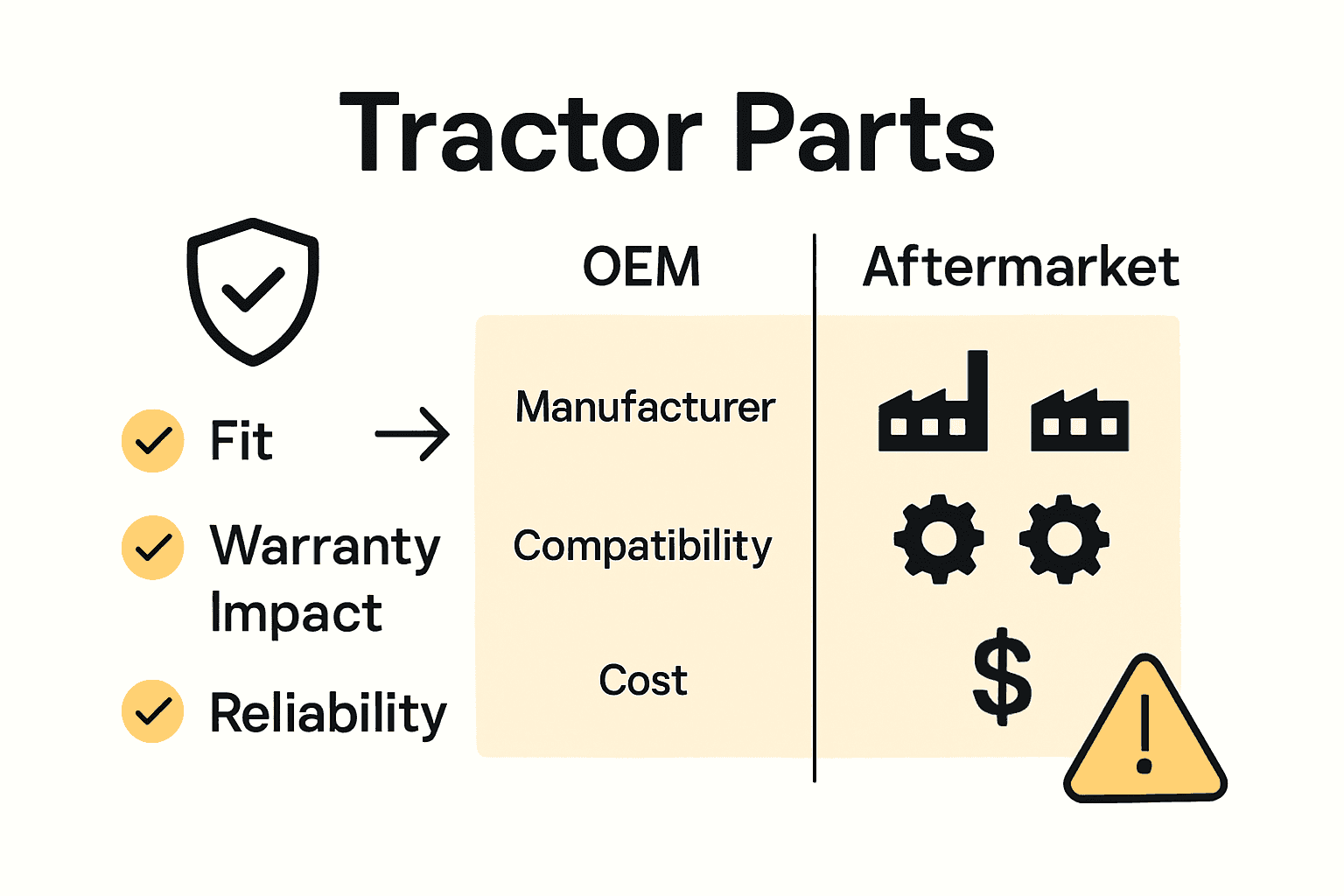
| Aspect | OEM Parts | Aftermarket Parts |
|---|---|---|
| Manufacturer | Original equipment maker | Third-party company |
| Compatibility | Exact fit, no modification | May require adjustments |
| Quality Standards | Guaranteed, factory-tested | Varies by brand |
| Cost | Higher upfront | Usually lower |
| Warranty Impact | Maintains warranty | May void warranty |
| Performance | Consistent, reliable | Can be inconsistent |
| Support | Full manufacturer support | Limited, varies |
Benefits of Choosing OEM Tractor Parts
Choosing OEM tractor parts represents a strategic investment in your agricultural machinery’s long-term performance and reliability. According to research from equipment manufacturing experts, these original components offer substantial advantages that go far beyond simple part replacement.
Research indicates that OEM parts undergo rigorous design validation and testing, ensuring exceptional quality control and precise compatibility. The key benefits include:
- Minimized equipment wear
- Reduced risk of unexpected failures
- Maintained original system integrity
- Significantly decreased operational downtime
Moreover, OEM parts provide unmatched reliability backed by manufacturer support and comprehensive warranty protection. Agricultural machinery specialists suggest that tractors maintained with original manufacturer parts typically retain higher resale value. This is because OEM components document a clear maintenance history and demonstrate consistent adherence to original engineering specifications. By investing in these precision-engineered parts, farmers essentially protect their equipment’s performance, extend its operational lifespan, and minimize the long-term financial risks associated with lower-quality alternative components.
Impact on Warranty, Safety, and Performance
When it comes to agricultural machinery, OEM parts play a critical role in maintaining warranty protection, ensuring safety, and preserving peak performance. According to equipment manufacturing research, using original manufacturer components is far more than a simple replacement strategy—it’s a comprehensive approach to machinery management.
Research indicates that using non-OEM parts can significantly jeopardize your equipment’s warranty coverage. Many manufacturers explicitly require original components to keep warranty agreements valid. This means that choosing aftermarket alternatives could potentially:
- Void existing warranty terms
- Reduce equipment resale value
- Compromise manufacturer support
- Increase long-term financial risks
Moreover, OEM parts are engineered with precise safety standards and performance specifications. They minimize risks of improper installation, reduce unexpected wear, and prevent potential system failures that could compromise operational safety. By investing in original manufacturer parts, farmers protect not just their equipment’s integrity, but also ensure consistent performance, minimize downtime, and maintain the highest possible safety standards for their critical agricultural machinery.
Cost Considerations and Long-Term Value
Navigating the financial landscape of tractor parts requires a strategic approach that looks beyond initial purchase price. According to equipment manufacturing research, OEM parts represent an investment in long-term equipment reliability and operational efficiency.
Research indicates that while OEM parts typically carry a higher upfront cost, they deliver substantial long-term economic benefits. The key financial advantages include:
- Reduced unexpected repair expenses
- Minimized operational downtime
- Extended equipment lifespan
- Preserved machinery resale value
Professional agricultural equipment managers understand that total cost of ownership matters more than initial price. By choosing OEM parts, farmers can potentially save significant money over time. These precision-engineered components minimize failure risks, reduce maintenance frequency, and maintain system integrity. What might seem like a more expensive choice initially translates into predictable performance, fewer unexpected repairs, and ultimately a more financially prudent long-term maintenance strategy for critical agricultural machinery.
Common Misconceptions About OEM Tractor Parts
When it comes to agricultural machinery parts, numerous myths and misconceptions can lead farmers astray in their equipment maintenance decisions. Research reveals that the reality of OEM versus alternative parts is far more nuanced than many realize.
Contrary to popular belief, not all aftermarket parts are inherently low-quality or unreliable. According to equipment manufacturing research, some reputable aftermarket brands actually match or even exceed OEM standards in performance and durability. The key misconceptions include:
- All aftermarket parts are inferior
- OEM parts are always the most expensive option
- Using aftermarket parts automatically voids warranties
- Non-OEM components cannot deliver reliable performance
Professional equipment managers understand that part selection is about context, not blanket rules. While OEM parts offer unparalleled reliability for critical systems, aftermarket components can be a smart choice for certain non-essential parts. The crucial factor is not the source of the part, but its specific engineering quality, compatibility, and performance characteristics. Smart farmers evaluate each component individually, understanding that blanket assumptions about part origins can lead to unnecessary expenses or missed opportunities for cost-effective maintenance.
Protect Your Tractor With Genuine OEM Parts—Shop With Confidence
As highlighted in our article, choosing OEM tractor parts is about preserving your machinery’s performance, safety, and value. Many farmers experience the stress of equipment downtime and the risk of voided warranties when relying on generic replacements. With OEM parts, you eliminate compatibility concerns and secure the reliable, long-term operation your business depends on.
Take the guesswork out of part sourcing by exploring the vast selection at pexlivanidis.com. Benefit from over 20,000 original and quality-tested products, unbeatable local expertise, and free shipping across Greece for larger orders. Whether you need a specific replacement or want wholesale options for your whole fleet, our platform offers the support and assurance your operation demands.
Ready to experience the security of OEM parts and maximize your equipment’s potential? Browse our full inventory today and get personalized support for your next order.
Frequently Asked Questions
What are OEM tractor parts?
OEM tractor parts, or Original Equipment Manufacturer parts, are components produced by the same manufacturer that originally made the equipment. They are designed to match the exact specifications, materials, and engineering tolerances of your machinery.
How do OEM parts differ from aftermarket parts?
OEM parts are made by the original manufacturer, ensuring precise engineering and compatibility. In contrast, aftermarket parts are produced by third-party manufacturers and may vary in quality and compatibility.
What are the benefits of using OEM tractor parts?
Using OEM tractor parts ensures minimized equipment wear, reduced risk of unexpected failures, and maintained original system integrity, leading to improved reliability and potentially longer equipment lifespan.
Can using aftermarket parts void my equipment’s warranty?
Yes, using non-OEM parts can potentially void your warranty, as many manufacturers require the use of original components to keep warranty agreements valid.