

More than 60 percent of American farms now rely on refurbished machinery to keep operations going strong. Choosing whether to restore, repair, or replace vital equipment makes a real difference for bottom lines and workflow. Understanding the key concepts of machinery refurbishment helps American growers and operators extend the life of their investments, avoid unnecessary costs, and get the most from every season.
Table of Contents
- Defining Machinery Refurbishment—Key Concepts
- Types of Machinery Refurbishment Processes
- Steps Involved in Refurbishing Equipment
- Benefits for Farmers and Equipment Operators
- Risks, Costs, and Mistakes to Avoid
- Refurbishment vs. Repair and Replacement
Key Takeaways
| Point | Details |
|---|---|
| Machinery Refurbishment | It is a systematic process aimed at restoring agricultural equipment for extended operational life and improved performance. |
| Refurbishment vs. Repair | Unlike simple repairs, refurbishment involves comprehensive system overhauls and upgrades for enhanced efficiency. |
| Financial Advantages | Refurbishing offers a cost-effective alternative to new machinery, saving money while improving performance. |
| Risk Management | Thorough diagnostic evaluations and documentation are crucial to avoid hidden damages and manage refurbishment complexities. |
Defining Machinery Refurbishment—Key Concepts
Machinery refurbishment is a comprehensive process of restoring agricultural equipment to its optimal functional state, extending its operational life and performance capabilities. This strategic approach involves systematically repairing, replacing, and upgrading components to restore machinery to near-original conditions without complete replacement.
At its core, machinery refurbishment encompasses several critical technical interventions. These typically include thorough mechanical assessments, component replacement, structural repairs, system recalibration, and technological upgrades. The goal is not merely repair, but strategic restoration that enhances equipment reliability, understanding farm machinery overhaul requires recognizing the nuanced difference between basic maintenance and comprehensive refurbishment.
The refurbishment process follows a structured methodology that begins with detailed diagnostic evaluations. Technicians conduct comprehensive inspections to identify wear patterns, structural damages, mechanical inefficiencies, and potential performance limitations. This assessment helps determine which components require replacement, repair, or modification. Key focus areas include mechanical systems, electrical components, hydraulic mechanisms, and structural integrity of the machinery framework.
Refurbishment strategies vary based on equipment type, age, usage history, and intended future performance requirements. Some interventions might involve minor component replacements, while others require extensive system overhauls. The ultimate objective remains consistent: maximizing equipment longevity, maintaining operational efficiency, and providing a cost-effective alternative to complete machinery replacement.
Pro Tip: Always document each refurbishment intervention meticulously, tracking replaced components, performance improvements, and maintenance history to create a comprehensive equipment lifecycle profile.
Types of Machinery Refurbishment Processes
Machinery refurbishment encompasses a diverse range of technical processes designed to restore and enhance equipment performance. These processes vary significantly depending on the specific machinery type, operational requirements, and existing wear conditions. Industrial equipment recycling and retrofitting techniques have evolved to include innovative approaches that go beyond traditional repair methodologies.
Traditional refurbishment approaches typically involve systematic interventions such as comprehensive disassembly, detailed component inspection, precision cleaning, and strategic replacement of worn or damaged parts. Machine rebuilding processes can be categorized into several distinct types, including mechanical restoration, electrical system overhaul, structural reinforcement, and technological upgrades. Each category targets specific aspects of machinery performance and structural integrity.
Modern refurbishment strategies increasingly incorporate advanced technologies like augmented reality and predictive diagnostics. These cutting-edge techniques allow technicians to conduct more precise assessments, identify potential failure points, and implement targeted improvements. Some sophisticated processes now include digital mapping of equipment wear patterns, computer-assisted component analysis, and real-time performance modeling to guide restoration efforts.
The complexity of refurbishment processes varies widely across different machinery types. Agricultural equipment might require different restoration techniques compared to manufacturing machinery, with each sector developing specialized approaches tailored to unique operational demands. Factors such as equipment age, usage intensity, maintenance history, and intended future performance all play critical roles in determining the most appropriate refurbishment strategy.
Pro Tip: Develop a comprehensive baseline assessment protocol that includes detailed documentation of initial equipment condition, enabling more accurate tracking of refurbishment effectiveness and long-term performance improvements.
Steps Involved in Refurbishing Equipment
Machinery refurbishment follows a systematic, multi-stage process designed to comprehensively restore equipment functionality and performance. Machine tool refurbishment techniques require meticulous attention to detail and a structured approach that transforms aging equipment into reliable operational assets.
The initial stage involves comprehensive disassembly and detailed inspection. Technicians carefully deconstruct the machinery, documenting each component’s condition and identifying potential areas of wear, damage, or performance degradation. Machinery rebuilding processes typically include precision cleaning of all parts, removing accumulated debris, rust, and contamination that might compromise future performance. This critical step enables a thorough assessment of individual component integrity and potential replacement requirements.
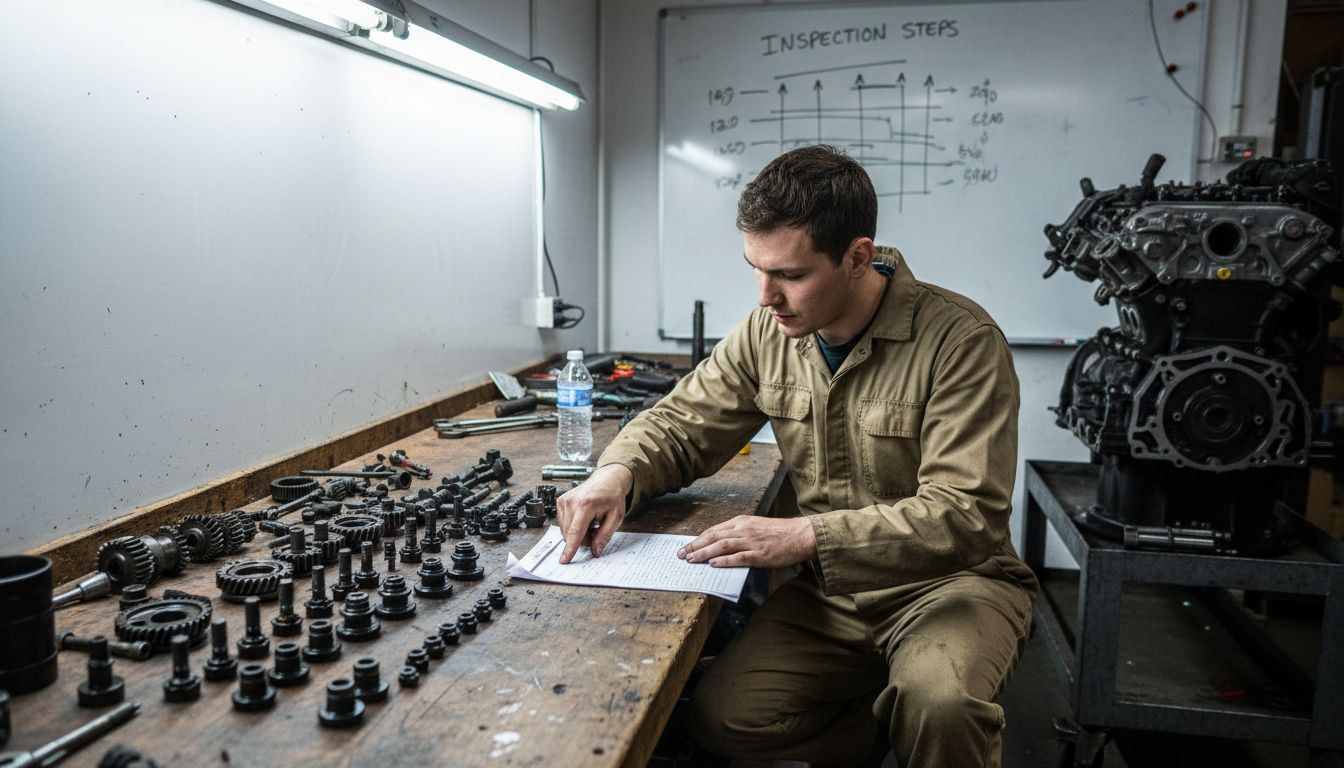
Following inspection and cleaning, the refurbishment process moves into repair and replacement stages. Worn mechanical components are strategically repaired or replaced, with particular attention to critical systems like bearings, seals, hydraulic mechanisms, and electrical components. Advanced diagnostic tools and precision measurement techniques help technicians determine whether components can be restored or must be completely replaced. This stage often involves calibrating mechanical alignments, rebuilding critical interfaces, and potentially upgrading technological systems to improve overall equipment functionality.
The final stages of refurbishment focus on reassembly, testing, and performance validation. Technicians carefully reconstruct the machinery, ensuring precise alignment and integration of all components. Comprehensive performance tests simulate actual operational conditions, verifying that the refurbished equipment meets or exceeds original manufacturer specifications. These rigorous evaluations confirm the effectiveness of the restoration process and validate the machinery’s restored capabilities.
Below is a summary of typical steps involved in a full machinery refurbishment process:
| Stage | Key Activities | Main Outcomes |
|---|---|---|
| Disassembly & Inspection | Parts removed, assessed for wear | Identifies all issues |
| Cleaning & Evaluation | Components cleaned, measured precisely | Reveals hidden deterioration |
| Repair & Replacement | Damaged parts fixed or replaced | Restores system integrity |
| Reassembly & Testing | Equipment rebuilt, performance tested | Confirms functionality |
Pro Tip: Create a detailed photographic and documentation log during each refurbishment stage, capturing critical measurements, component conditions, and restoration interventions to establish a comprehensive equipment history and facilitate future maintenance planning.
Benefits for Farmers and Equipment Operators
Machinery refurbishment offers substantial economic and operational advantages that directly impact the productivity and profitability of agricultural businesses. Industrial equipment refurbishing strategies provide farmers and equipment operators with a cost-effective alternative to complete machinery replacement, enabling them to maximize their existing asset investments.
The financial benefits of refurbishment are particularly significant for agricultural operations. By investing in comprehensive equipment restoration, farmers can achieve substantial cost savings compared to purchasing new machinery. Machinery rebuilding processes restore equipment precision, enhance mechanical reliability, and dramatically reduce operational downtime. These improvements translate into increased operational efficiency, higher productivity, and more predictable equipment performance across farming cycles.
Technological upgrades during refurbishment present another critical advantage for modern agricultural operations. Farmers can strategically modernize existing equipment by incorporating advanced control systems, improving mechanical alignments, and integrating more efficient components. This approach allows agricultural businesses to access cutting-edge technological improvements without the substantial capital expenditure associated with completely new machinery purchases. The ability to customize and upgrade existing equipment provides flexibility that supports evolving operational requirements and technological innovations.
Beyond immediate financial considerations, machinery refurbishment contributes to broader sustainability goals within agricultural sectors. By extending equipment lifespans, reducing waste, and minimizing resource consumption associated with manufacturing new machinery, farmers demonstrate environmental responsibility. Refurbished equipment often performs comparably to new machinery while requiring significantly less energy and material investment, creating a win-win scenario for both economic and ecological considerations.
Pro Tip: Develop a proactive equipment maintenance schedule that integrates regular assessments and planned refurbishment intervals, allowing you to anticipate potential performance degradation and schedule interventions before critical failures occur.
Risks, Costs, and Mistakes to Avoid
Machinery refurbishment presents complex challenges that demand strategic planning and comprehensive risk assessment. Bulk handling equipment analysis reveals that approximately ten percent of mechanical failures stem from fatigue-related issues, underscoring the critical importance of meticulous evaluation during restoration processes.
Machinery rebuilding risks can emerge unexpectedly, potentially transforming what appears to be a cost-effective strategy into a financially burdensome endeavor. Common pitfalls include underestimating the complexity of equipment restoration, failing to conduct thorough initial diagnostics, and overlooking subtle mechanical degradation that might compromise long-term performance. Equipment operators must anticipate potential hidden damages, budget for contingencies, and develop realistic timelines that account for potential complications during the refurbishment process.
Financial risks represent another significant consideration in machinery restoration. Unexpected component replacements, extended downtime, and specialized labor requirements can dramatically increase overall project costs. Farmers and equipment managers should develop comprehensive cost models that include not just direct restoration expenses, but also potential productivity losses during the refurbishment period. Advanced diagnostic technologies and experienced technical assessments can help mitigate these financial uncertainties by providing more accurate predictive evaluations of equipment restoration potential.
Technological obsolescence presents a nuanced risk in machinery refurbishment. While restoration can extend equipment life, there exists a critical point where continued investment becomes less economically viable than replacement. Operators must critically evaluate whether proposed upgrades will genuinely enhance equipment performance or merely postpone inevitable technological replacement. Factors such as replacement part availability, compatibility with modern systems, and potential efficiency gains must be carefully weighed against the costs of comprehensive restoration.
Pro Tip: Develop a comprehensive pre-refurbishment diagnostic protocol that includes detailed documentation, performance benchmarking, and a multi-stage assessment to identify potential risks and accurately estimate restoration feasibility before committing significant financial resources.
Refurbishment vs. Repair and Replacement
Equipment restoration represents a strategic decision that goes far beyond simple mechanical repairs, offering farmers and equipment operators a sophisticated approach to machinery management. Industrial equipment refurbishing strategies provide a comprehensive alternative to traditional repair or complete replacement methods, presenting a nuanced pathway to equipment optimization.
While basic repairs address immediate mechanical failures, refurbishment offers a holistic approach to machinery rehabilitation. Machine tool restoration techniques involve comprehensive system overhauls that go beyond superficial fixes. Unlike simple repairs that target specific components, refurbishment systematically rebuilds critical systems, corrects structural misalignments, and upgrades technological capabilities. This approach transforms aging equipment from marginally functional to highly efficient, effectively bridging the gap between minimal maintenance and complete replacement.
Economic considerations play a pivotal role in distinguishing refurbishment from traditional repair or replacement strategies. Complete machinery replacement represents the most expensive option, requiring substantial capital investment and potentially disrupting operational workflows. Simple repairs offer temporary solutions but often fail to address underlying systemic issues. Refurbishment emerges as a balanced approach, providing significant performance improvements at a fraction of the cost of new equipment. By strategically investing in comprehensive restoration, equipment operators can extend machinery lifespans, improve operational efficiency, and defer substantial capital expenditures.
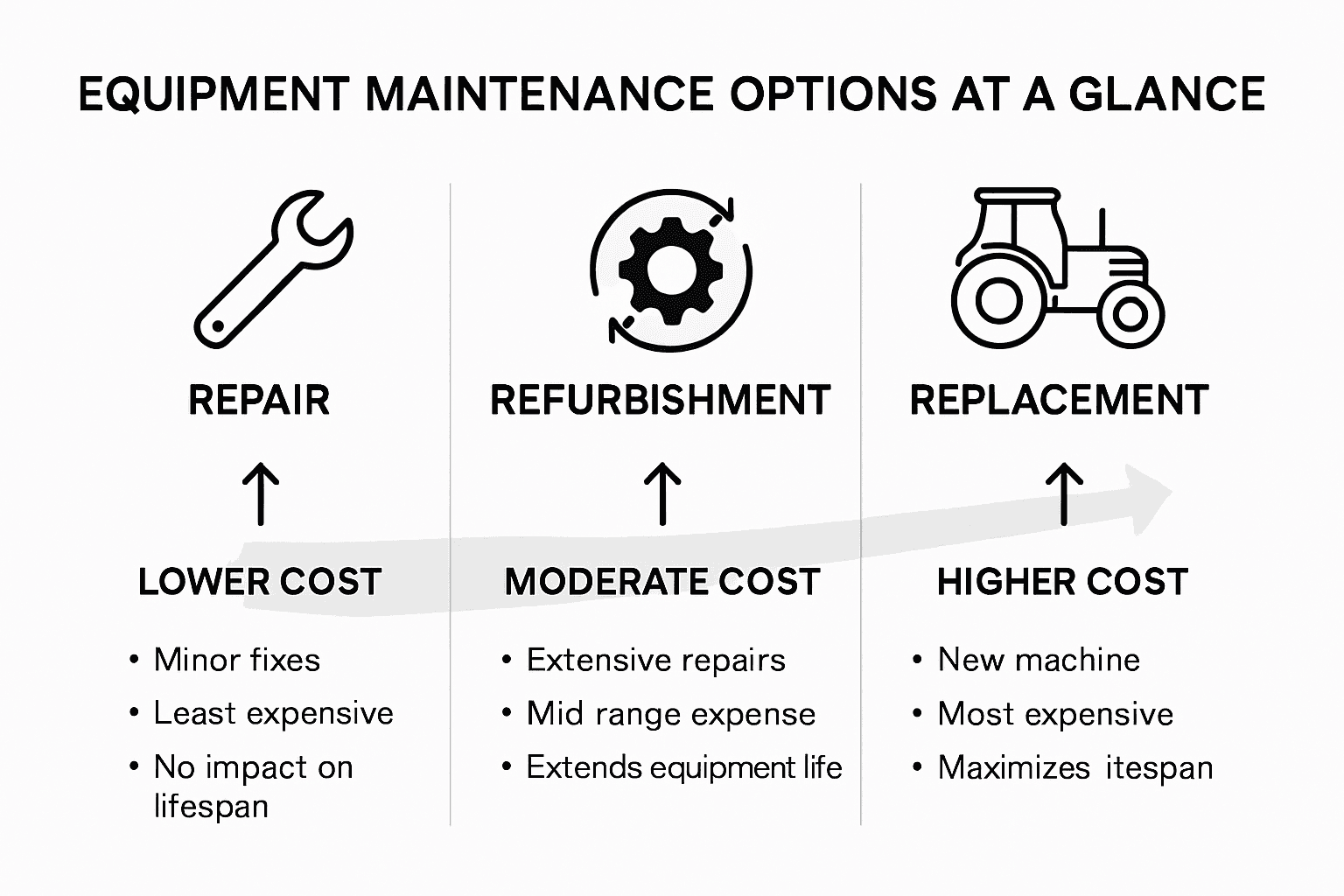
Here is a comparison of repair, refurbishment, and replacement approaches for machinery management:
| Factor | Repair | Refurbishment | Replacement |
|---|---|---|---|
| Typical Cost | Lowest upfront expense | Moderate expense | Highest investment |
| Downtime | Short, may recur frequently | Medium, planned around upgrades | Longest, requires new deployment |
| Longevity Boost | Minimal, addresses symptoms | High, restores equipment lifespan | Maximum, starts equipment lifecycle |
| Technological Upgrade | Rare, basic fixes only | Frequent, modern features added | Full, all latest innovations |
Technological adaptability represents another critical dimension of the refurbishment process. Modern restoration techniques allow for strategic technological upgrades that can incorporate contemporary control systems, improved mechanical interfaces, and enhanced performance monitoring capabilities. This approach enables equipment operators to maintain competitive technological standards without committing to complete system replacements. The ability to selectively modernize existing machinery provides unprecedented flexibility in managing technological obsolescence and maintaining operational relevance.
Pro Tip: Develop a comprehensive equipment assessment framework that evaluates restoration potential through detailed diagnostic processes, focusing on performance metrics, repair complexity, and long-term economic viability before selecting between repair, refurbishment, or replacement strategies.
Maximize Your Machinery Lifespan With Quality Parts and Expert Support
Machinery refurbishment is essential for extending the life of your agricultural equipment. The article highlights challenges such as hidden mechanical wear, costly downtime, and the need for precise replacement of critical components to restore performance effectively. At pexlivanidis.com, we understand that finding reliable, high-quality tractor accessories and spare parts is crucial to successful refurbishment. Our inventory of over 20,000 items ensures you can access the exact parts you need to overcome repair complexities and avoid costly mistakes.
Don’t let equipment failure slow your operation down or drain your budget. Explore our extensive selection of parts and enjoy benefits like free shipping on orders over 100€ within Greece and tailored wholesale options. Take control of your machinery restoration by visiting our storefront today. Ensure your equipment performs at its best and your investment delivers long-term value by securing trusted parts now.
Frequently Asked Questions
What is machinery refurbishment?
Machinery refurbishment is the process of restoring agricultural equipment to its optimal functional state by repairing, replacing, and upgrading components without full replacement. It enhances equipment reliability and extends its operational life.
How does refurbishment differ from simple repairs?
While simple repairs address immediate mechanical issues, refurbishment involves a comprehensive approach that restores equipment functions, corrects systemic issues, and often incorporates technological upgrades. It aims to extend the equipment’s lifespan more significantly than basic repairs.
What are the key steps involved in the machinery refurbishment process?
The refurbishment process typically includes disassembly and inspection, cleaning and evaluation, repair and replacement of worn parts, and finally, reassembly and testing to ensure that the machinery meets or exceeds original specifications.
What are the benefits of machinery refurbishment for farmers?
Machinery refurbishment offers significant cost savings compared to buying new equipment, improves operational efficiency, and allows for technological updates. Additionally, it supports sustainability goals by extending equipment life and reducing waste.