

Many farmers in Thessaloniki and Kavala are tired of paying inflated prices for tractor repairs when affordable solutions exist. The truth is that aftermarket parts often cut costs by up to 50% compared to American and other original brands, without sacrificing reliability. Understanding the performance and value of aftermarket options empowers you to keep your machinery working at peak efficiency for every demanding season.
Table of Contents
- Aftermarket Parts Defined And Common Misconceptions
- Categories Of Aftermarket Parts For Tractors
- How Aftermarket Parts Are Made And Sold
- Cost Savings Versus Oem: Key Comparisons
- Risks, Warranty, And Legal Considerations
Key Takeaways
| Point | Details |
|---|---|
| Aftermarket Parts Offer Cost Savings | Aftermarket parts can reduce repair costs by up to 50%, providing affordable alternatives to OEM replacements. |
| Performance and Quality Can Match OEM | Many aftermarket parts are engineered to meet or exceed OEM specifications, ensuring reliable performance. |
| Diverse Categories Available | Aftermarket parts encompass various categories, including mechanical, electrical, and consumable components. |
| Legal Protections Are in Place | Using aftermarket parts generally does not void OEM warranties, providing rights and safeguards for consumers. |
Aftermarket Parts Defined and Common Misconceptions
Aftermarket parts are replacement components manufactured by third-party companies, not the original equipment manufacturer (OEM), designed to repair or enhance machinery after its initial sale. These parts represent a critical segment in agricultural equipment maintenance, offering farmers alternative solutions to expensive original manufacturer replacements. Aftermarket services generate substantial revenue beyond initial product sales, often exceeding original equipment sales volumes.
Contrary to popular belief, aftermarket parts are not inherently inferior to original equipment components. While quality can vary between manufacturers, many aftermarket parts meet or exceed original specifications. Reputable aftermarket producers invest significant resources in research, development, and precision engineering to create compatible, high-performance alternatives. Consumer awareness about aftermarket restrictions plays a crucial role in understanding these components’ value and potential cost savings.
Key characteristics of aftermarket parts include:
- Typically more affordable than OEM replacements
- Often engineered with comparable or superior performance standards
- Provide greater market competition and consumer choice
- Available for a wide range of machinery types and models
- Can be manufactured using advanced materials and production techniques
Pro tip: Always verify aftermarket part specifications and compatibility with your specific equipment model before purchasing to ensure optimal performance and avoid potential installation complications.
Categories of Aftermarket Parts for Tractors
Tractor aftermarket parts are strategically divided into essential categories that address different mechanical and operational needs for agricultural machinery. Comprehensive parts categorization is critical for farmers seeking efficient equipment maintenance and performance optimization. These categories range from critical mechanical components to consumable items that ensure continuous farm operations.
The primary categories of aftermarket tractor parts include mechanical, electrical, hydraulic, and consumable components. Mechanical parts encompass crucial elements like engine components, transmission systems, axles, and drivetrain assemblies. Electrical parts cover starter motors, alternators, wiring harnesses, and electronic control units that manage modern tractor functionalities. Hydraulic components include pumps, cylinders, valves, and hoses critical for implementing power transmission and implementing implements’ movements.
Additional important aftermarket part categories include:
- Chassis and body parts: Cab components, fenders, frames, and exterior panels
- Drivetrain components: Clutch systems, differentials, and power transfer mechanisms
- Consumable items: Filters, lubricants, belts, and wear-and-tear replacement parts
- Specialized agricultural implements: Attachments and interface components for specific farming tasks
- Safety and comfort upgrades: Improved seating, lighting, and operator interface systems
Pro tip: Cross-reference aftermarket part specifications with your specific tractor model to ensure precise compatibility and optimal performance before making any replacement purchases.
How Aftermarket Parts Are Made and Sold
The manufacturing and distribution of aftermarket parts is a complex ecosystem involving multiple stakeholders and sophisticated production processes. Aftermarket parts supply chains encompass intricate networks of raw material suppliers, manufacturers, distributors, and retailers who collaborate to bring replacement components to market. These networks are particularly crucial in agricultural machinery sectors, where equipment reliability directly impacts farm productivity.
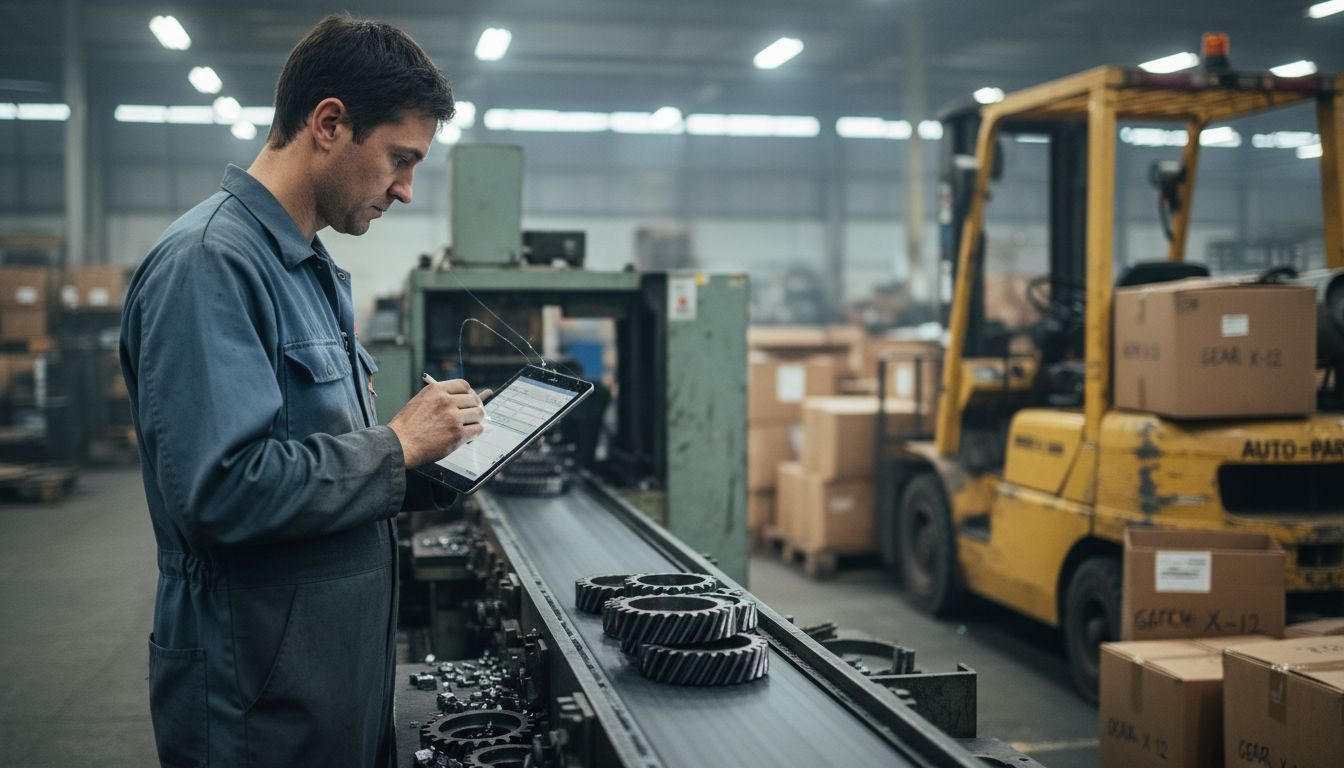
Manufacturing aftermarket parts begins with precision engineering and advanced material sourcing. Manufacturers typically start by obtaining high-grade raw materials like specialized metals, polymers, and electronic components. The production process involves detailed computer-aided design (CAD) modeling, rigorous testing, and quality control mechanisms to ensure parts meet or exceed original equipment manufacturer (OEM) specifications. Regulatory compliance for aftermarket parts is critically important, with manufacturers needing to navigate complex federal and state guidelines to ensure safety and performance standards.
The sales channels for aftermarket parts are diverse and continuously evolving, including:
- Traditional wholesale distributors
- Specialized agricultural equipment retailers
- Direct manufacturer sales platforms
- Online marketplaces and e-commerce websites
- Local repair shops and service centers
- Manufacturer-authorized dealership networks
Pro tip: Always request detailed performance specifications and compatibility documentation when purchasing aftermarket parts to verify their reliability and ensure proper integration with existing equipment.
Cost Savings Versus OEM: Key Comparisons
Aftermarket parts represent a significant opportunity for cost reduction in agricultural equipment maintenance, with substantial price differences compared to OEM components. These alternatives can potentially reduce repair and replacement expenses by up to 50%, offering farmers and equipment operators a financially strategic approach to machinery upkeep. The cost savings are particularly crucial for agricultural businesses operating with tight profit margins and complex equipment maintenance requirements.
The price disparities between aftermarket and OEM parts stem from several key factors. Original Equipment Manufacturer parts typically include premium pricing due to brand recognition, direct engineering from the original manufacturer, and stringent certification processes. Trade policies and manufacturing costs significantly influence these price differences, with aftermarket manufacturers leveraging more flexible production strategies and lower overhead expenses.
Key comparative aspects between aftermarket and OEM parts include:
- Price Point: Aftermarket parts often 30-50% less expensive
- Quality Variation: Range from near-identical to slightly lower performance
- Warranty Coverage: Often shorter or more limited compared to OEM parts
- Availability: Typically more readily accessible and faster to source
- Customization Potential: Greater flexibility in design and specification
- Manufacturing Standards: Regulated to meet minimum safety and performance requirements
Pro tip: Conduct a comprehensive cost-benefit analysis by comparing specific aftermarket part specifications, warranty terms, and performance ratings before making a purchasing decision.
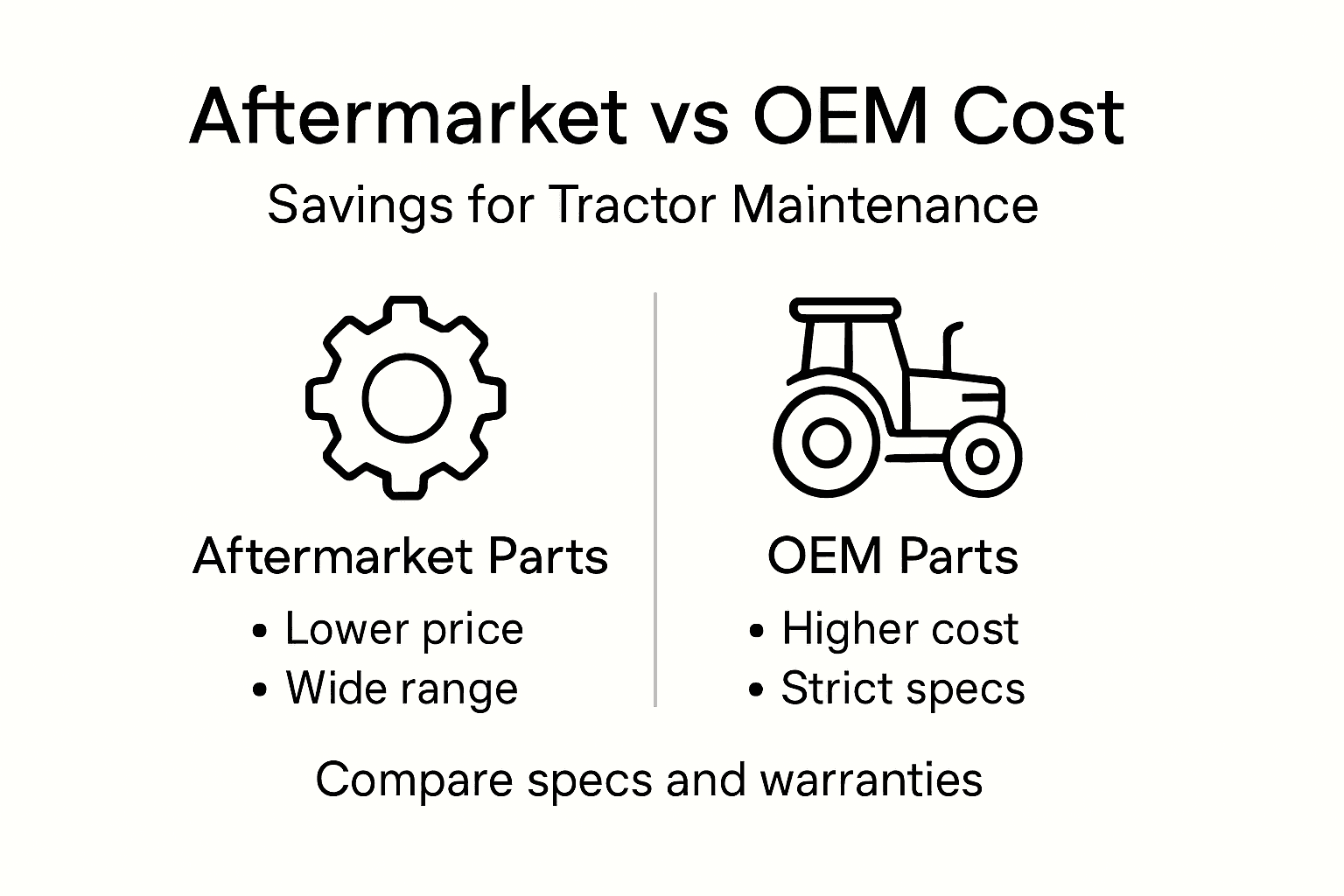
Here’s a concise comparison of how aftermarket and OEM tractor parts impact equipment owners:
| Aspect | Aftermarket Parts | OEM Parts |
|---|---|---|
| Price Impact | Lower upfront maintenance costs | Higher initial expenditure |
| Availability | Broad, rapid sourcing options | Limited to authorized dealers |
| Customization | Multiple design variations possible | Standardized factory options |
| Warranty Effects | May reduce coverage; check terms | Full manufacturer’s warranty |
Risks, Warranty, and Legal Considerations
Navigating the legal landscape of aftermarket parts requires understanding complex regulatory frameworks and consumer protection mechanisms. Warranty protections under federal law ensure that using aftermarket components does not automatically invalidate existing equipment warranties, providing critical safeguards for agricultural equipment owners. This legal protection represents a significant advancement in consumer rights, allowing farmers more flexibility in maintaining and repairing their machinery.
Federal agencies play a crucial role in regulating aftermarket parts, with organizations like the National Highway Traffic Safety Administration and the Environmental Protection Agency establishing stringent safety and performance standards. Comprehensive aftermarket parts regulations mandate strict compliance in manufacturing, labeling, and environmental impact. Manufacturers must meet these requirements to legally produce and distribute aftermarket components, ensuring a baseline of quality and safety for consumers.
Key legal and warranty considerations for aftermarket parts include:
- Warranty Implications: Manufacturers cannot void warranties without proving direct causation
- Safety Regulations: Mandatory compliance with federal performance standards
- Liability Protection: Clear guidelines for manufacturer and consumer responsibilities
- Environmental Compliance: Adherence to emissions and sustainability requirements
- Disclosure Requirements: Transparent communication about part specifications and limitations
- Consumer Rights: Protection against misleading marketing and unsubstantiated claims
Pro tip: Always request and retain detailed documentation of aftermarket part specifications, testing certifications, and manufacturer warranties to protect your legal interests and equipment performance.
For quick reference, here’s a summary of warranty and legal protections for aftermarket parts purchases:
| Legal Area | Key Protection Provided | Practical Outcome |
|---|---|---|
| Warranty Law | OEM can’t void for aftermarket use | More repair flexibility |
| Safety Regulation | Federal standards enforced | Reliable minimum quality |
| Consumer Disclosure | Mandatory transparency on specs | Informed purchasing choices |
Maximize Your Savings With Quality Aftermarket Tractor Parts
Are you seeking reliable and affordable alternatives to expensive OEM tractor parts While aftermarket parts can offer significant cost savings and performance benefits they require trusted sources to ensure compatibility and durability. Common challenges include verifying product specifications and securing warranties that protect your investment. At pexlivanidis.com we understand these important concerns and offer a vast inventory of over 20,000 agricultural machinery parts designed to meet or exceed OEM standards with clear product information and reliable support.
Discover the difference that expertly sourced aftermarket tractor accessories can make in maintaining your equipment without breaking your budget. Benefit from free shipping in Greece on orders over 100 euros and explore flexible purchasing options including wholesale membership. Take control of your machinery upkeep today by visiting our online store and browse quality parts crafted to keep your farm running smoothly. Don’t let costly repairs hold you back Act now and experience trusted savings at pexlivanidis.com.
Frequently Asked Questions
What are aftermarket parts?
Aftermarket parts are replacement components made by third-party manufacturers to repair or enhance machinery, differing from original equipment manufacturer (OEM) parts. They provide cost-effective alternatives for replacing broken or worn-out parts.
How do aftermarket parts compare in quality to OEM parts?
Quality can vary across aftermarket parts, but many meet or even exceed OEM specifications. Reputable manufacturers invest in research and development to ensure their products are high-performance and reliable alternatives.
What are the potential cost savings when using aftermarket parts?
Aftermarket parts can reduce repair and replacement costs by up to 50% compared to OEM components, making them a financially strategic option for maintenance, especially for agricultural businesses.
Are there warranty implications when using aftermarket parts?
Using aftermarket parts does not automatically void warranties, as per federal regulations. However, it’s important to ensure that the parts meet safety and quality standards to avoid any potential warranty issues.