

Most American farmers now rely on leasing solutions to keep their equipment modern and costs manageable. For farmers in Thessaloniki and Kavala, understanding how agricultural leasing works could be the key to greater flexibility and profitability. With many options for land, equipment, and short-term or long-term agreements, discovering the best leasing approach helps you avoid heavy financial burdens and stay ahead in today’s competitive market.
Table of Contents
- Defining Agricultural Leasing And Its Role
- Types Of Agricultural Leasing Agreements
- How Leasing Works For Farm Equipment
- Legal Framework And Standard Requirements
- Financial Impacts And Cost Considerations
- Comparing Leasing To Buying Equipment
Key Takeaways
| Point | Details |
|---|---|
| Importance of Agricultural Leasing | Agricultural leasing is crucial for accessing land and resources, promoting sustainability, and helping new farmers overcome ownership barriers. |
| Types of Lease Agreements | Cash rent, crop share, and hybrid leases each have distinct risk allocations and are suited to different farming needs and economic conditions. |
| Financial Implications | Leasing provides flexibility and lower upfront costs, often with potential tax benefits, making it an attractive option compared to purchasing. |
| Legal Considerations | Understanding the legal framework for leasing is essential to ensure fairness and compliance, necessitating professional consultation for robust agreements. |
Defining agricultural leasing and its role
Agricultural leasing represents a strategic approach to land management that enables farmers to access productive agricultural resources without purchasing property outright. This financial mechanism allows agricultural professionals to temporarily utilize land, equipment, or infrastructure through structured rental agreements. Land leasing practices have become increasingly important in addressing land mobility challenges and supporting agricultural sustainability.
At its core, agricultural leasing involves a contractual arrangement where landowners permit farmers or agricultural businesses to use their property for cultivation, livestock raising, or other agricultural activities in exchange for periodic financial compensation. These agreements can vary significantly in duration, terms, and specific conditions. Lease structures might range from short-term seasonal arrangements to long-term multi-year contracts that provide stability and predictability for both parties.
The significance of agricultural leasing extends beyond mere financial transactions. Good Practice Guidelines emphasize that these arrangements play a crucial role in promoting equitable land access, supporting new farmers, and enhancing overall agricultural productivity. By creating flexible pathways for land use, leasing helps overcome traditional barriers to entry, particularly for younger or resource-constrained agricultural professionals who might struggle with property ownership.
Pro tip: When considering an agricultural lease, always draft a comprehensive written contract that clearly defines responsibilities, payment terms, land use restrictions, and maintenance expectations to prevent potential misunderstandings.
Types of agricultural leasing agreements
Agricultural leasing encompasses several sophisticated arrangements designed to meet diverse farming needs and economic conditions. Agricultural lease types fundamentally include three primary structures: cash rent leases, crop share leases, and hybrid leases, each offering unique advantages and challenges for farmers and landowners.
Cash Rent Leases represent the most straightforward agricultural leasing model, where tenants pay a predetermined fixed rate to landowners, typically calculated per acre or for an entire parcel. This arrangement provides landowners with predictable income and gives farmers complete operational control over farming practices. The fixed payment remains consistent regardless of crop performance, which means farmers assume all production risks and potential rewards.
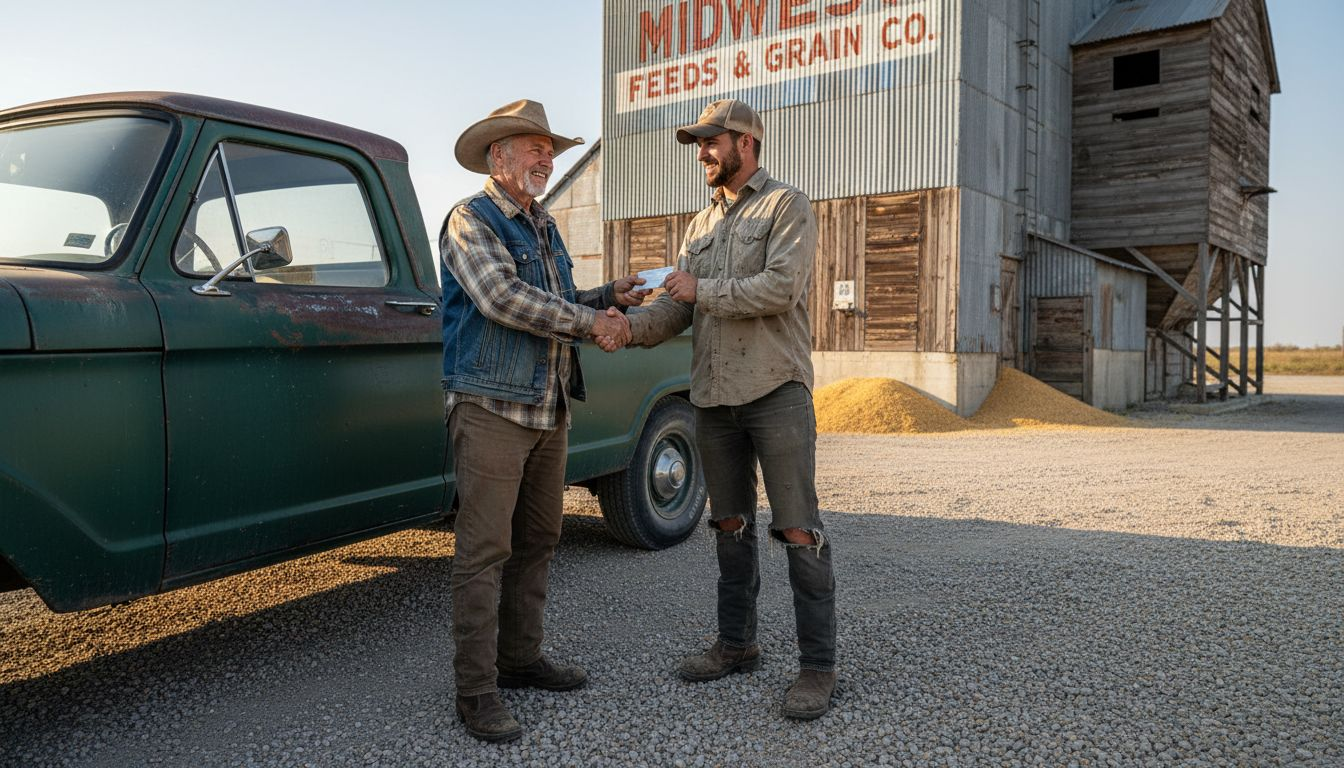
Crop Share Leases offer a more collaborative approach, where both landowner and farmer share revenues and agricultural risks proportionally. In these agreements, the landowner might receive a percentage of harvested crops or crop revenues as compensation. FAO guidelines recommend these arrangements as they create mutual investment and incentivize both parties to maximize land productivity. Typical crop share splits might range from 50/50 to 70/30 depending on each party’s contributed resources and labor.
Hybrid Leases combine elements from cash rent and crop share models, offering flexibility and risk mitigation. These complex arrangements might include a base cash rent supplemented by additional payments based on crop performance or market prices. Such leases allow customization to specific local agricultural conditions, farmer capabilities, and landowner objectives.
Pro tip: Always consult with a local agricultural attorney or lease specialist to draft an agreement that precisely reflects your specific farming context and protects both parties’ interests.
Here’s a concise comparison of the main agricultural lease types and their impacts:
| Lease Type | Risk Allocation | Income Predictability | Typical Users |
|---|---|---|---|
| Cash Rent | Farmer bears full risk | Predictable for landowner | Established growers |
| Crop Share | Risk shared by both parties | Variable for both parties | Partnerships/collaboratives |
| Hybrid | Mixed/adjustable risk split | Balanced, partly variable | Adaptive or tech-focused farms |
How leasing works for farm equipment
Agricultural equipment leasing provides farmers with a flexible financial strategy for accessing advanced machinery without substantial upfront investments. This approach allows agricultural professionals to acquire necessary equipment through structured rental agreements that preserve working capital and minimize long-term financial commitments.
Lease Mechanism involves a comprehensive process where farmers select specific equipment and negotiate terms with leasing companies or equipment providers. Typical lease agreements include predetermined monthly payments, equipment usage parameters, maintenance responsibilities, and optional purchase provisions. These arrangements can range from short-term seasonal leases to multi-year contracts, giving farmers unprecedented flexibility in managing their operational resources.
Agricultural equipment leasing benefits extend beyond financial considerations. Modern lease structures often incorporate technological upgrades, maintenance support, and tax advantages that traditional purchasing models cannot match. Farmers can strategically rotate equipment, access cutting-edge technology, and maintain financial agility without committing to full ownership. This approach is particularly advantageous for emerging agricultural businesses or operations dealing with rapidly evolving technological landscapes.
The financial calculations underlying equipment leasing involve complex assessments of present value, tax implications, and long-term operational costs. Farmers must carefully evaluate lease terms, comparing potential savings against ownership expenses, depreciation rates, and technological obsolescence. Factors such as equipment usage frequency, maintenance requirements, and anticipated technological advancements play crucial roles in determining the most economically sensible approach.
Pro tip: Always request a comprehensive lease breakdown that includes total cost of ownership, potential buyout options, and detailed maintenance responsibilities before signing any agricultural equipment lease agreement.
Legal framework and standard requirements
Agricultural leasing legal frameworks establish comprehensive guidelines that protect both landowners and tenants through national and regional statutes. These legal structures define critical parameters for agricultural leasing, ensuring transparency, fairness, and sustainable land use practices across different jurisdictions.
Key Components of agricultural leasing regulations typically encompass several essential elements. These include precise definitions of lease duration, renewal conditions, termination protocols, and explicit responsibilities for both parties. Legal requirements mandate clear documentation that outlines property boundaries, permitted land uses, maintenance obligations, and financial terms. Lease agreements must comprehensively address potential scenarios such as crop failures, environmental changes, and unexpected economic disruptions.
International leasing standards emphasize the importance of balanced contractual frameworks that protect tenant security while respecting landowner rights. Modern legal approaches prioritize creating flexible agreements that accommodate technological advancements, sustainable farming practices, and evolving agricultural economic landscapes. These standards require comprehensive dispute resolution mechanisms, transparent negotiation processes, and provisions that promote long-term agricultural productivity.
The complexity of agricultural leasing legal frameworks demands sophisticated understanding of local, regional, and national regulations. Farmers and landowners must navigate intricate legal requirements involving tax implications, land use restrictions, environmental compliance, and potential zoning limitations. Professional legal consultation becomes crucial in developing robust leasing agreements that effectively balance economic interests with regulatory compliance.
Pro tip: Consult with an agricultural law specialist to review your leasing agreement, ensuring comprehensive coverage of all legal requirements and potential contingencies before finalizing any contract.
Financial impacts and cost considerations
Economic evaluation of leasing requires sophisticated financial analysis that goes beyond simple cost comparisons. Farmers must carefully assess the complex interplay between upfront investments, ongoing expenses, tax implications, and long-term operational flexibility when considering agricultural equipment and land leasing strategies.
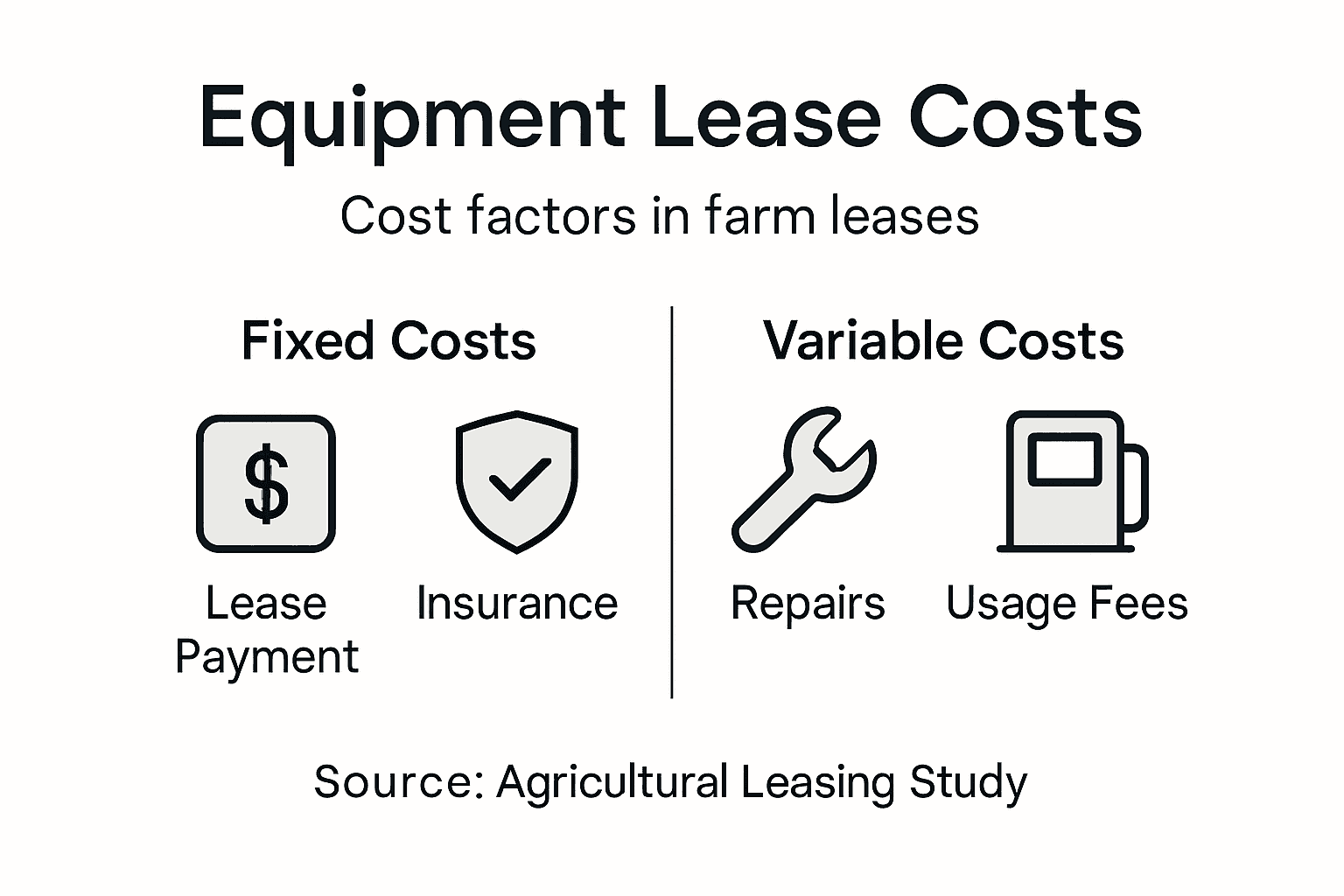
Cost Structures in agricultural leasing involve multiple financial dimensions beyond basic rental payments. Farmers must factor in hidden expenses such as maintenance costs, potential equipment depreciation, insurance requirements, and opportunity costs associated with different leasing arrangements. These financial considerations extend beyond immediate cash flow impacts, encompassing strategic decisions about capital allocation, technological upgrades, and operational scalability.
Rural land leasing financial strategies provide farmers with powerful tools for managing economic uncertainty and reducing capital risk. By spreading financial commitments across flexible lease agreements, agricultural professionals can access larger land parcels, experiment with diverse crop rotations, and mitigate market volatility risks. Effective leasing approaches transform traditional capital-intensive agricultural models into more adaptive, financially resilient business structures that respond dynamically to changing economic landscapes.
Tax implications represent a critical yet often overlooked component of agricultural leasing financial calculations. Lease payments may qualify as tax-deductible business expenses, potentially offering significant financial advantages compared to outright equipment purchases. However, these benefits vary dramatically based on individual farm operations, local tax regulations, and specific lease agreement structures. Farmers must collaborate with financial professionals who understand the nuanced tax treatment of agricultural leasing to maximize potential economic benefits.
Pro tip: Develop a comprehensive spreadsheet comparing total ownership costs, lease expenses, tax implications, and potential equipment replacement scenarios before finalizing any agricultural leasing decision.
Comparing leasing to buying equipment
Farm equipment acquisition strategies require careful analysis of financial implications, operational needs, and long-term economic sustainability. Farmers face a critical decision between leasing and purchasing equipment, with each approach offering distinct advantages and potential drawbacks that significantly impact agricultural business performance.
Financial Dynamics reveal fundamental differences between leasing and buying agricultural equipment. Leasing provides lower upfront costs, enabling farmers to access modern technology without substantial capital investment. Purchased equipment, conversely, offers complete ownership, potential tax depreciation benefits, and unrestricted usage. The financial calculation extends beyond initial expenses, encompassing maintenance costs, technological obsolescence, and long-term operational flexibility.
Agricultural equipment investment strategies distinguish between operating and capital leases, each presenting unique financial implications. Operating leases typically offer more flexibility, allowing farmers to upgrade equipment more frequently, while capital leases create a path toward eventual ownership. The decision hinges on multiple factors including farm scale, technological requirements, cash flow management, and specific operational challenges.
The comparative analysis between leasing and purchasing involves complex considerations beyond pure financial calculations. Factors such as equipment maintenance responsibilities, technological advancement rates, potential resale value, and tax treatment play crucial roles in determining the most strategic approach. Farmers must conduct comprehensive financial modeling that accounts for their specific operational context, future growth projections, and technological innovation cycles.
The following table highlights key financial factors to consider when leasing vs. buying equipment:
| Factor | Leasing | Buying |
|---|---|---|
| Upfront Capital Needed | Low, preserves cash flow | High, large initial outlay |
| Technological Flexibility | Easy access to upgrades | Depreciation risk |
| Tax Considerations | Payments often deductible | Possible depreciation benefits |
| Asset Ownership | No ownership, optional buyout | Full ownership and control |
Pro tip: Develop a detailed five-year financial projection comparing total ownership costs, lease expenses, potential equipment replacement scenarios, and technological upgrade opportunities before making your final equipment acquisition decision.
Enhance Your Agricultural Leasing Strategy with Reliable Equipment Parts
Navigating agricultural leasing means balancing cost efficiency and operational productivity while managing risks linked to equipment maintenance and availability. This article highlights the crucial role of well-structured lease agreements and making informed decisions about leasing versus buying farm machinery. A key challenge many farmers face is ensuring continuous access to quality tractor accessories and spare parts that keep leased equipment working at its best without unexpected downtime or costly repairs.
At Pexlivanidis, we understand these critical pain points and provide a vast inventory of over 20,000 agricultural machinery parts designed to support the needs of farmers who rely on leasing to maximize equipment value. Whether you operate under a cash rent, crop share, or hybrid lease agreement, our trusted product selection helps you maintain and upgrade your machinery efficiently. Experience the advantage of free shipping on orders over 100€ within Greece and explore wholesale options with our B2B membership to optimize your operational costs.
Ready to safeguard your leased equipment with reliable spare parts and keep your farm running smoothly? Visit Pexlivanidis now and discover the essential tractor accessories that align perfectly with your agricultural leasing strategy. Don’t wait until maintenance challenges disrupt your productivity. Take action today to enhance your farming business with dependable parts and expert support.
Frequently Asked Questions
What is agricultural leasing and how does it work?
Agricultural leasing is a contractual arrangement where landowners allow farmers to use their property for agricultural activities in exchange for periodic financial payments. This allows farmers to access land and equipment without outright purchasing them.
What are the different types of agricultural leasing agreements?
The main types of agricultural leasing agreements include cash rent leases, crop share leases, and hybrid leases. Cash rent leases provide fixed payments, crop share leases involve sharing risks and revenues, and hybrid leases combine elements of both models for flexibility.
What are the benefits of leasing agricultural equipment compared to buying?
Leasing agricultural equipment allows farmers to access advanced machinery with lower upfront costs, preserving cash flow. It also provides flexibility to upgrade equipment regularly and may offer tax advantages, unlike outright purchases which come with ownership responsibilities and depreciation risks.
How should farmers evaluate leasing agreements for equipment?
Farmers should evaluate leasing agreements by considering total ownership costs, lease expenses, tax implications, maintenance responsibilities, and future growth projections. Consulting financial professionals can help in making informed decisions about leasing versus buying equipment.