
Nearly 80 percent of American farms now rely on advanced technology to coordinate tractors, combines, and other essential machinery. With farm operations spanning hundreds of acres, staying in control of costly equipment presents ongoing challenges for every American grower. An effective farm fleet management system offers a smarter way to monitor vehicle performance, make data-driven decisions, and unlock greater productivity from every acre.
Table of Contents
- Defining Farm Fleet Management Systems
- Types of Agricultural Fleets and Their Roles
- How Farm Fleet Management Technology Works
- Benefits for Farm Owners and Operators
- Common Challenges and Compliance Issues
Key Takeaways
| Point | Details |
|---|---|
| Farm Fleet Management Systems | Integrate hardware and software to enhance tracking, monitoring, and management of agricultural machinery. |
| Types of Agricultural Vehicles | Include tractors, combines, sprayers, and balers, each serving specific agricultural tasks. |
| Technological Components | Utilize GPS tracking, telematics, and sensor networks to optimize productivity and efficiency. |
| Benefits for Farm Owners | Enable cost reduction, operational efficiency, and improved decision-making through predictive maintenance. |
Defining Farm Fleet Management Systems
Farm fleet management represents a sophisticated technological approach to coordinating and optimizing agricultural vehicle and equipment operations. A farm fleet management system integrates hardware and software technologies to help farmers track, monitor, and efficiently manage their agricultural machinery and resources. By leveraging advanced agricultural automation techniques, these systems transform traditional farm management practices into data-driven strategic operations.
At its core, a farm fleet management system enables farmers to make precise decisions about resource allocation, vehicle scheduling, and real-time tracking. The technology combines GPS tracking, telematics, and integrated software platforms to provide comprehensive insights into machinery performance, fuel consumption, maintenance requirements, and operational efficiency. Farmers can now monitor equipment locations, track usage patterns, predict maintenance needs, and optimize routing with unprecedented accuracy.
Key components of modern farm fleet management systems typically include:
- Real-time Vehicle Tracking: Precise GPS monitoring of equipment location and movement
- Performance Analytics: Detailed reporting on machinery utilization and operational metrics
- Maintenance Scheduling: Predictive tools for equipment service and repair planning
- Fuel Management: Comprehensive tracking of fuel consumption and efficiency
- Operational Cost Optimization: Data-driven insights to reduce overall fleet expenses
By implementing these advanced systems, farmers can significantly enhance operational productivity, reduce unnecessary downtime, and make more informed strategic decisions about their agricultural machinery investments.
Types of Agricultural Fleets and Their Roles
Farm vehicle fleets represent a complex ecosystem of specialized equipment designed to support various agricultural operations. Agricultural machinery encompasses a diverse range of vehicles and equipment, each engineered to perform specific tasks that optimize farming productivity and efficiency. These specialized machines transform traditional farming practices by enabling farmers to accomplish complex agricultural tasks with unprecedented precision and speed.
The primary categories of agricultural fleet vehicles include:
- Tractors: Versatile workhorses used for plowing, tilling, pulling implements, and powering other agricultural equipment
- Combines: Sophisticated harvesting machines that cut, thresh, and clean grain crops in a single pass
- Sprayers: Precision equipment for applying pesticides, fertilizers, and crop protection chemicals
- Balers: Machines designed to compress and package hay, straw, and crop residues into compact, manageable units
- Seeders and Planters: Specialized vehicles that ensure accurate and efficient crop planting
Each vehicle type plays a critical role in the agricultural production cycle. Farm vehicles are strategically designed to address specific agricultural challenges, from initial soil preparation to final crop harvesting. By understanding the unique capabilities of different fleet vehicles, farmers can optimize their machinery selection, improve operational efficiency, and ultimately enhance overall farm productivity.
Modern agricultural fleets are increasingly incorporating advanced technologies like GPS guidance, precision mapping, and real-time performance monitoring. These technological innovations enable farmers to make data-driven decisions, reduce operational costs, and maximize the utilization of their valuable agricultural machinery investments.
How Farm Fleet Management Technology Works
Precision agriculture has revolutionized modern farming by integrating sophisticated technological systems that transform how farmers manage and monitor their agricultural operations. Farm fleet management technology combines advanced hardware and software solutions to provide real-time insights, predictive analytics, and comprehensive control over agricultural machinery and resources. These integrated systems leverage cutting-edge technologies like GPS tracking, telematics, and sophisticated data analysis platforms to optimize farm productivity.
The core technological components of farm fleet management systems typically include:
- GPS Tracking: Enables precise location monitoring of agricultural vehicles
- Telematics: Provides real-time performance and diagnostic data
- Sensor Networks: Collect detailed information about machinery status and environmental conditions
- Cloud-Based Management Platforms: Allow remote monitoring and centralized data analysis
- Machine Learning Algorithms: Predict maintenance needs and optimize operational efficiency
Modern tractors exemplify the technological sophistication of farm fleet management systems. These advanced vehicles are equipped with auto-steer capabilities, integrated computer systems, and real-time performance monitoring tools that enable farmers to make data-driven decisions. The technology allows for precise navigation, automatic route optimization, and comprehensive machinery performance tracking.
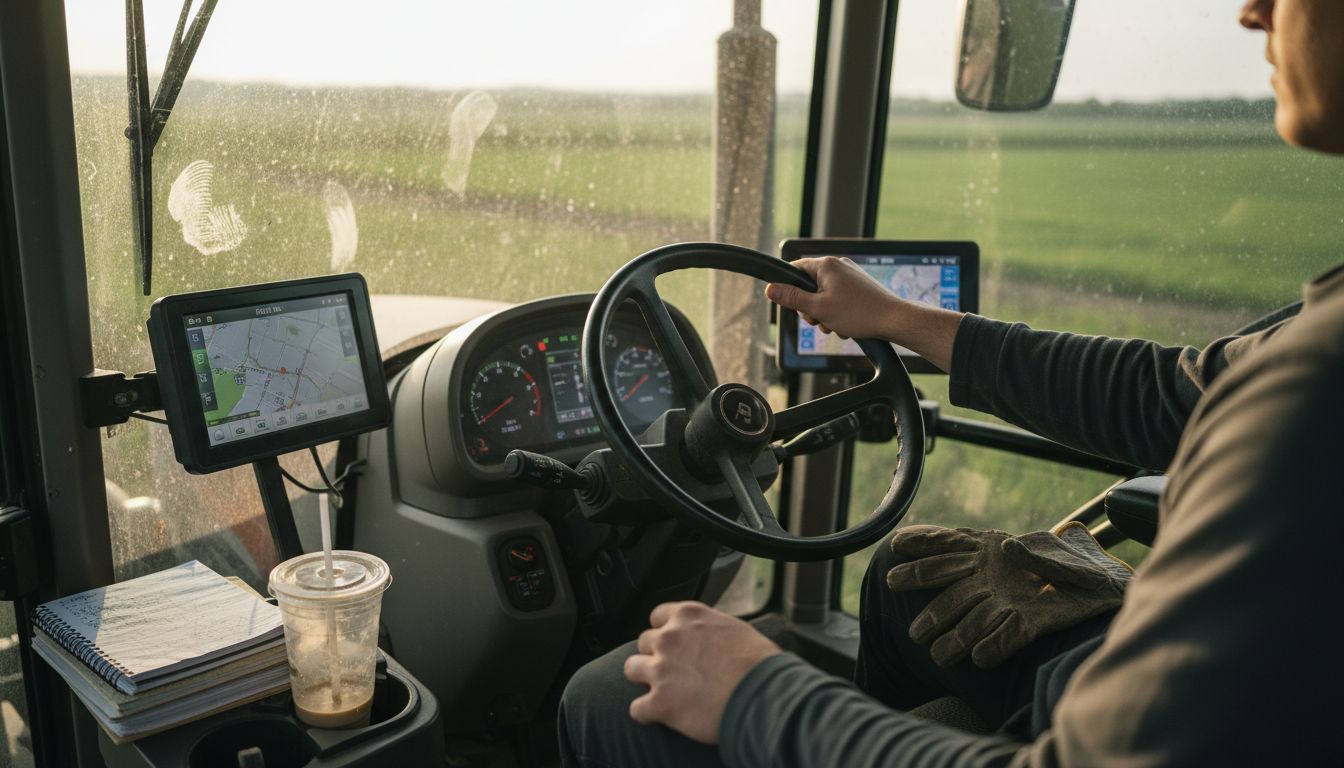
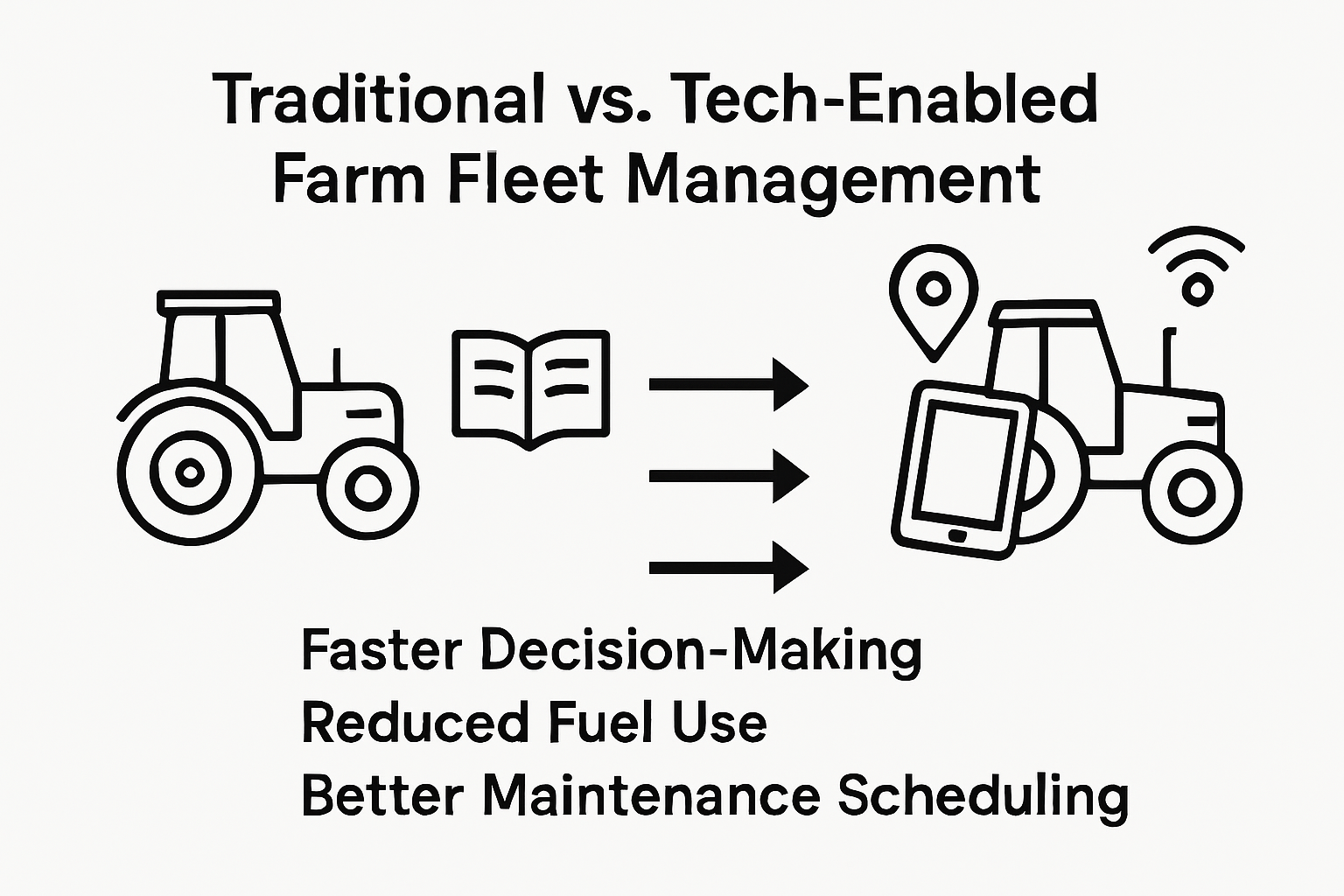
By integrating these advanced technological solutions, farmers can significantly enhance operational efficiency, reduce unnecessary downtime, minimize fuel consumption, and make more informed strategic decisions about their agricultural machinery. The seamless combination of hardware sensors, GPS technologies, and sophisticated software platforms creates a comprehensive ecosystem that transforms traditional farming practices into highly efficient, technologically driven agricultural operations.
Benefits for Farm Owners and Operators
Farm fleet management technology offers transformative advantages that extend far beyond traditional agricultural practices. Drones in agriculture represent a prime example of how technological innovations can revolutionize farming operations, providing unprecedented levels of data collection, resource optimization, and operational efficiency. These advanced systems empower farm owners to make more informed decisions, reduce operational costs, and maximize agricultural productivity.
The key benefits for farm owners and operators include:
- Cost Reduction: Minimize fuel consumption and maintenance expenses
- Operational Efficiency: Optimize equipment utilization and routing
- Predictive Maintenance: Identify potential machinery issues before they become critical
Robotic harvesting systems demonstrate the transformative potential of advanced fleet management technologies. By automating labor-intensive tasks, these systems dramatically reduce operational costs while simultaneously improving crop yield and quality. Farmers can now leverage real-time data analytics to make precise decisions about resource allocation, crop management, and equipment deployment.
Ultimately, farm fleet management technology represents a strategic investment in agricultural productivity. The integration of advanced tracking, monitoring, and predictive technologies enables farm owners to transform traditional agricultural practices into high-performance, data-driven operations. By embracing these technological innovations, farmers can achieve unprecedented levels of efficiency, sustainability, and profitability in an increasingly competitive agricultural landscape.
Common Challenges and Compliance Issues
Cooperative Intelligent Transport Systems have introduced complex challenges for farm fleet management that extend far beyond traditional operational considerations. Farmers and agricultural technology managers must navigate a sophisticated landscape of technological integration, regulatory compliance, and operational safety. These challenges require a multifaceted approach that balances technological innovation with stringent legal and safety requirements.
The primary challenges in farm fleet management technology include:
- Data Security: Protecting sensitive operational and agricultural information
- Regulatory Compliance: Meeting evolving agricultural and transportation safety standards
- Technological Interoperability: Ensuring different systems and equipment can communicate effectively
- Cybersecurity: Defending against potential digital threats and unauthorized system access
- Privacy Protection: Maintaining confidentiality of farm-specific operational data
Automated ground-vehicle solutions highlight the intricate challenges of implementing advanced agricultural technologies. These systems must adapt to unpredictable environmental conditions while maintaining strict compliance with safety regulations. Effective modeling and simulation become critical tools for addressing the complex operational requirements and potential risks associated with advanced fleet management technologies.
Navigating these challenges requires a proactive and strategic approach. Farm owners and operators must invest in continuous training, robust technological infrastructure, and comprehensive risk management strategies. By developing a holistic understanding of the technological, legal, and operational landscape, agricultural businesses can successfully implement advanced fleet management systems while mitigating potential risks and ensuring regulatory compliance.
Enhance Your Farm Fleet Efficiency with Reliable Parts and Accessories
Managing a modern farm fleet involves overcoming challenges like unpredictable machinery breakdowns, costly maintenance, and the need for precise equipment tracking. As discussed in the article, utilizing farm fleet management technology depends heavily on having durable, compatible tractor accessories and spare parts to keep your machinery running smoothly and efficiently. Addressing those pain points with quality components can dramatically reduce downtime, optimize resource use, and support predictive maintenance efforts.
At pexlivanidis.com, you gain access to a vast inventory of over 20,000 agricultural machinery parts designed to fit a wide range of vehicles and equipment types mentioned in the article such as modern tractors, sprayers, and balers. Whether you need essential tractor accessories or hard-to-find spare parts, our easy-to-navigate platform ensures you find what you need quickly. With free shipping on orders over 100€ within Greece and special benefits for wholesale B2B members, now is the perfect time to secure reliable components that empower your farm fleet management system.
Don’t let equipment downtime hamper your farm’s productivity. Visit pexlivanidis.com to explore our extensive product range and experience how the right parts can enhance your operational efficiency today. Take the next step to future-proof your farm’s fleet by choosing trusted components that keep you running without interruption.
Frequently Asked Questions
What is a farm fleet management system?
A farm fleet management system is a technological solution that integrates hardware and software to track, monitor, and optimize agricultural machinery and operations, using advanced techniques like GPS tracking and telematics.
How does farm fleet management technology improve operational efficiency?
Farm fleet management technology enhances operational efficiency by providing real-time insights into vehicle performance, optimizing routing, facilitating predictive maintenance, and helping in effective resource allocation to minimize downtime and costs.
What are the key components of modern farm fleet management systems?
Key components include real-time vehicle tracking, performance analytics, maintenance scheduling, fuel management, and operational cost optimization, all of which support more informed and strategic decision-making for farmers.
What challenges do farmers face when implementing farm fleet management systems?
Farmers may encounter challenges such as data security, regulatory compliance, technological interoperability, cybersecurity threats, and privacy protection when implementing farm fleet management technologies.